What to do in Weimar: practical guide to planning your visit
What to do in Weimar: see how to get there, when to visit, what to prioritize in the historic center, and which attractions require more planning.
How to get to Weimar and get around the city
Getting to Weimar by train via Erfurt is the simplest way. The connection between the two cities is usually frequent, with departures about every 15 minutes, and the journey takes around 12 minutes. Since Weimar is no longer on the ICE network, Erfurt Hauptbahnhof serves as the main connection point for those coming from other parts of Germany. If you only want the train between the two cities, there is the Hopperticket Thüringen, which usually costs €4.50; if you prefer a ticket that also includes local transport, the regular train between Erfurt and Weimar costs around €5.60 and is valid for 120 minutes, including buses in Weimar and trams in Erfurt. Before traveling, confirm the current fare and the type of ticket available that day.
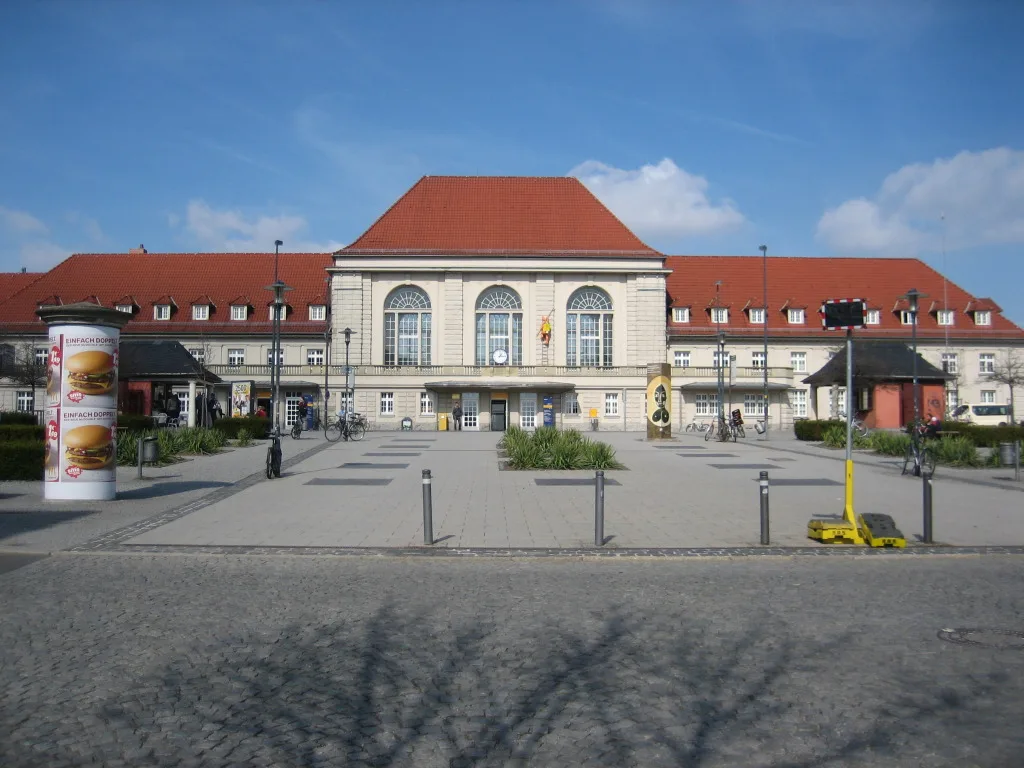
Weimar’s central station is about 1.5 km north of the historic center. You can walk if you have light luggage, but the most practical option is to take the direct bus from the station. Lines 1 and 6 connect the Hauptbahnhof to the city, and the single urban ticket costs around €2, usually bought from the driver. For short trips within Weimar, this ticket works well; if you are doing a day trip between Erfurt and Weimar, it is worth calculating whether the combined train ticket already covers what you need.
Local public transport is especially useful for places outside the very center. Line 1 takes you to Schloss Belvedere in about 15 minutes from the central area, but not every bus on this line goes all the way to the palace, so it is important to check the final destination on the updated timetable. The Buchenwald Memorial is served by line 6, with a connection between the central station, the center, and the memorial in about 20 minutes. If you are traveling as a couple, family, or small group and plan to move around other cities in Thuringia on the same day, the Thüringen Ticket usually makes more sense, because it covers regional transport as well as local buses and trams.
Best time to visit Weimar and dates that change the itinerary
If the idea is to see Weimar with the city operating at its best cultural pace, August, October, and December change the experience quite a bit. In August, the Genius Loci Festival takes over a weekend with projections and audiovisual narratives on the city’s façades. It is not the time for a contemplative, quiet visit to the center: it works for those who enjoy nighttime programming and want to fit the trip around the festival. Since the schedule can vary from one edition to the next, confirm dates and locations before planning the trip.
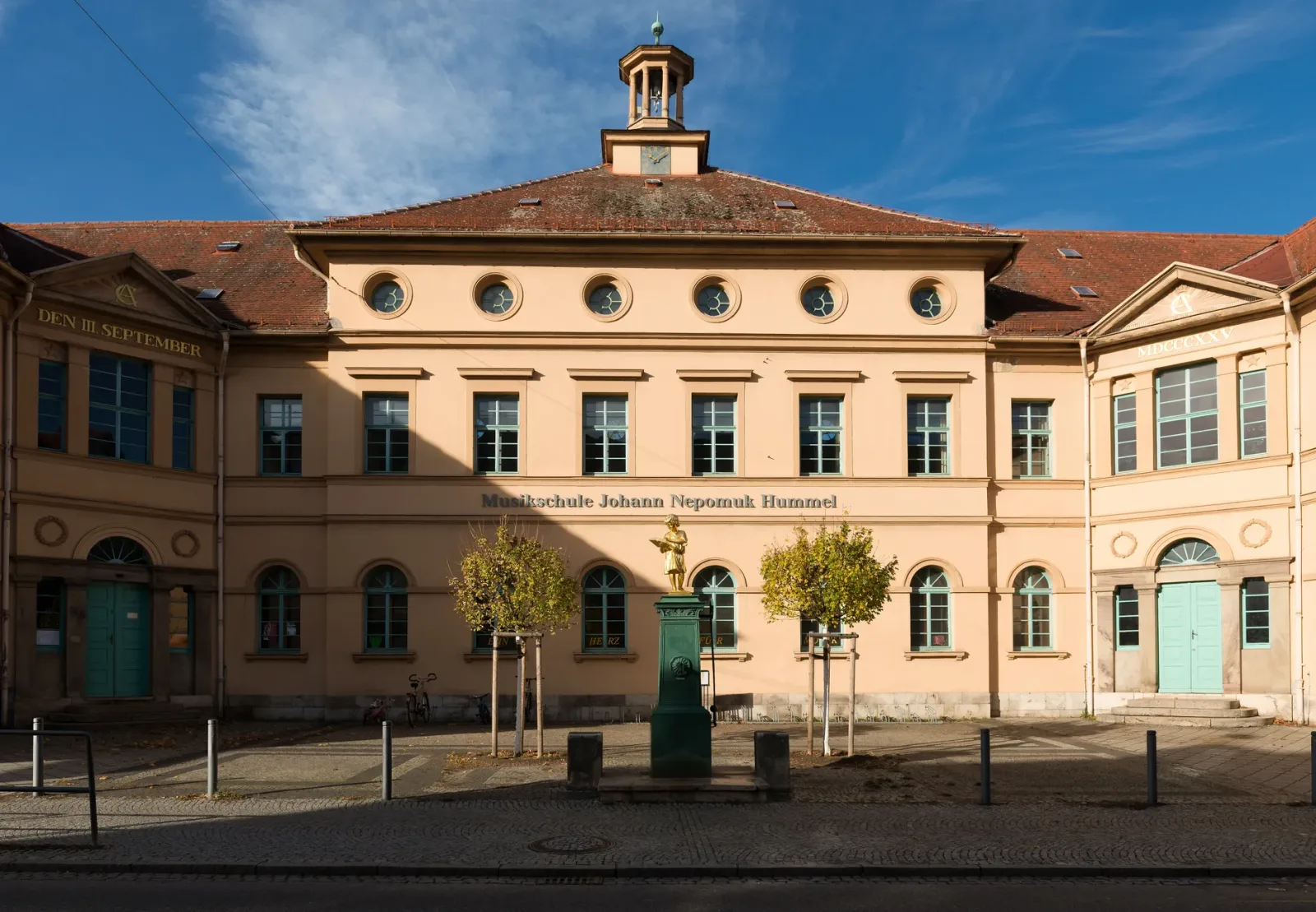
In October, the Weimarer Zwiebelmarkt takes over the historic center on the second weekend of the month. It is a large traditional festival, with stages and stalls spread across the central area, and the city becomes much busier than during the rest of the year. For some travelers, that is precisely the appeal; for others, it can get in the way of a calmer visit, with crowded streets and more competitive accommodation. If you want to experience Weimar in an event atmosphere, this is the most distinctive date on the local calendar.
During Advent, the Christmas market in Market Square gives the visit a different tone. It is a good choice for those who want to see the center in a seasonal setting, especially late in the afternoon and at night. If you are thinking of combining Weimar with other cities in Thuringia on the same itinerary, December works well because of this Christmas market atmosphere, but it makes sense to check the exact opening days in advance.
Regardless of the month, there is one detail that affects planning: many museums and attractions are closed on Mondays. In Weimar, this has a major impact on the itinerary, because much of what interests visitors depends on house museums, collections, and historic sites. If you only have one or two days, try to avoid making Monday your main sightseeing day and check the updated opening hours of the attractions you want to see.
Editorial transparency: Some links on this page are affiliate links. We may earn a commission at no extra cost to you. This does not influence our recommendations.
The main places in Weimar’s historic center
Weimar’s historic center works best on foot, with everything very concentrated. If you have little time, start at Frauenplan, where Goethe’s residence is located, and continue to Schillerstraße, where Schiller’s house is. These are the two addresses that most concretely shape literary Weimar: one shows Goethe’s weight in the city’s public and intellectual life; the other helps explain Schiller’s presence in that same circuit. Even for those who do not intend to enter every historic house, it is worth stopping by both spots from the outside and noticing how they fit into the urban fabric of the center.
Between these axes, the most photographed spot is the Goethe-Schiller Monument, in front of the German National Theater. It is an obvious landmark on the map and a good reference point, because from there you can easily reach the most important stretches of the old center. You do not need to treat this part of the visit like a checklist: Weimar rewards those who wander slowly through the smaller streets, looking at facades and squares, because there is almost always some connection to writers, musicians, or court life.
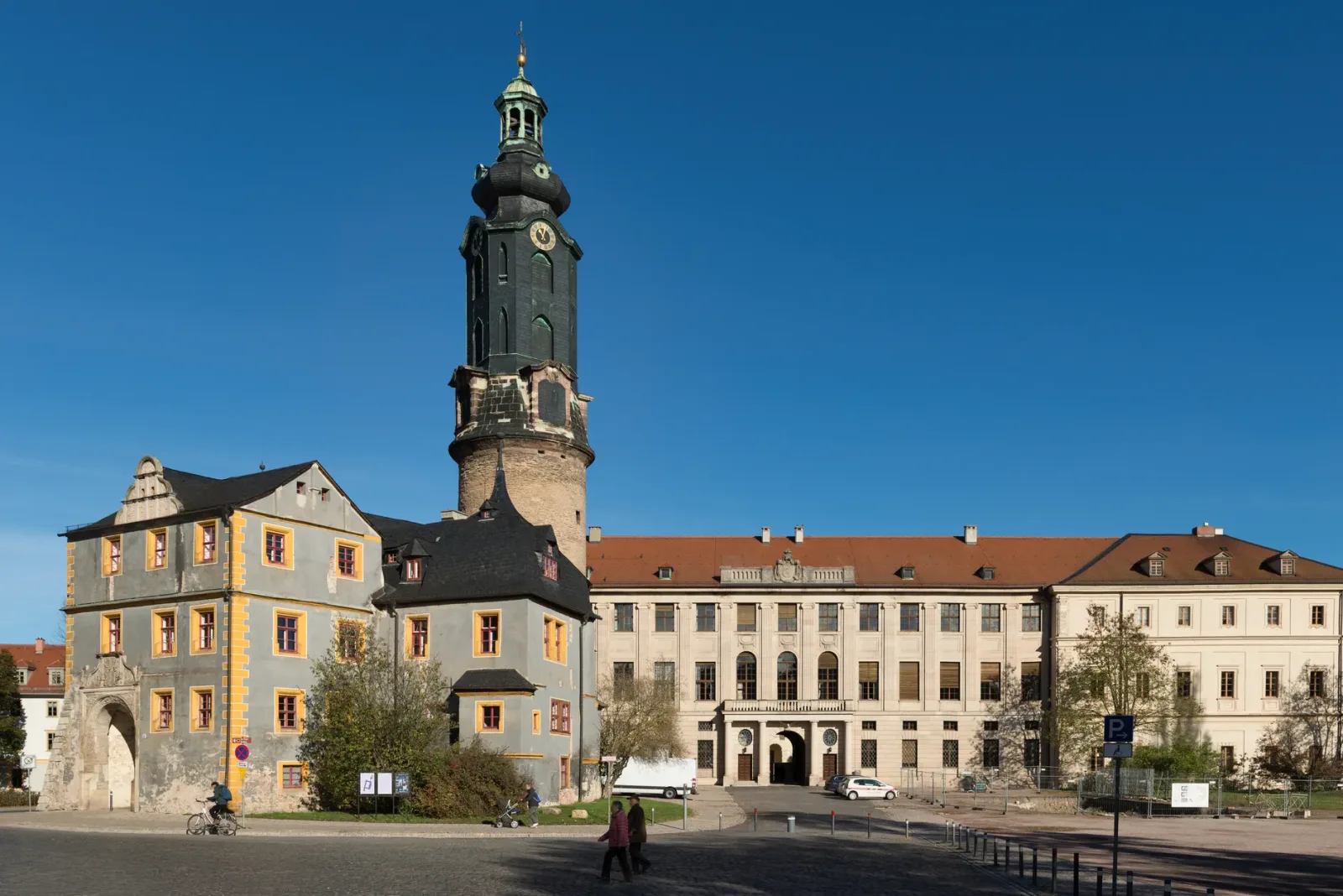
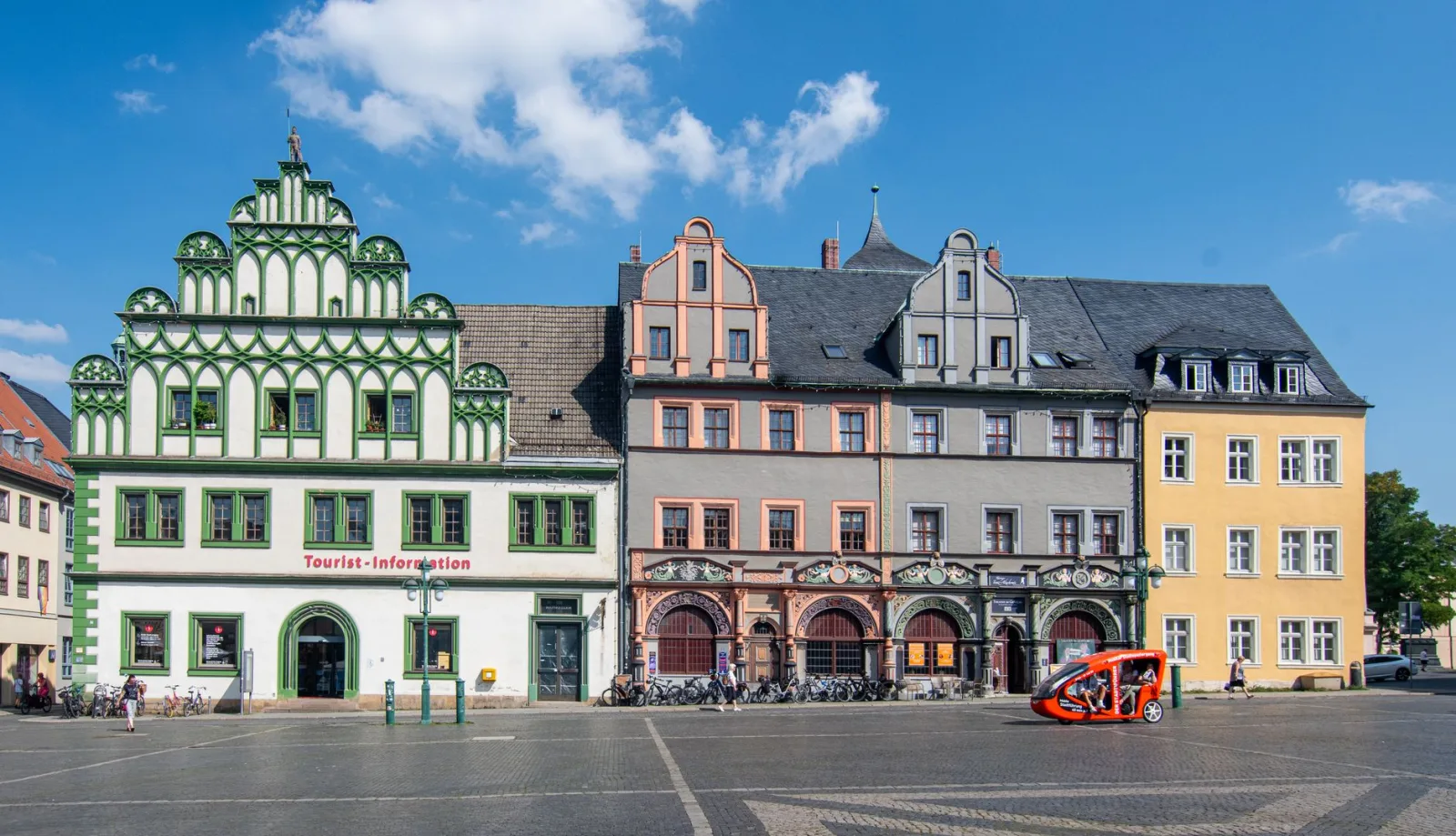
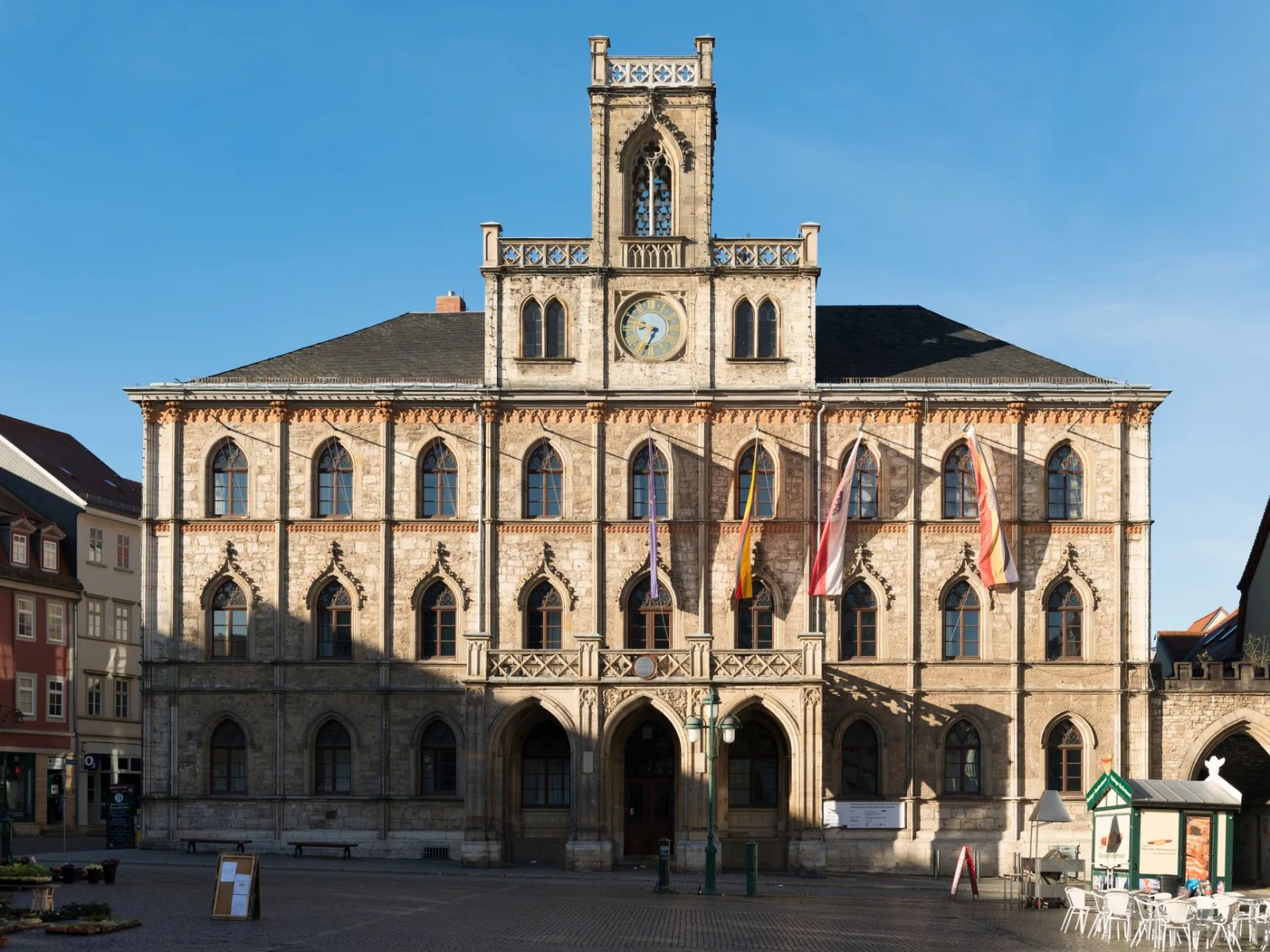
Market Square deserves a stop with time to spare. The town hall visually organizes the space, and the Cranach House stands out for its colorful facade. It is one of the areas where the city seems most clearly preserved, without losing its everyday use. If you want to experience the historic center beyond the monuments, this is where it happens best, with the square serving both as a thoroughfare and a place to linger for a while.
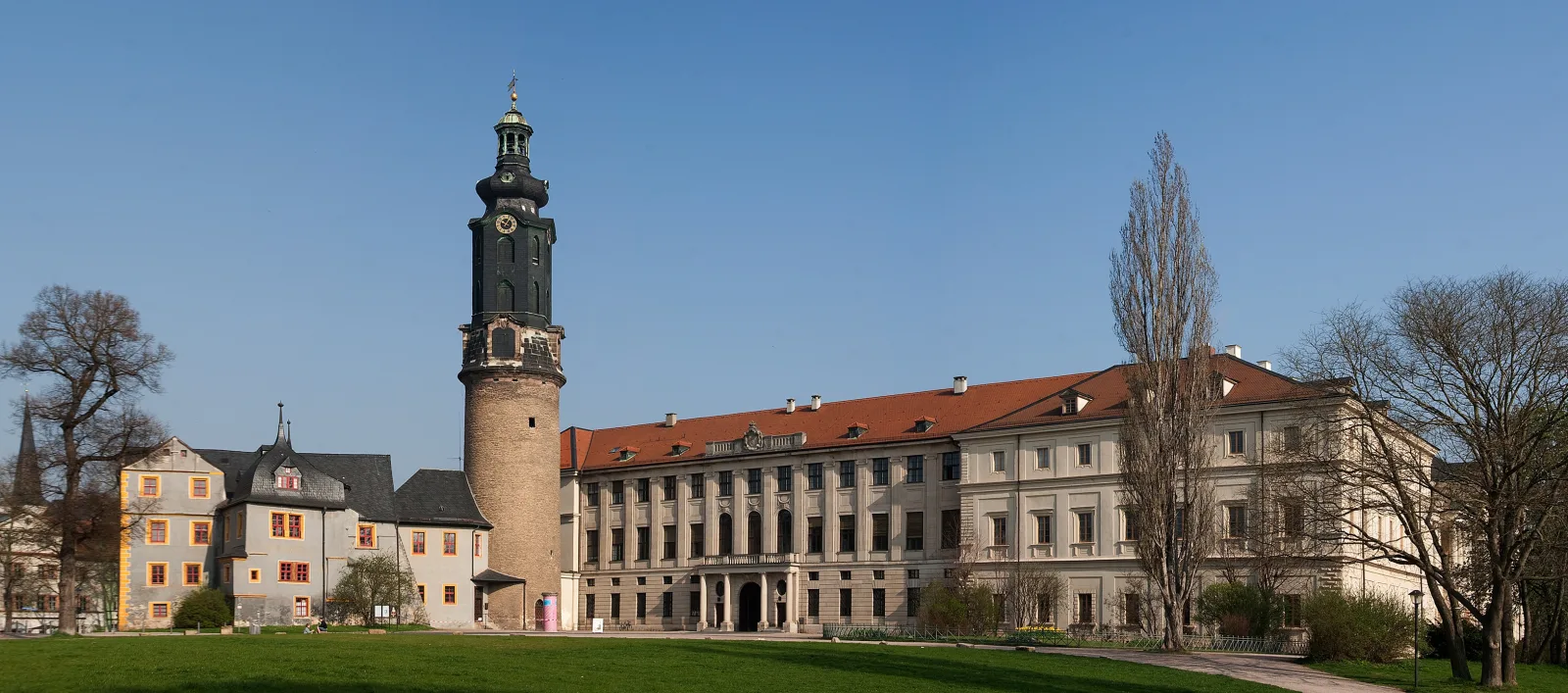
On the western edge of the center, Weimar Palace rounds out this walking circuit nicely. It helps broaden the city’s reading beyond Goethe and Schiller, drawing the route toward Weimar’s ducal and artistic side. If your time is short, it makes sense to think of this historic core as a continuous route: Frauenplan, Schillerstraße, the theater area, Market Square, and the palace. It is the part of the city where historical density appears with the least effort in getting around.
Museums and visits that require more planning
The visit that most requires advance planning is the Anna Amalia Duchess Library. The sensitive point there is the Rococo Hall, which receives only 50 visitors per day. If it is a priority in your itinerary, buy your ticket in advance or arrive at the ticket office when it opens, which is usually at 9 a.m.; since hours can change, check the official website before you go. The library holds more than one million works, from the 9th century to the present day, and the visit makes more sense for those who want to see the historic building and the impact of the restoration after the 2004 fire than for those expecting a “large” library in the contemporary sense.
The Goethe Museum and the Schiller Museum require another kind of planning: time and attention to the pace of the visit. At Goethe’s house, the route goes through 20 rooms, and it is worth taking the audio guide, included in the ticket, because it provides context for the author’s life, the function of each space, and what you are seeing. It is a visit to take unhurriedly. If your interest in Weimar is mainly literary, it makes sense to set aside a good portion of the day for this area rather than trying to fit everything in between other stops.
Within the Bauhaus scope, the Bauhaus Museum and the Neues Museum work better for those who want to go beyond the basics. The first is the most straightforward way to understand why Weimar matters in the history of the movement since 1919. The second requires you to check the updated program and opening hours in advance, because this kind of visit is more rewarding when there is an exhibition that matches your interests. If you are choosing what to prioritize, think of it this way: the library requires a reservation; Goethe and Schiller require time; Bauhaus requires focus. This usually helps avoid an itinerary that is too rushed for the number of historic interiors the city concentrates.
Park an der Ilm and the buildings connected to Goethe
The Park an der Ilm lies east of the historic center and changes the pace of the visit. Instead of façades and interiors, the focus here is on the landscape design and Goethe’s relationship with this part of the city. The park is about 1.6 km long and 300 meters wide, enough for a relaxed stroll without feeling like you are simply moving between attractions. If the weather is good, it is worth entering without a fixed route and using the paths to connect the places linked to Weimar Classicism.
The most important stop inside the park is Goethe’s Garden House. It was there that he had his small retreat built, and the place helps to show a less official Goethe, more connected to observing nature and everyday life away from the court. Even for those who do not plan to go inside, the surroundings alone make the walk worthwhile. Since visiting hours can vary, especially outside peak season, confirm opening times on the day.
In the southern part of the park, the Roman House is worth a detour. The building was inspired by Goethe’s trip to Italy and works almost like a well-placed set piece in the landscape: it makes sense both for the building itself and for the way it appears along the route. If you enjoy walking without turning everything into a sequence of rooms and showcases, this part of the park usually offers more than many museums.
If you have time and want to explore beyond the basics, also look for the ruins of the Tempelherrenhaus in the park area. It is not the central point of the visit, but it helps show that the interest here lies in the whole ensemble, not just in individual buildings. This is the best part of Weimar to breathe between indoor visits and see the city in a more landscape-oriented key, with Goethe present less as a monument and more as someone who directly shaped the space.
Bauhaus in Weimar: what to see if this theme is a priority
If your interest in Weimar includes the history of 20th-century architecture and design, it makes sense to set aside a specific block for the Bauhaus. The movement was founded here in 1919 by Walter Gropius, and the city still preserves the key places needed to understand that beginning. For many people, this theme works better as a focused half-day than as a quick stop between visits with a different focus.
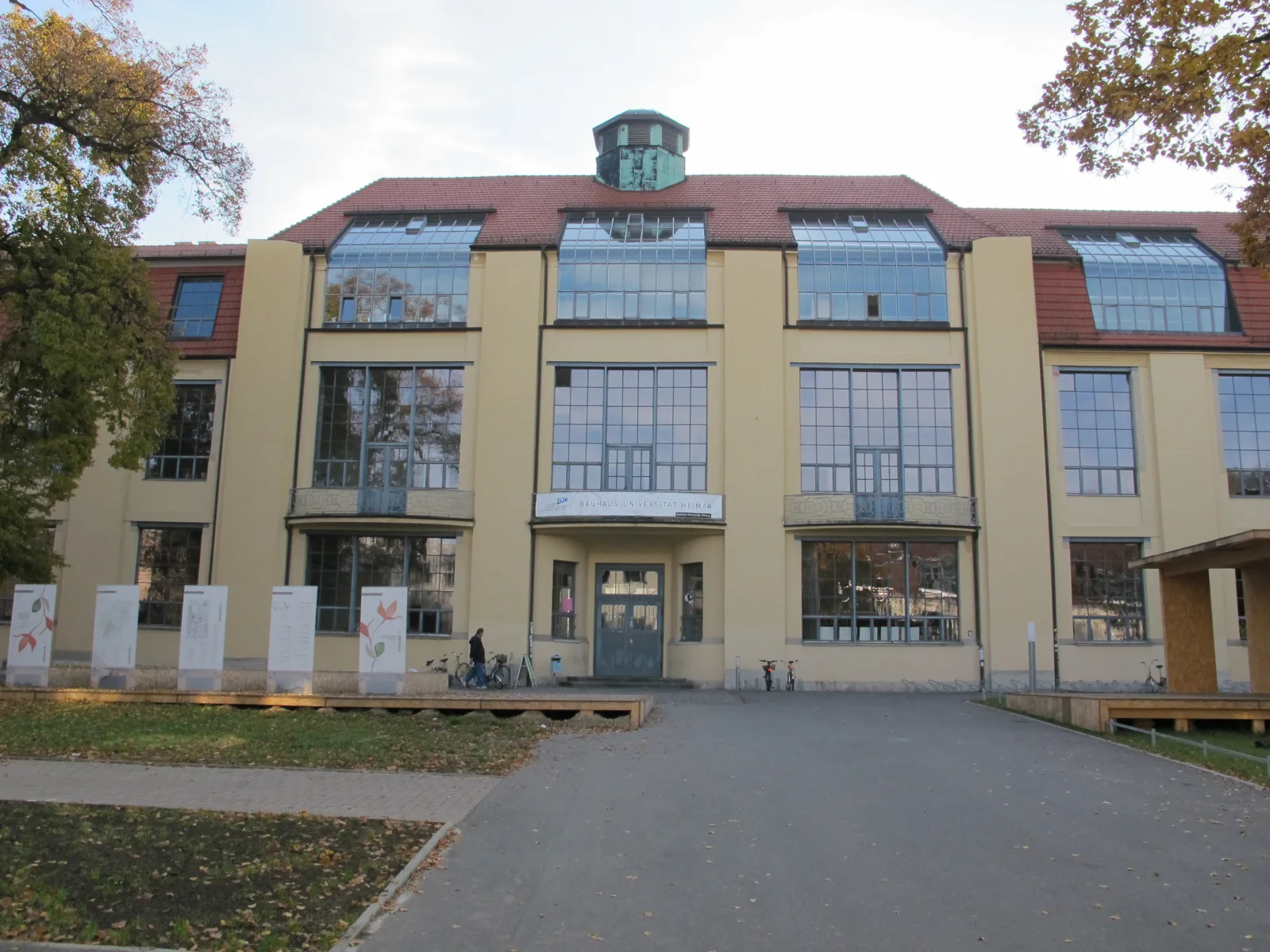
The point most interesting to those who want to see Bauhaus in the urban space is the main building of the Bauhaus University. There are around 4,000 students enrolled today, so this is not a frozen museum building, but a living institution. For architecture lovers, the most frequently mentioned detail is the interior staircase, in the building designed by Henry van de Velde. Before you go, it is worth checking the access conditions for the day, because university buildings may have restricted areas or variable opening arrangements.
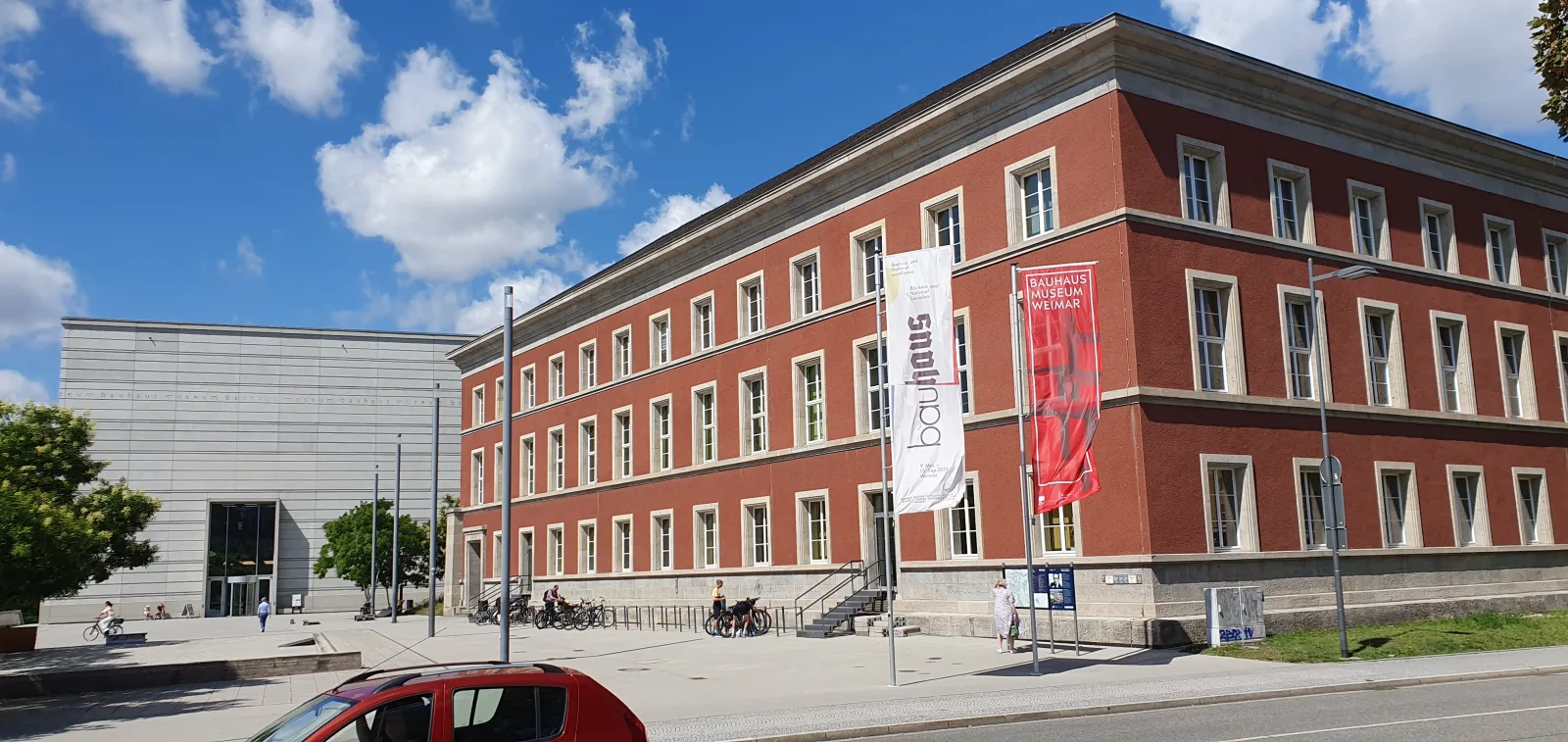
The Bauhaus Museum, opened in 2019 in Weimarhallenpark, is the most straightforward visit for those who want historical context without relying too much on prior knowledge. If you are curious about the movement’s origins but do not plan to go into great depth, it is the most efficient place to start. Haus am Horn, on the eastern edge of the park, is more appealing to those who want to see Bauhaus applied to the idea of housing: it is a model house from 1923, conceived according to the movement’s principles. From the outside, it may seem understated; inside, the concept becomes clearer.
If time is limited, I would prioritize the museum and the university building. Haus am Horn fits better into the itinerary of those who already know they want to give the theme real attention. This choice is especially worthwhile for travelers who see Weimar beyond its literary associations and want to leave with a concrete sense of how the city participates in the birth of European modernity.
Day Trips Outside the Center: Schloss Belvedere, Historic Cemetery and Buchenwald
If you want to get a little away from the historic core, Schloss Belvedere is the simplest and lightest detour. It is outside the center, but close enough to fit into the day without disrupting it. Access is usually by bus line 1, in about 15 minutes from the central area. The important detail is this: not every bus on line 1 goes to the palace. Before boarding, check the final destination on the display or the updated timetable. The visit makes more sense for those who want a break between historic interiors and prefer a complex with gardens and an orangery to yet another museum in the center.
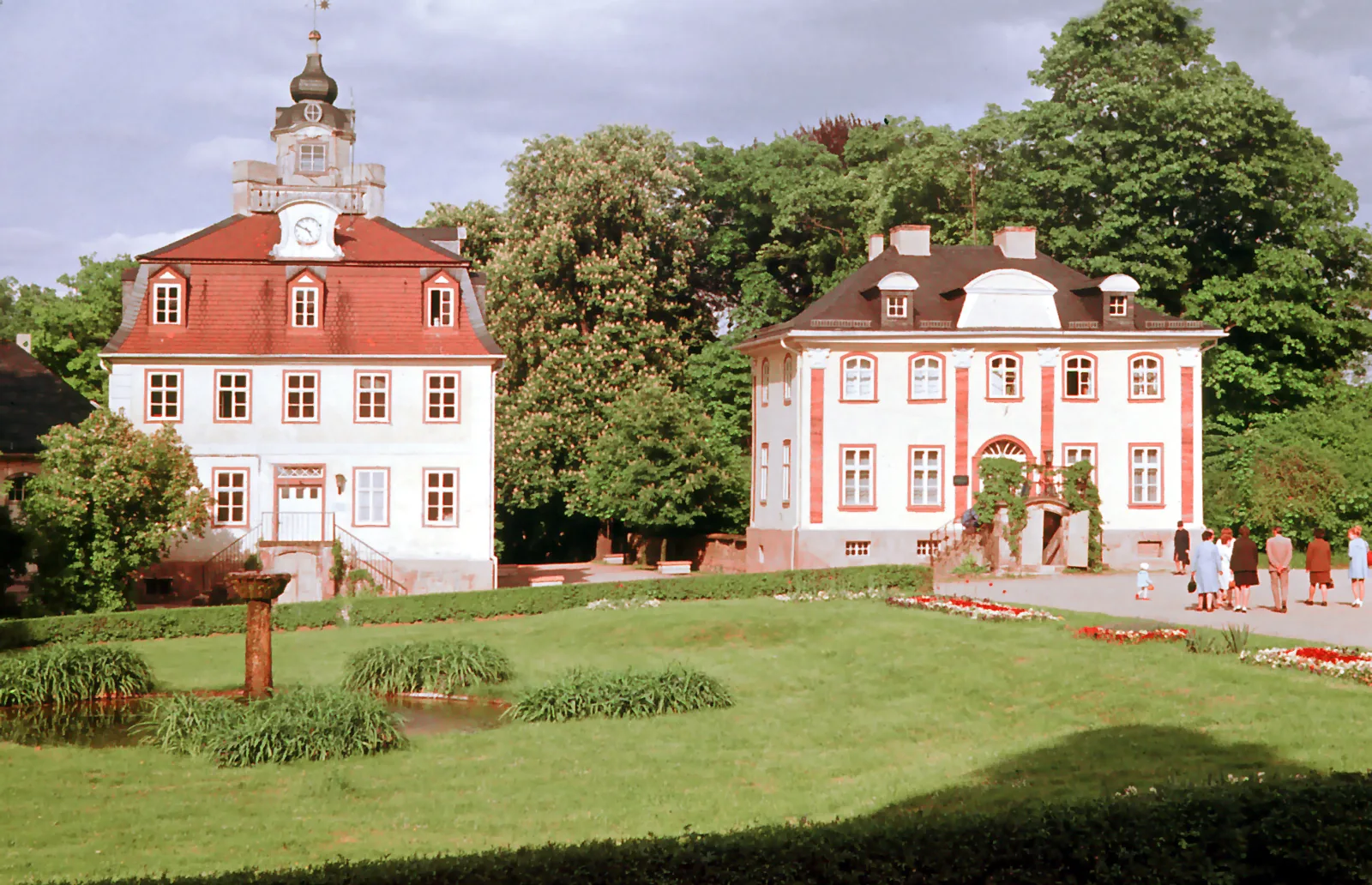
In another direction, the historic cemetery often gets overlooked by those on a day trip, but it deserves attention if you have a few extra hours. There you’ll find the ducal crypt, with the coffins of Goethe and Schiller among other noble names, and the Russian Orthodox chapel, an unexpected element in Weimar. It was built at the request of Grand Duchess Maria of Saxe-Weimar-Eisenach, daughter of Tsar Paul of Russia. It is a quieter-paced visit, best suited for those interested in the city’s courtly and memorial layer.
The most important trip outside the center is to the Buchenwald Memorial, on the Ettersberg, on the outskirts of Weimar. Line 6 connects it with the main station and the city in about 20 minutes. Here the criterion is not “fit it in if there’s time left.” Buchenwald was one of the largest concentration camps on German soil: more than 250,000 people were imprisoned there, and 56,000 died. If you decide to go, it is worth setting aside both mental time and visit time, reading the information on site calmly, and avoiding treating the memorial as a quick stop between attractions. It is also wise to confirm opening hours and access conditions on the day before you go.
Where to stay in Weimar
If the idea is to do everything on foot, stay in the historic center or on its immediate edge. That is where location really works in your favor, because you cut down on transfers, come and go from the hotel without relying on buses, and still make better use of the city early in the morning and at the end of the day. For a more classic stay, the Hotel Elephant is in the old town and carries the weight of being a historic hotel in operation since 1696. The Grand Hotel Russischer Hof appeals to those who like that same kind of traditional atmosphere, with a building and name tied to local history. In both cases, it makes sense to check the current room profile and rates in advance, because this type of hotel tends to vary quite a bit depending on the date.
If you prefer to stay close to the center, but not necessarily in the busiest core, the Dorint Am Goethepark is a practical choice because of its position between the historic center and the park. It works well for those who want a comfortable base without giving up the ability to do almost everything on foot. The Art Hotel Weimar goes in another direction: it is in a quiet residential area, just a few minutes’ walk from the center, and usually appeals more to those who value peace and rooms with their own personality than to those who want to step out of the hotel right into the bustle.
For a smaller and more informal stay, the Grande Albergo Giancarlo is in the historic center and has a more intimate scale. It is the kind of hotel that usually makes more sense for couples or for those who prefer a place that feels less like a chain and more distinctive. If you are undecided between these options, the choice in Weimar depends less on the neighborhood and more on the style of accommodation: historic and traditional, discreet and well located, or smaller and more personal. Before booking, check whether the room you choose is in the main building, which services are available on your date, and the cancellation conditions.
Combining Weimar with Erfurt in the same itinerary
It makes sense to pair Weimar and Erfurt in the same itinerary because the train connection between the two is very short: the trip takes about 12 minutes and, in general, there are departures every 15 minutes. That changes the logic of the trip. Instead of treating Weimar as an isolated base, many people plan their days in Thuringia with the two cities as a single set, choosing where to stay and arranging the visits according to the pace they want for each day.
Erfurt works well as an extension for a simple reason: it adds contrast without requiring a heavy commute. Weimar usually works better at a more attentive pace, focused on the city’s historic interiors, museums, and intellectual layers. Erfurt functions as a natural complement for those who want to broaden their itinerary in the region without wasting time in transit. If you have two days, the combination is particularly efficient. If you only have one day, it is still possible to consider splitting it, but that only makes sense if the idea is to make a selective visit, without trying to “cover” everything.
In practice, this pair works best when you decide in advance which city will be the main focus. If Weimar is the priority, use Erfurt as a half-day or as a continuation at the end of the day. If the plan is to get to know Thuringia more broadly, it is worth dividing one city per day and avoiding a rushed day trip. Since train frequency and fares can change, check the updated schedules and the most convenient ticket for your date before planning your itinerary.
Frequently asked questions
What is the best way to get to Weimar?
The easiest way is to take the train via Erfurt. The route between Erfurt and Weimar is short and frequent, and Weimar’s central station is about 1.5 km from the historic center.
How many days are enough to visit Weimar?
Two days usually work well to see the historic center, the library, and some museums at a more relaxed pace. With one day, it is better to prioritize the center and choose only a few indoor visits.
Which places in Weimar’s historic center are most worth visiting?
Frauenplan, Schillerstraße, the Goethe-Schiller Monument, the Market Square, and Weimar Palace form the main circuit. This stretch is best explored on foot.
Do you need to book the Duchess Anna Amalia Library?
Yes, if the Rococo Hall is a priority, it is better to buy in advance. The visit is limited to 50 people per day and usually requires planning.
Is Buchenwald far from Weimar?
Not very: line 6 connects the central station and the center to the memorial in about 20 minutes. Even so, it is a visit that calls for time and attention, not just a quick stop.