Giverny: how to visit Monet’s village, what to see, and how to organize your trip
Giverny: see how to visit Monet’s village, what to see in the gardens and the house, and how to organize a trip without wasting time at the destination.
Where is Giverny and why did the village become famous
Giverny is in Normandy, in the Eure department, about 70 km from Paris. It is a small rural village, on a scale that you can cross without hurrying. This location helps explain why it works well as a day trip, but its fame did not come from geography.
Claude Monet moved to Giverny in 1883 and lived there until his death in 1926. It was during this period that the village entered the map of Impressionism: Monet worked there for decades, shaping his surroundings as part of his creative process. The place first became known for the painter’s house and gardens, then for the image that came to represent his world.
The relationship between Giverny and Monet is direct. The village became the setting for the artist’s daily life and, at the same time, the raw material for an important part of his work. Today, visitors find an address linked not only to Monet’s memory, but also to the way he thought about painting, light, and landscape in everyday life.
How to get to Giverny and when it’s worth going
By car, Giverny works well as a standalone stop: it is the most flexible option for those who want to control the pace and, if desired, include detours along the way. The route may follow toll roads or smaller country roads; the former tends to be more direct, while the latter is usually slower but more pleasant for those who like to stop along the way.
Without a car, the train + bus combination is the simplest solution. The train goes to Vernon and, from there, you take the bus that goes directly to Giverny. It’s an easy trip to fit into a day trip, as long as you check the day’s schedule in advance, since the logistics depend on the season and the available frequency.
There are also organized tours, useful for those who want to avoid connections and decide everything at once. They take care of the transportation, but usually leave less room to wander at a relaxed pace between the village, the gardens, and the rest of the visit. If the idea is autonomy, the car or the train with bus usually offer more control over the time at the destination.
The gardens and the house are open from March to November, so the visit needs to be planned within that period. Spring and early summer are when the blooms work most in Giverny’s favor, with full gardens and more intense colors. Outside of that, the place remains attractive, but with a different visual impression.
If you want less movement, avoid weekends and the months when the flowers are at their peak. On weekdays, early or closer to closing time, the flow tends to be lighter. For those who want to see the gardens at their best, it’s worth accepting more people in exchange for the fullest setting.
Editorial transparency: Some links on this page are affiliate links. We may earn a commission at no extra cost to you. This does not influence our recommendations.
Claude Monet’s House: what to expect from the visit
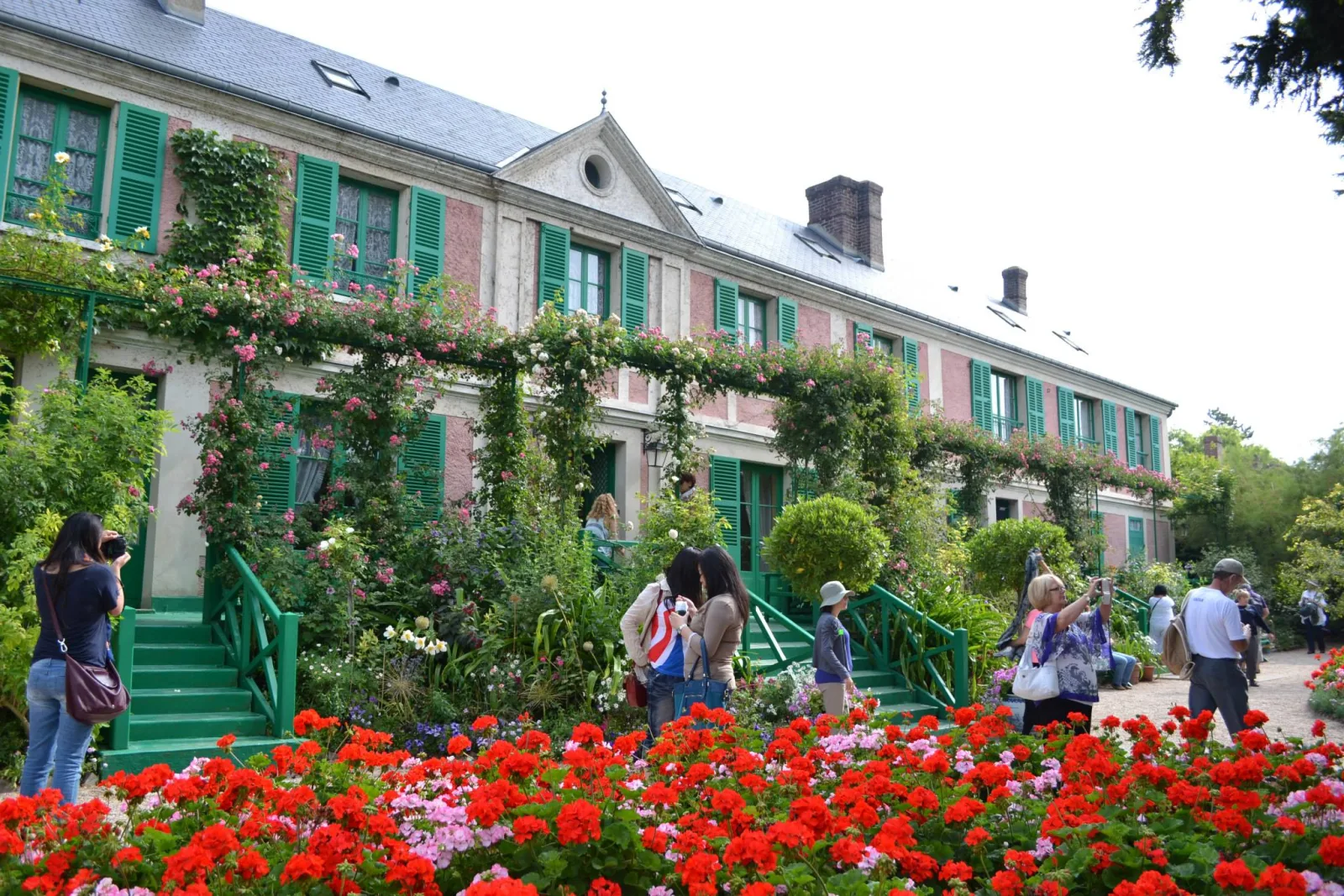
The visit begins at Claude Monet’s house, with the pink façade and green shutters that appear in the most well-known photos of Giverny. Inside, the rooms have been kept with an appearance very close to the time when the painter lived there, which gives the visit the character of an inhabited house, not a distant exhibition room set up from afar.
The yellow dining room stands out for its strong color and the furniture arranged in an intimate way, almost as if the table were still set. The kitchen, with blue tiles, also preserves this domestic atmosphere, with utensils and the large copper stove composing an accurate portrait of everyday life in the house.
Then come the studio and the upstairs bedrooms. There, the reading is more personal: paintings, writings, photographs, and the collection of Japanese prints help explain what Monet chose to keep close by. The whole was carefully reconstructed and preserved, based on what the house retained from his life, so the visit calls for attention to detail more than haste.
If you like to see the house without too many people, it is worth checking the official website for access and the flow of the day before going, because this changes according to the season. The indoor route is simple and straightforward, but the experience improves when you go in with time to observe the rooms one by one, rather than moving quickly just to take photos.
Monet's gardens in Giverny
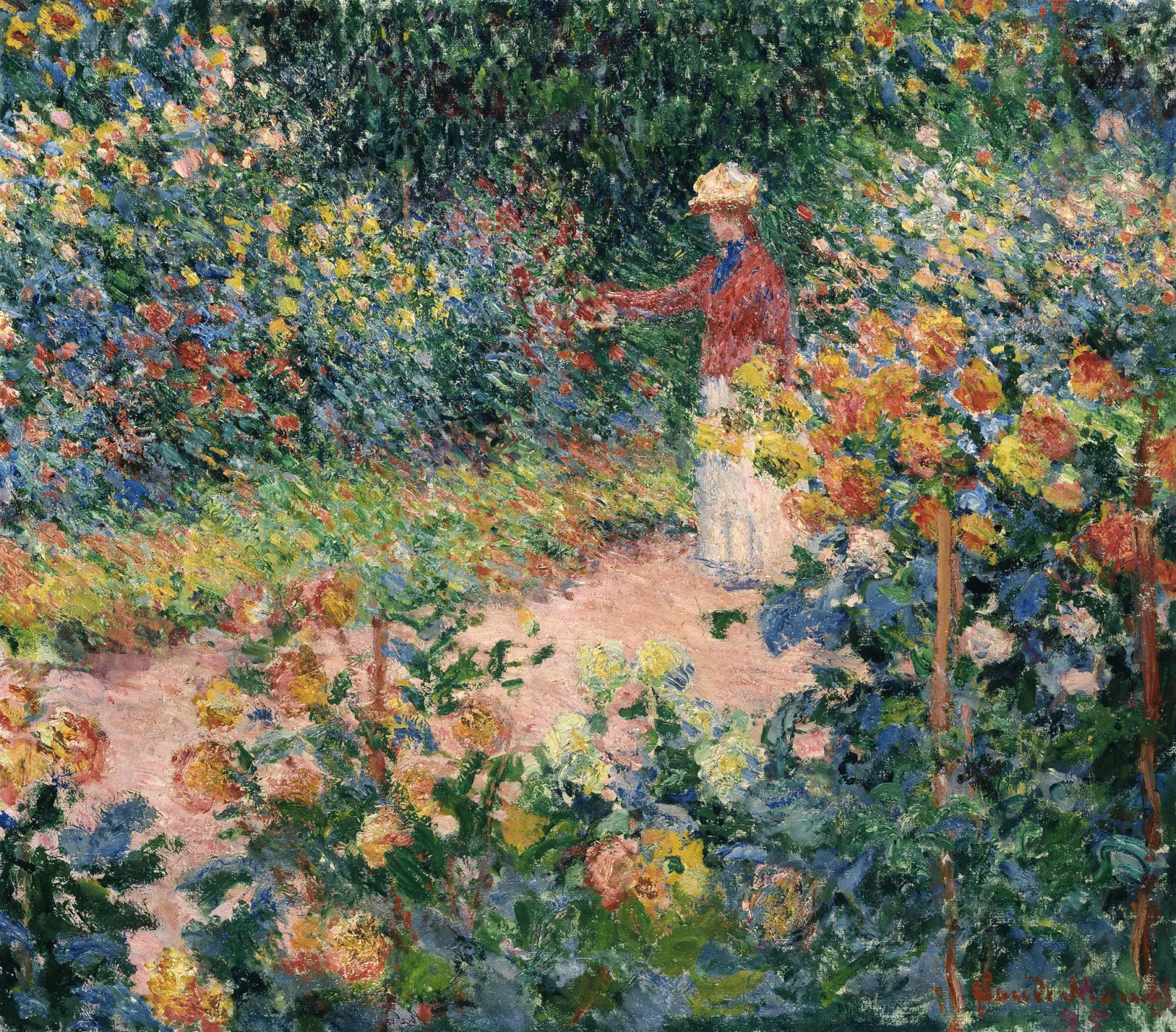
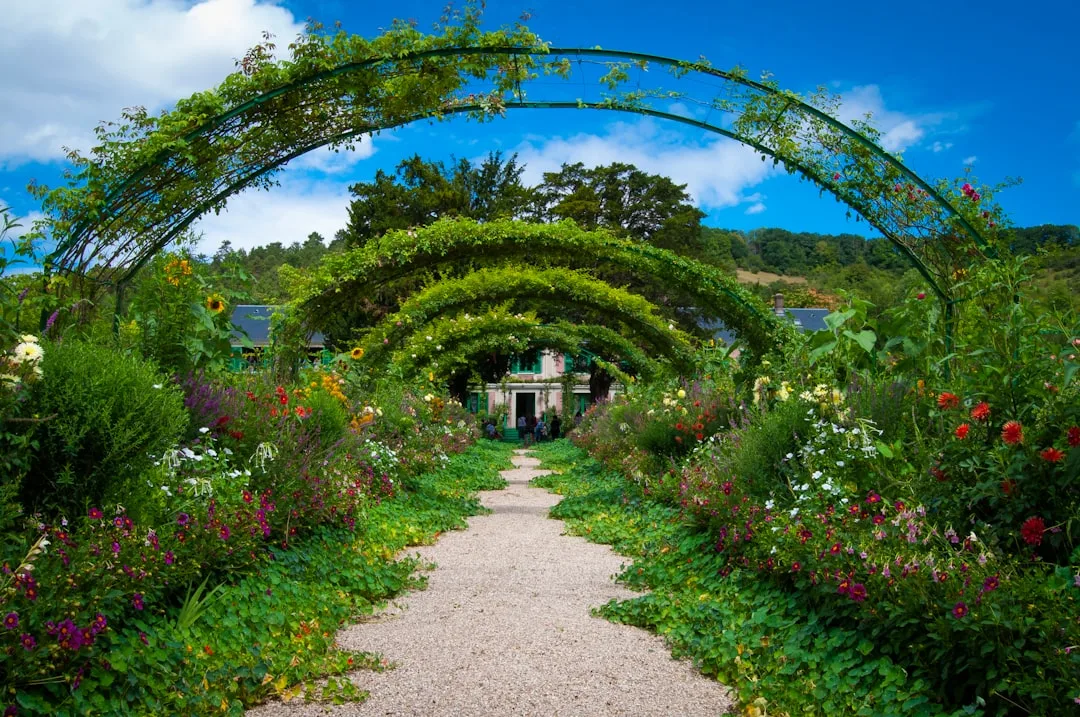
The garden area is divided into two ensembles with very different logics. The Clos Normand lies in front of the house, with flower beds arranged in a succession of colors, climbing plants, rose arches, fruit trees replaced by cherry trees and Japanese apricot trees, as well as flowers such as daffodils, tulips, irises, oriental poppies, and peonies. Monet conceived this garden like someone composing a painting: he worked on perspectives, patches of color, and the arrangement between plants with the same attention he gave to painting.
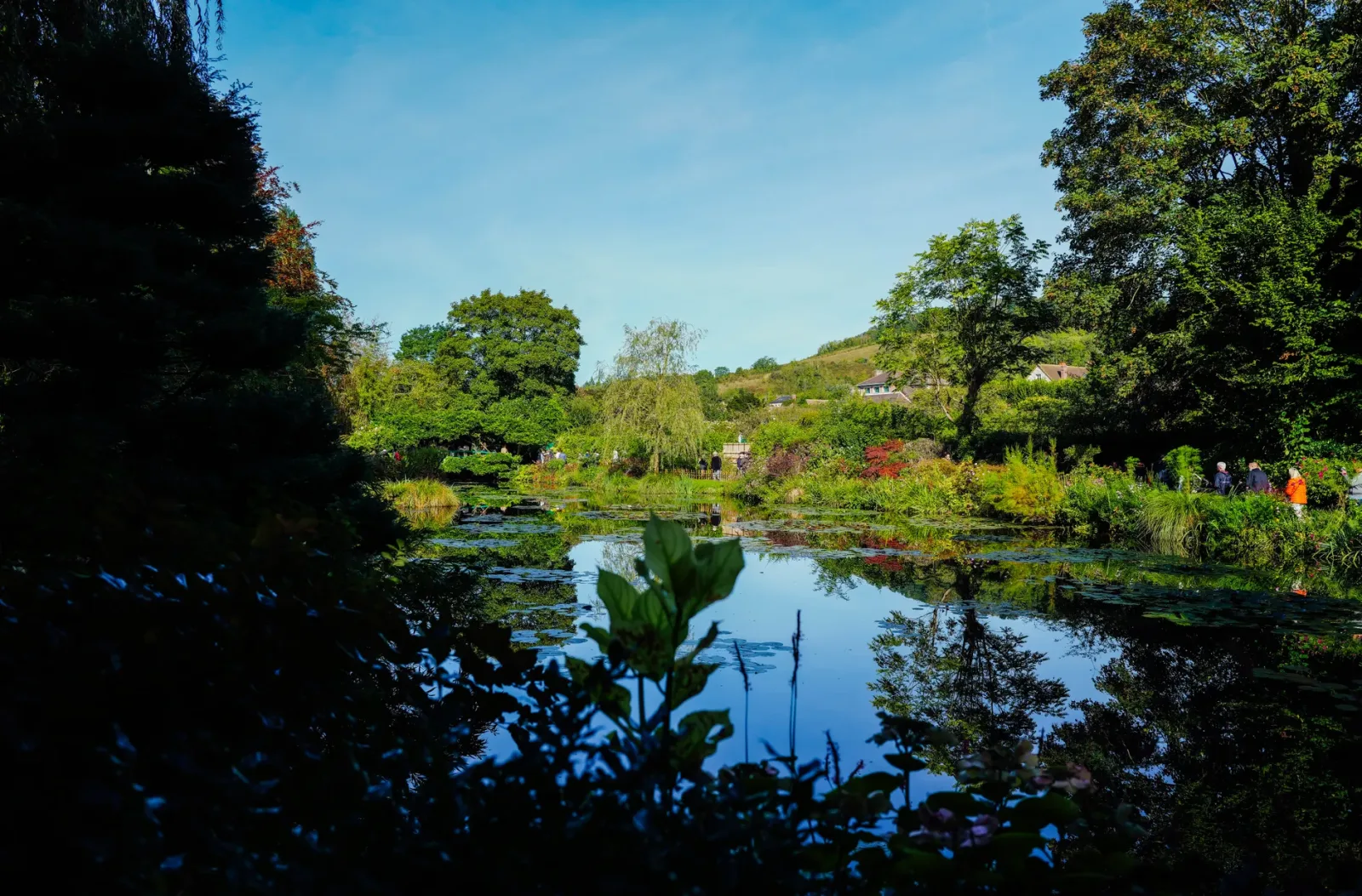
On the other side is the Water Garden, created when he diverted a small branch of the Epte to form the aquatic area he wanted to paint. There you find the Japanese bridge, painted green, and the pond with water lilies, surrounded by bamboo, ginkgo biloba, maples, Japanese peonies, lilies, and weeping willows. The effect was designed to capture reflections, shadows, and the passage of light over the water, the kind of scene that became the basis for the artist's best-known paintings.
The movement between the two parts clearly shows Monet's intention: one dry garden and one water garden, each with its own rhythm, but conceived together. The visitor sees a space that was not left to chance; it was shaped, cared for, and adjusted over years to serve as a subject for painting.
Today, anyone who walks through these gardens finds a landscape design that carries the painter's signature in every section. The most interesting reading is not to look for “the” famous spot, but rather to notice how the elements were placed to change the way one looks: first the mass of flowers, then the bridge, then the surface of the water, and finally the reflection that holds the scene in time.
The center of Giverny beyond Monet’s house
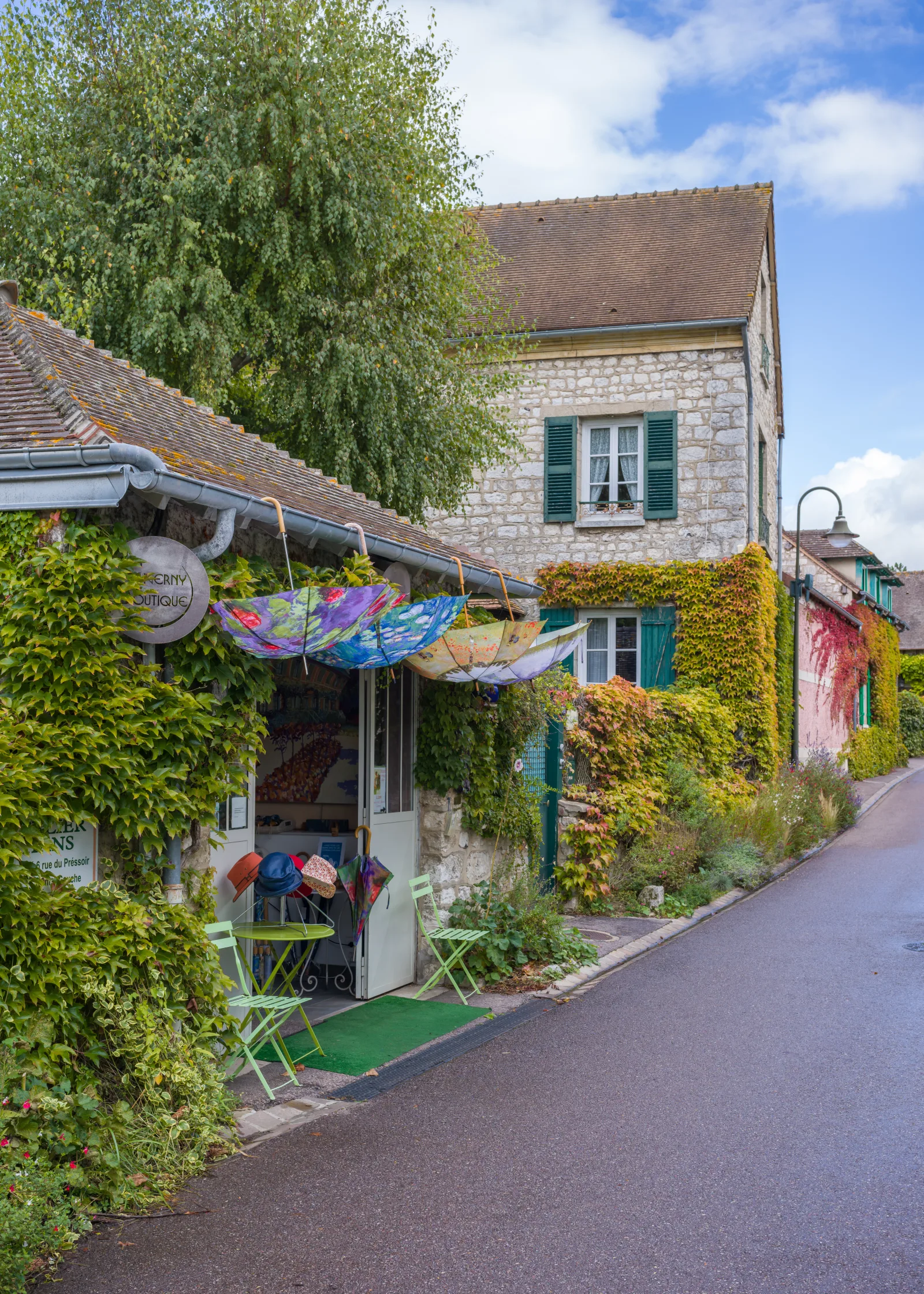
Giverny has the feel of a small village even when it is full of visitors. The center can be explored on foot effortlessly, with narrow streets, short alleyways, and low houses surrounded by well-kept gardens. The scale is intimate: little traffic, simple façades, and a pace that makes sense for anyone who wants to walk slowly from one stop to the next.
It is in this heart of the village that you will find the art galleries, studios, and little shops connected to Monet’s world. Don’t expect a large commercial area. The appeal lies more in the sequence of discreet doorways, small shop windows, and addresses that make the most of passing foot traffic. On busy days, it is worth going in without rushing and choosing what truly catches your eye, because the area is compact.
The streets also help explain why Giverny keeps this rural atmosphere. There are gardens in front of the houses, low walls, stretches that feel almost residential, and a constant sense of a lived-in village rather than a set built for show. If you like walking while looking at details, this part of the visit offers more than it seems at first glance.
After the main visit, set aside some time to wander without a fixed destination. It is in the center that the village shows its most everyday side, with simple façades, small galleries, and shops centered on Monet’s memory without turning the place into something grander than its size.
The Musée des Impressionnismes and what it adds to the visit
The Musée des Impressionnismes broadens the visit because it places Giverny in the right context: that of the formation and circulation of Impressionism, and of the role the village played when French and American artists began gathering there. Instead of focusing only on Monet, the museum shows how the place functioned as a small artists’ colony.
The rooms display works by Maurice Denis, Maximilien Luce, Wendel, as well as a work by Blanche Hoschedé Monet, along with exhibitions focused on the Impressionist period. This selection helps one understand the movement beyond the most famous paintings, with attention to the artistic environment that formed in Giverny around the painter.
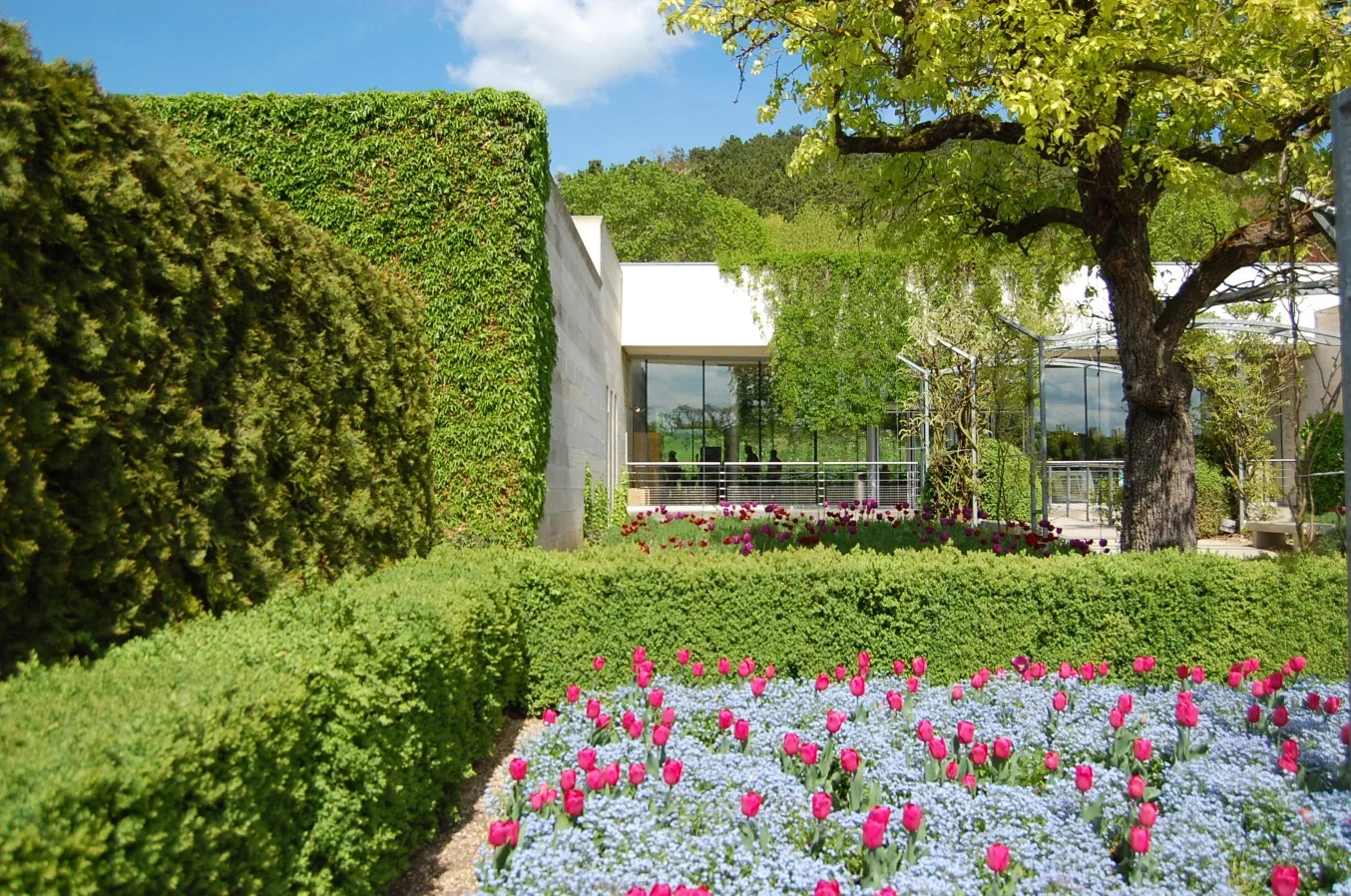
The building is contemporary, with large windows that let the light flow through the interior, and that makes sense for the theme it addresses. Outside, the gardens designed by Mark Rudkin become part of the experience, not an appendix: the route between the building and the outdoor area fits well with the museum’s reading, which links art, landscape, and the place’s lasting presence.
Those with little time may choose Monet’s house and gardens without including the museum. But if the idea is to understand why Giverny became an important address for Impressionism, the Musée des Impressionnismes fills that gap without repeating what is already seen in the rest of the visit.
Where to eat in Giverny
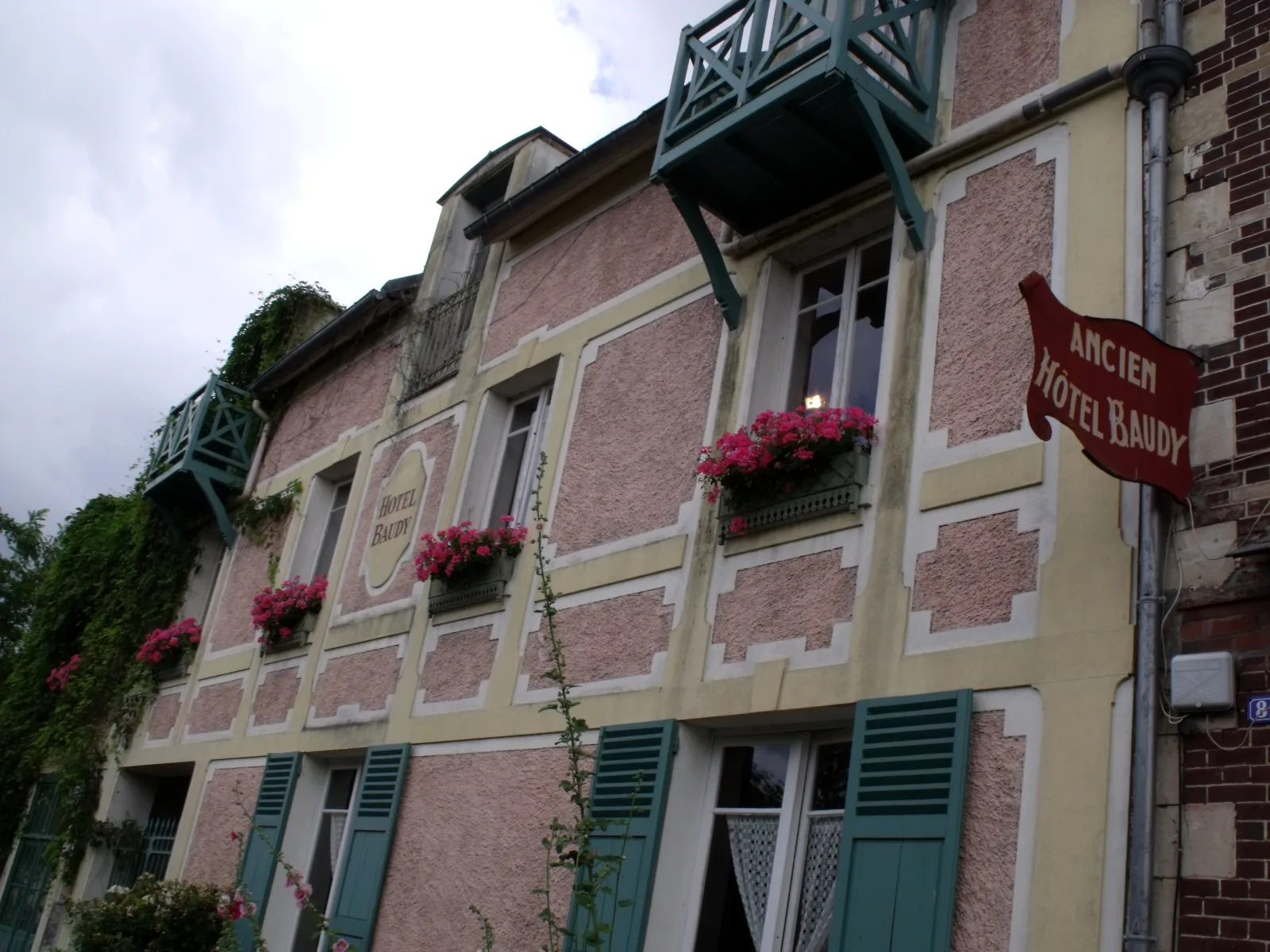
Baudy Restaurant is the name most closely associated with dining in Giverny. It is located at 81 Rue Claude Monet, 27620 Giverny, at the address of the former inn where Impressionist artists gathered in search of inspiration and conversation. Today, the place operates as a restaurant and retains this historical association, which is part of the appeal of dining there.
Besides it, the village has a few cafés and small spots for a break between one walk and another, but the selection is limited and changes with the season. If you plan to have lunch in Giverny, it is worth confirming in advance whether the place you chose will be open on the day of your visit, because operations can vary quite a bit outside the busiest periods.
Those who want to make the meal part of the outing usually choose between eating in the village itself or planning a stop in Vernon, where the options tend to be broader. In Giverny, the decision is usually less about variety and more about fitting the schedule, since there are only a few places and activity is concentrated in the same spots.
Where to stay in Giverny and Vernon
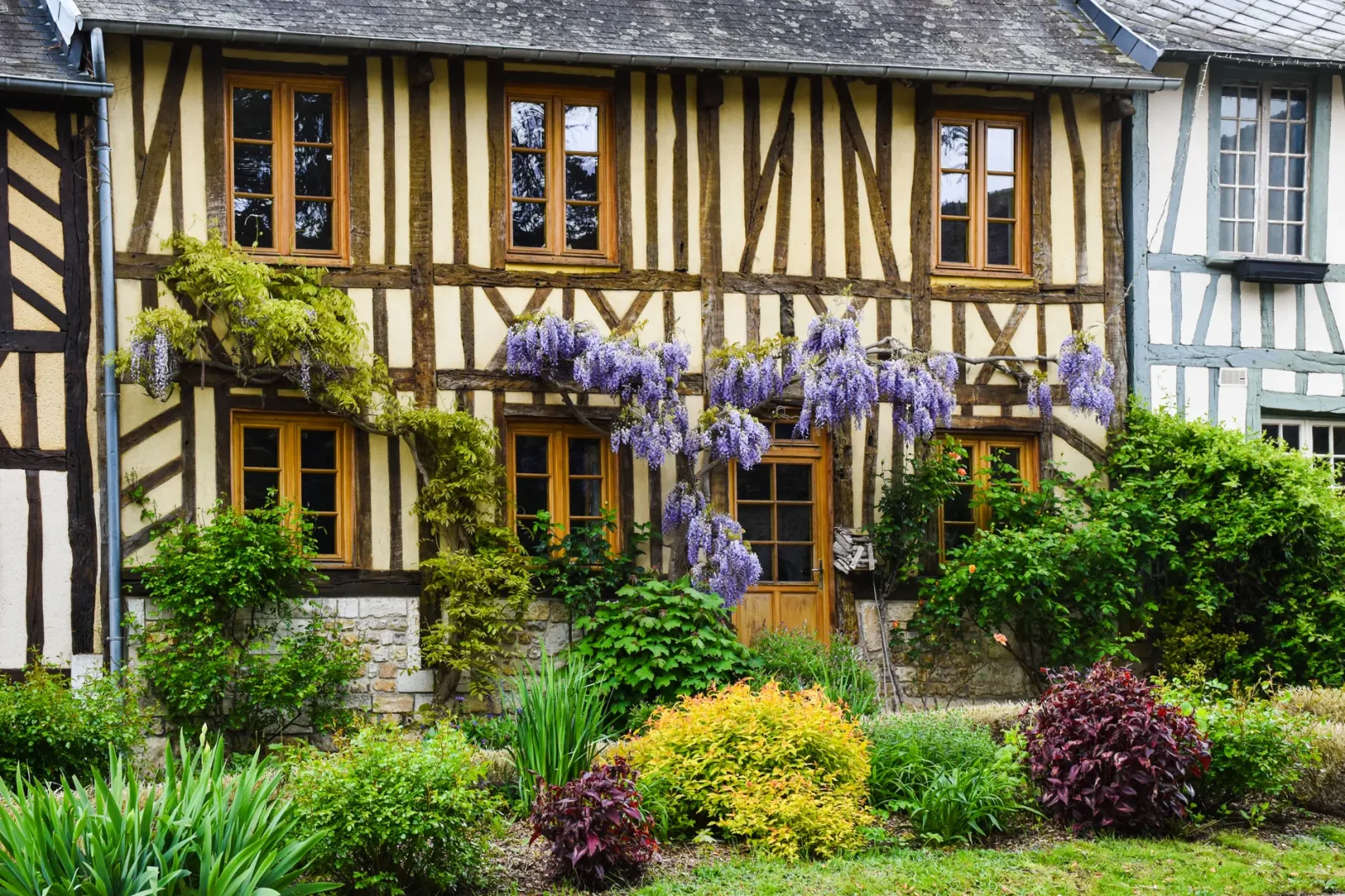
Accommodation options in Giverny are limited and concentrated in just a few properties, which tend to fill up quickly in spring and summer. The most typical choices are family-run B&Bs in the countryside, with well-kept gardens and small-scale management, offering more of a peaceful stay than a conventional hotel.
If the idea is to sleep in the village itself, it is worth booking in advance and confirming what the place actually offers during your travel period, because availability changes a lot throughout the season. In Giverny, the choice usually depends more on location and advance booking than on variety.
Vernon is the most practical alternative for expanding overnight options. The town is about 6 km from Giverny and usually works well for those who want more hotel choices while still visiting the village the next day without complicating logistics.
Between staying in Giverny or in Vernon, the decision comes down to the pace you want for the trip: staying in the village favors the rural atmosphere and a more direct start to the day; Vernon gives you more room to choose.
Frequently asked questions
Where is Giverny?
Giverny is in Normandy, in the department of Eure, about 70 km from Paris. It is a small country village, easy to explore on foot.
What to see in Giverny besides Monet's house?
Besides the house, the highlights are Monet's gardens, divided between the Clos Normand and the Water Garden. The Musée des Impressionnismes also adds context to the visit.
What is the best time to visit Giverny?
The house and gardens are open from March to November. Spring and early summer usually offer the strongest bloom, with fuller and more colorful gardens.
How to get to Giverny without a car?
The simplest way is to take a train to Vernon and, from there, catch the bus to Giverny. There are also organized tours for those who want to avoid connections.
Is it worth staying overnight in Giverny or Vernon?
Staying overnight in Giverny favors a quieter, more rural experience, but the options are limited. Vernon is usually the most practical choice for finding more accommodation.