Dinan: complete guide to visiting the medieval city of Brittany
Discover what to see in Dinan, how to get there, how long to stay, and where to walk through the historic center, ramparts, and Rue du Jerzual.
Where Dinan is and what to expect from the city
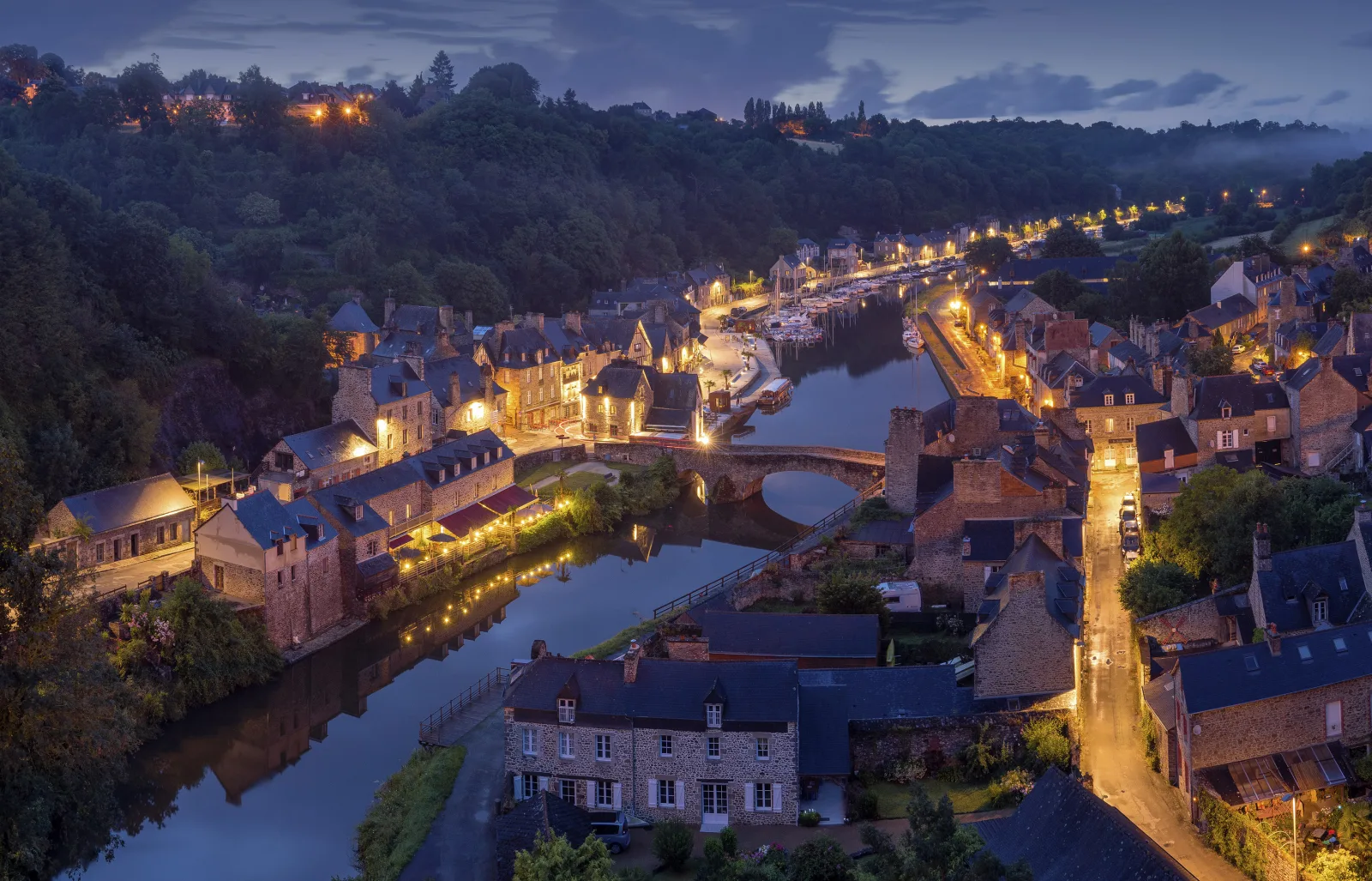
Dinan is in Brittany, in the Côtes-d’Armor department, and the first impression is of a city that has preserved its medieval layout well. The historic center is walled, with monumental gates, narrow stone streets, and a collection of half-timbered houses that appears in several sections of the old urban fabric.
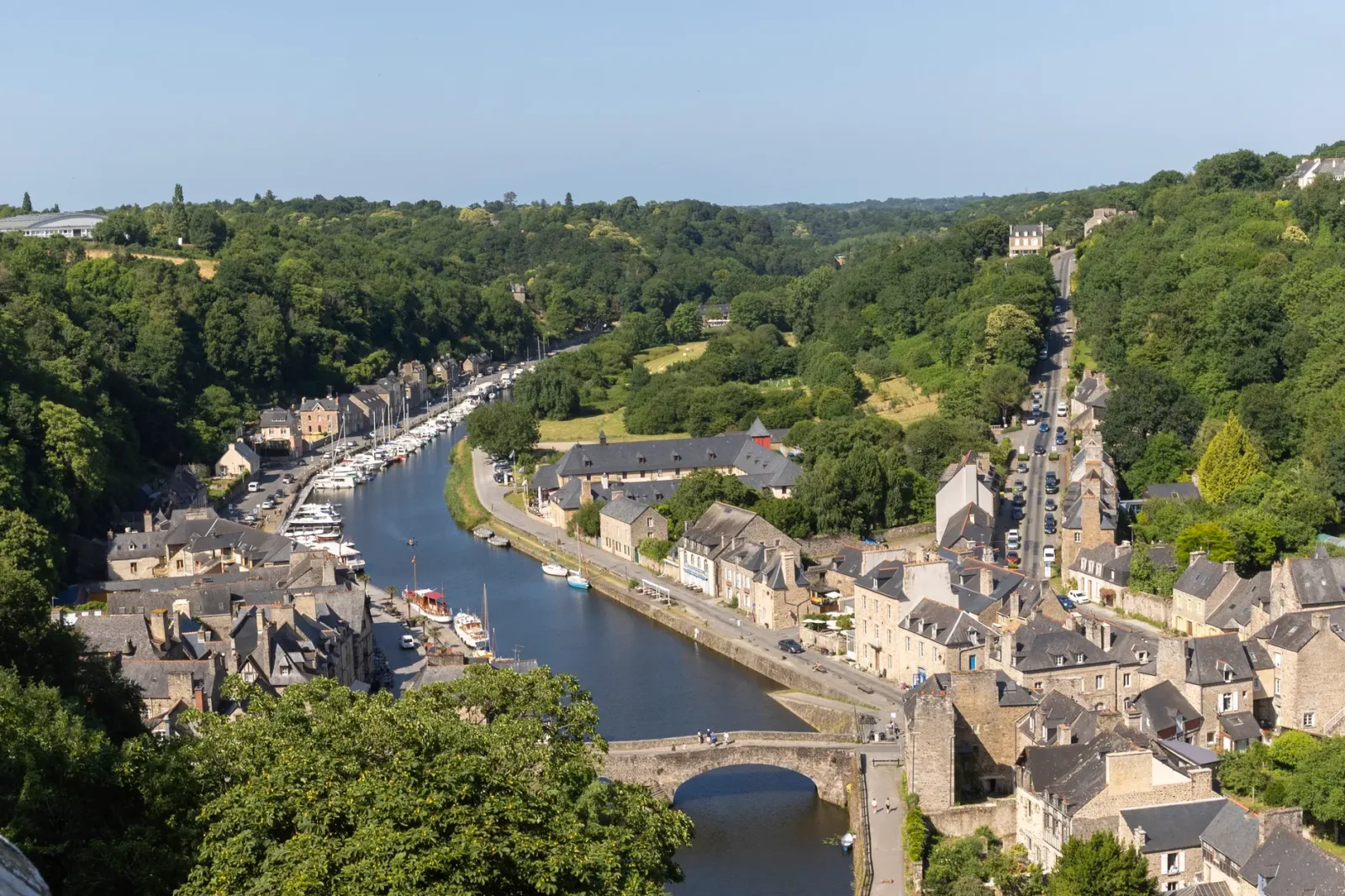
The city is organized around its relationship with the Rance River. On one side, the upper part of the city concentrates the houses and the medieval street plan; on the other, the descent toward the valley gives the clearest sense of how Dinan grew from the protection of the walls and the port.
For first-time visitors, what defines the visit is not the number of individual attractions, but the way everything fits together: the compact layout, the old facades, the enclosed views of some streets, and the gradual transition between the elevated center and the riverside area. It is a destination for walking unhurriedly and paying attention to the urban whole, not just to a specific point.
How to get to Dinan by train, car, or boat
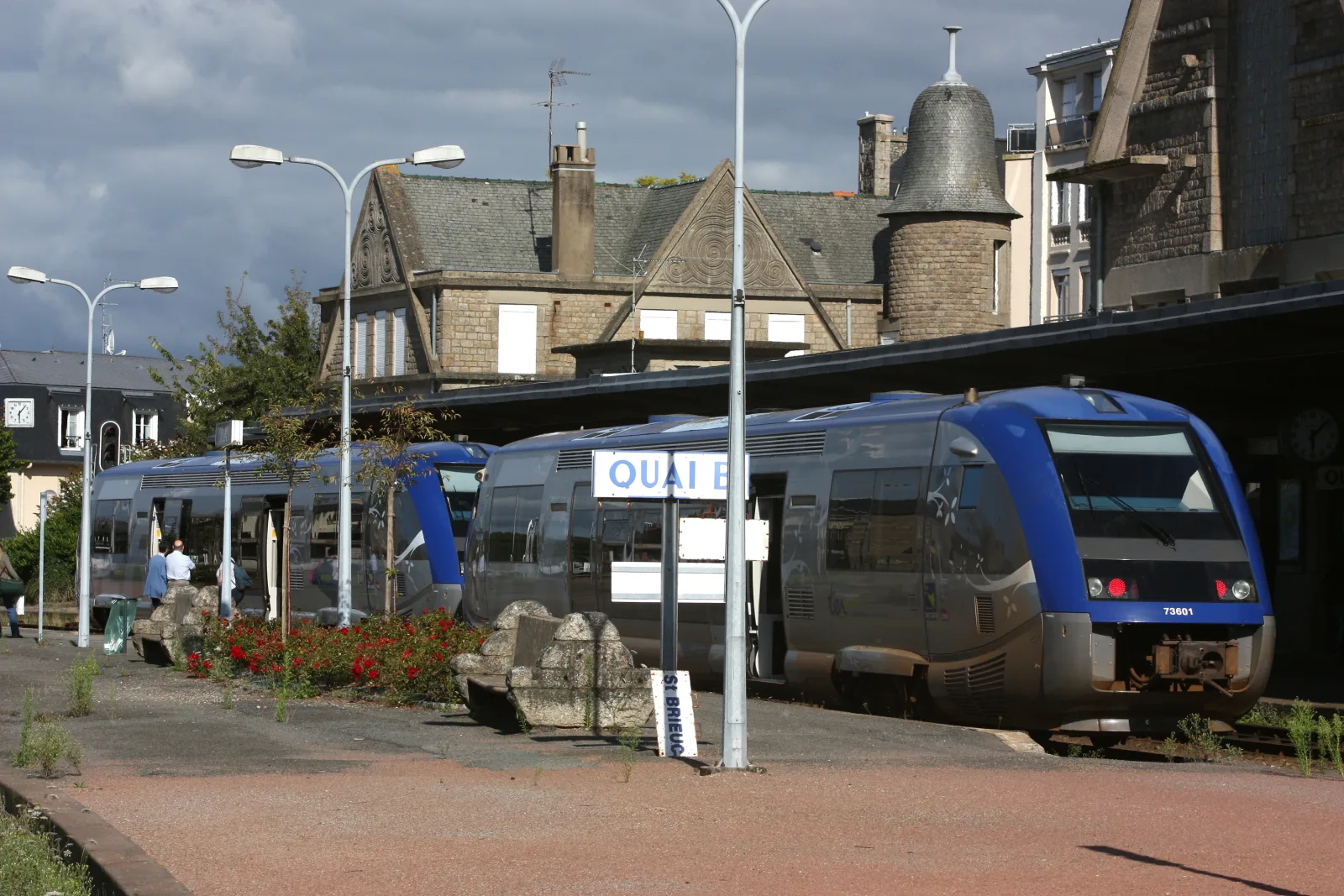
Dinan has a railway station with services from Rennes, as well as connections with Saint-Brieuc and Dol-de-Bretagne. For those putting together an itinerary through Brittany, this makes it easy to combine the city with other places in the region without relying on a car.
By car, access is the most flexible for those who want to stop in smaller villages along the way or head straight to the historic center. Dinan also works well in combination with Saint-Malo, which is about an hour away, making it easier to include both cities in the same route.
There is also arrival by boat via the port, a form of access that makes sense for those already sailing along the Rance river or the nearby coast. If the idea is to use this type of transport, it is worth confirming the operation and service conditions in advance, as these may vary.
Editorial transparency: Some links on this page are affiliate links. We may earn a commission at no extra cost to you. This does not influence our recommendations.
How much time to set aside for the visit
A full day is the minimum reasonable amount of time to get to know Dinan without rushing. With less than that, the visit tends to turn into a quick stopover, and the town loses precisely what makes it interesting: the walking pace, the pauses, and the sequence of streets and changes in elevation.
With two days, the experience improves considerably. You can spread out the visit more calmly, stop to eat without cramming everything in, and return to wander through the center at quieter times. Three days make sense for those who want to walk slowly, sit for a while, and leave room to revisit stretches that are worth seeing in different light or with less traffic.
If the trip fits into a weekend, the ideal is to spend one night and use the following day without rushing. If there is the possibility to stay longer, the town rewards that extra time more for its atmosphere than for a long list of sights.
What to see in Dinan: ramparts, castle, and historic center
The ramparts of Dinan date back to the 13th century and still help to read the city as a medieval fortress. There are 14 towers and four monumental gates, a set that neatly frames the old town and conveys the defensive importance the city once had. Walking along this perimeter helps you understand why the historic center became so concentrated and compact.
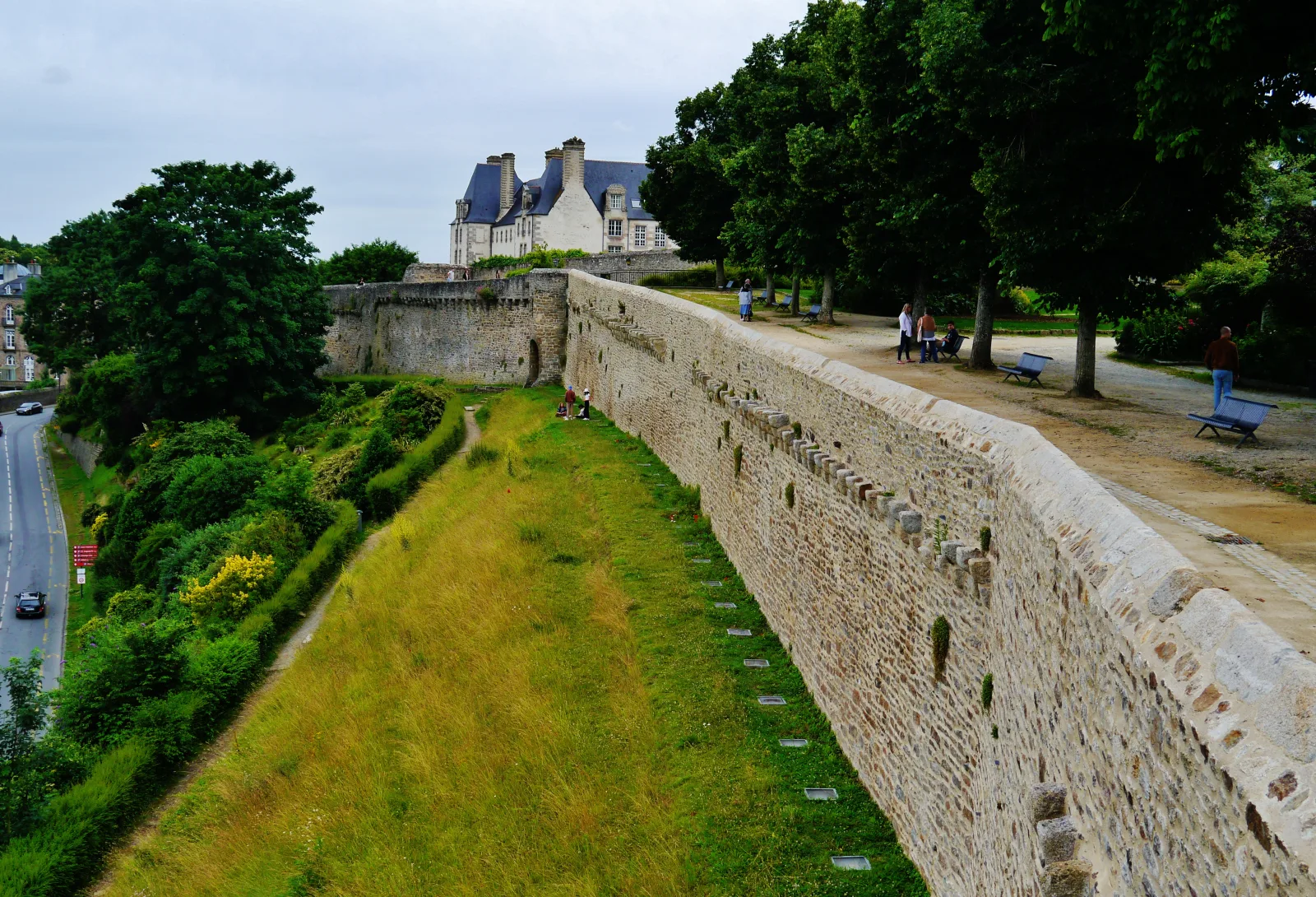
Above the row of houses, the 14th-century fortress marks another moment in the city’s history. Nearby, the 15th-century Tour de l’Horloge serves as a visual and historical reference within the urban fabric. It is also worth paying attention to the half-timbered houses, scattered between the 15th and 17th centuries: they appear in several parts of the center and help shape the older reading of Dinan without requiring you to fall into the temptation of looking for “one single spot” to see everything.
Among the religious buildings, the Basilique Saint-Sauveur and Saint-Malo church are worth attention for their historical weight and for the difference in periods and styles they embody. The Cordeliers convent completes this picture and reinforces the city’s medieval profile. This is not an itinerary to do in a rush; the interest lies in comparing facades, volumes, and construction dates as you cross the center.
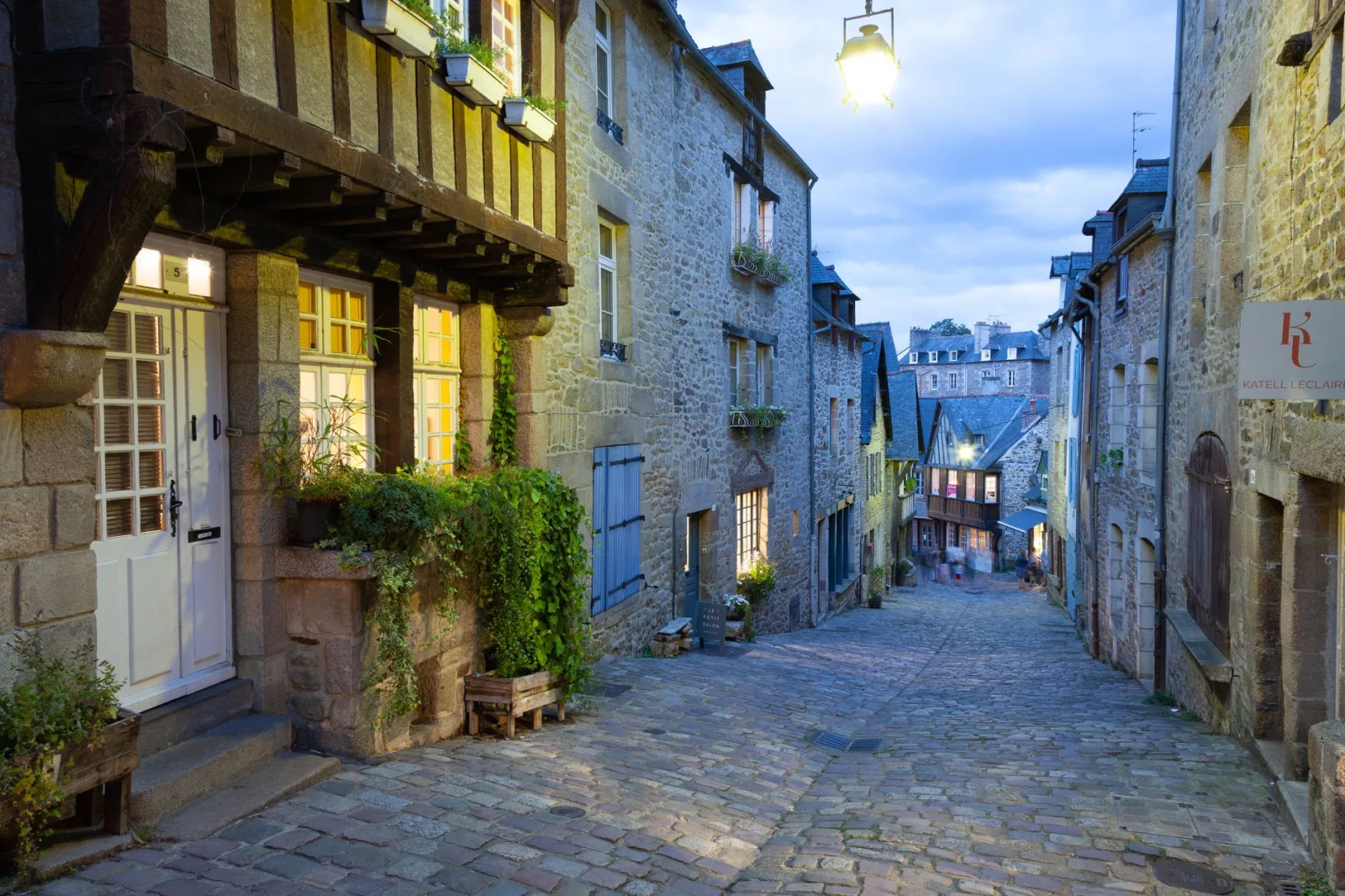
Rue du Jerzual connects the port to the city and concentrates one of the most characteristic walks in Dinan. It is a historic downhill street that stitches the two parts of the urban ensemble together and makes the route more rewarding than a simple descent: you feel the transition between the lower area and the old core, with the row of houses changing scale along the way.
How to organize the walking tour through the center and Rue du Jerzual
Start the walk through the old center unhurriedly and with attention to changes in elevation. The narrow streets offer the best reading of Dinan’s urban fabric: every curve closes the perspective, the old houses draw closer, and the route helps you understand how the city was shaped to be explored on foot.
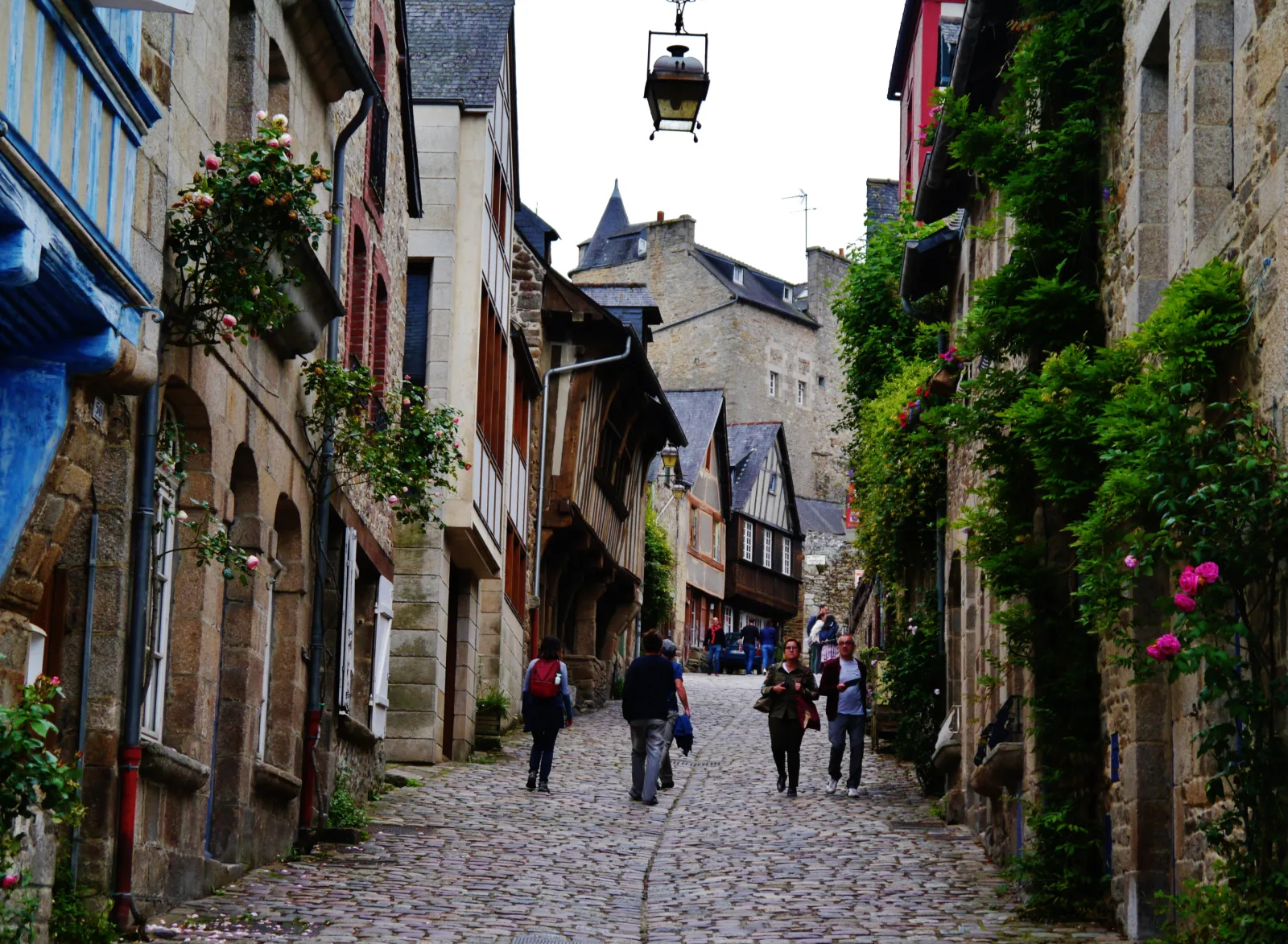
Rue du Jerzual calls for a more measured pace. It is steep, cobbled, and often requires short pauses along the way. There are benches along the descent, which makes a difference when you want to observe the street without turning the journey into a race. Pay attention to the façades and to the way the houses change as you go down, because this transition says a lot about the connection between the upper part and the harbor area.
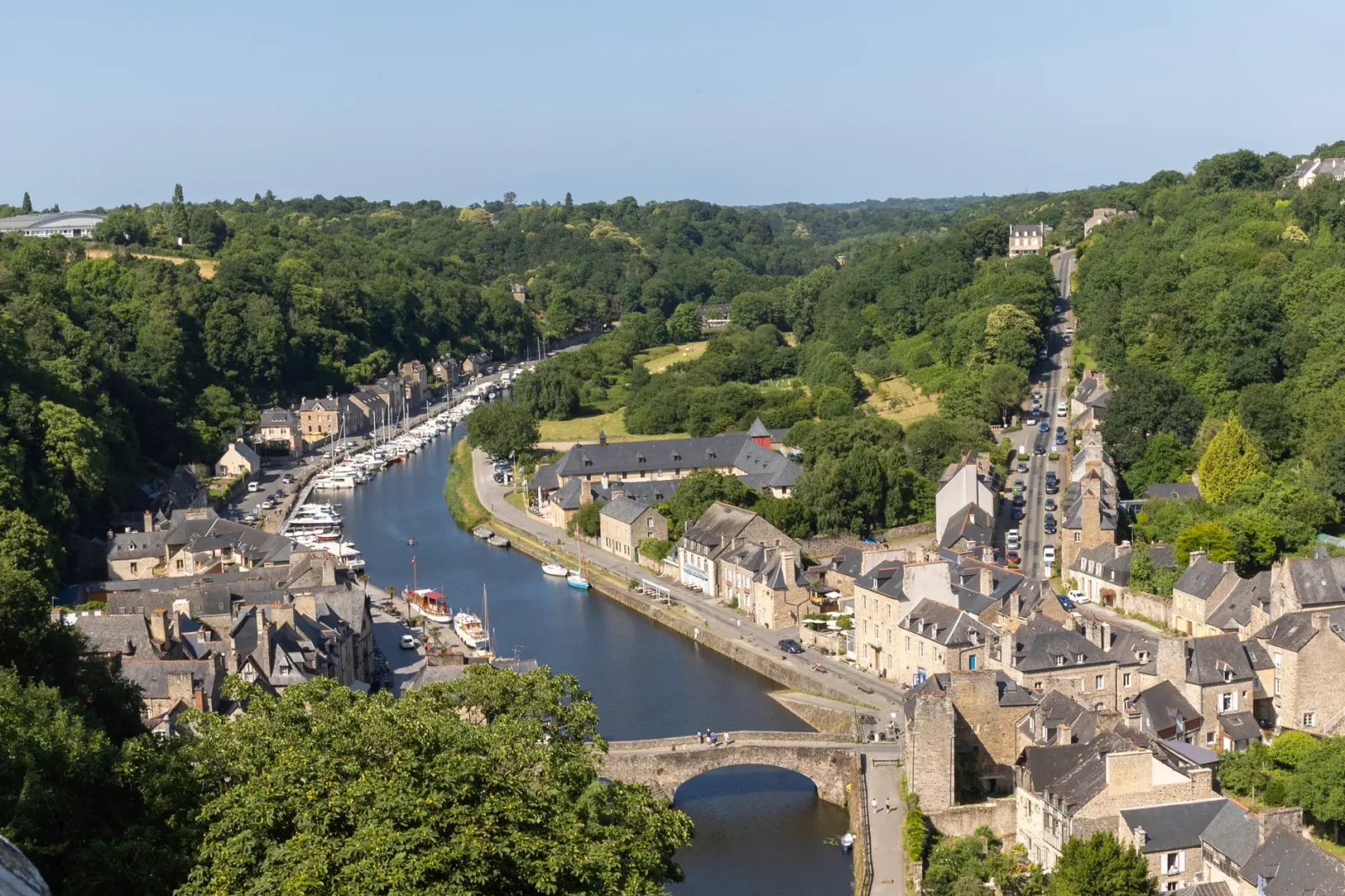
At the end of the street, access to the harbor nicely completes the route. The passage from the historic center to the banks of the Rance changes the scale of the walk: movement becomes more open, and the urban ensemble is seen from another angle, with the hillside and the valley entering the scene.
If you want to make the most of this walk, take your time on the descent to stop and climb back up without haste, rather than treating the street as a shortcut. It is the kind of stretch where the city’s design matters as much as the final destination.
Market, local food and where to stop for a meal
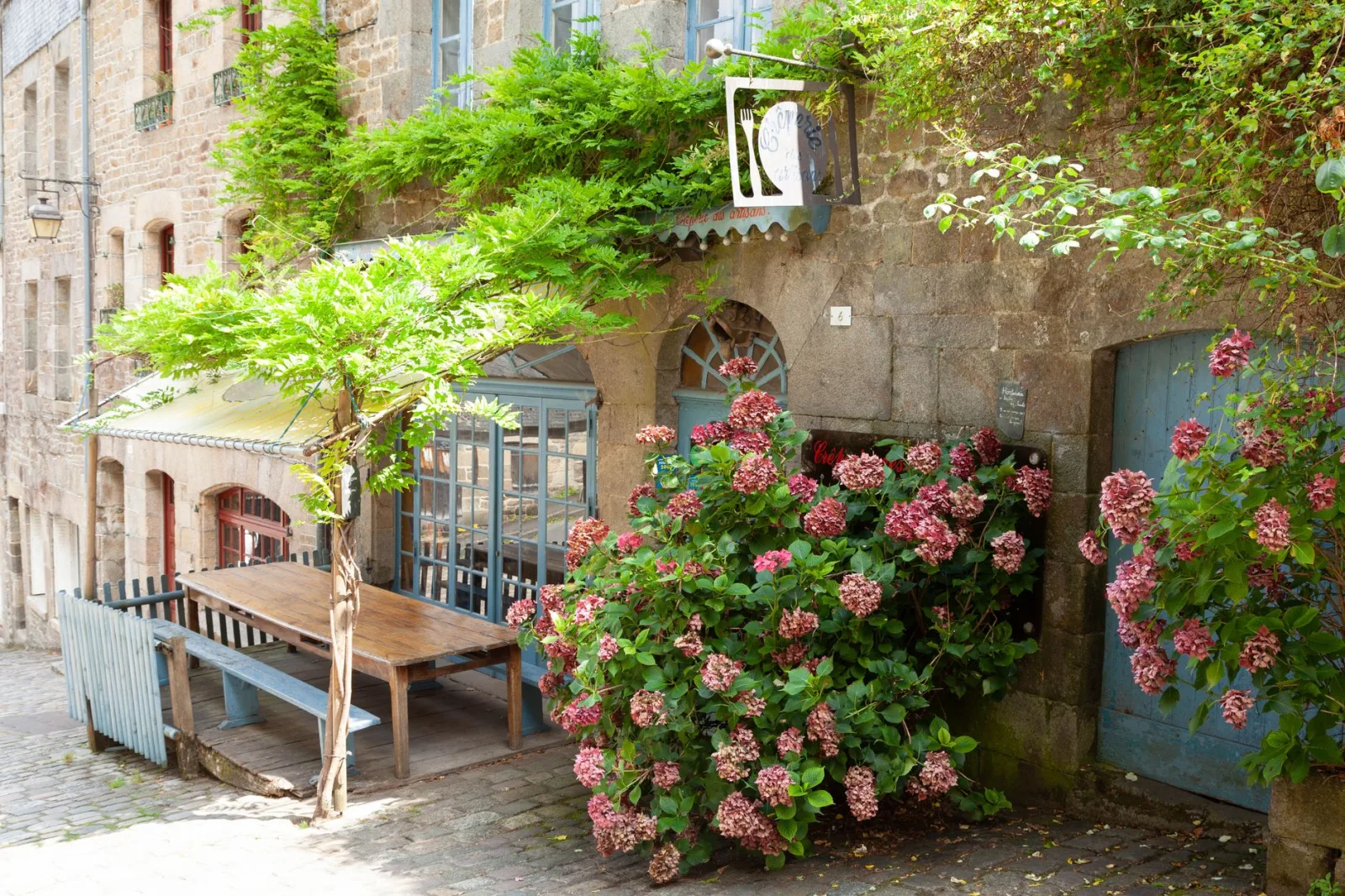
The Thursday morning market is the best time to buy food and see the market working for real. It takes over Place du Guesclin and Place du Champs Clos, with artisans and local producers bringing what they make and harvest in the region. If you want to choose something to eat without relying on a generic display case, this is the most direct starting point.
Between shopping and snacks, it’s worth aiming for Breton specialties that are easy to find there, such as crêpes and kouign-amann. Crêpes work well both for a quick stop and for a simple lunch; kouign-amann is heavier, so it usually makes more sense if you’re hungry after walking or want to save it for later. If you go on market day, arrive with some time to spare, because the offerings change depending on the time and the crowd.
For a sit-down meal, the most practical decision is to look at what’s being prepared on the spot and what looks freshest. In a market like this, the difference lies less in a fixed list of “the right places” and more in what you find at the counter that day. If the idea is to try the basics of the local cuisine without any fuss, start with the two most characteristic items and leave the rest to the moment’s chance.
Walks along the Rance River and views around the harbor
Dinan’s harbor is the most direct point for reading the city from the Rance. The lower bank changes the pace of the visit: the space opens up, the river comes to dominate the scene, and the hillside helps explain the difference in level between the riverside area and the upper town. If the idea is to continue by water, there is a guided boat tour or the option to rent a boat, as well as the crossing to the other side of the river.
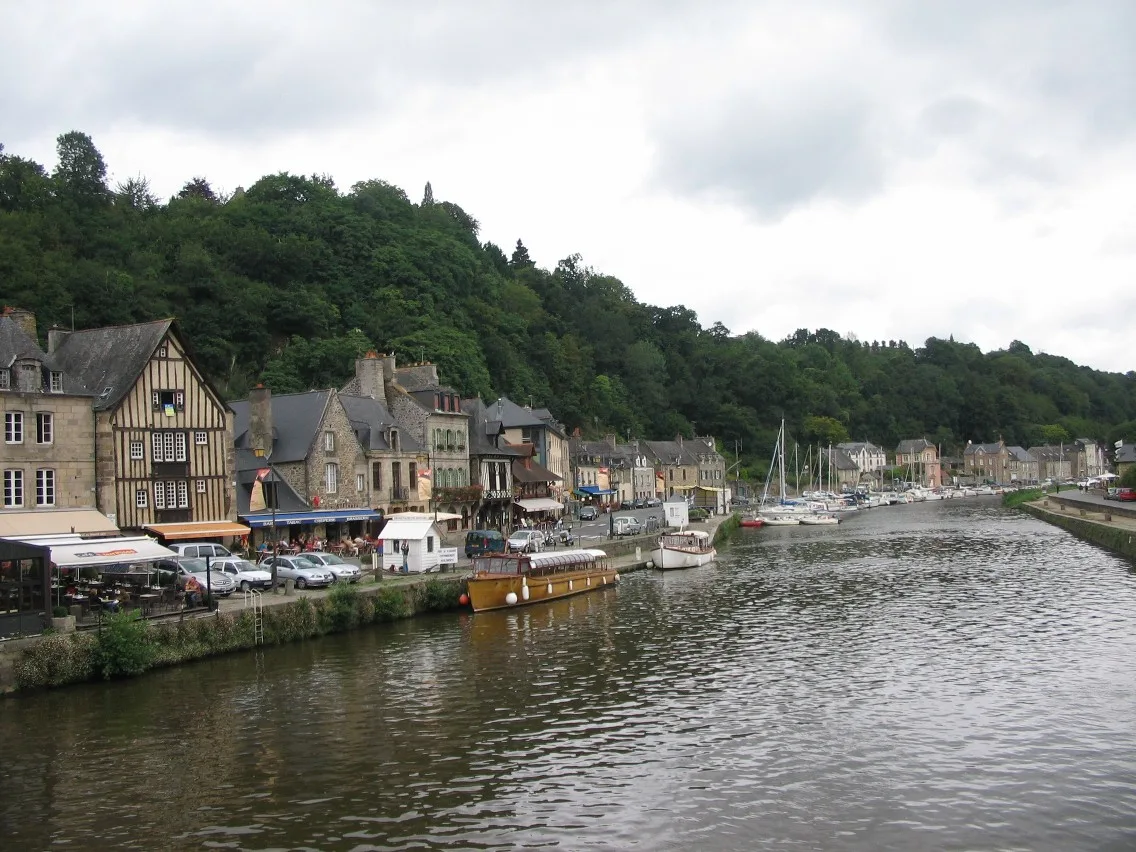
Those who prefer to observe rather than board will find good vantage points on the slopes near the harbor. From there, the reading of the valley becomes clearer, with the curve of the Rance, the houses climbing the hill, and the layout of the urban ensemble appearing all at once. It is the kind of view that helps situate Dinan in the territory without relying on formal viewpoints.
If you are going to take the river tour, confirm the operating conditions on the spot, because this type of service varies. For those who just want to cross and explore the opposite bank, the crossing is useful precisely because it shows the city from another point of view, with the water as the axis of the landscape.
The most interesting pauses are usually those that combine the bank, a short climb, and a return along the hillside. That way you better understand how the harbor relates to the valley and why the Rance weighs so heavily in the reading of Dinan.
Events and best time to coincide with the Fête des Remparts
The Fête des Remparts takes place every two years, over a weekend, and it is the most specific event for those who want to see Dinan with a fully medieval atmosphere. The city goes into celebration mode with period costumes, tournaments, taverns, and activities spread throughout the center. If the idea is to coincide the trip with this period, it is worth checking the date of the next edition in advance, because it does not happen every year.
Outside this window, the calendar is more discreet. The Festival Bobital appears as another seasonal reference in the area, concentrated in June or July, but it does not play the same role as the medieval festival for those who want to choose their stay dates based on Dinan.
If you want to see the city at its busiest, the criterion is simple: look for the Fête des Remparts edition and organize your trip around it. If you prefer fewer people and a calmer pace, choose another time of year and just keep an eye on the local events calendar before finalizing your dates.
Frequently asked questions
How much time is ideal to visit Dinan?
A full day is the minimum reasonable time to get to know Dinan without rushing. With two days, you can walk at a more relaxed pace and enjoy the historic center better.
What is there to see in the historic center of Dinan?
The main sights are the ramparts, the fortress, the Tour de l’Horloge, the half-timbered houses, and religious buildings such as the Saint-Sauveur Basilica and the Saint-Malo church.
Is it worth going down Rue du Jerzual?
Yes. Rue du Jerzual connects the historic center to the port and clearly shows the transition between the upper part of the city and the banks of the Rance.
When does the Dinan market take place?
The Thursday morning market takes place at Place du Guesclin and Place du Champs Clos. It is a good time to see local producers and buy food.
What is the most important event in Dinan?
The Fête des Remparts is the city’s most characteristic event. It takes place every two years, over a weekend, with period costumes, tournaments, and activities in the center.