San Sebastián: practical guide to eating well, getting around, and choosing where to stay
San Sebastián: discover where to stay, how to get around and what to eat to plan a practical trip, with neighborhoods, beaches and day trips.
How long to stay in San Sebastián and where to base yourself
Stay three full days if this is your first visit. It’s enough time to understand the city’s rhythm, move around without rushing between the most useful areas, and still leave room for long meals, which take up an important part of the day here. With less than that, you tend to experience the city in a hurry and choose the wrong place to stay just for the convenience of the moment.
San Sebastián works well as a base when you want to extend the trip by a few more days and include short outings around the region. Hondarribia and Biarritz fit well into that plan, and Bilbao can also be added, although it deserves its own time if it’s on your itinerary. If the idea is just to make a quick stop, it’s worth centering your stay in the city; if you have more flexibility, basing yourself in San Sebastián makes more sense than changing hotels at every move.
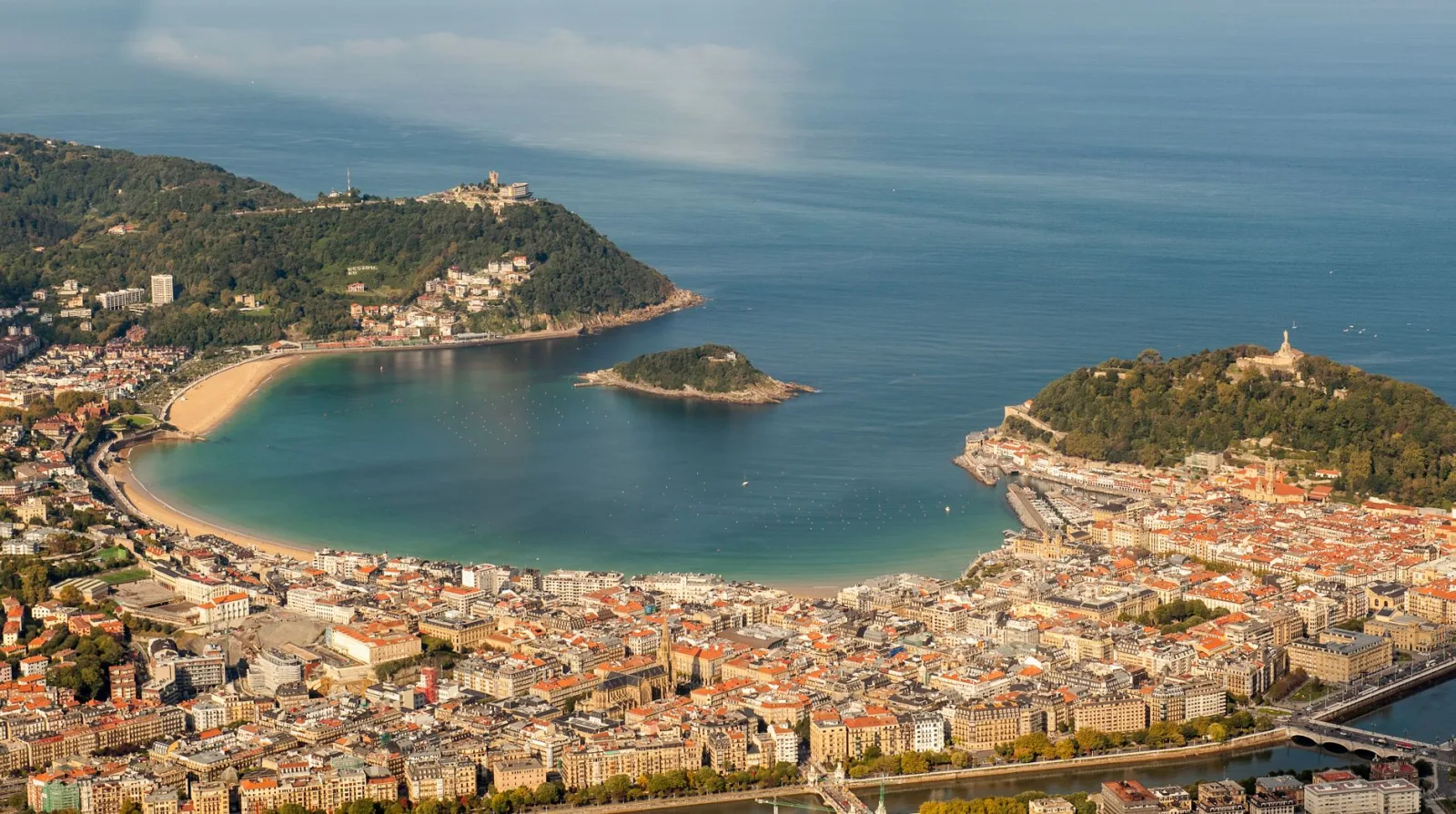
For accommodation, the choice is simple: Centro for a balance between location and practicality, Old Town to stay close to the busiest core, and Gros if you prefer a slightly quieter area with good walkable connections to the rest of the city. Centro is the best bet for anyone who wants to walk to almost everything without staying in the most crowded stretch; Old Town makes sense if the priority is being in the middle of the action; and Gros usually helps those who want to ease the intensity of the more touristy surroundings without losing easy access. The city is compact, so location matters less than in larger destinations, but it does make a difference if you want to do almost everything on foot.
The outskirts only make sense when budget matters more than convenience. In that case, confirm in advance whether the hotel has parking and whether there is a space available; when traveling by car, that detail often changes the final cost more than the nightly rate itself.
How to get to San Sebastián
Arriving via San Sebastián Airport works well when you find a convenient route, but the airport is small and usually has fewer options than Bilbao. The advantage is the proximity: from the terminal to the city center, the trip takes about 25 to 30 minutes.
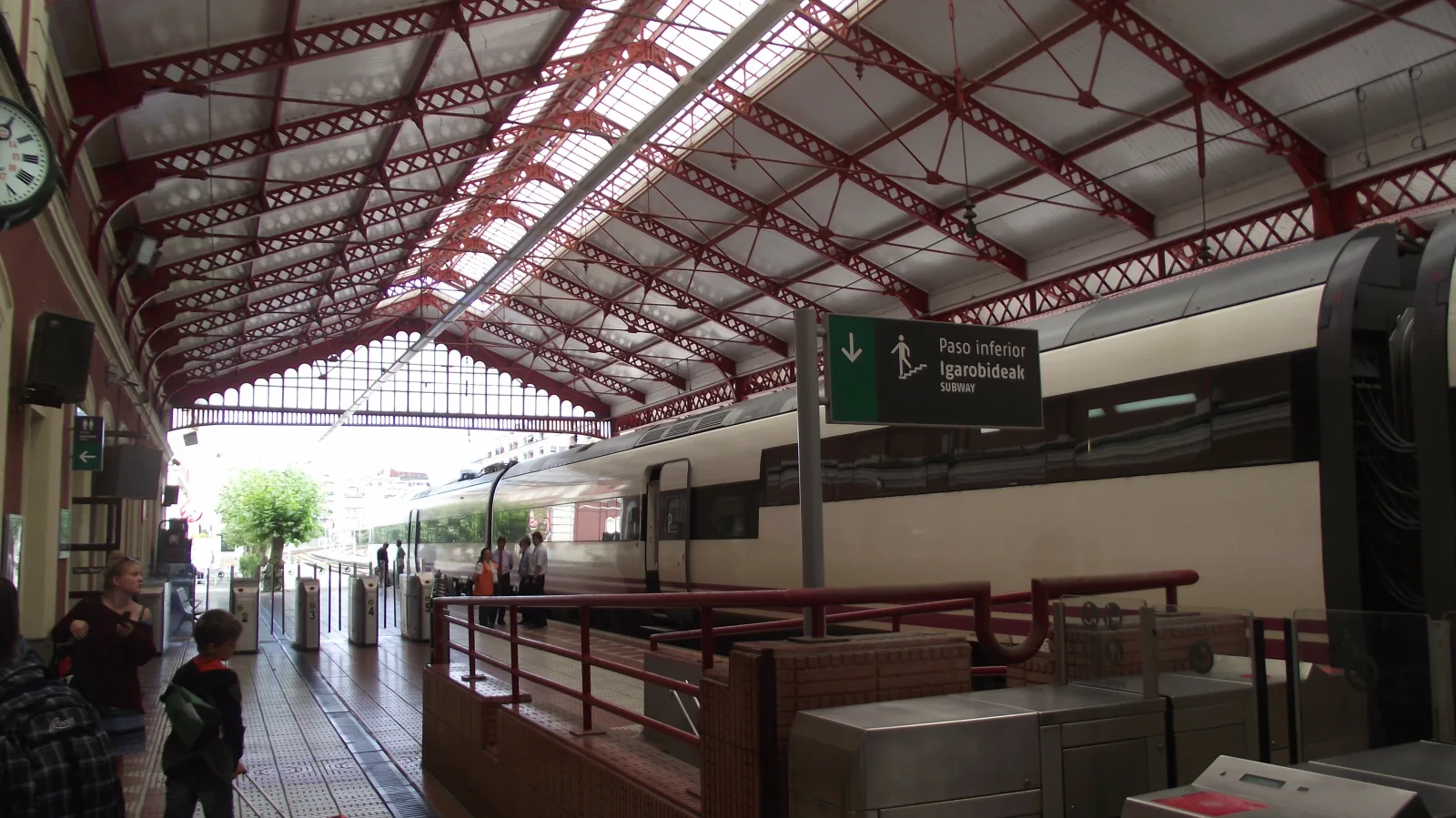
Bilbao comes in as the most practical alternative for those who find a better schedule combination. From there, you can continue by bus, arrange a private transfer, or rent a car. The city is about 1h15 from San Sebastián, so the arrival is still simple, it just requires an extra stretch by land.
The train is also a direct option from other cities in Spain or France. The high-speed network in the Basque Country is more limited than in other major Spanish hubs, so the trips can be long. The connection with Madrid, for example, takes about five hours. For those who enjoy train travel and are not in a hurry, it is a relaxed way to enter the city.
If you are on a road trip, a car offers flexibility, but parking tends to weigh on the budget and there is not always a guaranteed spot at the hotel. Before finalizing the booking, confirm whether parking is available, how much it costs, and whether availability is limited. In San Sebastián, this detail changes the logistics of the stay quite a bit.
Editorial transparency: Some links on this page are affiliate links. We may earn a commission at no extra cost to you. This does not influence our recommendations.
Where to stay: hotels and areas that work best
Hotel Catalonia Donosti works well for those who want to stay in Centro without sleeping in the busiest stretch. The building used to be a convent and is on San Bartolomé Hill, with views that can reach the city and the bay depending on the room. It is the most coherent option for a mid-range stay: it has an on-site restaurant, a spa with massages, and a rooftop pool, used in season. If you like returning to a hotel with amenities after a day of walking and long meals, it fits well.
Hotel Maria Christina makes more sense for those who want a central address and are willing to pay for a luxury standard. It is just outside the Old Town, which helps those who want easy access to the most sought-after core without sleeping in the busiest spot. It is also the kind of hotel where it is worth checking the availability of nights with points, because that can change the bill quite a bit. If the idea is to prioritize comfort and location without relying on a car, it belongs in the strongest group.
Hotel Londres and La Sala Plaza are the names to look at when the view of the bay matters more than being in the center of the action. Hotel Londres is on the promenade, while La Sala Plaza is in the Old Town, with a rooftop pool and adults-only policy. Both tend to be in the higher price range compared to the city’s conventional options, so the decision here is less about “which is better” and more about where you want to open the window: facing La Concha or immediate proximity to the historic center.
For those traveling on a tighter budget, the city calls for a hard comparison between location and extras. In San Sebastián, a simpler room in a practical area usually makes more sense than paying for a hotel that is too nice for the routine you will have. If the priority is walking to almost everything, Centro and Old Town remain more efficient; if the beach and the view matter more, it is worth focusing the search on properties facing the bay.
What to eat and drink in San Sebastián
Pintxos are the city’s everyday language. Think of them as small portions, often served on bread, which you order by the piece or two and build into a meal over several stops. In some bars, they are displayed on the counter; in others, they are made to order. The point is not to have a long dinner in one place, but to try a little at each bar, alternating cold classics with hot options and small dishes that change depending on the house.
Among the easiest snacks to recognize are gildas, a combination of green olive, guindilla pepper, and anchovy on a skewer. They work as a first bite: salty, tangy, and straightforward. Basque cheesecake follows another logic, with a creamy center and a toasted top, almost always served as a simple slice, with no sauce or garnish. Idiazabal, on the other hand, appears more as a table cheese or cooking ingredient; it is a sheep’s cheese, firm and lightly smoked, which works well in hot dishes, on cheese boards, or alongside desserts and savory sides.
For drinks, txakoli and cider are the two most common references. Txakoli is a light white wine, sometimes with a slight fizz, served in a glass and, in some cases, poured from a certain height to aerate it. It pairs well with pintxos because it is not heavy and cleanses the palate between bites. Basque cider, in turn, is dry, with little or no carbonation, and usually appears both in a glass and in a more traditional service, with the txotx ritual in cider houses. In the city, it is also common to find tasting menus in Michelin-starred restaurants, ranging from more formal experiences to tables where Basque cuisine appears in a highly precise version. If you are going to book this kind of meal, confirm the menu format and the current house conditions in advance, because these change frequently.
Food itinerary: pintxos, bars and tours
Start the route with one or two counters, not a marathon. In San Sebastián, the common mistake is trying to turn the first stop into a full dinner: you lose time, fill up quickly, and end up repeating what you’ve already seen instead of broadening your range. Pintxos work best in short doses, choosing one specialty or another at each bar and moving on. In busier places, expect a crowded counter, people standing, and service that is faster than it is welcoming; you gain efficiency once you already know what you want to order and don’t spend too long studying the display.
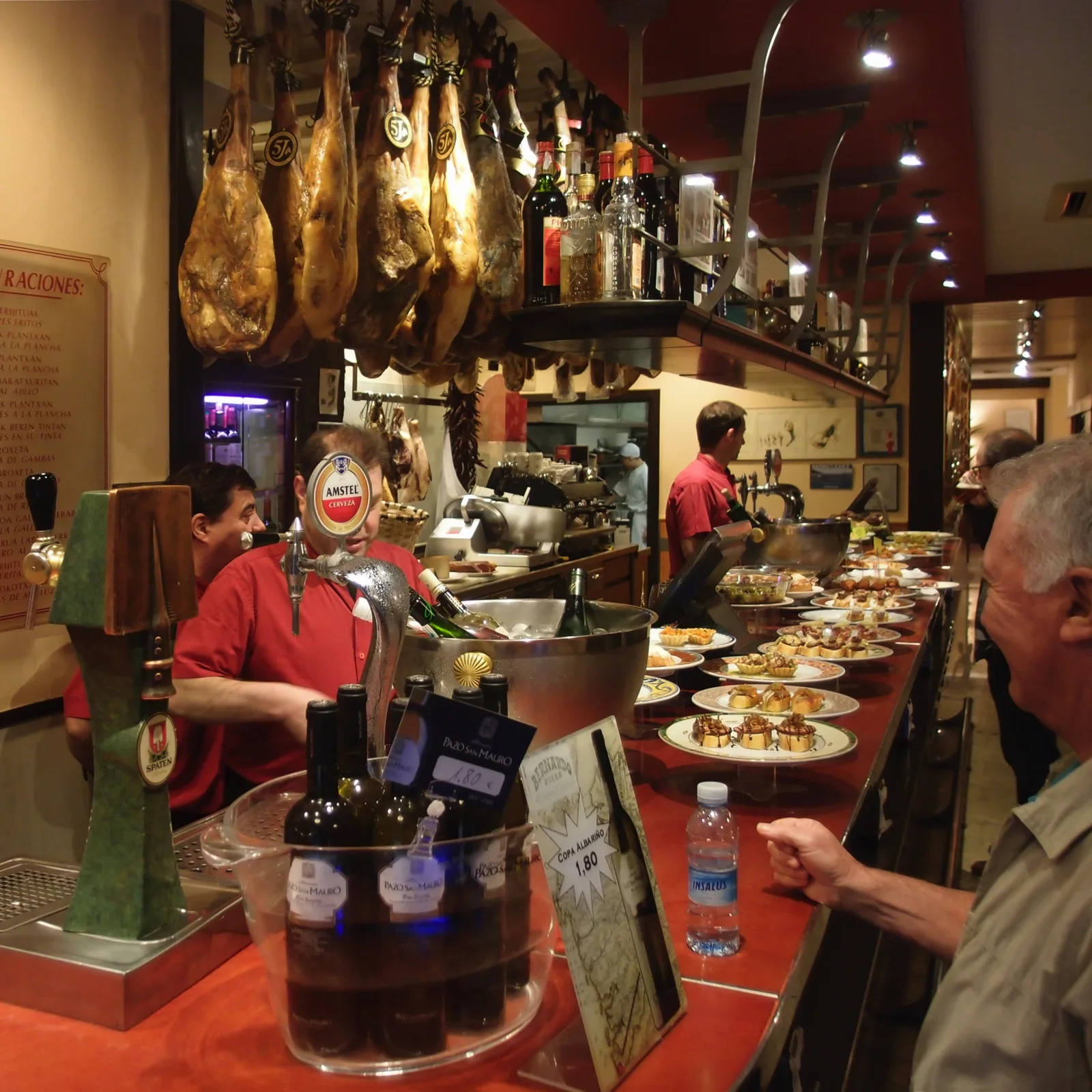
The etiquette is straightforward. Say the basics clearly, ask for a few things at a time, and be ready to eat standing up if a table doesn’t appear. In many places, a simple order works better than trying to negotiate the entire menu at once. It also makes sense to head out of the Old Town instead of concentrating everything there: in Gros and the Centro, the atmosphere is usually less cramped, and you’ll find bars that help break the routine of the most obvious spots. That’s where places like Bar Desy, Kbzon Haundi, Antonio Bar, Mala Gissona, Basqueland Izakaia and Bissadoa Taproom come in, useful both for eating and for realizing that the city doesn’t revolve around just one area.
If the idea is to avoid the learning curve, a food tour makes sense right at the start of your stay. It helps you understand how to order, what is worth trying first, and how to read the rhythm of the bars without wasting an entire night in indecision. It also tends to be the most efficient way to connect food, neighborhood and local context in a single outing. For those who prefer autonomy, the most practical combination is still to move between Old Town, Centro and Gros, observing where there’s a queue, where the counter moves quickly, and where the bar calls for a short stop before the next one.
What to do beyond eating
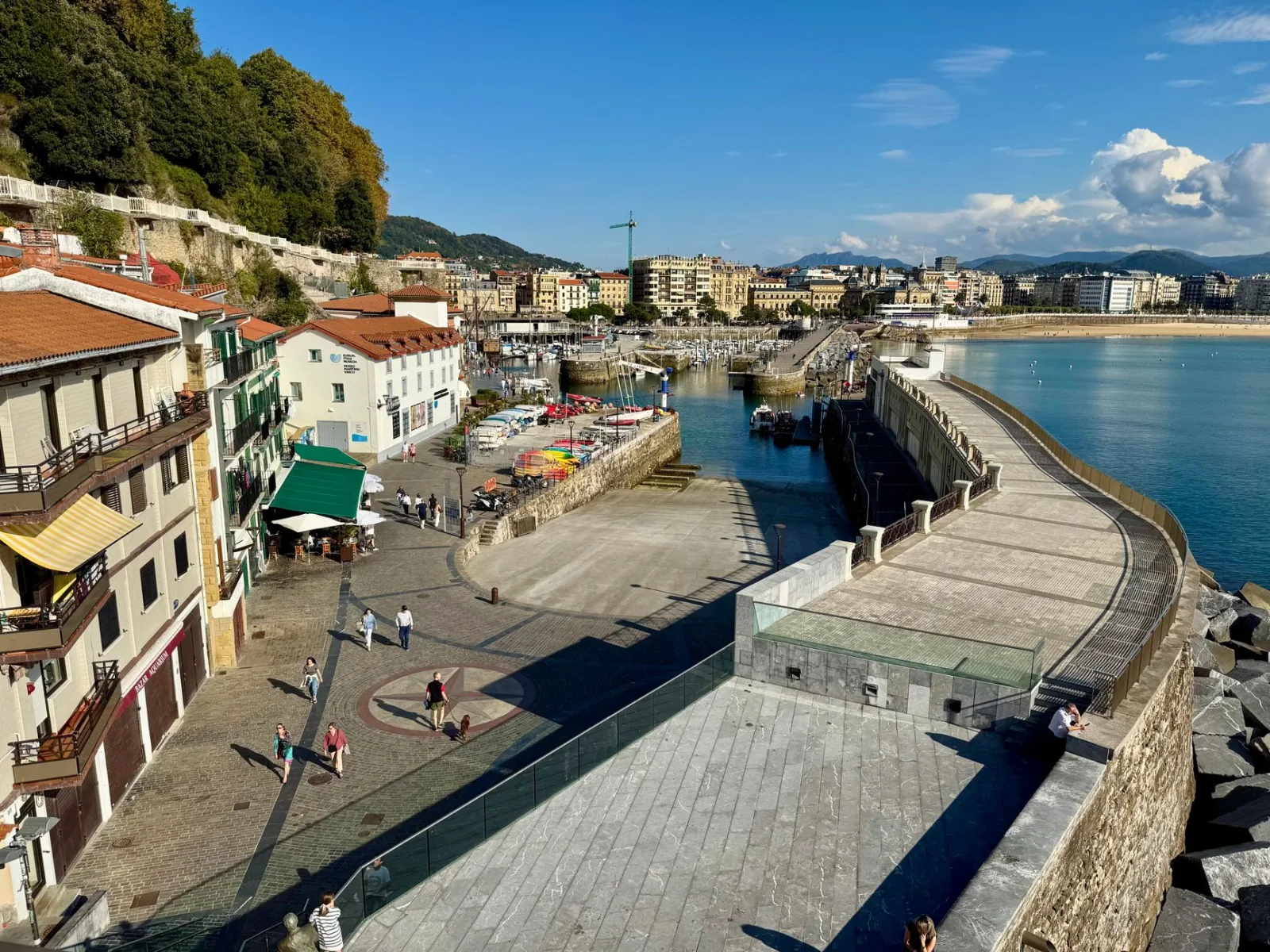
Old Town deserves a stroll without a rigid plan. The narrow streets call for a careful eye for facades, balconies, and small squares, and they work best early or at the end of the day, when the flow of people is less crowded. If you like observing the city instead of just passing through it, that’s where the clearest reading of the historic center begins.
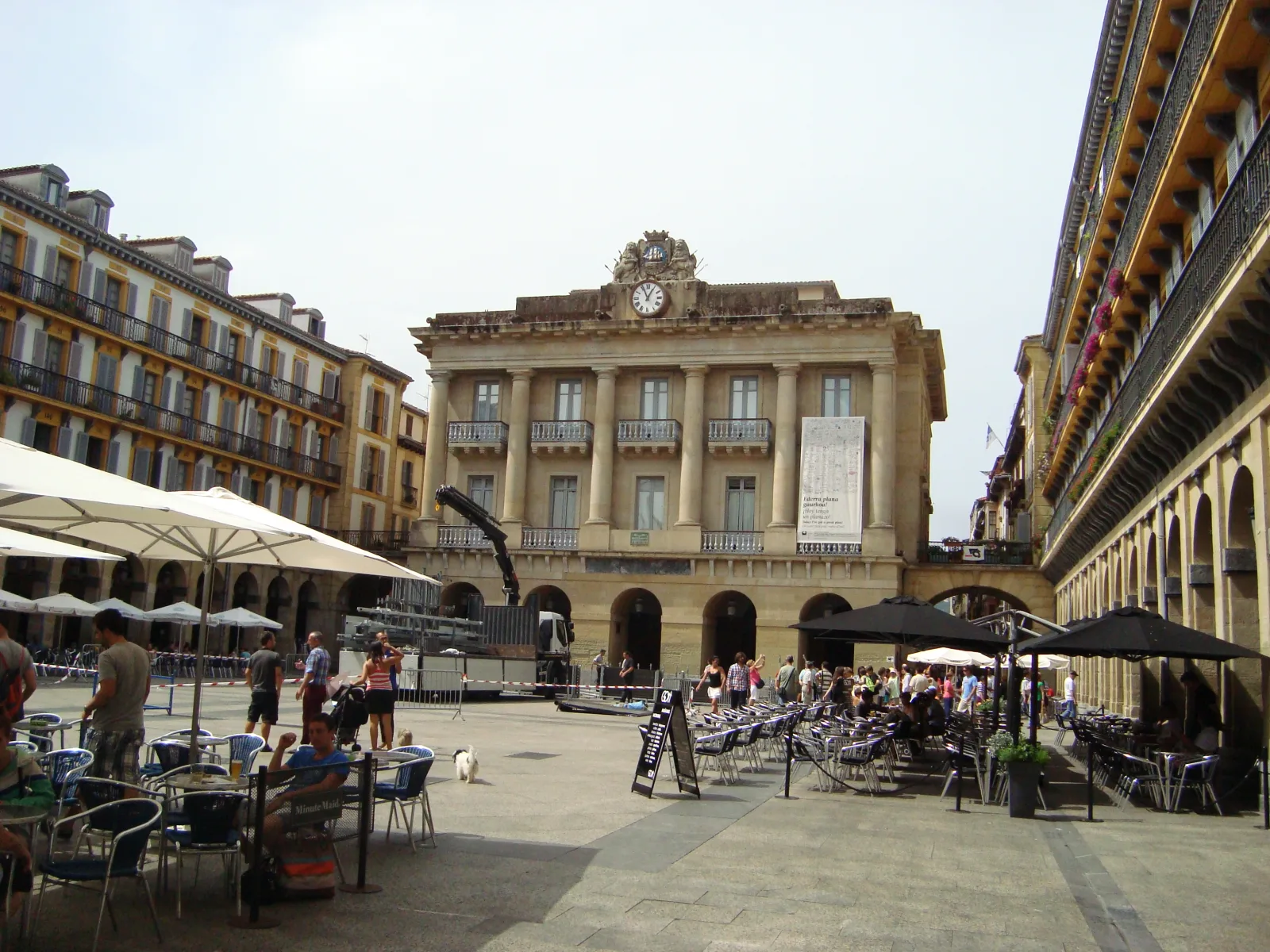
In the more open part of the center, Oquendo Plaza and Gipuzkoa Plaza help you understand San Sebastián through avenues, gardens, and public buildings. They are short stops, more for observation than lingering, useful for breaking up the pace between one area and another without falling into a sequence of only commercial streets. The Basilica of Santa María del Coro and the San Telmo Museum are part of the same circuit with different profiles: the basilica calls for a quick visit, while the museum requires more time and makes sense when you want historical and artistic context for what you are seeing in the city.
On La Concha beach, the sand also becomes an attraction. There are those who stop to watch the work of artists who draw on the stretch of sand לאורך the day, a simple scene, but easy to fit between one outing and another. After that, walking along the waterfront is worthwhile on its own: the bay organizes the city in a very clear way, and the stretches next to the beach work well for those who want to walk without effort.
For going up, Monte Urgull and Monte Igueldo offer different views of the landscape. Urgull combines trails and closer views of the urban center; Igueldo opens up more of the view over La Concha and usually makes for a longer stop at the top. If you prefer seeing the city from the water, boat tour and sunset sail are a natural complement, especially on clear days, when the late-afternoon light makes sense for a calmer outing.
Beaches, viewpoints and outdoor walks
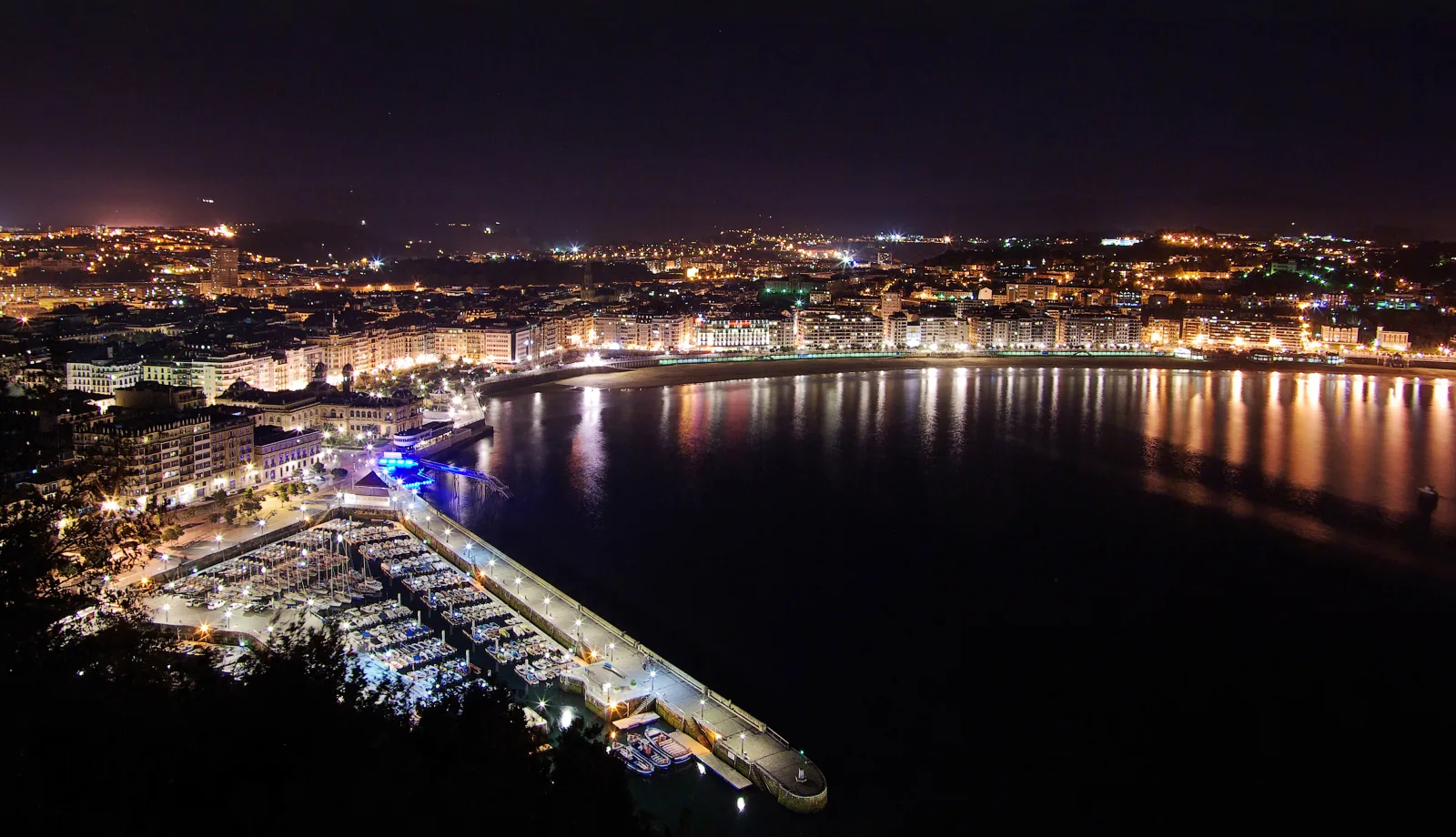
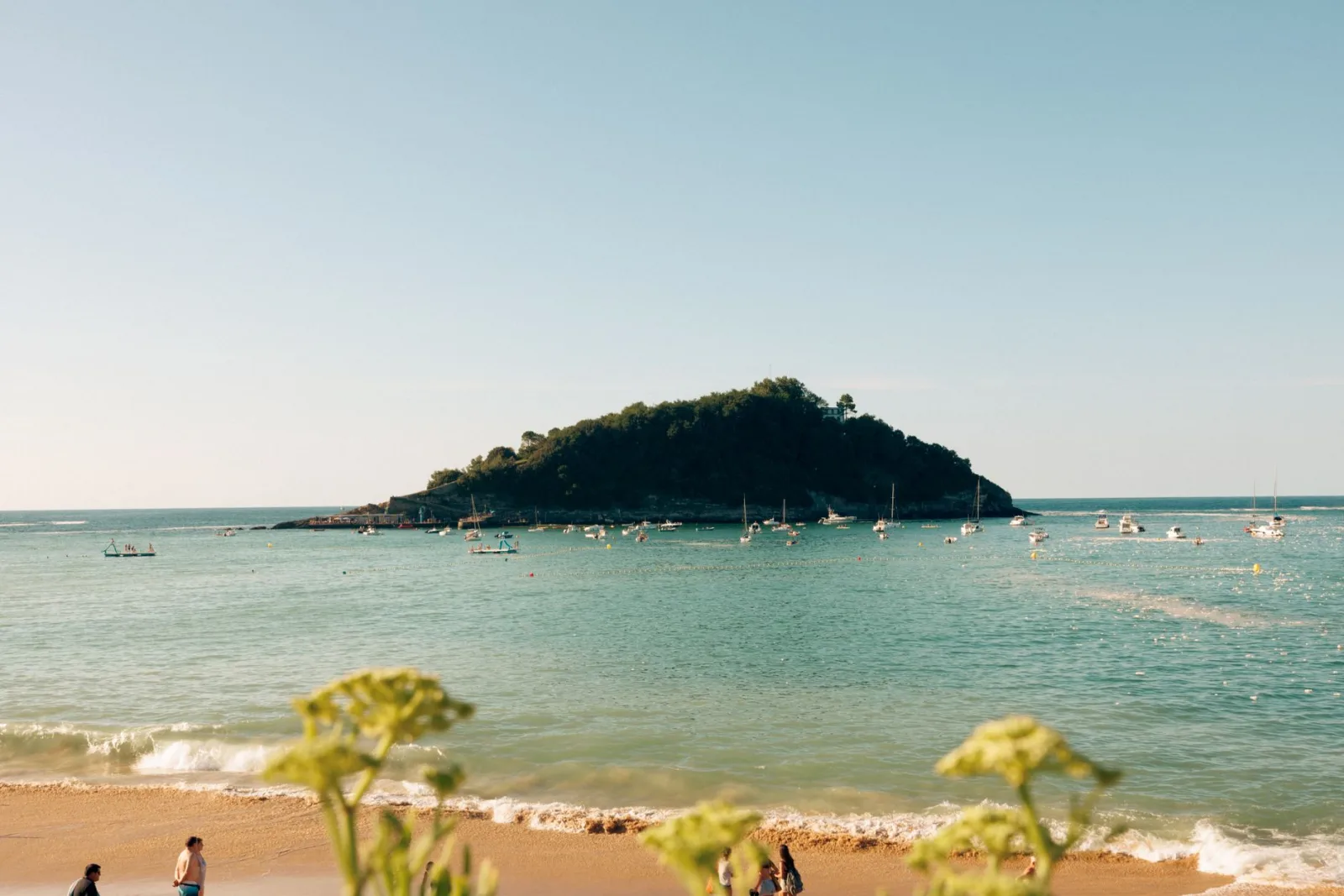
La Concha is the beach for those who want to walk along the seafront, stop to rest, and go into the sea without dealing with strong waves. The curved stretch makes it easy to walk and works well for swimming on calmer days, in addition to being the simplest area for those who prefer to sit in the sand and watch the bay. It is also where the city shows its softer side, with activity spread out along the promenade instead of concentrated in a single spot.
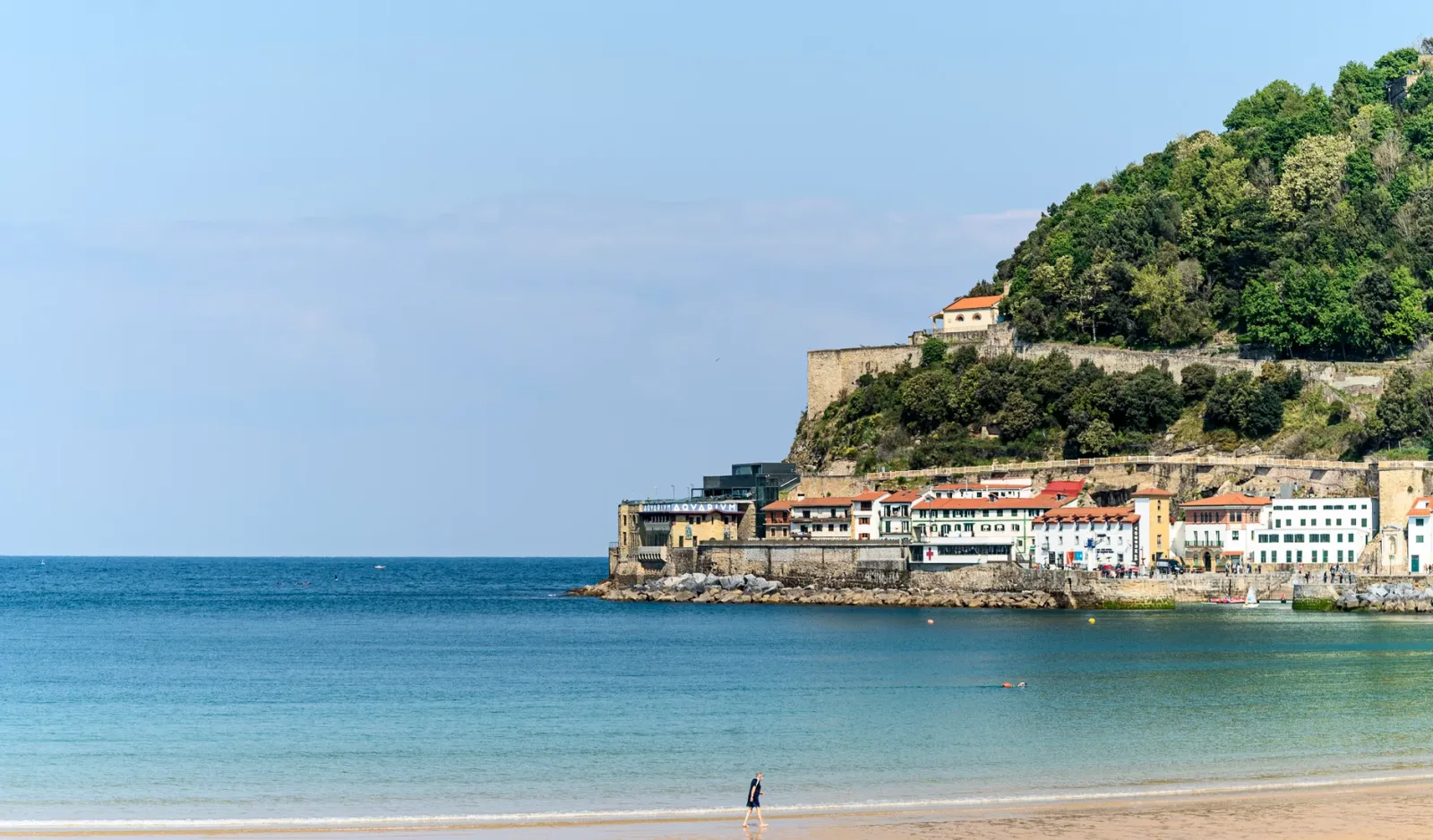
Zurriola serves a different profile. The beach has a more exposed sea and is the natural reference for surfing in the city. Those who want to stay on the sand usually go with a different expectation: less of a “quiet swim” idea, more space to see the water in action and follow the boards coming and going. On windy days with swell, it becomes even more important for those looking for a beach with its own energy, while La Concha remains better for staying near the water unhurriedly.
The paths around the bay offer one of the easiest walks to fit into the day. You can follow the seafront without needing complex planning, alternating stretches of beach, promenade and natural viewpoints along the way. If you want to go up, Monte Urgull and Monte Igueldo provide two different views of the city: Urgull brings you closer to the urban fabric and opens up more direct views over the old town, while Igueldo broadens the perspective over the bay and the coastline. On clear days, both climbs are worth the effort; in unstable weather, it is worth choosing the one that best fits your pace and the visibility at the time.
Day trips from San Sebastián
Hondarribia is the easiest day trip to fit in when you want to leave the urban core without embarking on a long journey. The town works well for a half day or a full day, especially if you want to walk at a leisurely pace, look at the architecture, and return to San Sebastián for dinner. It is also the simplest option when the idea is just to change scenery.
Biarritz and the French Basque coast call for a more relaxed day. It makes sense to include them if you are already staying longer in the city and want to cross the border to see a different setting without planning a separate trip. In that case, it is worth choosing a single focus and not trying to cram too much into the same day, because the benefit comes more from wandering through one area than from collecting stops.
Bilbao works better when you want an urban outing with its own weight. If the city is already on your itinerary, you can use San Sebastián as a base and set aside a day for it, but without rushing to “do” Bilbao in just a few hours. It makes more sense for those willing to trade a day of beaches and long meals for museums, streets, and the pace of a big city.
Rioja Alavesa or La Rioja are only worth it when the main interest is wine and vineyard scenery. It is not the kind of day trip to squeeze in out of obligation; it works when you have enough time and want a full day away from San Sebastián. If time is tight, the best decision is usually to stay on the coast.
What to Bring and When the City Works Best
Bring comfortable clothes for walking a lot and for going in and out of bars without thinking about what to wear. In San Sebastián, the day usually calls for pieces that work well for city walks and for long meals, when you sit down, stand up, and start walking again right after. Footwear that can handle wet ground helps more than pretty shoes.
A lightweight rain jacket makes a difference year-round. The weather changes quickly, and you may find cloudy skies and showers even in late spring and early summer, when many people expect stable weather. A small umbrella also fits well in your backpack, but it does not replace an outer layer that dries quickly.
In the colder months, include an extra layer that is easy to take off and put on, because the feels-like temperature changes quite a bit between the street, the waterfront, and indoor spaces. If your trip falls on more humid days, it is worth prioritizing fabric that does not soak through easily and water-resistant footwear, especially if you plan to get around on foot between Centro, Old Town, and the beach without relying on long breaks to shelter from the rain.
If you can only adjust one thing before you leave, adjust your shoes. Wet pavement shows up more often than you might think, and San Sebastián works better when you walk without worrying about every puddle.
Frequently asked questions
How many days should you stay in San Sebastián?
Three full days are enough for a first visit. That time allows you to explore the main neighborhoods, eat at a relaxed pace, and still include walks and viewpoints.
What is the best area to stay in San Sebastián?
Centro is the most balanced option in terms of location and convenience. Old Town works best if you want to stay close to the action, and Gros is a good choice if you prefer a quieter area.
How do you get to San Sebastián?
San Sebastián Airport is the closest option to the city center, with a journey of about 25 to 30 minutes. Bilbao usually has more options and is about 1h15 from the city.
Where to eat pintxos in San Sebastián?
Old Town is the best-known spot for pintxos, but Centro and Gros also have good options. The ideal is to try small portions at several bars, without turning the first stop into a long dinner.
Which beaches are worth visiting in San Sebastián?
La Concha is the best for walking, relaxing, and entering the sea more calmly. Zurriola is the most recommended beach for those who want to watch surfing and find a more exposed sea.