Saint-Malo Guide: what to do, where to stay, eat, and how to plan your trip
Plan your trip to Saint-Malo with walking routes, beaches, tides, where to stay, and day trips to better organize each day.
How to understand Saint-Malo before planning your itinerary
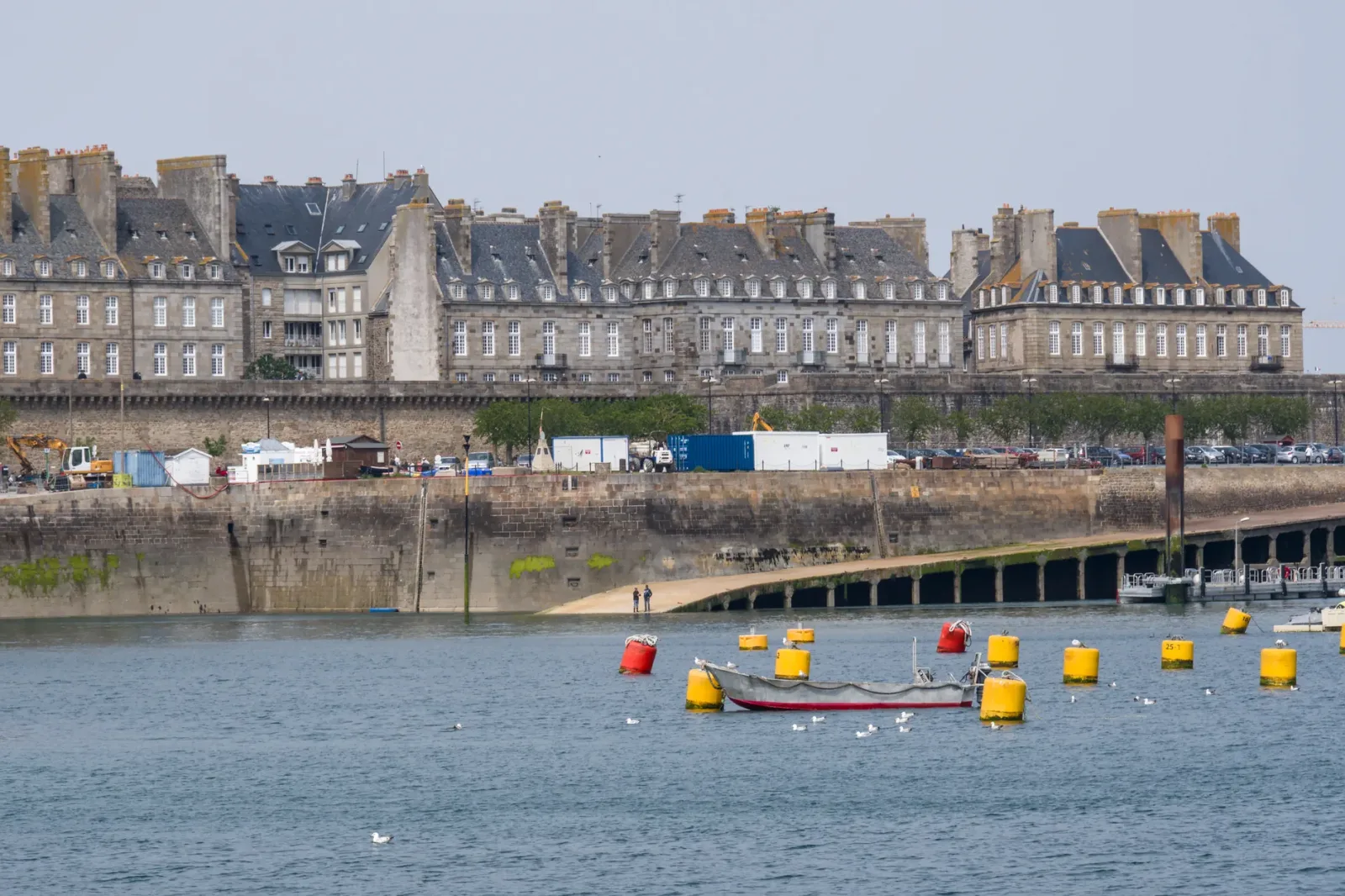
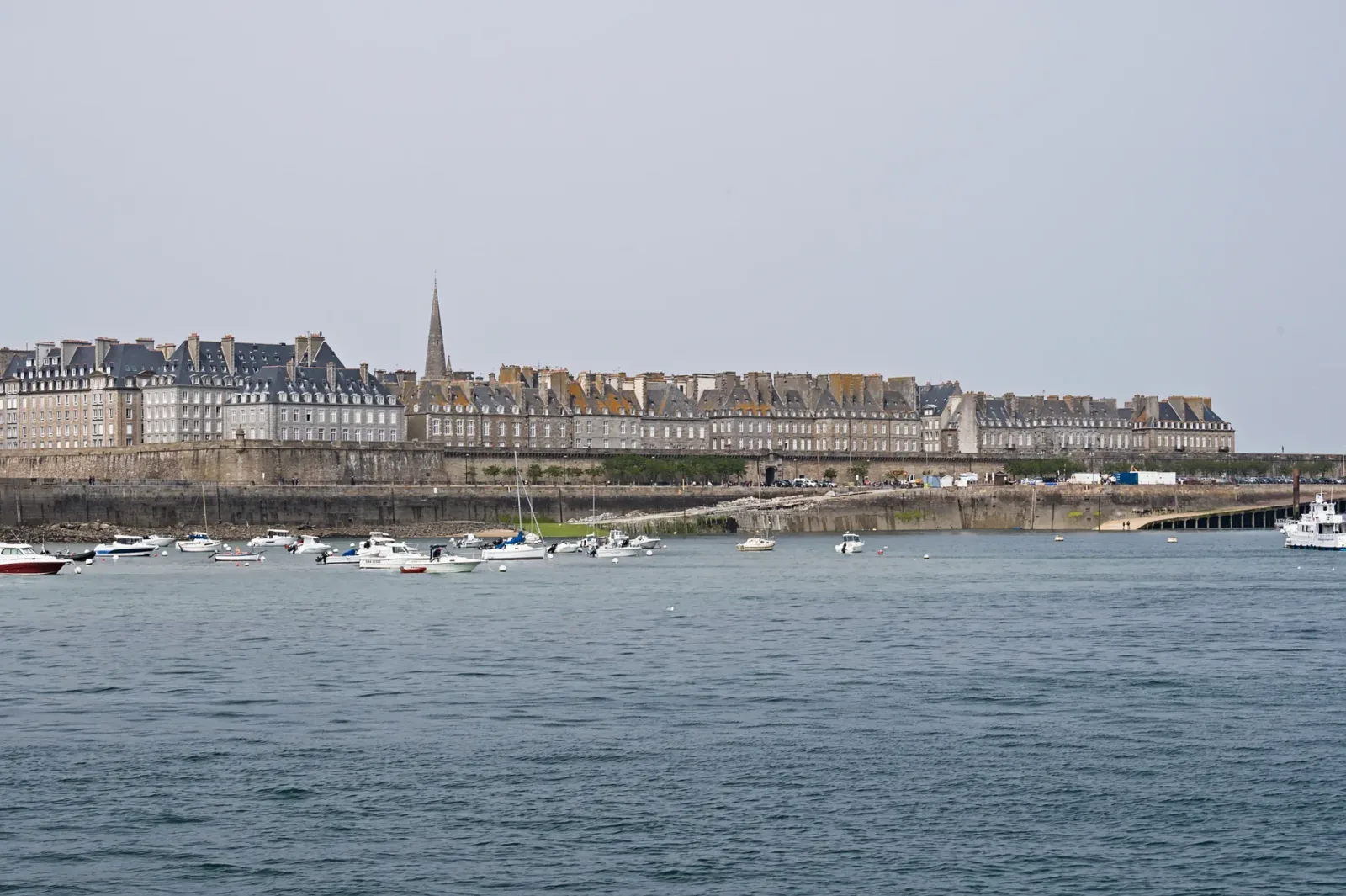
Saint-Malo works better on a map than in the imagination. The core that matters to the traveler is Intra-Muros, the old town surrounded by ramparts, with fortified gates, bastions, compact streets, and the port right beside it. Instead of thinking of it as a sprawling beach town, think of a walled historic block set against the sea. That changes the pace of the visit: a lot can be done on foot, in short stretches, and the most useful viewpoints are not on distant overlooks, but on top of the ramparts themselves and on the bastions facing the bay.
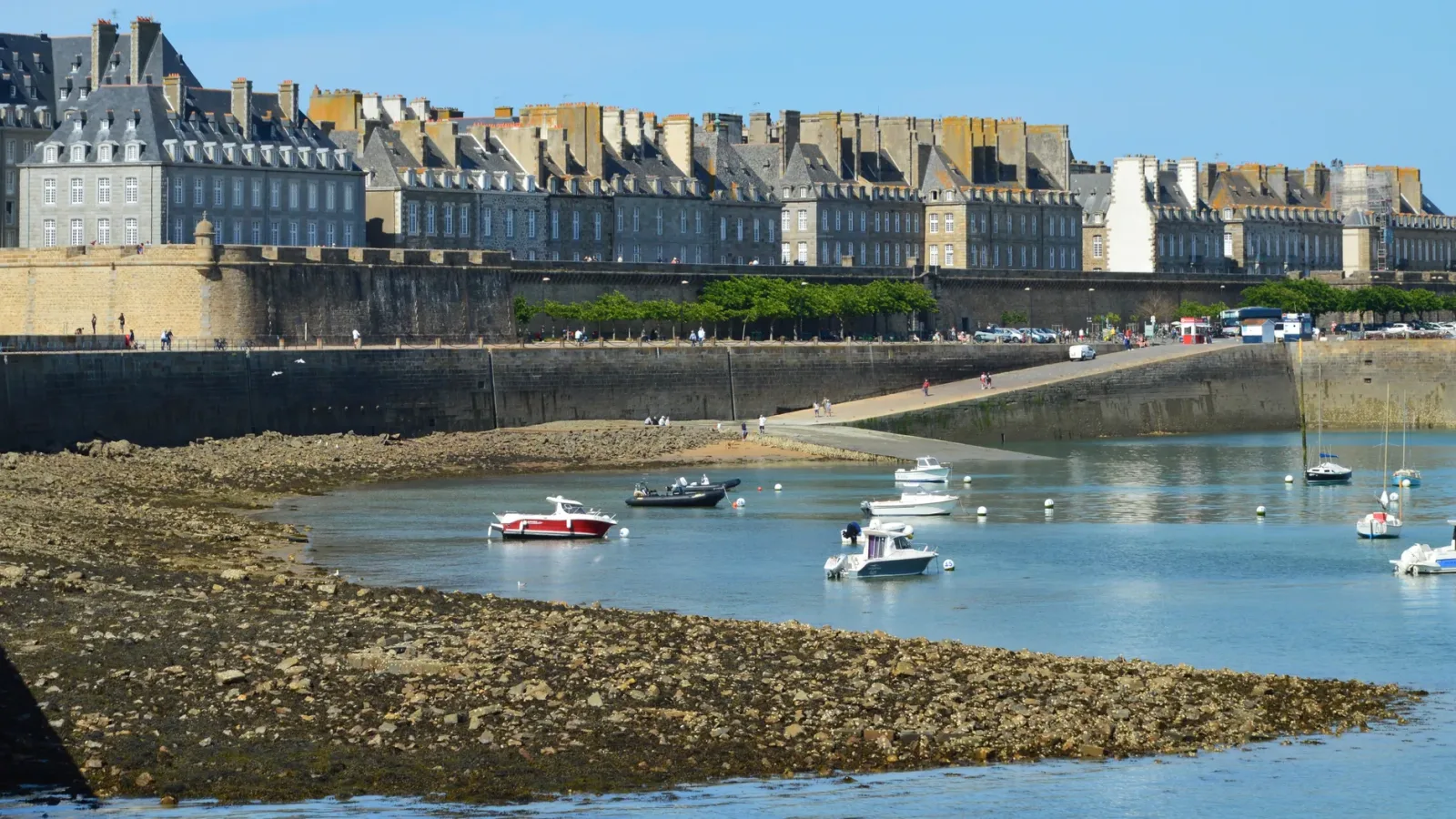
Around this walled center, the water appears in different forms. There is the port, which reinforces the city's maritime identity, and there are several beaches attached to the historic center or just a few minutes from it, such as Plage du Mole, Plage de Bon-Secours, and Plage de l'Éventail. Farther on, already outside the immediate core, are areas like Bas-Sablons and the Tour Solidor side. This makes Saint-Malo a somewhat non-linear coastal destination: you do not choose between “city” and “beach” on separate days. The two alternate all the time, and the sea enters the itinerary as access, scenery, and physical boundary.
The decisive factor here is the tides. They do not affect only the strip of sand: they determine whether or not you can cross on foot to places like Grand Bé, Petit Bé, and Fort National. At low tide, passages and rocky stretches appear that connect the city to islands and fortifications; at high tide, these accesses disappear. That is why Saint-Malo is not best visited with a rigid “morning/afternoon” itinerary without first checking the day’s times. It is worth picking up a tide table at the tourist office or checking online before deciding the order of visits.
This behavior of the sea also changes the experience of the beaches and the coastal walk. A stretch that seems like a natural continuation of the sand may later be cut off, and a small beach may open up considerably when the water recedes. If you want to walk to islands, explore fortresses, or use the beaches as a link between one point and another, the tide belongs in the planning as much as the weather. In Saint-Malo, it is not a detail of the landscape; it is part of the logistics.
When to go to Saint-Malo and what to expect from the sea and tides
If you want to combine the city, beaches, and walking crossings to islands and fortifications, the most practical period is usually the one with longer days and milder weather. In summer, the trip works better for swimming, water sports, and beach time, and it is also when some coastal attractions tend to operate more regularly. Fort National, for example, usually opens only between June 1 and September 30, and even then the visit depends on the tide and the day’s operations, so it makes sense to check before heading out.
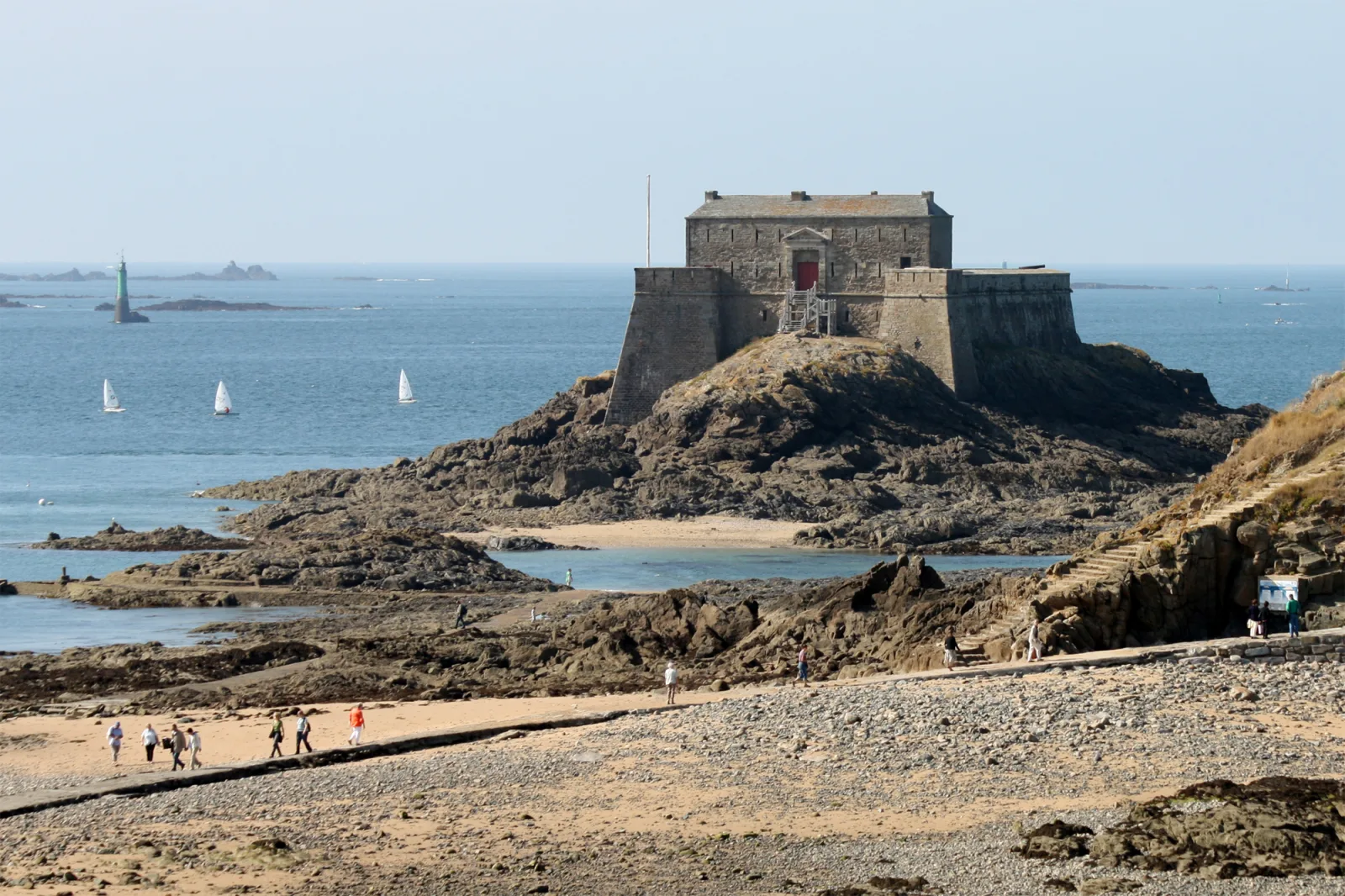
Here, the tide sets the clock. Grand Bé, Petit Bé, and Fort National can only be reached on foot during low-tide windows. It is not enough to see that low tide “happens today”: you need to check the exact time and plan your approach with a margin, because access may require crossing sand, rocks, and passages that disappear quickly. For Grand Bé and Petit Bé, this matters even more, since staying too long on the island means waiting for the water to go down again. Checking the tide table at the tourist office or online should be part of the day’s planning before any other decision.
The beaches also change a lot depending on the sea level. Stretches that seem continuous from one beach to another may later be cut off, and simple accesses at low tide stop working at high tide. This affects both getting around and the useful time at each stop. In Bon-Secours, for example, the way to get there may change with the water; on the more open beaches, the strip of sand can grow considerably when the tide goes out. If the idea is to walk along the seafront, connect beaches in the same outing, or fit a fortification between two swims, check the tide together with the weather forecast.
Outside summer, Saint-Malo still works well for those who prioritize ramparts, views, and walks, but the itinerary becomes less centered on the beach and more dependent on flexibility. You make the most of it when you plan the day around two objective questions: what time low tide opens the accesses and how long the weather allows you to stay exposed on the coast.
Editorial transparency: Some links on this page are affiliate links. We may earn a commission at no extra cost to you. This does not influence our recommendations.
How to get to Saint-Malo and which day trips make sense
If you want to use Saint-Malo as a base, it makes sense. The city makes it easy to come and go for short outings without forcing you to change hotels constantly. Rennes fits well into that logic: it is less than an hour away by train and a little over an hour by car, so it works for an urban day between beaches and the coast. Vannes requires more travel and is better suited to those continuing their journey through Brittany, not to those who just want to slip away for a few hours and return at a relaxed pace.
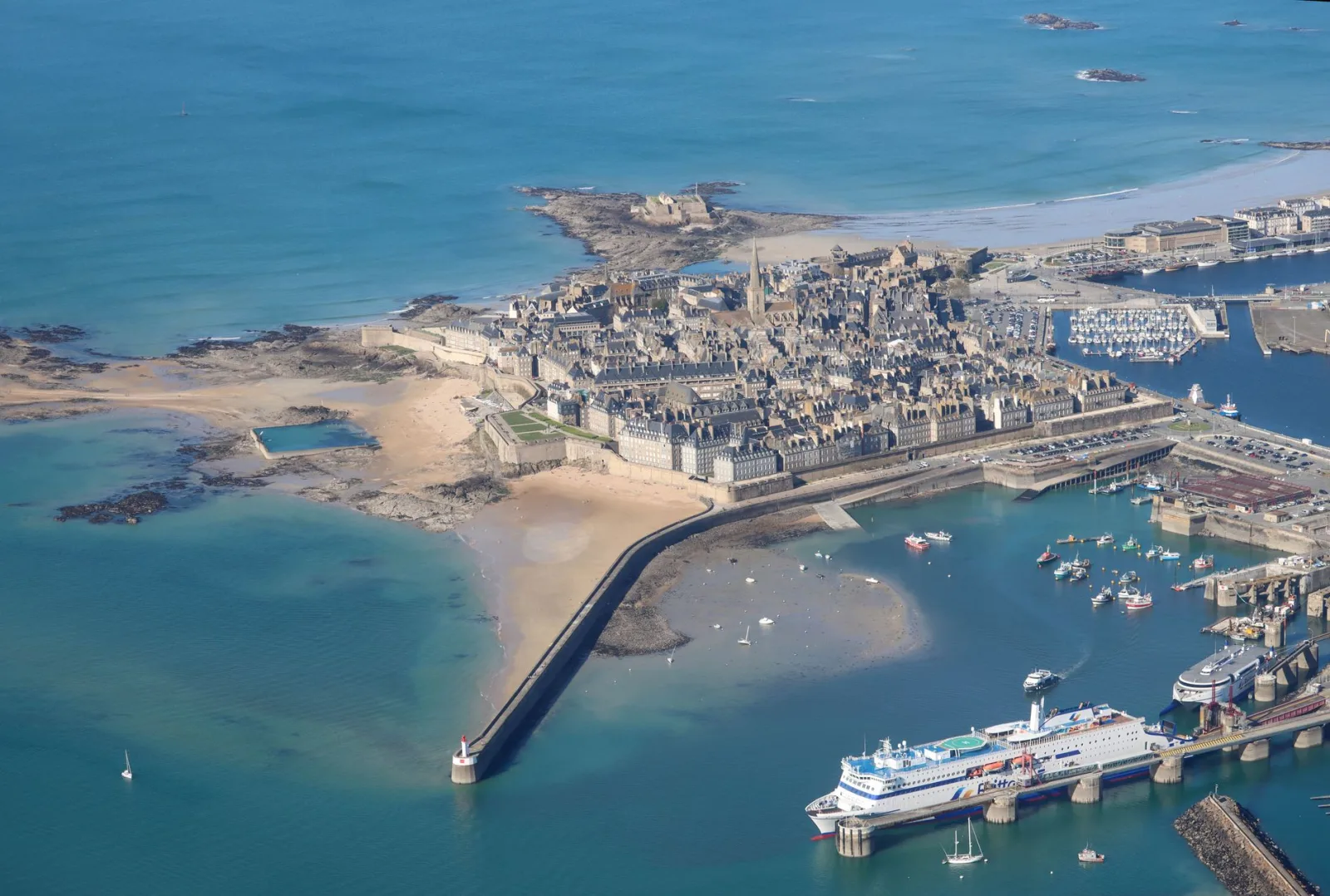
Dinard is the simplest and most natural day trip. The sea crossing between the two cities has existed since 1904 and remains the most direct way to make this journey. The boat leaves from Cale de Dinan, next to the walls, and the crossing takes about 10 minutes. As the boat schedule changes depending on operations and the season, check the day before. To decide whether it is worth it: Dinard works well when you want to change the scenery without using up an entire day, especially if the idea is to walk, have lunch, and return.
Mont Saint-Michel is another very popular outing from Saint-Malo because the drive takes less than an hour. It is a logical choice for those who want to combine two major coastal destinations in the same stay, but here it is worth being honest about timing: even though it is close, it is not a quick half-day add-on. It works better if you set aside a full day for it and accept that Saint-Malo will not be the focus that day. The Menhir de Champ-Dolent falls into another category. It is of more interest to those with a car and a taste for megalithic sites; as a standalone visit, it is short, so it pays off more when combined with a route around the area rather than being the day’s only plan.
If your question is whether to sleep only in Saint-Malo or split your bases, think about the weight of these detours in your itinerary. For Dinard, Rennes, and Mont Saint-Michel, Saint-Malo works well as a single base. For Vannes, the equation changes: if it is among the trip’s priorities, it may be worth moving closer to that part of Brittany instead of doing a round trip on the same day.
What to do in Saint-Malo in 2 to 4 days
If you have 2 days, focus almost the entire first day on Intra-Muros. Start in the heart of the old town and visit the Château de la Duchesse Anne, which today houses both a museum and the town hall; it works well right at the beginning because it helps you understand the local history before heading to the ramparts. From there, continue to the Saint-Vincent Cathedral, one of the central landmarks of the medieval urban fabric, and then make your way to the Grande Porte, which marks the eastern entrance to the old town. Close this circuit with the Demeure de Corsaire, a house-museum that immerses visitors in 18th-century Saint-Malo. Between one stop and the next, the best option is to go up and down via the bastions and ramparts rather than walking only through the inner streets: the Bastion de la Reine, the Bastion Saint-Philippe, and the Bastion de la Hollande offer the clearest reading of the seafront and help you decide where to head down to the sand.
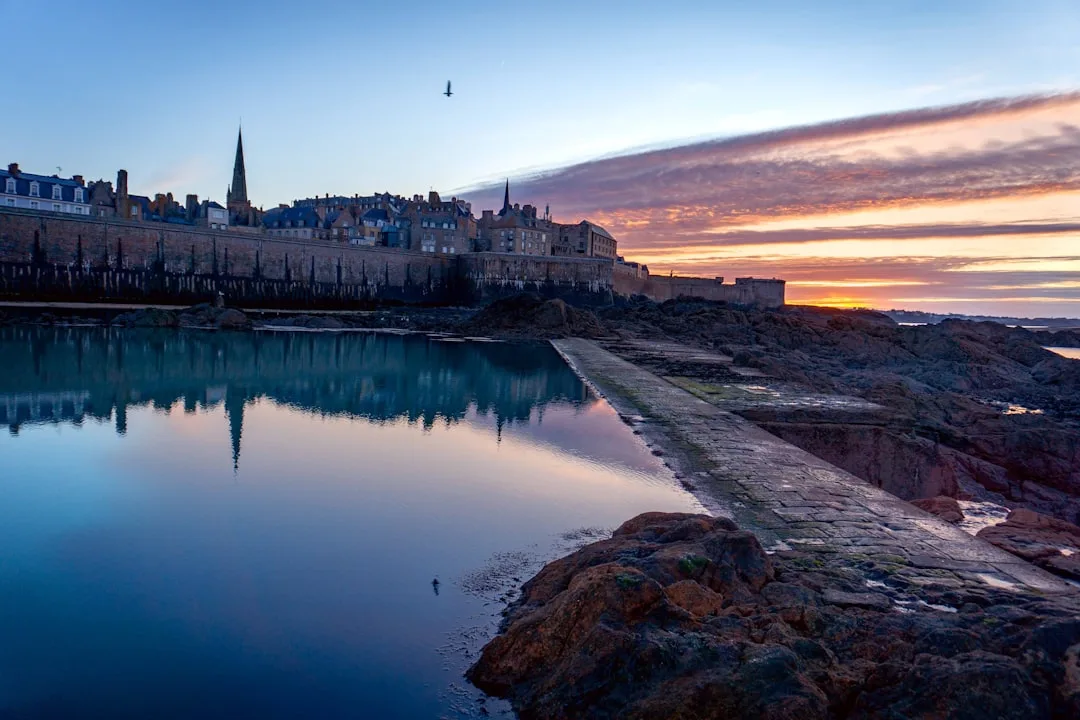
On the second day, explore the city through its beaches and the islands accessible at low tide. The most practical sequence is usually Plage du Mole, Plage de Bon-Secours, Grand Bé, and, if time and the tide allow, Petit Bé. Plage du Mole works well as a starting point because it lies right beside the ramparts and opens up fine views over the estuary. At Bon-Secours, it is worth paying attention to the seawater pool among the rocks and to the framing of the old town seen from outside. Grand Bé offers one of the most striking images of Saint-Malo, with the ramparts outlined in the background, as well as Chateaubriand’s tomb at the most exposed point of the island. Petit Bé requires more stamina and closer attention to the clock, but it rewards those who want to see up close one of the maritime fortifications linked to the city’s defense.
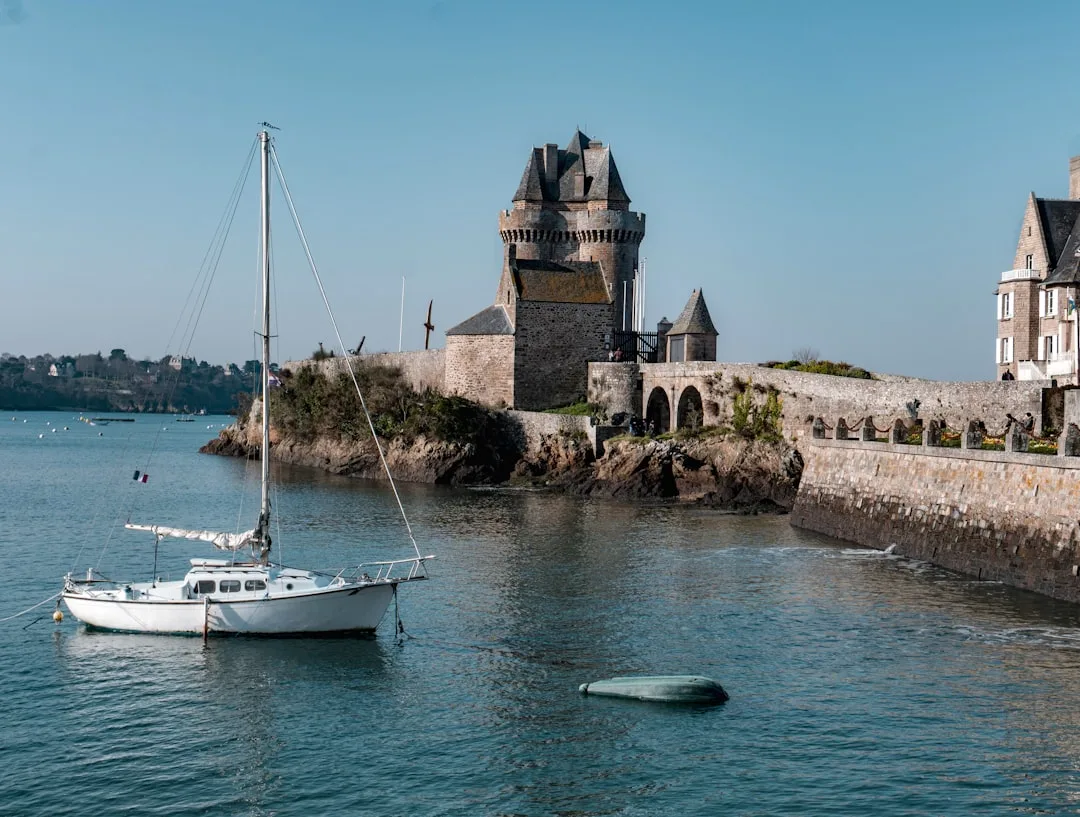
With 3 days, use the third for the northern and western stretch. Spend part of the morning at Plage de l'Éventail, the large sandy beach beside the ramparts, and fit in the Forte National if the tide and the opening hours for visits are favorable; since these conditions change, check on the day itself. In the afternoon, cross over to Plage des Bas-Sablons, where the perspective over Intra-Muros changes completely, with the city appearing on the other side of the water. From there, go up to the Tour Solidor, a 14th-century tower facing the Rance estuary, and continue on foot to the Point de Vue, which serves less as a standalone attraction and more as a natural balcony for watching the movement of boats and understanding the port side of Saint-Malo. If the subject of war interests you, fit in the Mémoires 39/45 in the same part of the day, because it is closely associated with that sector of the city.
If you have 4 days, reserve the last one for seeing Saint-Malo from the sea. A bay cruise changes the scale of the visit: the bastions stop being a backdrop, the islands begin to make sense as a defensive system, and the silhouette of Intra-Muros appears in full, with ramparts, beaches, and forts in the same frame. It is the best moment to mentally revisit what you have already covered on foot and understand why the city was built this way. If you do not want to turn this into a long outing, choose a short departure and treat the trip as the visual closing of the itinerary, not as the day’s main activity.
Saint-Malo with children: beaches, aquarium, and practical activities
With small children, the easiest break between walks is usually the outdoor seawater pool between Plage du Mole and Plage de Bon-Secours. It works well when the open beach feels too exposed for little ones or when adults want a predictable pause, with more contained water and easy access from the historic center. For families with children who still tire quickly, this is the kind of stop that keeps the day from turning into pure transit. Since the experience changes with the tide and the weather, it’s worth checking the day’s conditions before heading out.

The Petit Train solves another practical problem: children who are already tired of walking but still want to “keep seeing things.” It usually works best with younger children and with families visiting the city for the first time, because it provides an overview without demanding much from their legs. It’s also useful at the beginning of a stay, when you’re still getting your bearings, or in the middle of the afternoon, when enthusiasm drops. Schedules and operation may vary depending on the season, so check on the day.
For an indoor plan, independent of wind, tide, or fatigue, the Grand Aquarium Saint-Malo is the safest choice. It works especially well with school-age children, but it also holds younger children’s attention longer than many of the city’s museums. It is the most logical option for a day of unstable weather or to balance a trip in which the rest of the time has been very outdoors-focused. If the aquarium is on your list, it’s worth checking current opening hours in advance and buying tickets beforehand, if that option is available on the date of your visit.
The Micro Zoo fits better as a short visit than as the day’s main attraction. It suits families with children who enjoy observing animals up close without needing to set aside many hours for it. It is also a good backup option to fill a gap between outings, especially when you want something simple, smaller in scale, and easy to combine with the rest of your stay. Here, the criterion is straightforward: if the child likes the beach and water, the pool and the aquarium tend to be more rewarding; if they like animals and quick outings, the Micro Zoo is a better fit.
Where to eat and drink in Saint-Malo
To experience the more local side of dining in Saint-Malo, start with what the region does best: oysters, crêpes, and cider. Oysters work well for a casual lunch or as a late-afternoon stop; crêpes and galettes cover everything from a quick meal to an informal dinner; cider goes effortlessly with both. If you want to try all this with some context, food tours help decode the city through its cuisine, especially for those arriving without knowing how to tell a tourist crêperie from a place where you can eat well in a simple way.
The Marché de Paramé is the best bet for seeing how the city stocks up outside the most obvious circuit. It works best for those who like putting together a light lunch, buying local products, or understanding what really appears on the region’s stalls. If the idea is to choose oysters, seafood, cheese, bread, or something to take to the beach, the market beats a restaurant for flexibility. Since markets change pace depending on the day and the season, check before you go to make sure it will actually be open.
For breakfast, a snack, or a coffee break, Bergamote and Cargo Culte fit well into the itinerary. When the focus is crêpes, the most straightforward choice is Crêperie La Touline. For seafood and dishes with a stronger maritime profile, Effet Mer, Fidelis, and Le Méson Chalut are names to consider. Meanwhile, La Fourchette à droite and Le Saint-Placide make more sense when you want to sit down at leisure and make the meal a central part of the day, not just a break between walks.
In practice, it’s worth deciding based on the kind of meal you want to have. If you want something quick and typical, go for a crêperie or the market. If you want to try oysters without stretching out the meal, choose a place geared toward seafood. If the plan is a longer dinner, book a table and check the current opening hours, because these change often in coastal towns and vary quite a bit with the season.
Where to stay in Saint-Malo
If your priority is waking up near the sea and treating the hotel as part of the stay, it makes more sense to stay along the coastal stretch outside the immediate old town. The Grand Hôtel des Thermes fits that profile: it works best for those who want a base more geared toward rest, views, and a classic resort pace, with the beach genuinely shaping the experience. It is a more natural choice for couples, for those planning to spend time at the hotel, and for trips where a “right on the beach” location matters more than proximity to the historic core.
If you prefer practicality and want a functional base for coming and going with ease, the Mercure Saint-Malo Balmoral tends to be the better fit. It works well for short stays, trips where the hotel mainly serves as a base, and itineraries that call for less maritime atmosphere and more convenience. For those who arrive, sleep well, and spend the day out, this kind of location usually offers better value than paying for scenery you may not use much.
When choosing the area, think less about the “best neighborhood” and more about how you want to use your mornings and evenings. Staying by the old town suits those who want to head out on foot early, return effortlessly in the middle of the day, and feel the historic area close by even outside the busiest hours. Staying near the beach shifts the focus of the trip: the sea becomes part of the day more naturally, and the stay takes on a different rhythm. Meanwhile, an area more practical for exploring usually pays off when the plan is to combine Saint-Malo with the surroundings or when you value efficiency more than atmosphere.
It is also worth checking the room type before booking, especially in seaside-profile hotels or more traditional buildings, where category and view make a significant difference to the experience. In any of these areas, confirm the current booking, parking, and breakfast conditions on the official website before finalizing, because those matter just as much as the address when it comes to satisfaction with the stay.
Planning extras: beach, sea, shopping, and activities outside the historic center
If you have half a day or a full day left over, use it to step outside the most obvious perimeter and see Saint-Malo from the coast. The coastal walk is more rewarding for those who like walking with purpose than for those looking for “attractions” in sequence: the appeal lies in the changes in terrain, the contact with the sea, and the feeling that the city is gradually being left behind. For couples, it works well as an unhurried plan. For solo travelers, it is one of the simplest ways to fill hours with scenery and independence. With children, it is only worth it to choose short stretches, because the interest here depends a lot on being willing to walk.
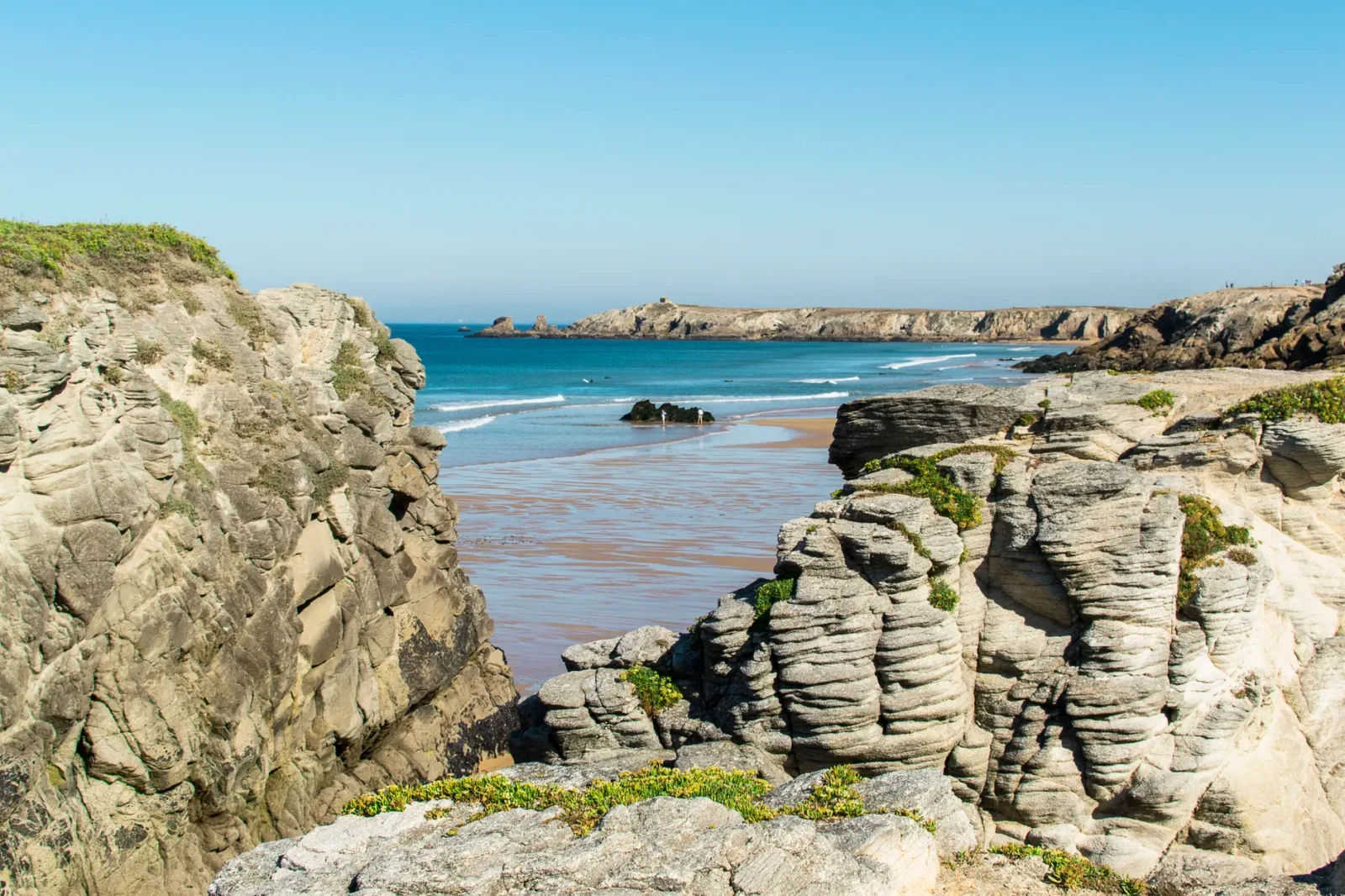
Two detours that justify leaving the center are the Rochers sculptés and the Pointe de la Varde. The Rochers sculptés appeal to those who like specific places with a distinct identity, and they work better as part of a coastal walk than as a standalone visit. The Pointe de la Varde, meanwhile, is more suited to those who want open space, coastal views, and a less urban pace. If the weather is unstable, these plans lose some appeal; if the sun comes out and you have already seen the city’s essentials, they fit in very well.
For an extra with a historical profile, the Musée Jacques Cartier is a more focused and quieter choice than Saint-Malo’s central sights. It works best for those who already know the basics of the city and want to deepen the region’s maritime connection from another angle. Families with small children tend to get less out of it than from the aquarium or the beaches; for adults traveling as a couple or alone, it makes more sense.
If the idea is to vary the kind of day completely, there are two clear options. The Saint-Malo Golf Resort suits those who want to fit golf into their stay without turning it into a long journey to another destination. The Hippodrome de la côte d'Émeraude, on the other hand, appeals to a more specific profile: those who enjoy races or want a program different from the sea-beach-ramparts circuit. In both cases, the essential thing is to check the current schedule before going, because the usefulness of these options depends more on the calendar than on the place itself.
Frequently asked questions
How many days should you stay in Saint-Malo?
Two days are enough to see Intra-Muros, the ramparts, beaches, and islands accessible at low tide. With 3 or 4 days, you can also include Fort National, Bas-Sablons, Tour Solidor, and a boat trip around the bay.
Do you need to check the tide in Saint-Malo?
Yes. The tide determines pedestrian access to places like Grand Bé, Petit Bé, and Fort National, as well as changing circulation between beaches and coastal stretches.
Is Saint-Malo a good base for day trips?
Yes. Dinard, Rennes, and Mont Saint-Michel work well from Saint-Malo, while Vannes makes more sense for those continuing their journey through this part of Brittany.
Where is the best place to stay in Saint-Malo?
Near the old town works best for exploring on foot and getting back to the hotel easily. The coastal strip outside the historic center is better suited to those looking for beaches, sea views, and a more seaside-oriented pace.
Is Saint-Malo good for traveling with children?
Yes, especially because of the combination of beaches, the outdoor seawater pool, the Petit Train, and the aquarium. On unsettled days, the Grand Aquarium is the more reliable option.