One-day itinerary in Étretat: what to see, do, and how to organize your visit
One-day itinerary in Étretat with cliffs, beach, viewpoints, and tide tips to plan your visit with less improvisation.
Why Étretat belongs on a Normandy itinerary
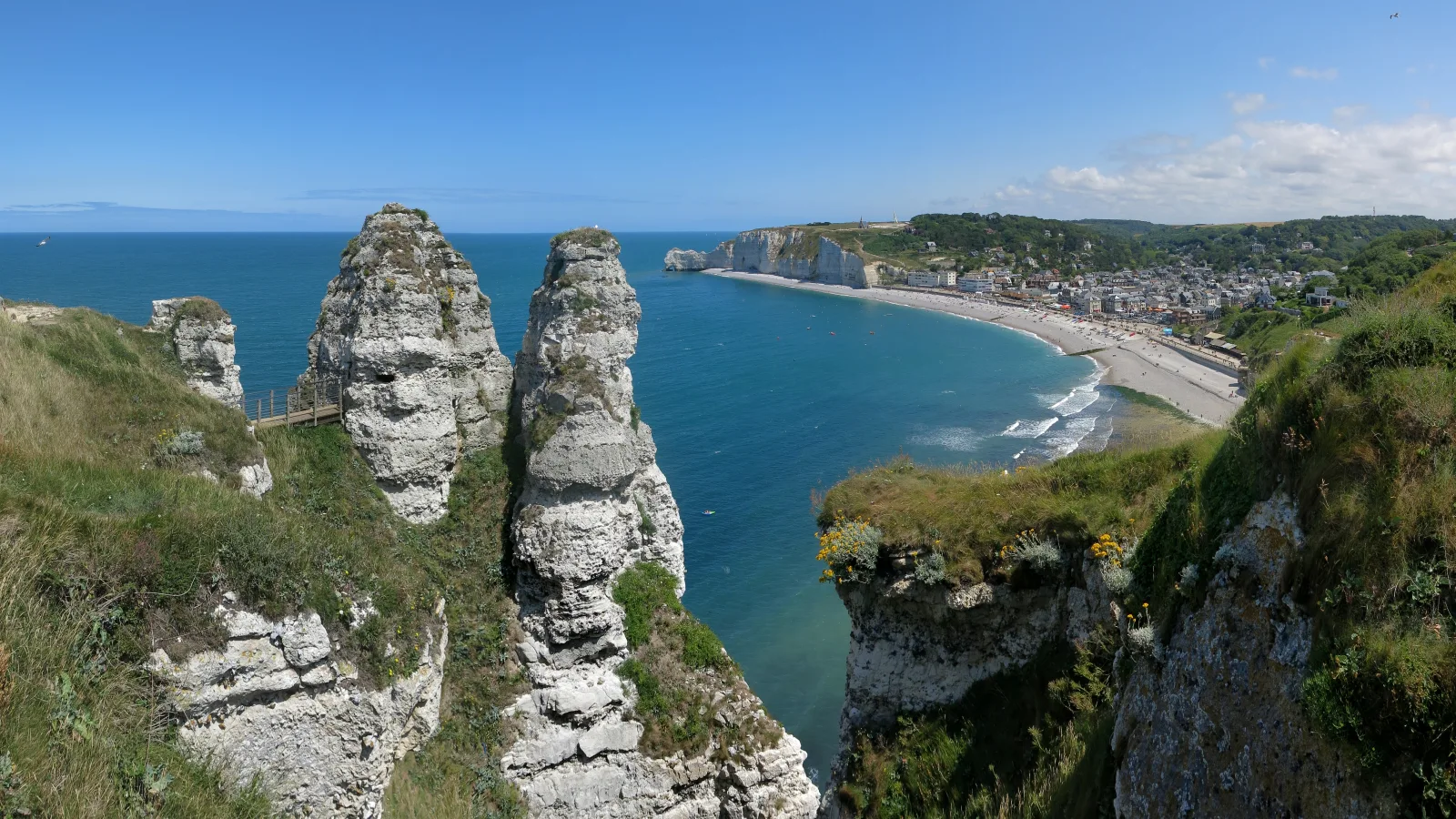
Étretat works well when a trip through Normandy calls for a short but very specific itinerary: a rugged coastline, white cliffs, and a small town that concentrates visitors into just a few blocks. What stands out here is not the size of the place, but the power of the landscape. The pebble beach, the pale cliff face, and the direct relationship with the sea gave Étretat an identity that is easy to recognize and, for that reason, highly sought after.
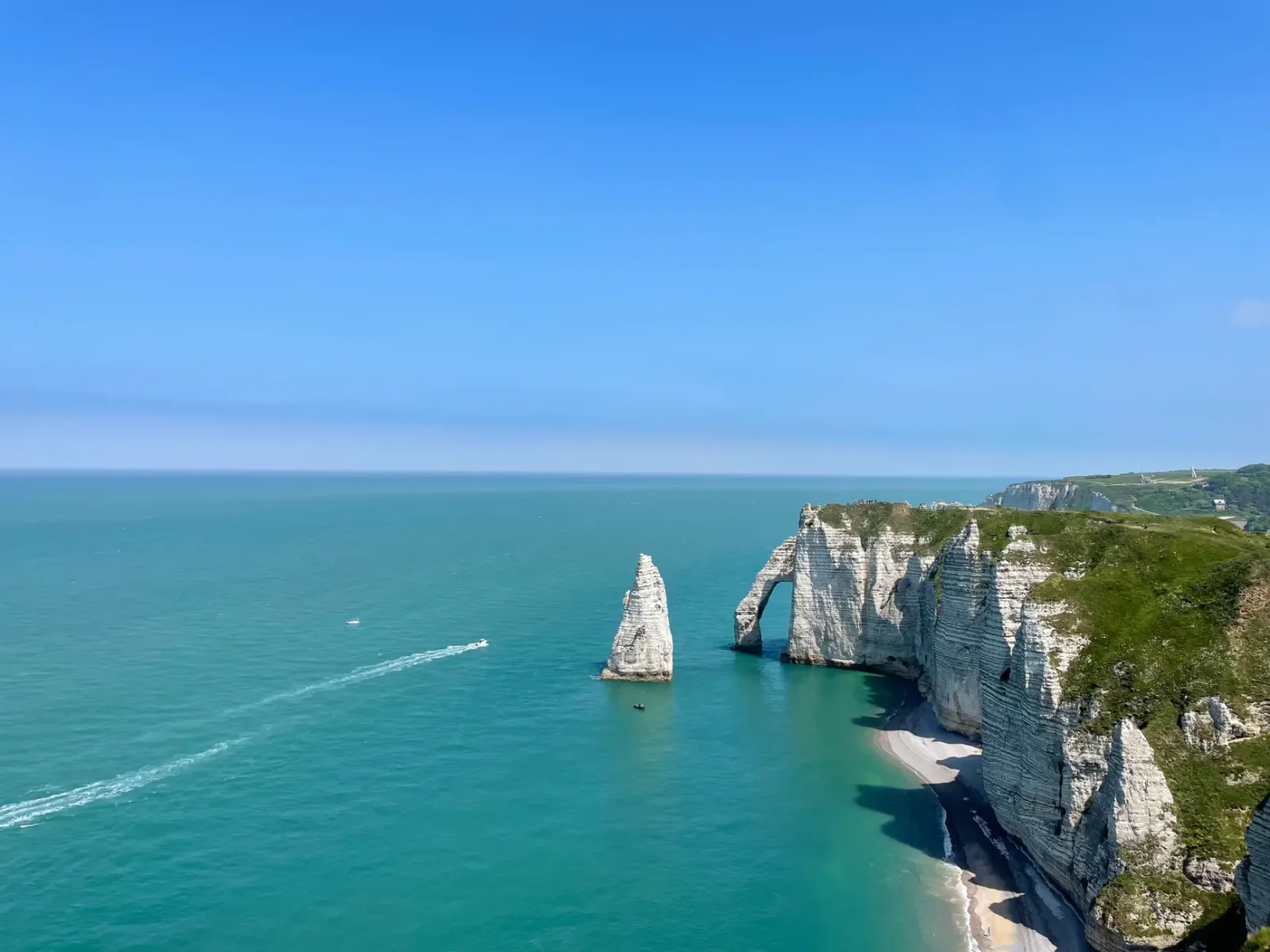
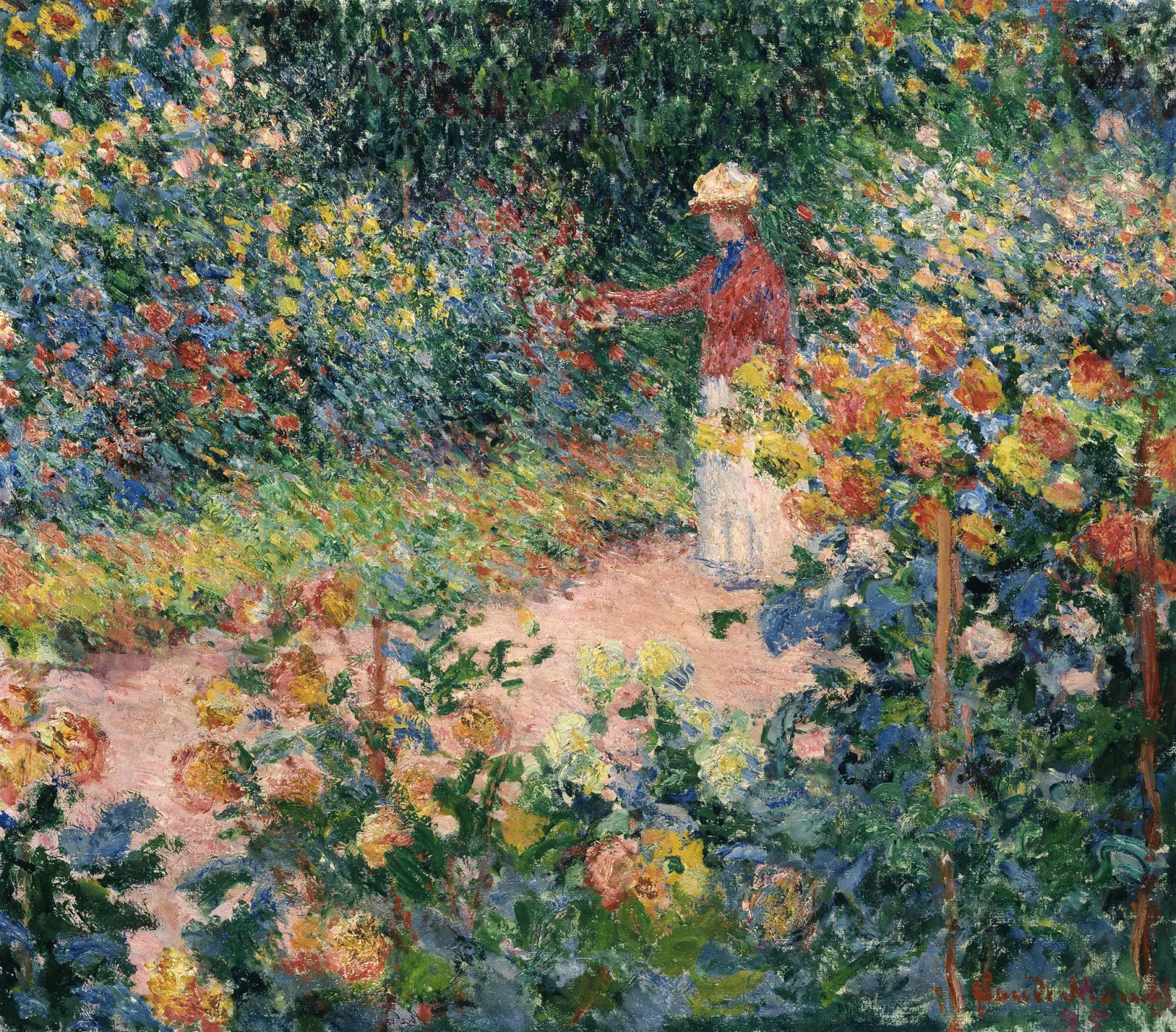
It is also a destination that speaks well to those who enjoy landscapes linked to 19th-century painting. Étretat appears associated with the Impressionist gaze, which helps explain why the place moved from being an old fishing village to becoming firmly part of Normandy’s tourist circuit. For those traveling with an interest in nature and in settings already widely depicted in art, the visit makes sense even without a long list of attractions.
In practice, Étretat works both as a day trip and as an overnight stop. One day is enough for those who want to see the town and keep going, while staying the night allows you to enjoy the slower rhythm of the coast when the stay coincides with more favorable weather. Those most likely to enjoy it are travelers who are not looking for large cities or a packed schedule, but rather a compact place, easy to understand, and dominated by the coastal landscape.
How to get there and when it’s worth visiting
If the idea is to fit Étretat into a Normandy day trip, its proximity to Paris helps a lot. The town works well as a day trip, as long as you accept a more focused pace and concentrate the visit on what really matters along the coast.
Those with little time usually do better going by car. This reduces dependence on schedules and makes it easier to arrive and leave on the same day without squeezing the itinerary.
Tides need to be part of the plan before anything else. In some spots, the water and rocks change a lot throughout the day, and this affects both safety and movement in the area. It’s worth checking the updated schedule on the day of the visit, because that is the information most likely to change.
Summer brings the biggest crowds, so the town gets especially busy հենց when many people want to go. The weather in northern France is usually cooler than many travelers expect, even outside winter, so it’s wise to expect low temperatures and wind for much of the year.
Editorial transparency: Some links on this page are affiliate links. We may earn a commission at no extra cost to you. This does not influence our recommendations.
How long to stay in Étretat
If the idea is to get to know Étretat without rushing, one day is usually enough to stroll around the town and do the main hikes with enough time to stop, watch the tide, and move on. It’s a good pace for those who want to fit the visit into a broader itinerary through Normandy.
Two days make a difference when the trip falls during a warmer period and you want to set aside part of the time for the beach, without turning the stop into a race. With one night there, you can split the day better between walking and spending more time by the sea, instead of cramming everything into a few hours.
A short visit works well for those who arrive early and accept an objective schedule. A more relaxed stay helps if you prefer to walk slowly, repeat what you liked most, and enjoy the hours when the crowds thin out. If your schedule is tight, plan only the essentials; if it’s open, sleeping there gives you a different perspective on the place.
What to do on the beach and promenade
Étretat beach is not made of fine sand. The ground is pebbles, which completely changes the experience: walking requires more attention, sitting for a long time is tiring, and going into the sea requires some willingness, because the water is cold even in the mildest months. Those who decide to wet their feet or swim usually do so for a short time, more for the feeling of being there than for comfort.
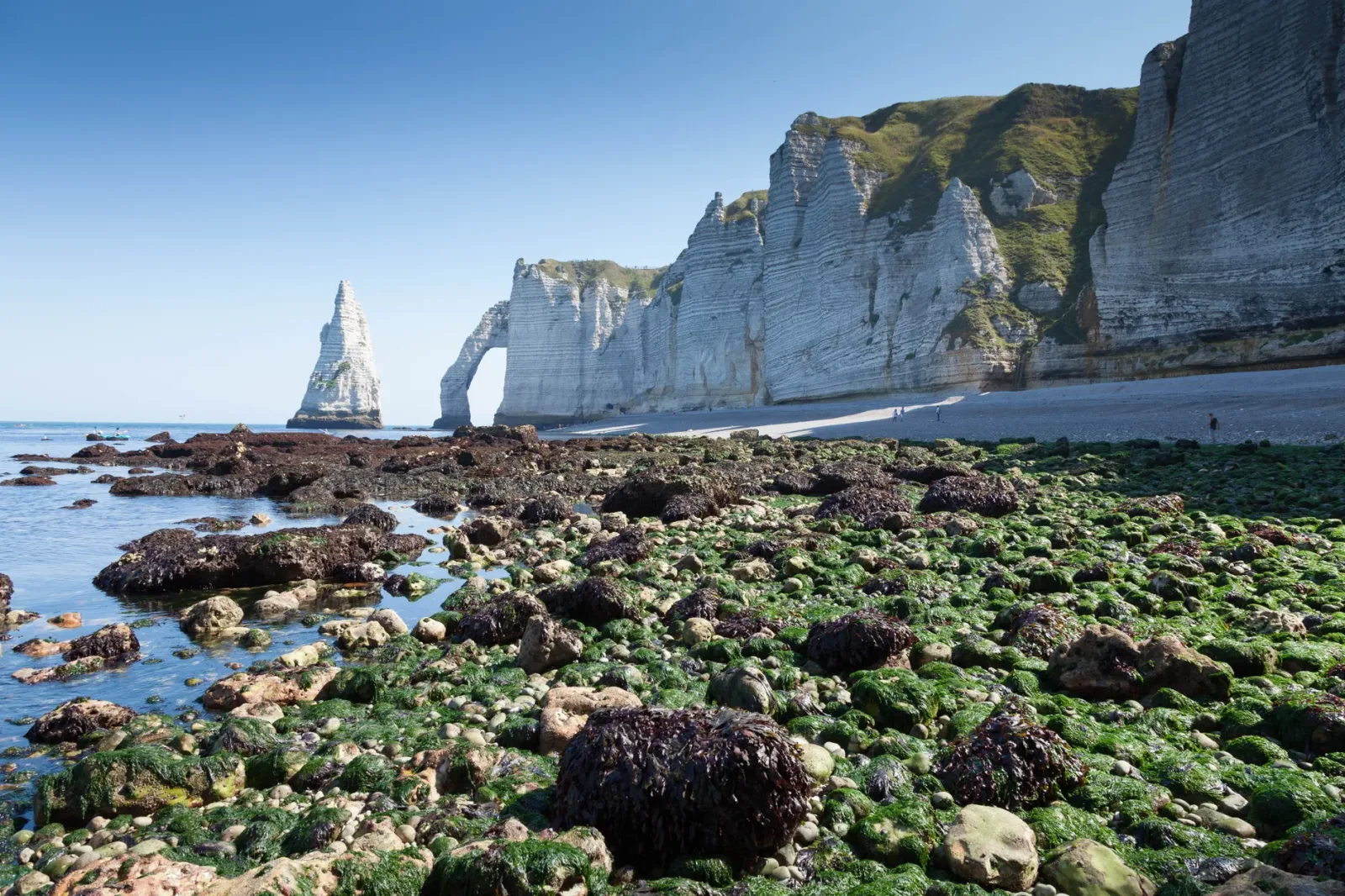
Along the stretch by the beach, the Promenade Perrey is the easiest section to walk around without effort. It is from there that many people watch the tide go in and out, stop somewhere among the rocks, and simply listen to the sound of the waves. This kind of pause makes sense in Étretat because the landscape changes throughout the day, and the water advances or retreats in a noticeable way.
The stones are there for a reason. They help contain the force of the high tide and protect the lower area of the town when the sea rises. For this reason, the appearance of the beach changes so much from one moment to the next, and what seems like a wide stretch in the morning can become much narrower later.
If you like being close to the water without rushing, the best use of this stretch is simple: walk, choose a spot to stop, and watch the movement of the sea. On windy days, the experience is even more marked by the force of the waves and the constant sound hitting the pebbles.
How to see the cliffs from different angles
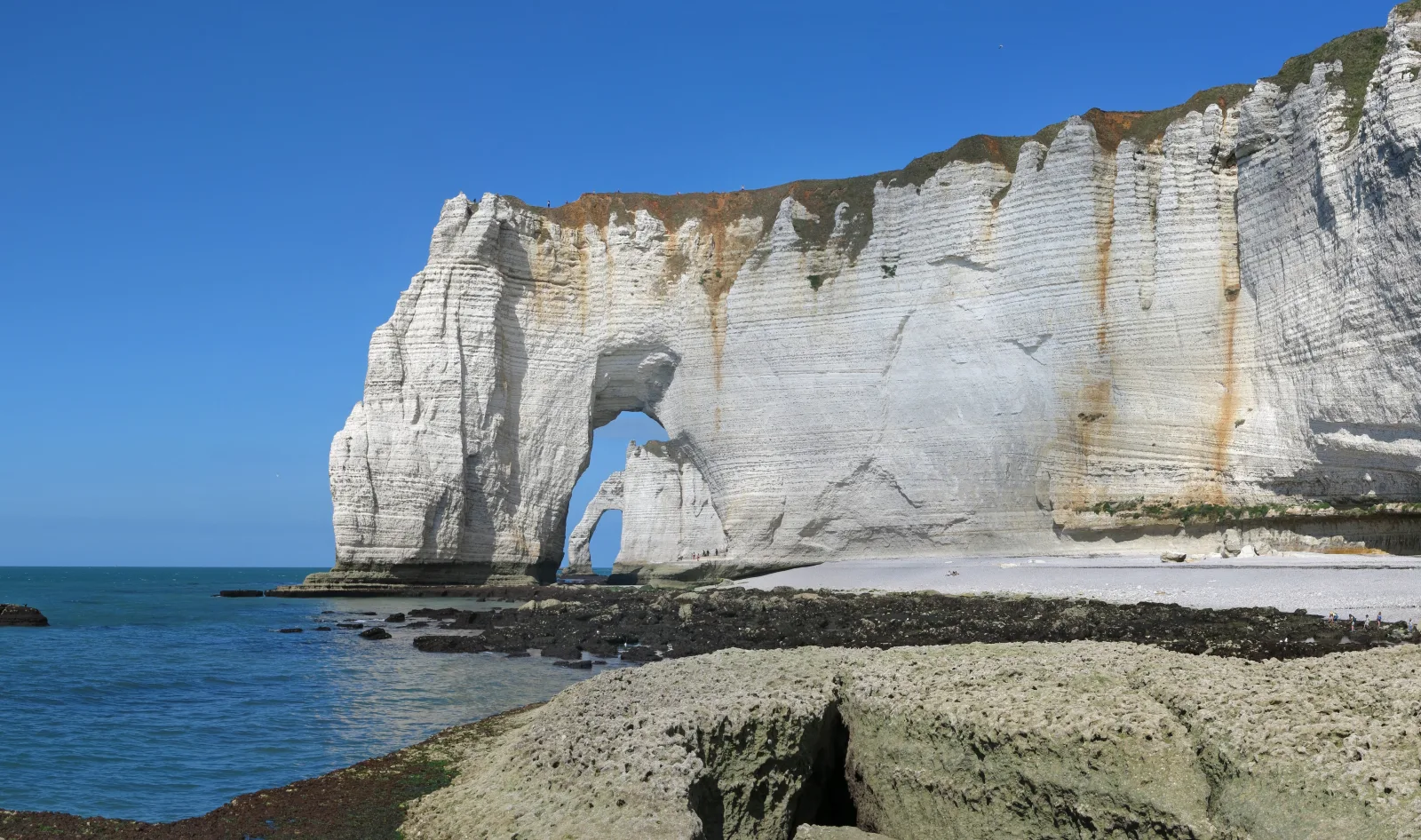
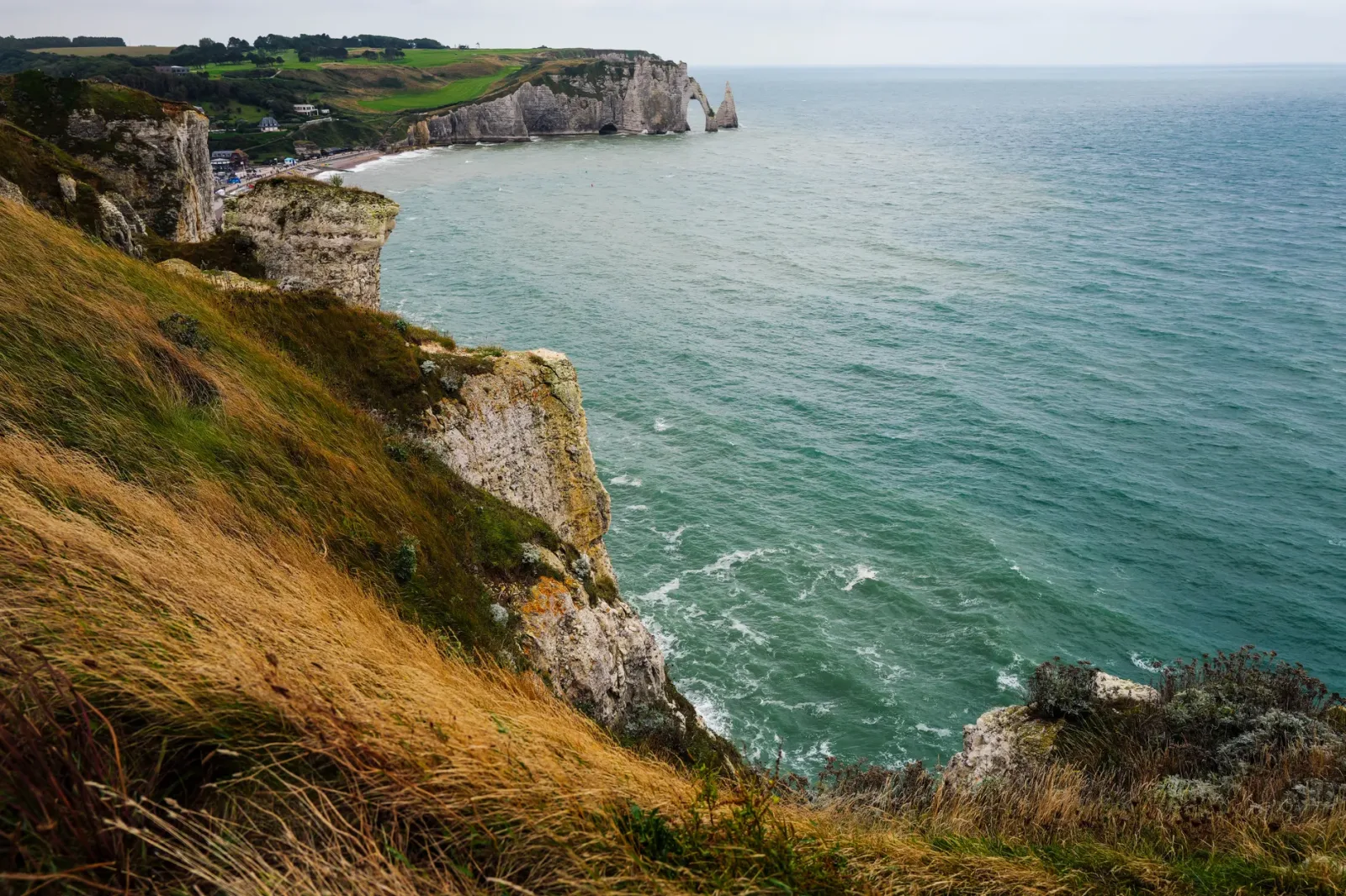
Taking the trails from above completely changes how you read the cliffs. From the top, you can see the shape of the coast, the beach below, and the form of the cliffs more clearly than from the urban strip. It is also the best way to link together the area’s two best-known natural arches: the Porte d’Aval, in the busiest section, and the connection to the Manneporte, which appears as you follow the path along the top.
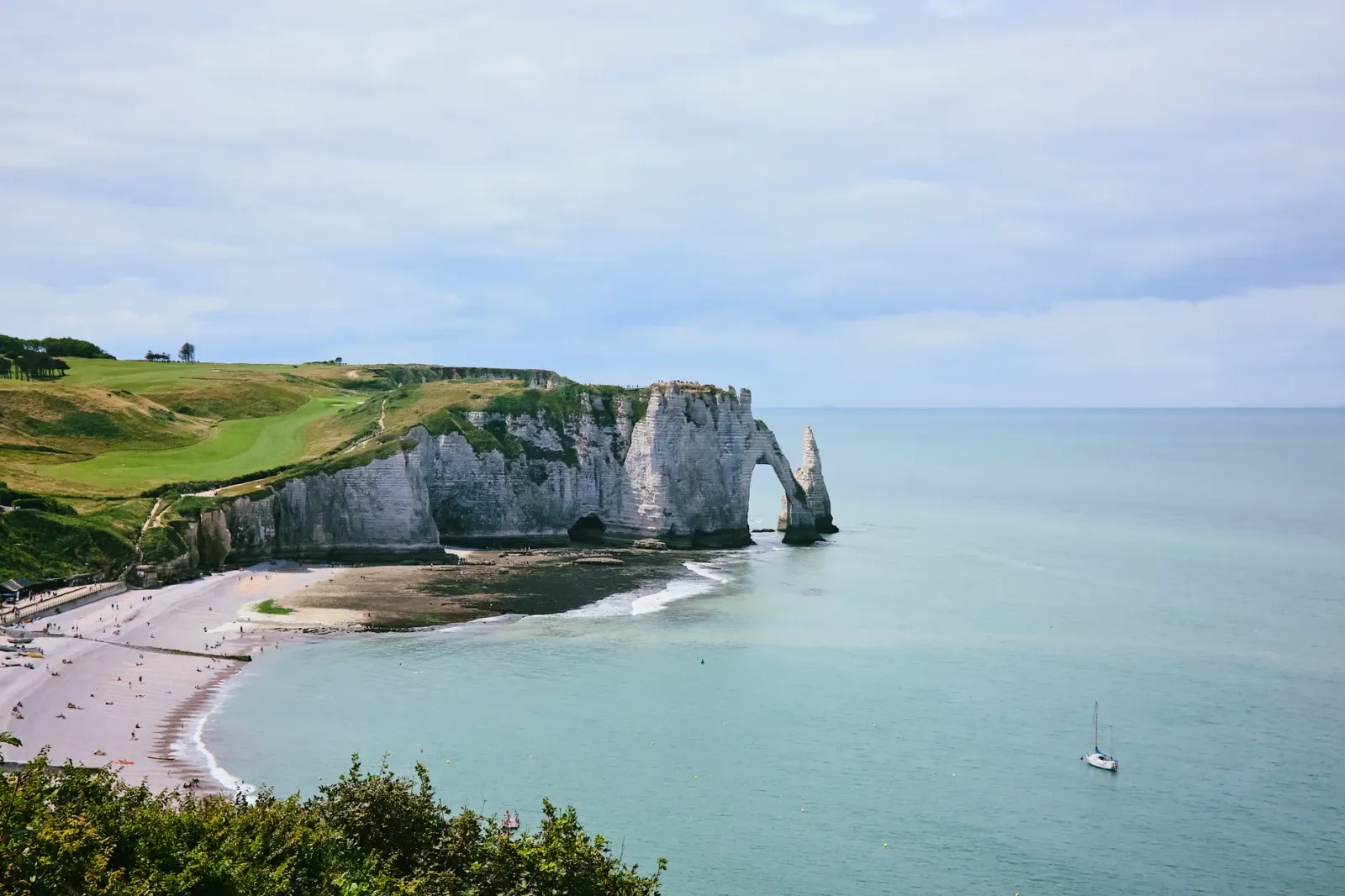
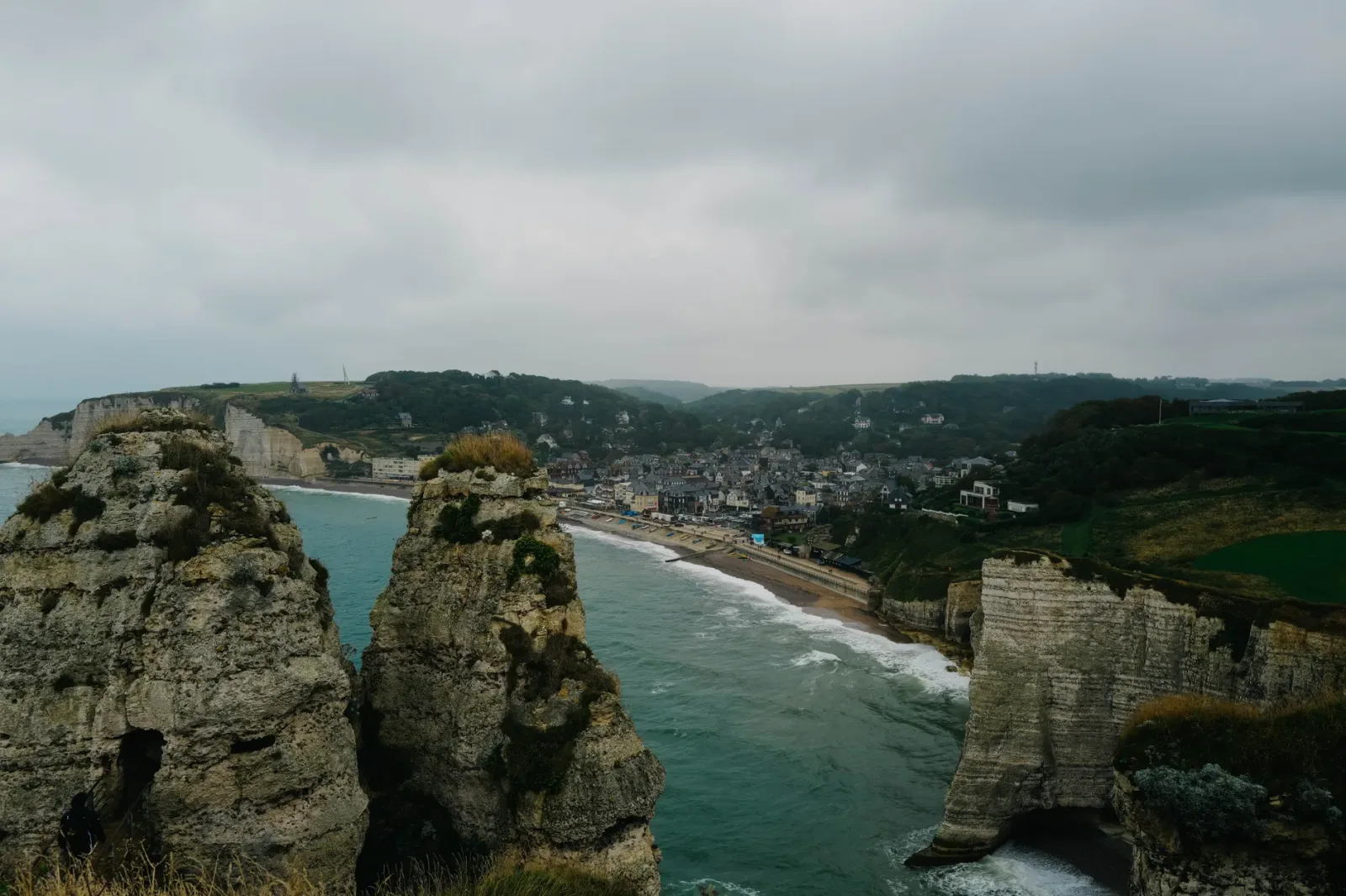
The falésia d’Amont usually works better for those who want a broader view of the town and the coast at the same time. From there, the framing is wider, and you can better understand how Étretat fits between the sea and the cliffs. If the goal is to observe the whole, it is worth prioritizing that side before spreading your time across several spots.
There are also ways to see the cliffs from the water. Boat, kayak, and catamaran tours change the perspective quite a bit and let you look at the base of the cliffs from another angle, without relying only on walking. In any of these options, keep an eye on the tide times on the day of your visit. In Étretat, this is not a detail: the tide changes the scenery and also access in some sections.
If you want to compare the views, think of it this way: the high ground shows the geometry of the coast, the water brings you closer to the cliff face. The two readings complement each other, but they require different attention to timing.
Notre Dame de la Garde chapel and the view from above
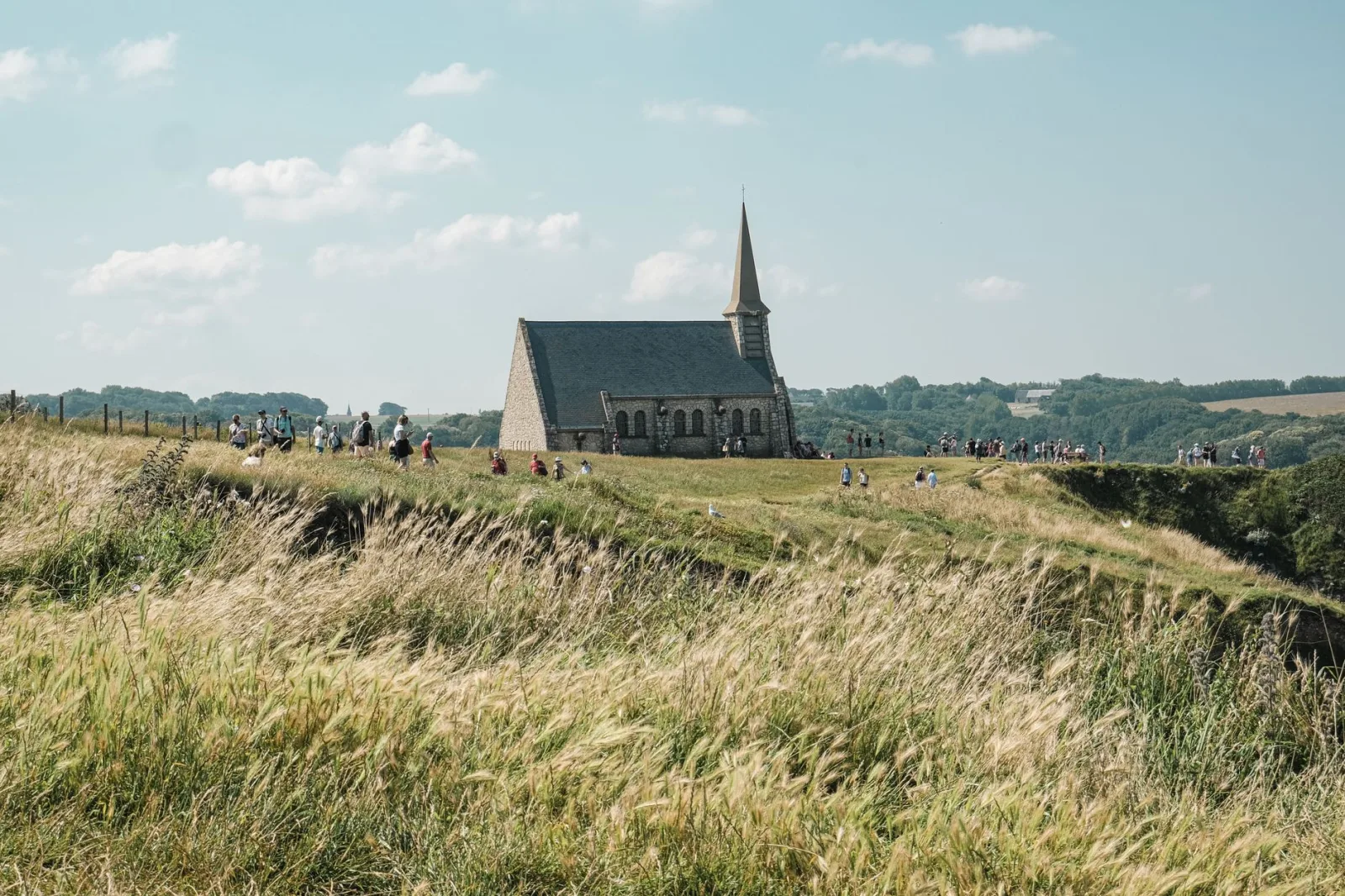
The falésia d’Amont is the right spot to understand the scale of Étretat without being confined to the strip of sand. At the top, the Notre Dame de la Garde chapel dominates the edge of the cliff and opens the view to the town, the sea, and the Porte d’Aval. It is from there that you can see the whole setting most clearly, including the monument dedicated to Nungesser and Coli, near the chapel.
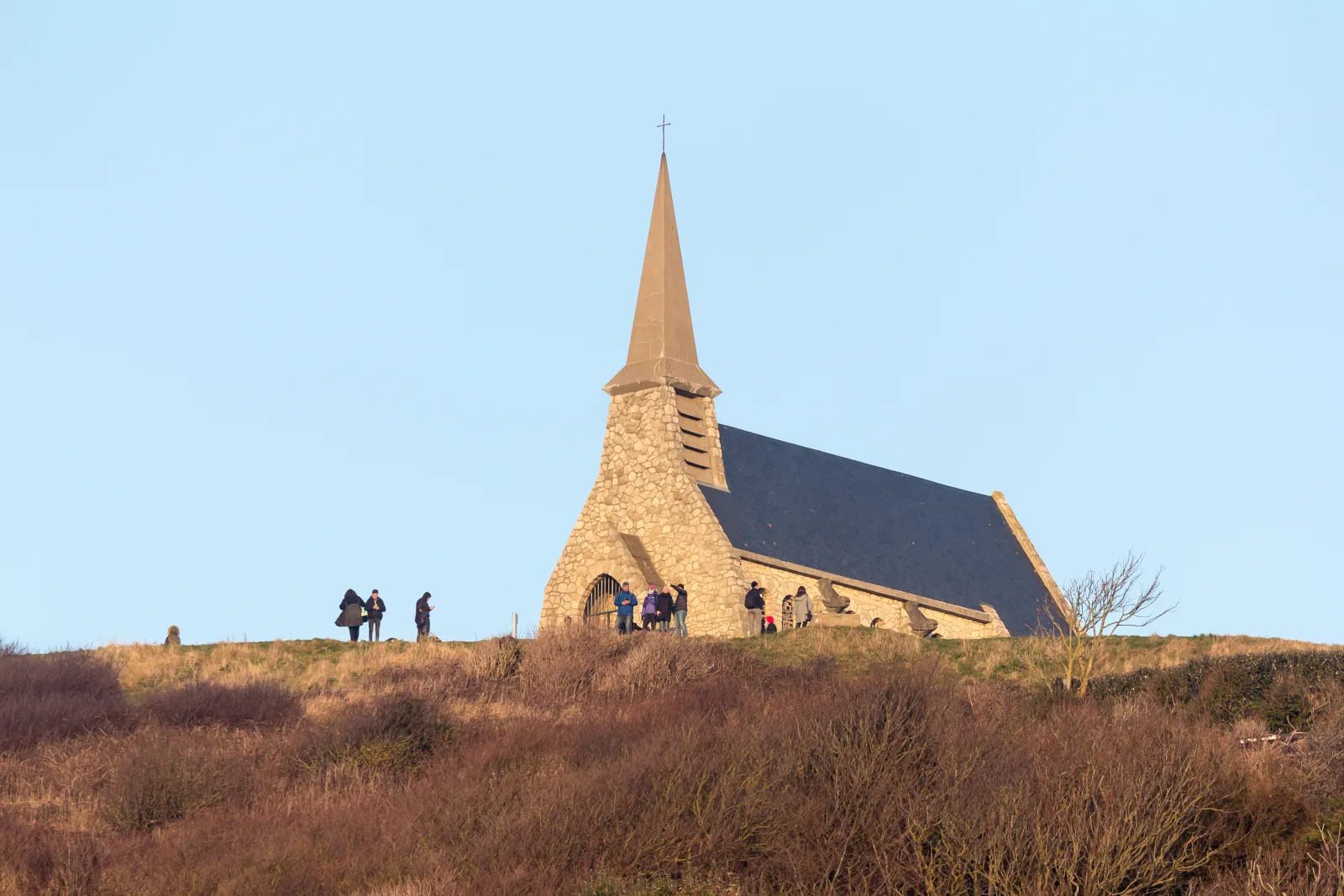
The access is worthwhile more for the view than for the path itself. Go up at a leisurely pace and plan the stop for a moment of low light, because the top of the cliff works very well at the end of the day. Sunset is usually the best time to stay there unhurried and observe how the color of the sea changes in relation to the cliffs.
If the idea is to take photos, this is the spot where the town is easiest to read from above. You can see the line of the beach, the natural arch of the Porte d’Aval, and the outline of the coast around it, all in the same frame. On windy days, the lookout also helps you feel the force of the place without going down to the base of the rocks.
Historic center, old market and local architecture
The streets of Étretat’s center preserve the look of the old Norman town: well-preserved houses, with exposed timber, brick, and stone appearing on the same facade without trying to hide the mix. This ensemble gives the walk a character of its own, because the architecture remains legible even after the place’s strong tourist appeal. It is worth paying attention to the shop windows and the small local-product stores, which occupy part of this urban fabric without erasing the buildings’ old layout.
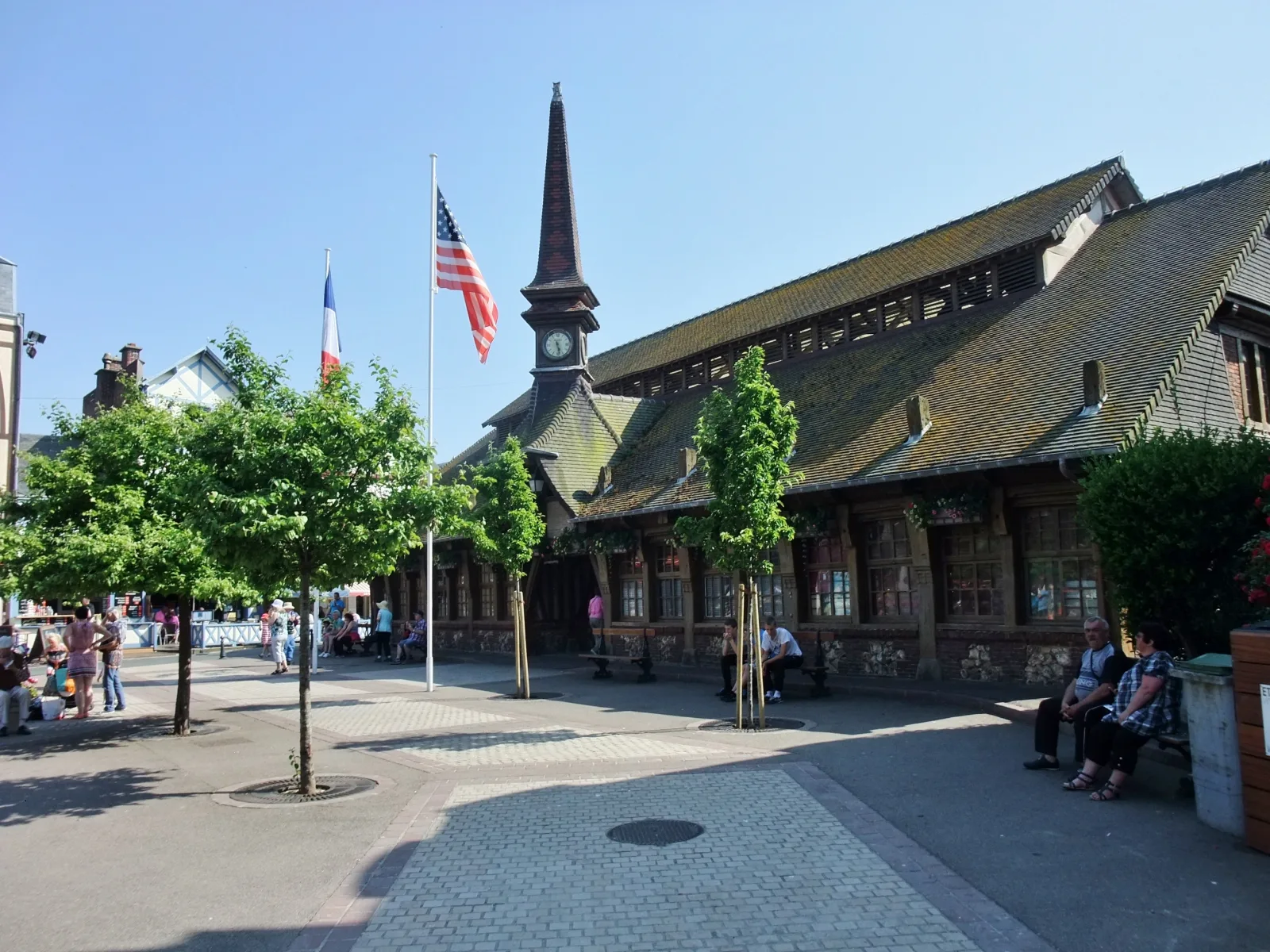
The most interesting spot for this walk is the old market on Place Foch. The medieval wooden structure still stands and today houses small shops selling regional products, decorative items, and souvenirs. It is a good place to observe how the center adapted to tourism without completely losing the building’s historical reading.
If you like to walk without rushing, this stretch works best when you turn into the side streets and observe the facade details, rather than crossing the center in a straight line. The influences mentioned in the local architecture appear precisely in this variety of materials and in the preservation of the buildings, which still give the core of the town its own identity.
Where to eat in Étretat
The most convenient restaurants are located facing the beach, where you can eat without leaving the main route of the outing. There, the menu usually revolves around seafood and fish, with moules et frites as the most repeated local dish.
Prices are reasonable for a tourist destination, with menus usually ranging from €14.90 to €75. This range varies from place to place and may change throughout the year, so it is worth checking the current menu before you sit down.
If seafood is not part of your plan, you can still find options for meat and pizza. In Étretat, this works well for those traveling in a group or with children and wanting to avoid a meal that is too limited.
To choose without wasting time, first look at the location and then at the type of cuisine. In general, the tables with a view of the beach fill up quickly at the busiest times, so booking or arriving early helps more than looking for a place on the fly.
Clues for planning a stop in Étretat within a trip through Normandy
Étretat fits well into a circuit through Normandy when the trip calls for a short stop focused on coastal scenery and a small town that does not require much internal logistics. It works as a connecting piece between stretches of the coast and other points in the region, especially because it is close to other Norman towns that often appear on the same itinerary.
If your idea is to put together a longer route, think of Étretat as a stretch of coast to fit along the way, rather than as a place to leisurely enjoy within a fixed program. This helps distribute the days better: you can set aside the visit for part of the itinerary where it makes sense to prioritize the coast, without needing to treat it as an isolated destination.
It is also worth combining the stop with other bases in Normandy, because the region calls for choices. Étretat fits in well when the itinerary alternates between small towns, the coast, and short transfers between points of interest. If time is tight, it can remain a one-off visit; if you have more flexibility, it can share space with other nights in the region without requiring major planning changes.
To plan this stage, look at the map of Normandy as a whole and place Étretat in the stretch where you want more scenery and fewer accommodation changes. This usually simplifies the trip and avoids turning a day on the coast into a long sequence of back and forth.
Frequently asked questions
How long should you stay in Étretat?
One day is usually enough to see the town, walk along the beach, and do the main cliff paths. Two days help if you want to take it slower and enjoy the beach for longer.
What to do in Étretat in one day?
The essentials are to walk along the pebble beach, climb up to the cliffs to see the Porte d’Aval and the d’Amont cliff, and stroll through the historic center. If you have time left, it’s worth stopping by the old market at Place Foch.
Do the tides affect a visit to Étretat?
Yes. The tides change the scenery a lot and affect access in some sections, so it’s worth checking the schedule on the day of your visit. This also helps you plan your beach and cliff walks better.
Where can you see Étretat from above?
The d’Amont cliff is one of the best spots for a wide view of the town, the beach, and the Porte d’Aval. The Notre Dame de la Garde chapel is there and helps frame the landscape well.
Where to eat in Étretat?
The most practical restaurants are those facing the beach, and they usually serve seafood, fish, meat, and pizzas. The most common dish is moules et frites.