Konstanz: what to do, where to stay and how to enjoy the city on the shores of Lake Constance
Konstanz: what to do in the city center, at the harbor, and by the lake, with a walking route to understand the main historical highlights in one day.
How to get to Konstanz and start the walk from the central station
Arriving by train makes sense in Konstanz because the Bahnhof is in the right spot to start exploring the city on foot, without an intermediate stop. For a short itinerary, this matters a lot: you get off, orient yourself, and head straight into the center without relying on local transport. The central station also works well as a practical reference point at the start of the day, especially for those who want to adjust the route according to the weather, the season, or the time available.
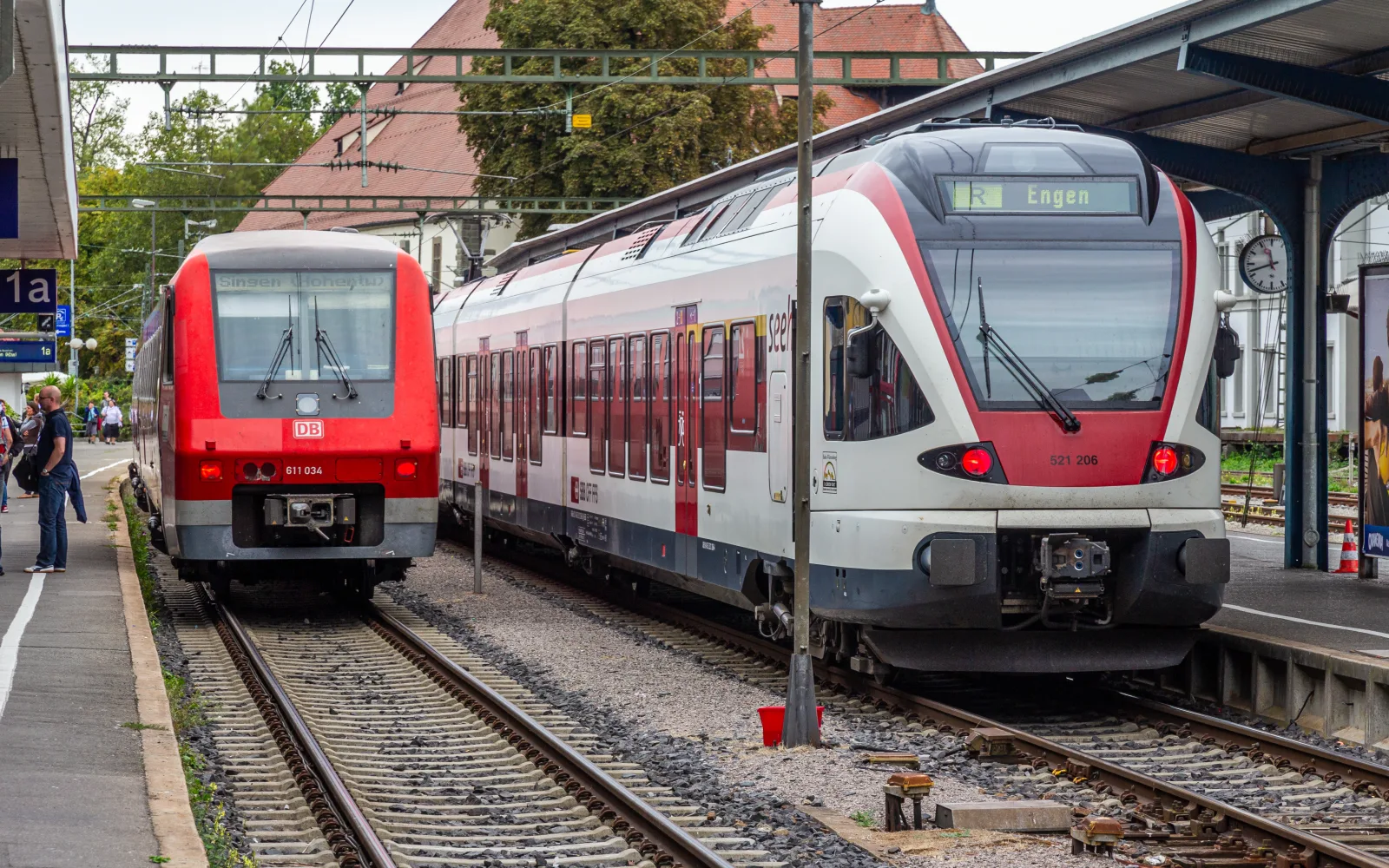
Inside the Bahnhof itself is the Tourist-Information Konstanz, which is worth a stop before heading out. It’s the place to pick up a city map, confirm what is open that day, and check information that changes, such as visiting hours and seasonal programming. The address is Bahnhofplatz 43. Service usually operates daily during business hours, but it is advisable to confirm the current opening hours before your visit.
If you like to start with the least possible improvisation, this is the moment to take care of the basics: mark the places you want to see on the map, understand the layout of the central areas, and clear up specific questions about boats, temporary events, or access. In Konstanz, this saves time because much of the itinerary is concentrated and can be done on foot, as long as you leave the station already knowing which direction to head.
First walk through the center: Bahnhofplatz, Bahnhofstrasse and the Church of the Trinity
Leaving the station, the transition to the city center happens almost without noticing. Bahnhofplatz and Bahnhofstrasse serve as that first contact with Konstanz: storefront facades, cafés, bars, and restaurants side by side, with a lively atmosphere that quickly helps you understand the city’s rhythm. This is not the part to rush from one point to another. It is worth walking slowly and using this stretch to orient yourself, look at shop windows, and notice how the center blends local routine with the flow of visitors.
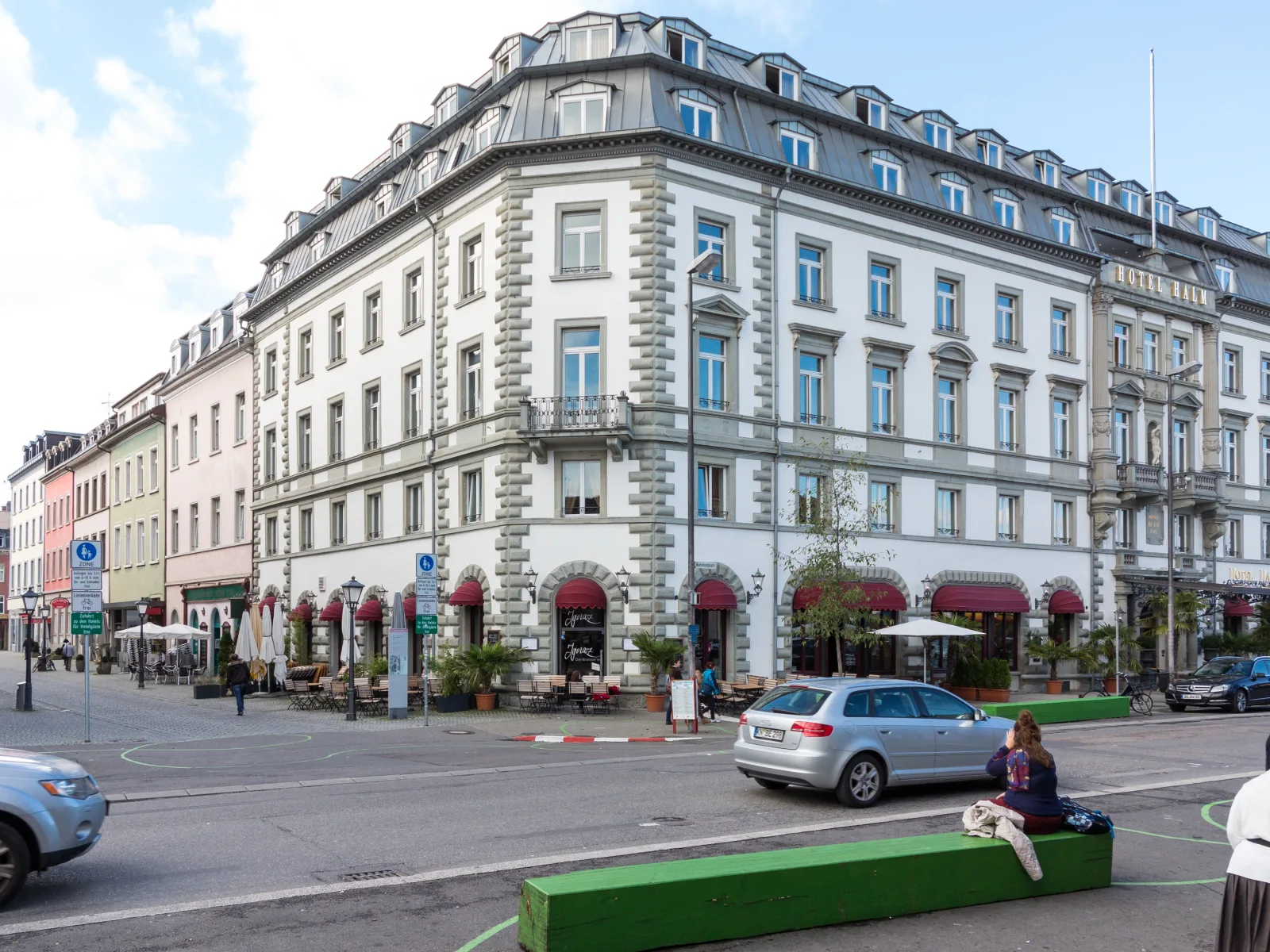
Bahnhofstrasse is also a good barometer for deciding the rest of the day. If you want to stop for coffee, eat something later, or simply take note of some of the more polished facades in the center, this is where the walk begins to take shape. Since this area changes quite a bit depending on the time and day of the week, it makes more sense to look at what is open at the moment rather than leave with a rigid plan.
Along the way, the Dreifaltigkeitskirche, the Church of the Trinity, is worth the stop even for those who do not usually go into churches. From the outside, it almost blends in discreetly on the street. Inside, the visit more than justifies itself. Admission is usually free, but it is always a good idea to confirm whether there are any temporary restrictions on the day. The interior combines a late Gothic foundation with Baroque interventions, and this mix is clearly visible in the paintings and decoration.
What holds your attention there are the frescoes and the organ. It is not a long visit, but it also does not call for haste. If you are putting together a walking itinerary through the center, this is one of those stops that works well right at the beginning because it adds visual context to the city before the more crowded areas. The church is located at Rosgartenstraße 25.
Editorial transparency: Some links on this page are affiliate links. We may earn a commission at no extra cost to you. This does not influence our recommendations.
Konstanz Harbor, Imperia, and the Konzil Building
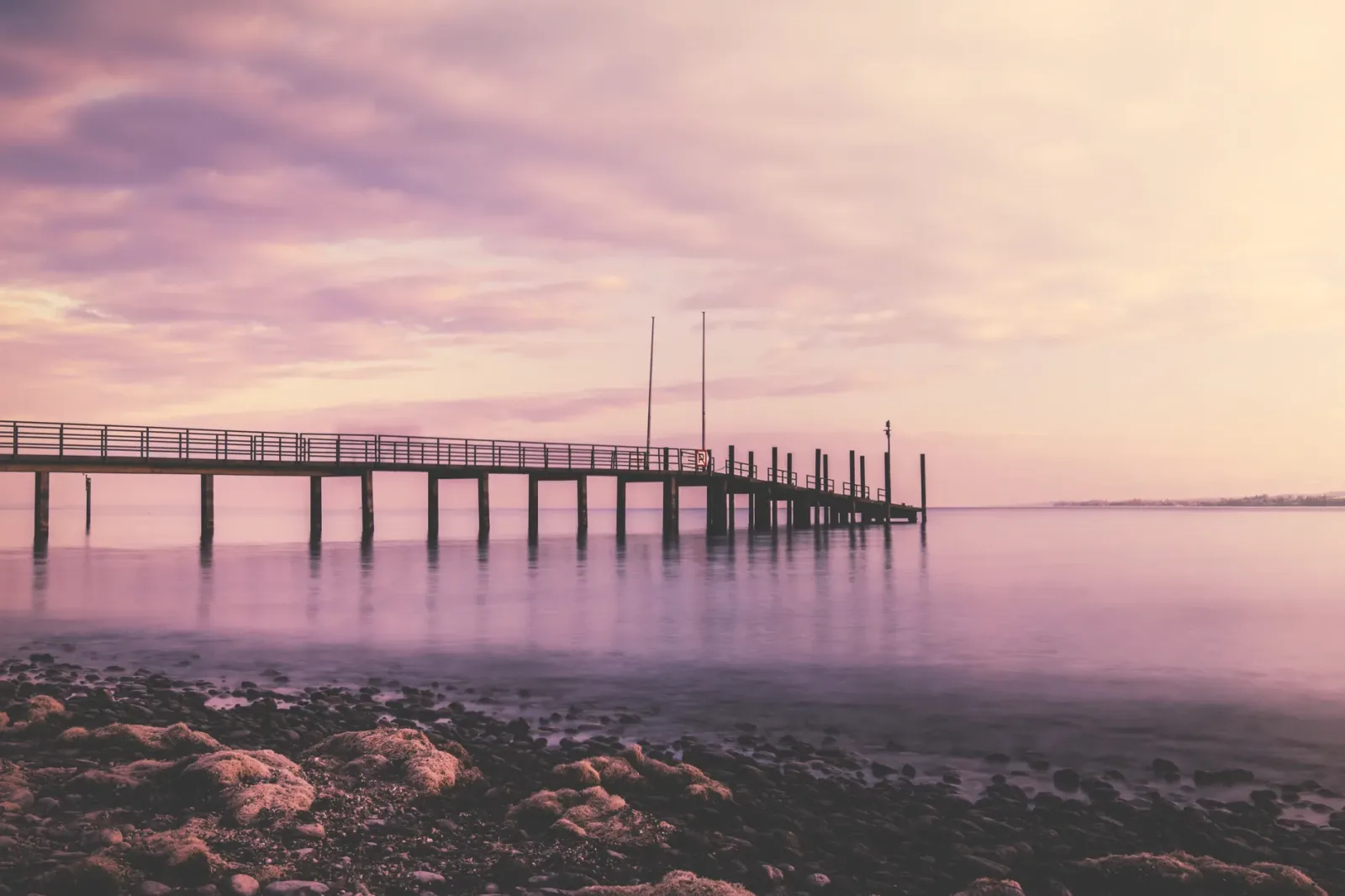
From Bahnhofplatz to the lakeshore, the walk is short, and the change of scenery is immediate. At Konstanz Hafen, it’s best to take your time along the promenade and the wooden decks, because that’s where the city opens up to the Bodensee. Moored boats, seagulls, water everywhere, and, on clear days, the line of the Swiss Alps in the background. It’s an area to look at more than to “tick off”: if the weather is good, it’s worth staying a few minutes just following the movement on the lake.
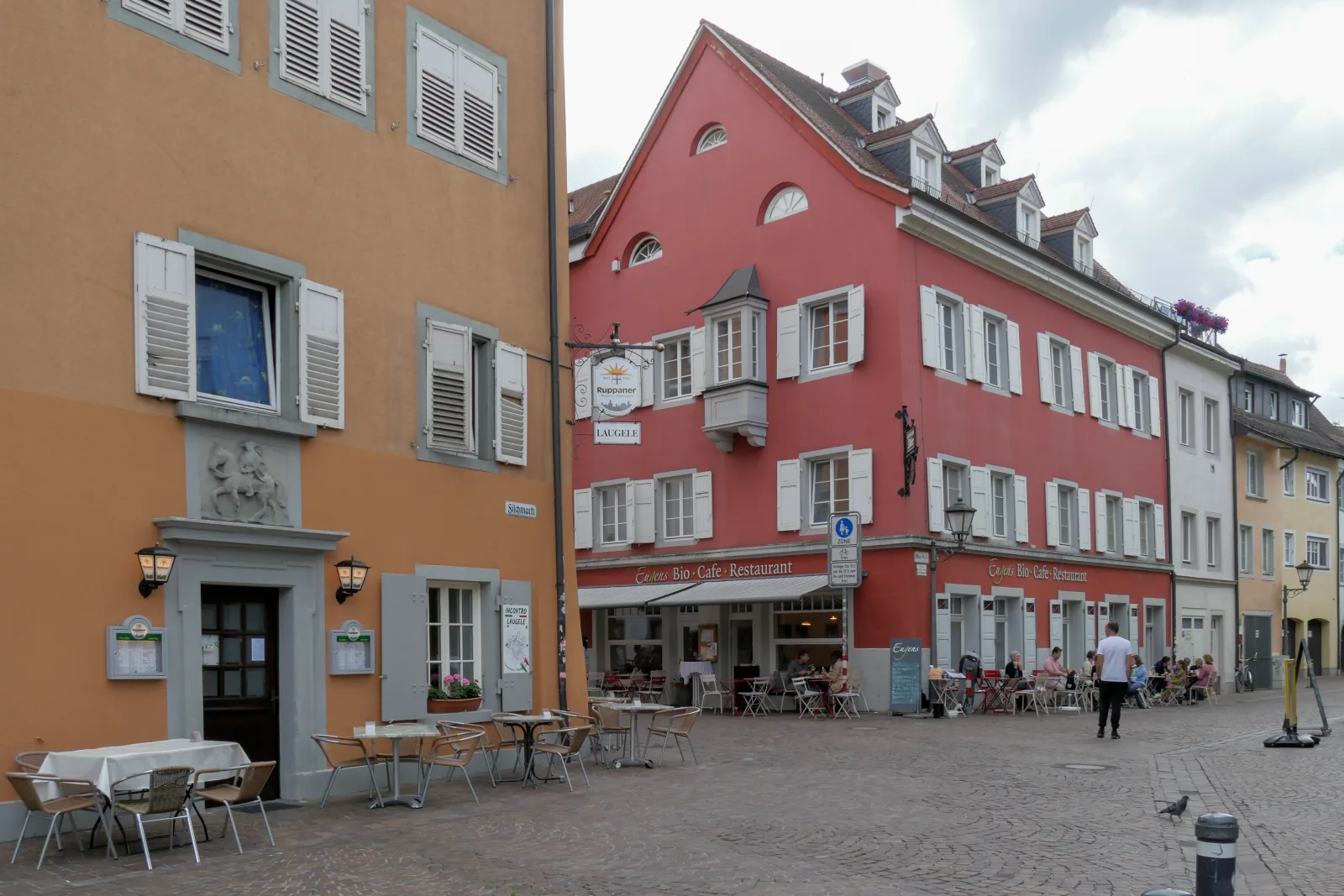
The harbor is also the starting point for boat trips around the region. From there, connections depart for the island of Mainau and for other towns on the lake’s shores, something especially interesting for those planning to use Konstanz as a base. Since routes and schedules vary depending on the time of year, it makes sense to check what is operating on the day before putting together the rest of the itinerary.
Among the waterfront landmarks, Imperia is the most recognizable image. The statue, created by Peter Lenk, shows a 9-meter female figure holding two nude male miniatures, one with the papal tiara and the other with the imperial crown, in a direct satire of the religious and secular power of the time of the Council of Constance. It stands on the pedestal of an old tower and rotates throughout the day, so it appears different depending on the angle and the time of the photo. Access to the area is free.
Right next to it is the Konzil Konstanz, at Hafenstraße 2, a building from 1388 that began as a grain warehouse and later went down in history for having hosted the meetings of the Council of Constance until 1417. It was there that Otto Colonna was elected pope under the name Martin V. Today the building functions as a restaurant, but even those who do not plan to eat there should pay attention to the exterior of the structure: it helps explain why this stretch of the harbor carries so much historical weight. In winter, this same area changes character with the installation of the Christmas market, which occupies much of the harbor zone; if you are traveling at that time, confirm the opening dates before visiting.
Stadtgarten, Alte Rheinbrücke and Rheintorturm
Leaving the waterfront, Stadtgarten offers the most pleasant transition between the lake and the Rhine stretch. It is a small enough park to fit into the itinerary without a detour, yet with enough space to slow down a bit before returning to the city’s historic fabric. If the day is clear, walk along the edge facing the water: from there you get, on one side, the harbor deck in the background and, on the other, the houses lined up along the river. In summer, the area tends to see more local use; in the cold, the park becomes quieter and works better as a short pause for observation.
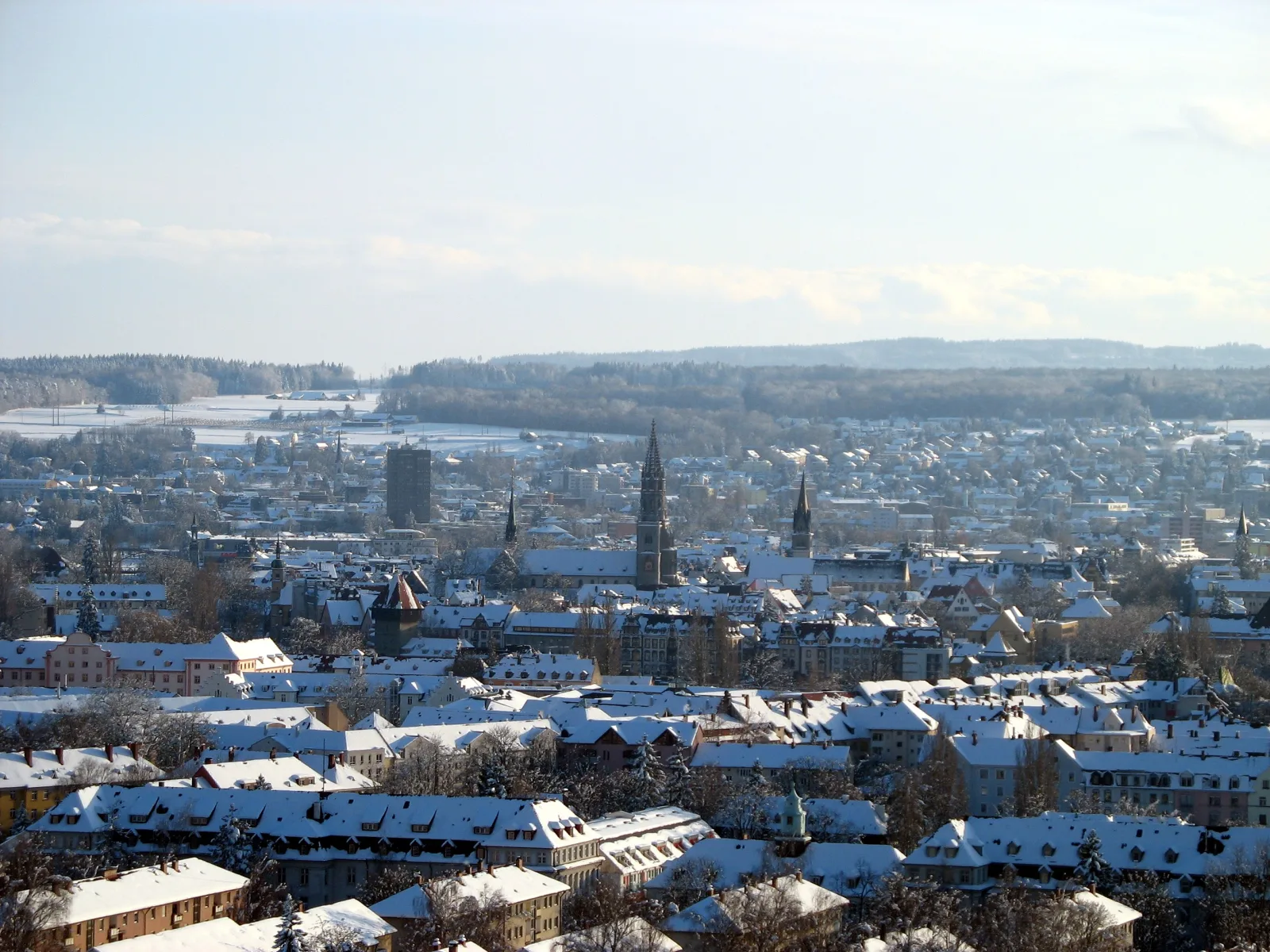
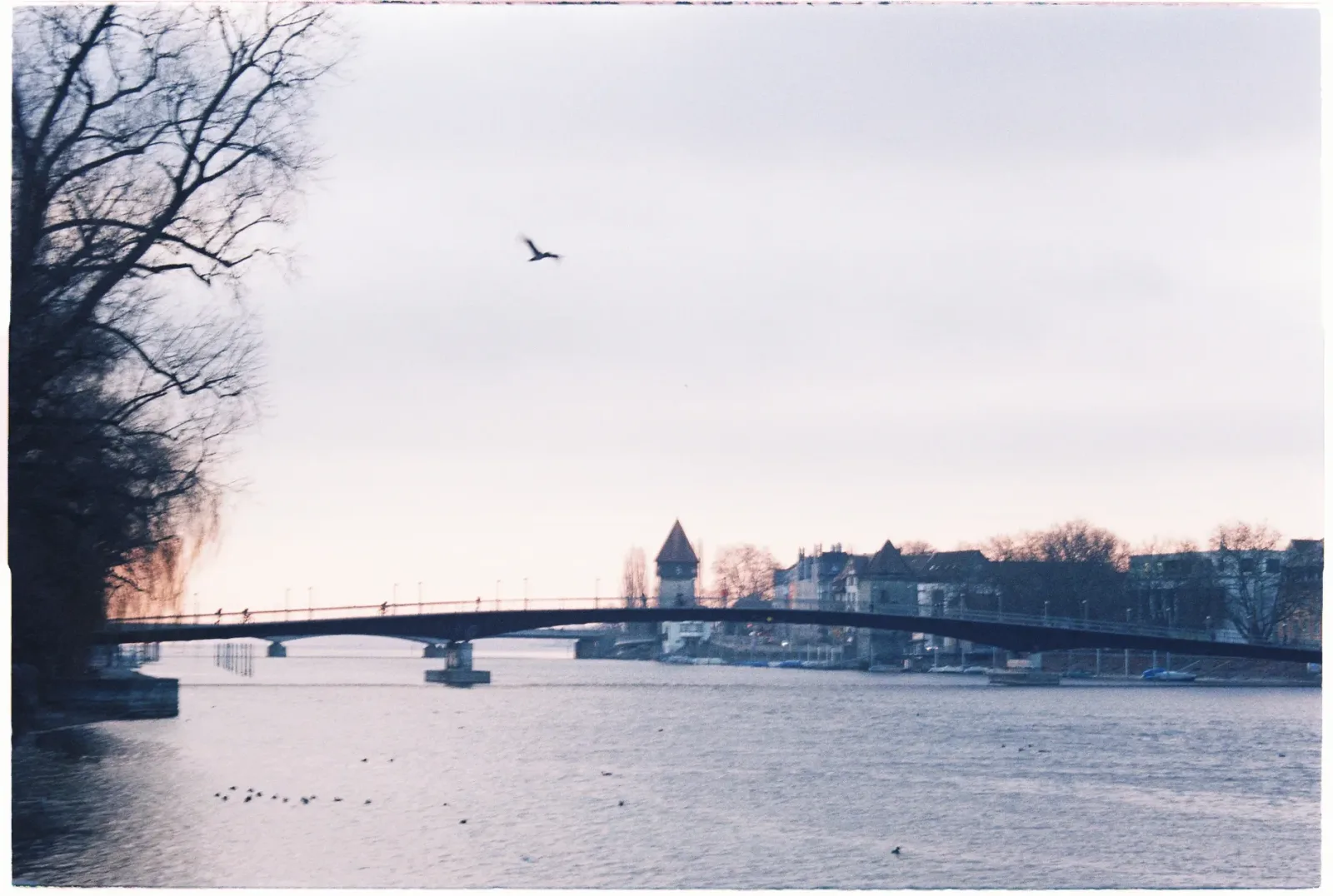
A few minutes farther on is the Alte Rheinbrücke, at Am Seerhein, 78467 Konstanz. The bridge crosses the Seerhein, the stretch of the Rhine that connects parts of the lake, and clearly marks this passage between the waterfront and the older city. It predates the two world wars and has remained preserved, which gives historical weight to a structure that, in practice, also serves as a viewpoint. Even if you do not cross the whole bridge, it is worth stepping in a few meters to look at the water flowing beneath and understand how Konstanz is organized at this meeting point between lake and river.
Almost next door is the Rheintorturm, on Rheinsteig, 78462 Konstanz, one of the clearest medieval landmarks along this route. The tower was built around 1200 and was the northern gate of the walled city, at the point where the old wooden bridge over the river arrived. For centuries, this access played a central role for those moving between the region’s banks. Today the interior is not usually open to visitors, but the exterior structure is enough to give a sense of Konstanz’s past: there you can see, in just a few meters, the transition from port city to medieval city.
Niederburg and the Oldest Streets of the Historic Center
From the Rheintorturm, you enter the oldest part of Konstanz. Niederburg is the section of the city center where the medieval town still appears clearly: narrow alleys, old facades, quiet courtyards, and houses that survived, in part, the great fire of 1355 and the transformations of the following centuries. Here it is worth slowing down and looking up. Many details go unnoticed if you cross the neighborhood only as a route from one point to another.
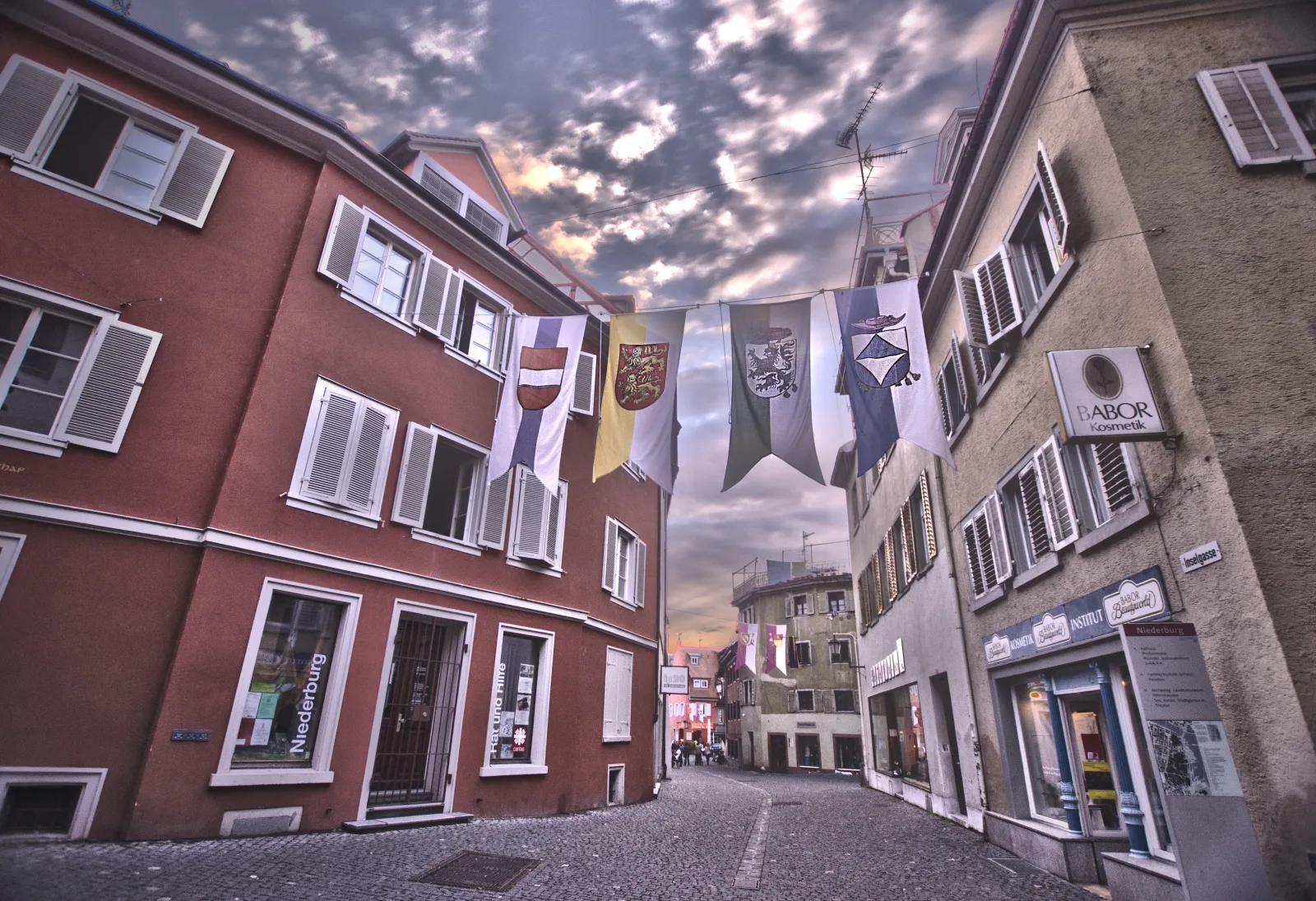
The streets that best show this character are Konradigasse, Tulengasse, and Klostergasse. On Konradigasse, there are some good examples of preserved historic houses, such as Zum Kampf and Zur Guldin Rose, both in the section numbered 29-1. On Tulengasse, the easiest stop to identify is the half-timbered house at number 11, which helps vary the reading of the area’s stone and plaster facades. On Klostergasse, Zur Rhein-Schmiede, at number 1, is a useful reference for anyone who wants to locate medieval buildings without relying on a guided route. If you enjoy urban photography, this is one of the best parts of the center for capturing doors, windows, inscriptions, and wall paintings.
Another important historical presence in the neighborhood is Kloster Zoffingen, at Brückengasse 15. The former Dominican monastery was built in 1257 and remains one of the surviving 13th-century buildings in Konstanz. The interior is not usually open to visitors, so the stop makes sense for the external view of the ensemble and for the building’s historical weight in the fabric of Niederburg.
If you have little time, focus on these streets and walk slowly between them instead of trying to “cover” the entire neighborhood. Niederburg works best this way: less as a collection of isolated points and more as a sequence of small signs of age, continuity, and old urban scale.
Konstanzer Münster and Sankt-Stephans Kirche
Konstanzer Münster requires time because the visit is not limited to the main nave. The church’s origins date back to the 7th and 8th centuries, with documentary mention in 780, and for about twelve centuries it was the cathedral of the bishops of Konstanz. It also played a direct role in the Council of Constance between 1414 and 1418. Today it functions as a Catholic parish church, but the historical weight is still evident as soon as you enter: the foundation is Romanesque, with 11th-century monolithic columns, stained glass, frescoes, and an early 16th-century Renaissance organ. Admission is usually free, but it is advisable to confirm on the day whether there are restrictions due to celebrations or partial visitation.
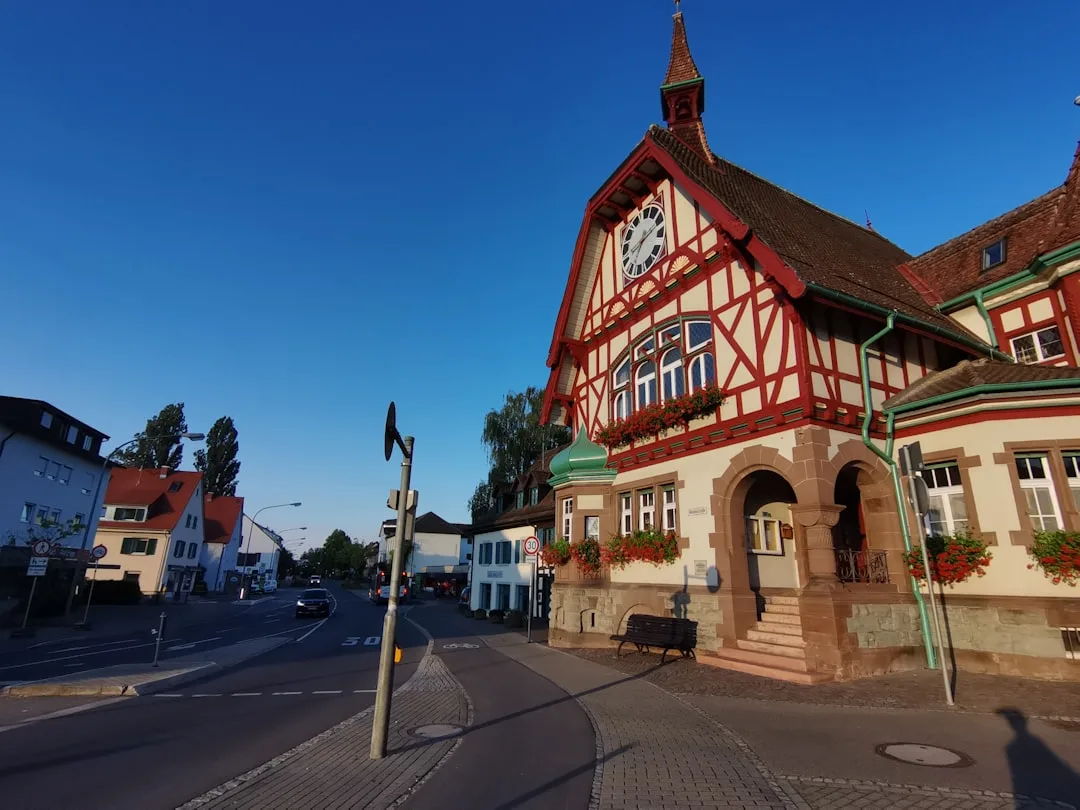
The main point here is to walk calmly through the less obvious parts of the complex. Besides the main church, look for the crypt, the Mauritius Rotunde, and the Chapel of Saint Sylvester, which greatly broaden the architectural reading of the building and help explain how the Münster developed over the centuries. If you usually go in, take a quick photo, and leave, this is a church where it is worth doing the opposite: observe the differences in period, materials, and proportions between the spaces.
Climbing the tower is usually the step that separates a quick visit from a complete one. When open, it adds a useful view of the historic city from above, but access times and any limitations should be checked in advance, because this kind of visit can change depending on the season, the weather, or the day’s operation. If your interest is more architectural than panoramic, the tower still makes sense because of the building itself.
Sankt-Stephans Kirche fits well into the same itinerary for those who want to compare historical layers within the center. It is treated as the oldest church among those mentioned for Konstanz, and for that reason it is of interest less for its immediate visual impact and more for the antiquity of the site in the city’s urban and religious context. If you have to choose only one, the Münster offers much more in scale and variety of spaces. If you can see both, the comparison works: on one side, the former cathedral with its large complex; on the other, a church that helps push the Christian chronology of Konstanz even further back.
Zollernstrasse, Wessenbergstrasse and Konstanz Town Hall
This stretch of the city center works well for walking without a rigid itinerary, because the appeal lies less in “checking off attractions” and more in reading the facades while the city goes about its normal life. Zollernstraße and Wessenbergstraße concentrate that mix of circulation, commerce, and heritage that Konstanz does so well. If you are short on time, use these streets to stitch the walk together from one point to another, but pay attention to details above window-display level: inscriptions, paintings, crooked volumes, old windows, and gables that reveal the age of the buildings.
On Zollernstraße, the Steuer-Brunnen is a quick stop along the way. It is an easy fountain to incorporate into the route and helps mark this historic axis without requiring a detour. A few meters further on is the Hohes Haus, one of the best-known facades in the center, precisely because it preserves paintings that catch the eye even of those who were not intending to look for specific architecture. In this part of the walk, the best approach is to slow down and observe the group of houses, not just a single building.
Wessenbergstraße continues this reading with historic buildings integrated into the street’s commercial use. Among them, it is worth looking for Zum hohen Gewölbe and Zum goldenen Löwen, two useful references for those who like to locate old houses by name and not only by appearance. These are not long stops. They work best as discoveries along the route, the kind that change the rhythm of an ordinary shopping street into a street with real historical depth.
The Rathaus Konstanz closes this route very well. The town hall is one of the buildings that most rewards those who take the time to look at the facade closely, because of the exterior paintings. Even without going inside, it is worth the stop; if the interior is accessible on the day, confirm the visiting conditions on site. Around it, pedestrian traffic and shops reinforce something important about this area: here, heritage is neither isolated nor overly museumified. It appears in the middle of the city’s flow, and that is what makes this walk work so well.
Rosgarten Museum and the best way to end the day in Markstätte
If you want to fit in a museum before wrapping up the day, the Rosgarten Museum Konstanz works best as a short, focused visit, not as a program to fill an entire afternoon. It’s the kind of stop that takes about 45 minutes to 1h30, depending on your pace and interest in local history. Since opening hours and ticket prices can change, it’s best to check the current conditions on the day or on the official website before going. If time is tight, it’s worth going in with a clear focus: see the permanent exhibition and move on, without trying to turn the visit into an obligation to “cover everything.”
It makes the most sense for those who like adding historical context to a walking tour, after already having seen the city from the outside. If you’re traveling with small children or are at the end of a very full day, it’s worth considering your energy and attention before going in: in Konstanz, walking a little more through the center may be better than forcing a museum visit when you’re tired.
To wrap up the itinerary, Markstätte is a practical and natural spot. It’s centrally located, useful for ending the day without moving away from the most convenient part of the center. It also keeps you close to access to the harbor, which helps if the idea is to end with one last short walk toward the water or pick things up from there the next day.
During the Christmas market period, Markstätte becomes even more useful as a place to end the route, because it clearly marks the transition to the event area. At that time, traffic changes a lot and the crowds increase, so it makes sense to use the square as a meeting point, a final pause, or a place to reorganize the rest of the evening, rather than marking an ending spread more loosely through the center.
Konstanz Christmas Market in winter
If you are in Konstanz between the end of November and close to Christmas, it is worth checking the dates of the Konstanzer Weihnachtsmarkt am See before planning your day, because the schedule is seasonal and can vary with each edition. The market takes over the harbor area and changes the city’s rhythm quite a bit during this period: instead of a more open flow of people, you find rows of stalls, lights, the smell of spices, and a larger crowd in the late afternoon and evening. If you prefer to stroll around more calmly, arrive earlier; if you want the liveliest atmosphere, go after dark.
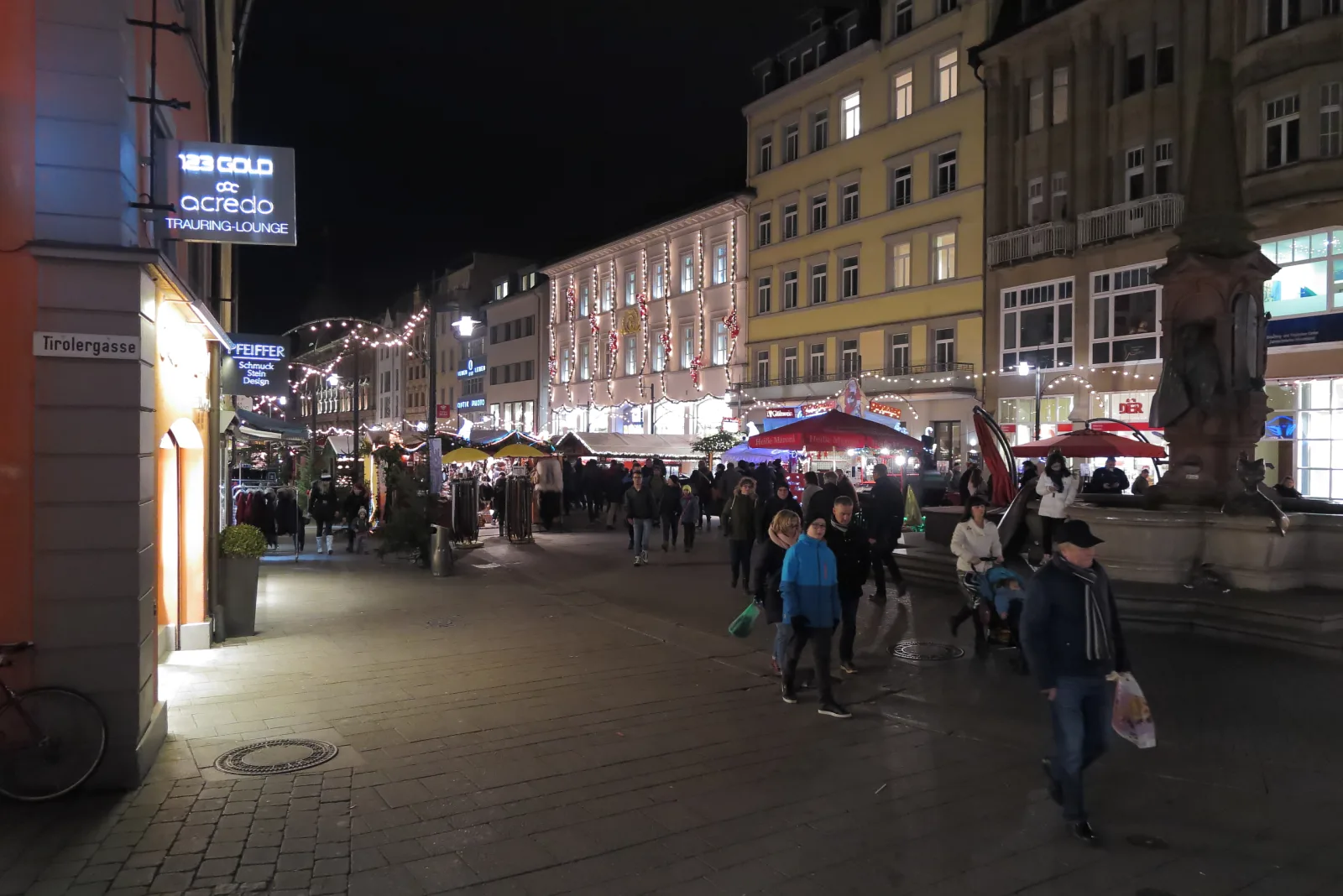
The focus here is on eating, drinking, and wandering without rushing. The stalls usually mix winter ready-to-eat food, sweets, hot drinks, and crafts, following that Christmas market logic where part of the charm is tasting little by little rather than sitting down for a long meal. To decide where to stop, the best criterion is simple: look at what is being prepared on the spot and choose what makes sense for the day’s weather. On cold nights, it makes a difference to prioritize something hot right at the start of your visit.
Glühwein is almost a local winter ritual. It is the spiced hot wine found throughout the market and works both as a break and as an excuse to stay outdoors longer. If you do not drink alcohol, it is usually worth looking for non-alcoholic versions or other hot drinks, but this varies depending on the vendors each year. Since menus, opening hours, and the event format may change, confirm the current edition on the official channel before going, especially if your visit to Konstanz depends on the market being open that day.
Frequently asked questions
What to do in Konstanz in one day?
A good walking itinerary starts at the central station, goes along Bahnhofstrasse, the harbor, Imperia, Konstanz Münster, Niederburg, and ends at Markstätte. That way you see the historic center and the lakeside without relying on local transportation.
Is it worth visiting the port of Konstanz?
Yes. Konstanz Hafen is one of the most pleasant places in the city to walk, admire the lake, and see Imperia and the Konzil building. It is also where boat tours to the region depart from.
What are the main historical sights in Konstanz?
The highlights of the center are Konstanzer Münster, Rheintorturm, the Niederburg district, Konzil Konstanz, and the town hall. The city preserves well the mix between medieval heritage and livelier areas.
Where is the oldest area of Konstanz?
The oldest area is in Niederburg, near Rheintorturm. That is where you will find narrow alleys, historic houses, and some of the most interesting stretches for a leisurely walk.
Does Konstanz have a Christmas market?
It does, and it takes over the harbor area between the end of November and close to Christmas. It gets quite busy, so it is worth confirming the dates of the current edition before going.