Kanazawa Guide: what to do, where to stay, what to eat, and how to organize your trip
Kanazawa: see how many days to stay, when to go, where to stay, what to eat, and how to plan a practical itinerary through the city.
How long to stay in Kanazawa and when to go
If you want to get to know Kanazawa without rushing, two days is the minimum reasonable amount of time. In that time, you can spread out your visits well and still leave room for unhurried meals and for moving around at a relaxed pace. With three days, the city starts to make more sense, because you reduce the feeling of a tightly packed itinerary. Four days already allow you to go beyond the basics and include longer breaks between one stop and another, which matches the city’s rhythm.
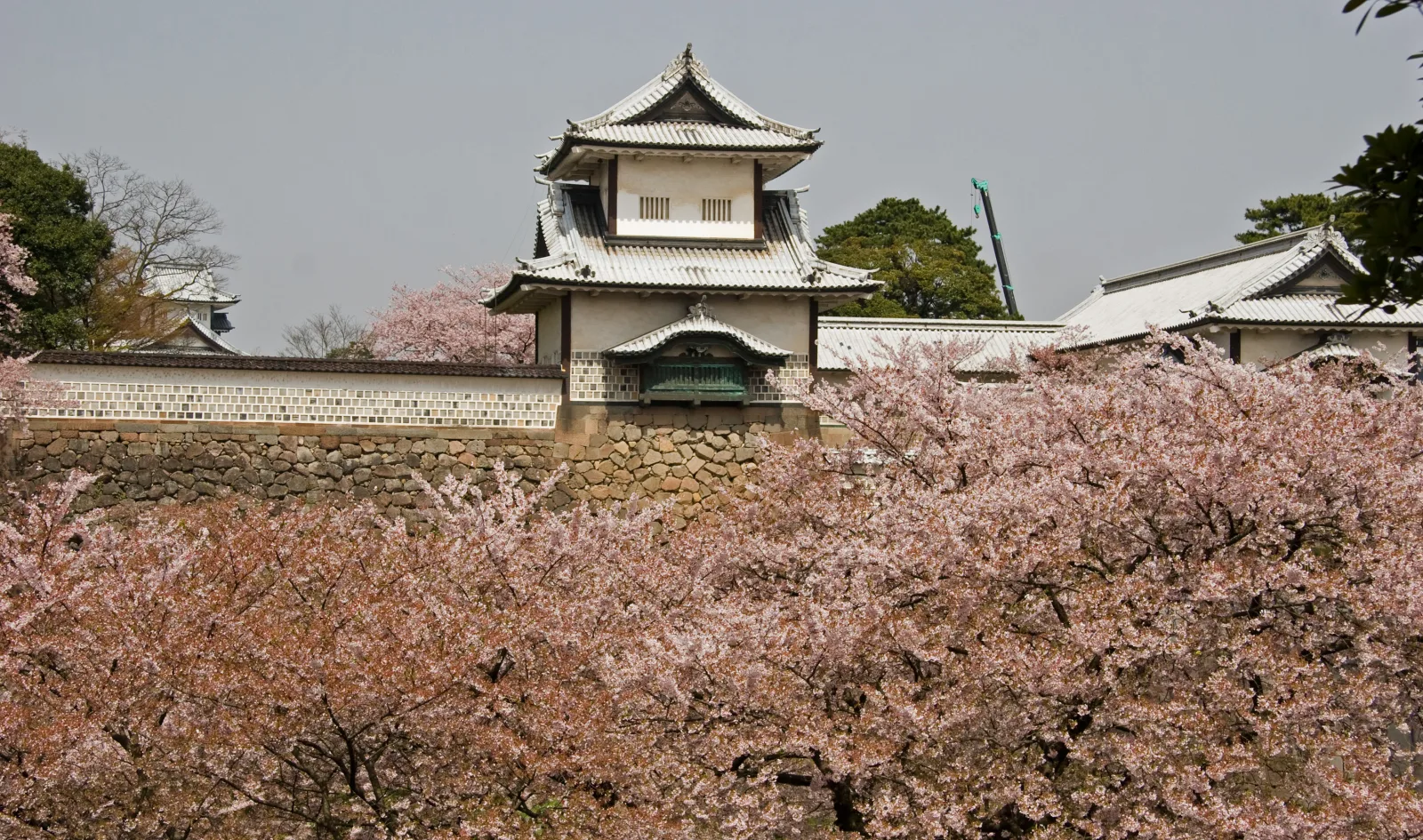
To choose the best time of year, it helps to look less at “high” or “low” season and more at what you want to see. From December to February, the cold is significant, but that is when the city usually delivers the best experience for those who want snow, quieter streets, and winter seafood, especially snow crab and yellowtail. Between March and April, it is still cold, but the scenery changes quickly: this is the cherry blossom window, usually about a week before Kyoto or Osaka. May and the beginning of June tend to be more pleasant; from mid-June to August, the heat, humidity, and rain make the visit more tiring. September improves the weather and usually has fewer people. From October to November, the temperature drops, the foliage peaks, and the sea offers a good transition between warmer-water fish and the start of snow crab season.
If the trip can be adjusted according to what is on the plate and the weather, November to March is the strongest period. That is when the city tends to be quieter and seasonality works in your favor. Those who want to combine snow and winter food should aim for December to February. Those who prefer cherry blossoms, March and April. For foliage, October and November.
How to get to Kanazawa
Kanazawa does not have its own airport, so access usually goes through Kanazawa Station, which serves as the city’s gateway. By train, the connection with Tokyo takes about 2 to 3 hours; with Kyoto and Osaka, the journey is also in the range of 2 to 3 hours. From Toyama, the trip is short, around 20 to 30 minutes by train. From Takayama, the transfer usually takes about 2 hours to 2.5 hours, whether by bus or car, depending on traffic and road conditions.
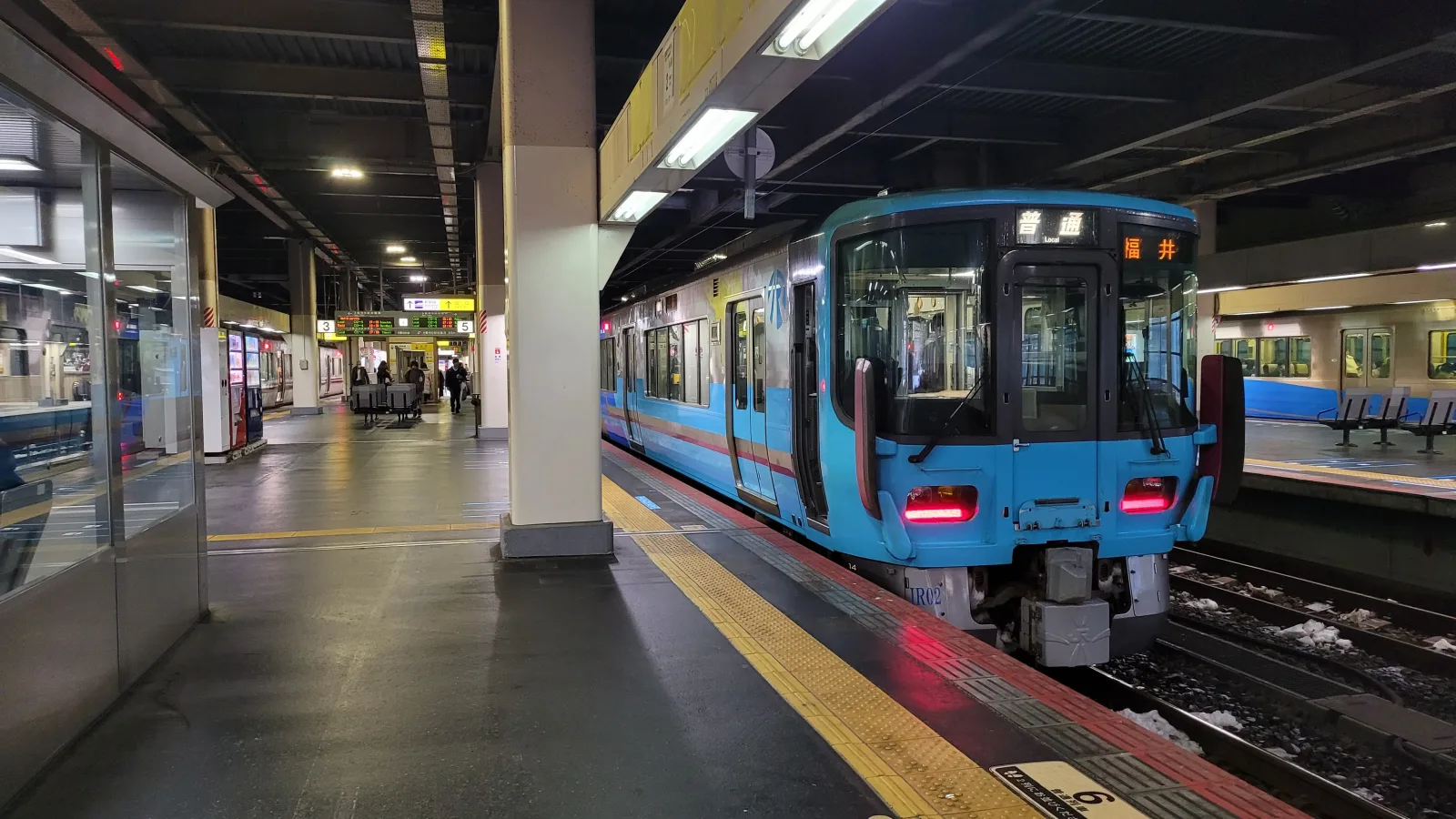
If the idea is to prioritize convenience, the train is usually the most direct option for those coming from Tokyo, Kyoto, or Osaka. The bus is more of an alternative for those leaving Takayama. By car, Kanazawa is also accessible from these cities, but travel time varies more than by train, especially on mountain stretches. For Toyama, the connection is so short that the train often works better than any other combination.
Those already traveling around Hokuriku can think of Kanazawa as a natural base for continuing their trip, not as a complicated detour. The routes are simple enough to fit the city into a larger itinerary without turning the transfer into a lost day.
Editorial transparency: Some links on this page are affiliate links. We may earn a commission at no extra cost to you. This does not influence our recommendations.
Where to stay in Kanazawa
Staying near Kanazawa Station is usually the most practical choice. The area concentrates more functional hotels, with simple check-in and easy access to taxis, buses, and walking. It is also the most convenient base for those who want to arrive, drop off their luggage, and carry on with the day without depending on much logistics. The area around the station tends to work well for those who prioritize efficiency, especially on short trips or on itineraries with arrivals and departures in the same direction.
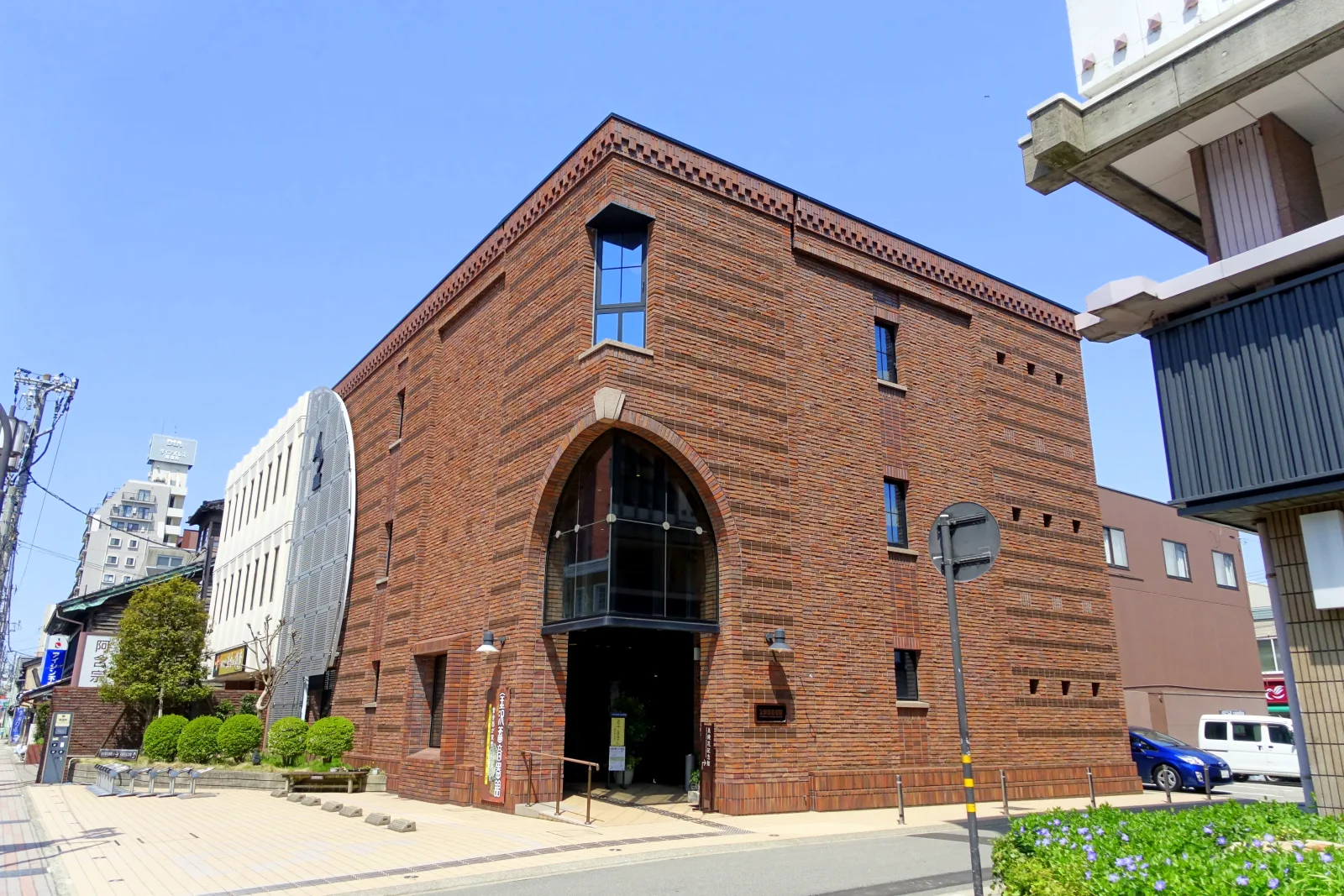
The other area that makes sense is the area around Omicho Market. There, the stay is more in line with those who want to get around on foot and prefer a slower pace, without having to cross the city for every outing. Hotels in this zone usually mix contemporary design with Japanese elements, such as wood, tatami, stone, and more subdued lighting. In Kanazawa, this style appears quite a lot: spacious rooms, soaking tubs in some cases, careful use of natural materials, and an atmosphere that leans more toward calm than excess formality.
Among the hotels mentioned with this profile, the UAN Kanazawa is a short walk from Omicho Market and combines modern design with traditional details; the rooms are spacious and have soaking tubs, as well as complimentary bicycles. The Hotel Kanazawa Zoushi is located between the market and the station, with a boutique concept, wood and stone, a bonsai garden, and a Japanese-style breakfast with seasonal and local ingredients. The SOKI Kanazawa is also close to Omicho Market and opts for more minimalist lines, tatami flooring, low futons, relaxing baths, and an onsen on site. For a more exclusive stay, the Maki No Oto Kanazawa is in Higashi Chaya, has only four suites and personalized service, with a small onsen; it makes more sense for those who want to sleep in a historic area and are willing to pay more for it.
The places worth adding to your itinerary
Omicho Market works best as a first stop or as a base for fitting in other visits on the same day. The market combines fish stalls, small counters, and ready-to-eat food, with a clear focus on seafood and local produce. It’s the place to quickly understand why Kanazawa has a reputation as a city with a strong food culture before anything else. If you like markets that still serve the local routine, it fits into the itinerary effortlessly.
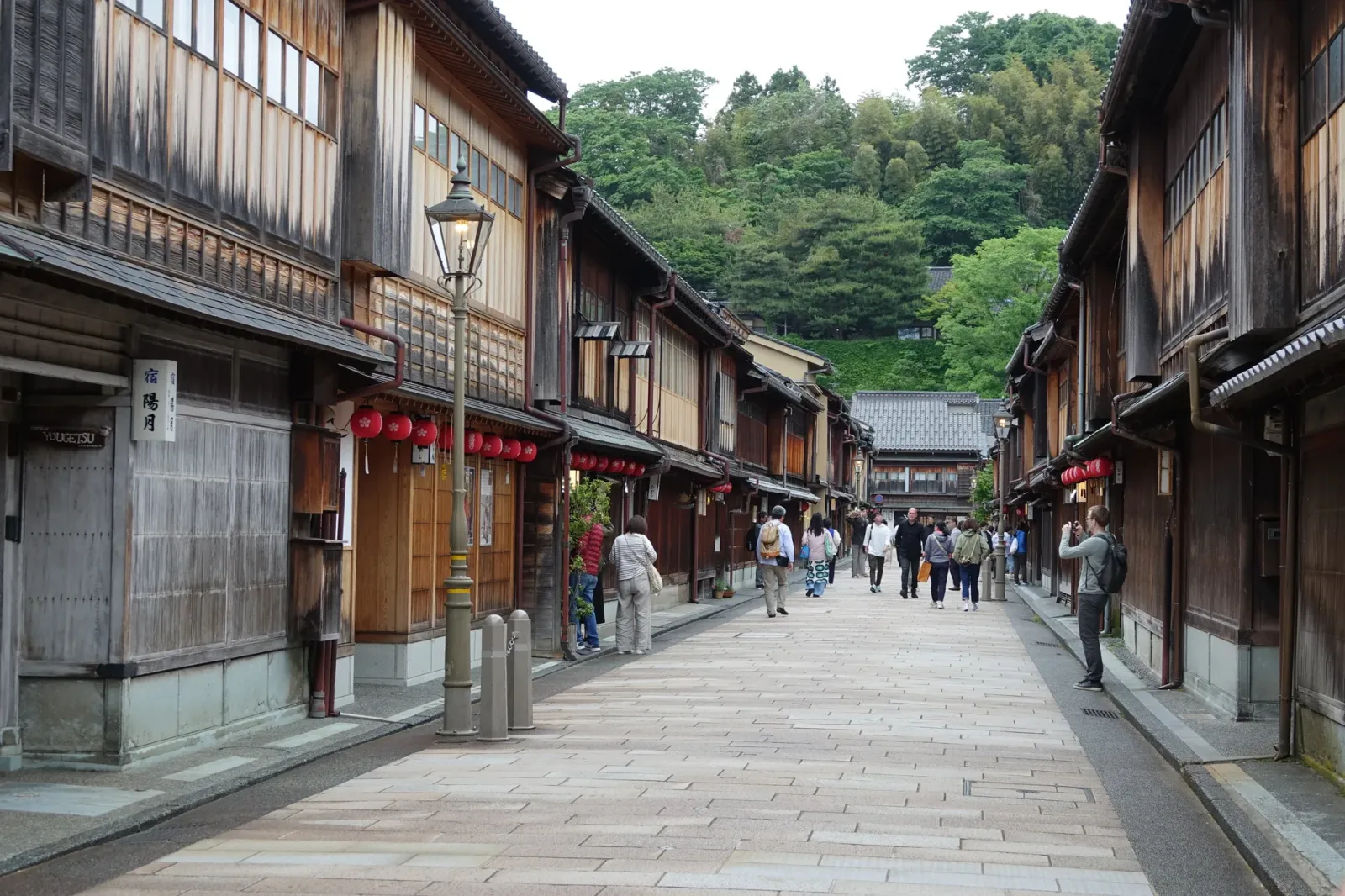
Higashi Chaya calls for a slow walk. The district preserves old teahouses, with wooden facades and narrow streets that retain the scale of the old city. Here, the visit makes sense because of the atmosphere and the shops tied to crafts, traditional sweets, tea, and gold leaf. Nishi Chaya follows the same logic, but with less movement and fewer storefronts. The two areas help you read Kanazawa as a city of commerce, craftsmanship, and female sociability linked to the teahouses.
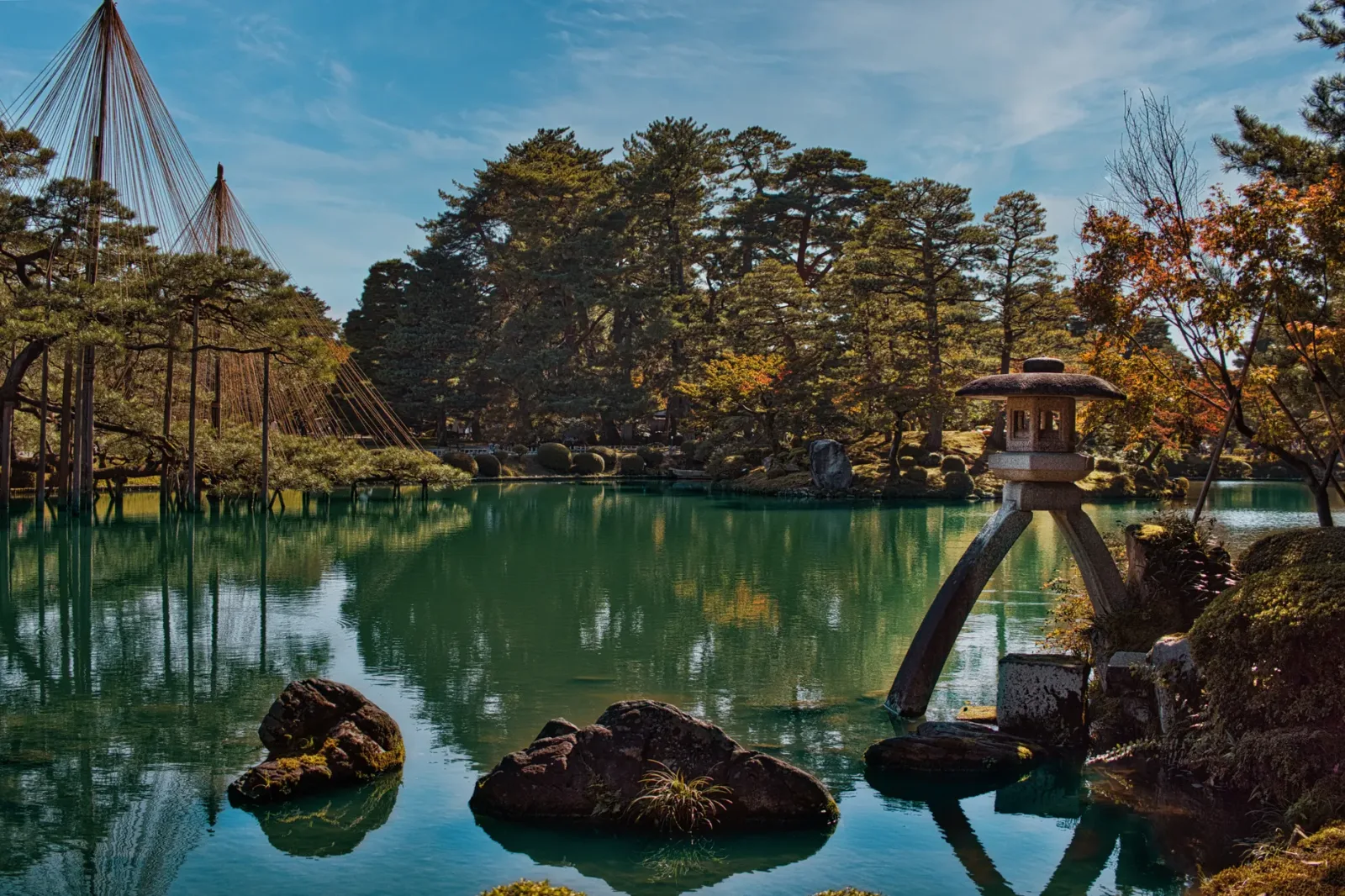
For the historical axis, Kanazawa Castle and Kenrokuen Garden are usually seen in the same outing, because they sit side by side and work well in sequence. The castle helps place the feudal power that shaped the city; the garden showcases the landscape design aesthetics for which Kanazawa is known. Nagamachi Samurai District adds another layer: narrow streets, earthen walls, and old samurai residences, in a stretch that preserves the domestic scale of the Edo period. Nearby, Oyama Shrine offers a short, straightforward break, with a shrine that’s quick to visit.
If the priority is art and contemplation, the D.T. Suzuki Museum and the 21st Century Museum of Contemporary Art occupy very different ends of the itinerary. The former is quiet and introspective, with a focus on the experience of pause. The latter works with contemporary art and open-flow architecture, and usually enters the itinerary when you want to balance the city’s historical weight with something more current. Myoryuji, known as Ninja Temple, is for those who want a more specific detour: the guided visit reveals the temple’s hidden engineering, so it’s worth including only if you’re willing to follow a more controlled format, with reservations and on-site guidance.
What to eat in Kanazawa
The sea defines a large part of the table in Kanazawa. Snow crab appears in winter, when the city enters its strongest season for seafood; uni, buri, and nodoguro complete this axis of flavors that arrive fresh from the Sea of Japan and vary according to the season. If the idea is to understand the city through its food, start with a well-composed kaisendon: it shows, without filter, what is good that day.
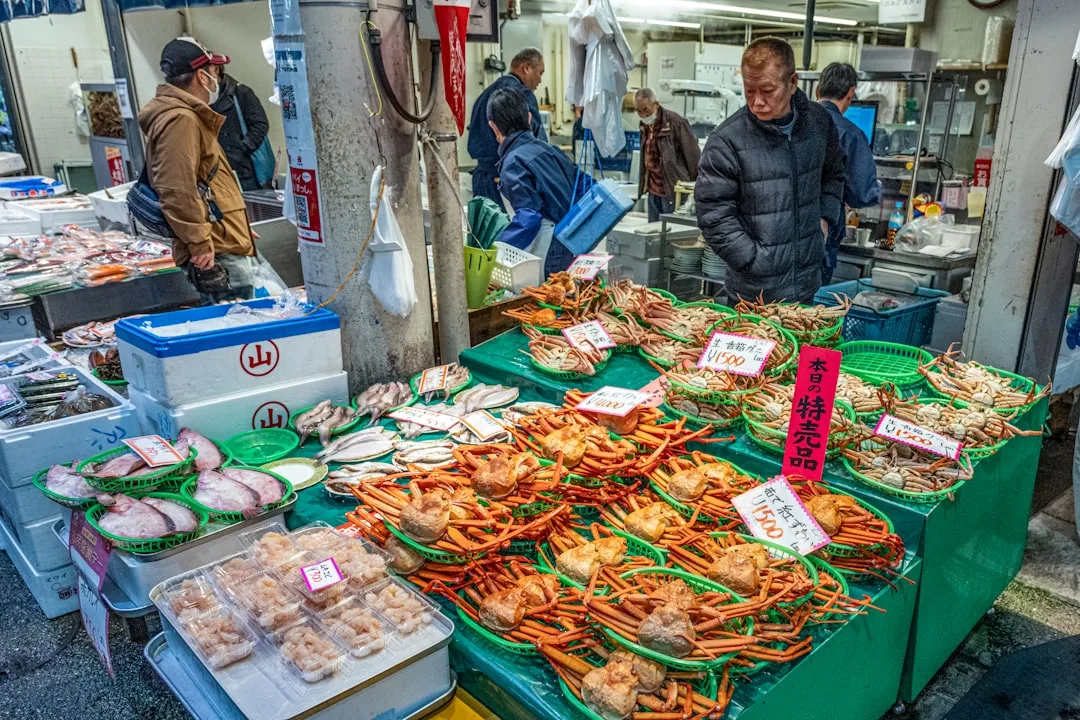
There is also a more home-style cuisine, made for the cold and for everyday life in Ishikawa. Kanazawa oden combines broth, vegetables, and fish items in a simple format, but one that is very closely tied to local routine. Jibu-ni follows another line: it is heartier, with a thicker broth and careful use of ingredients that speak to the regional table. In the same logic come the Kaga vegetables, which appear in seasonal preparations and help explain why the city takes the origin of its products so seriously.
For a broader reading of the local cuisine, it is worth paying attention to what comes from Ishikawa Prefecture beyond fish. Noto wagyu is an option for meat, while Kanazawa-style curry shows the city’s more direct and everyday side, less ceremonial, more like a practical meal. These dishes help balance the food itinerary: one day more sea-based, another more home-style, another with something quick and substantial.
Leaf gold appears strongly in sweets and desserts, sometimes more decoratively than for taste, but it is part of the city’s visual identity and has become a local signature. If you have little time, a good strategy is to look for seasonal dishes at the market and, at another moment, try a curry or a regional stew. It is the most efficient combination for leaving Kanazawa with a real sense of what the city eats.
Where to eat in Kanazawa
Ramen Taiga is the safe bet for a hot, straightforward meal. The focus there is ramen, and it works well for lunch or dinner, when you want something simple to decide on and that doesn’t depend on long detours through the menu. If the idea is to eat quickly and carry on with the day, it makes sense.
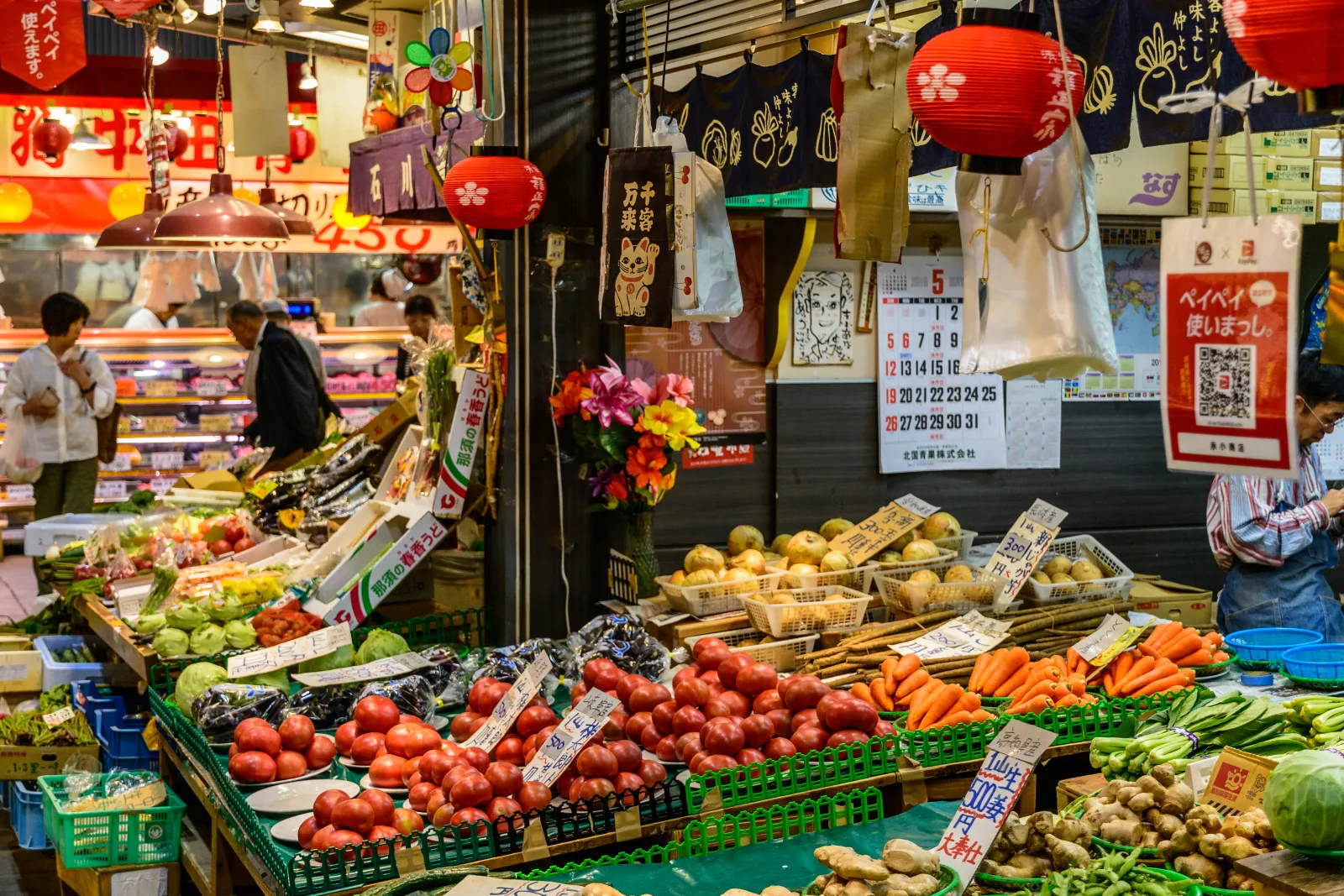
Ushioya and Mori Mori Sushi come into play when seafood is the priority. The first serves sushi and seafood; the second is a practical choice for kaisendon and sushi, with a profile that’s easier to fit into lunch. In Kanazawa, this kind of place usually makes more sense early, before the day’s most popular items sell out or change in availability.
Kanazawa Curry Laboratory handles a no-fuss meal well. The dish is curry in the local style, so it works especially well for lunch, but it also suits dinner when you want to eat something substantial without turning the decision into an outing. It’s a useful address for alternating with sushi and ramen, without leaving the repertoire that the city does best.
If you like eating based on what’s freshest that day, the best filter is to look at what the counter is serving at that moment. In Kanazawa, that matters more than looking for the “right” dish for the city as a whole.
How to get around the city
Kanazawa works well on foot. The city center is compact, and the urban layout makes it easy to string together short stretches without relying on transportation all the time, especially if you’re moving between central areas. For longer distances, a taxi solves things with little friction and is often more worthwhile than breaking up the outing into multiple connections.
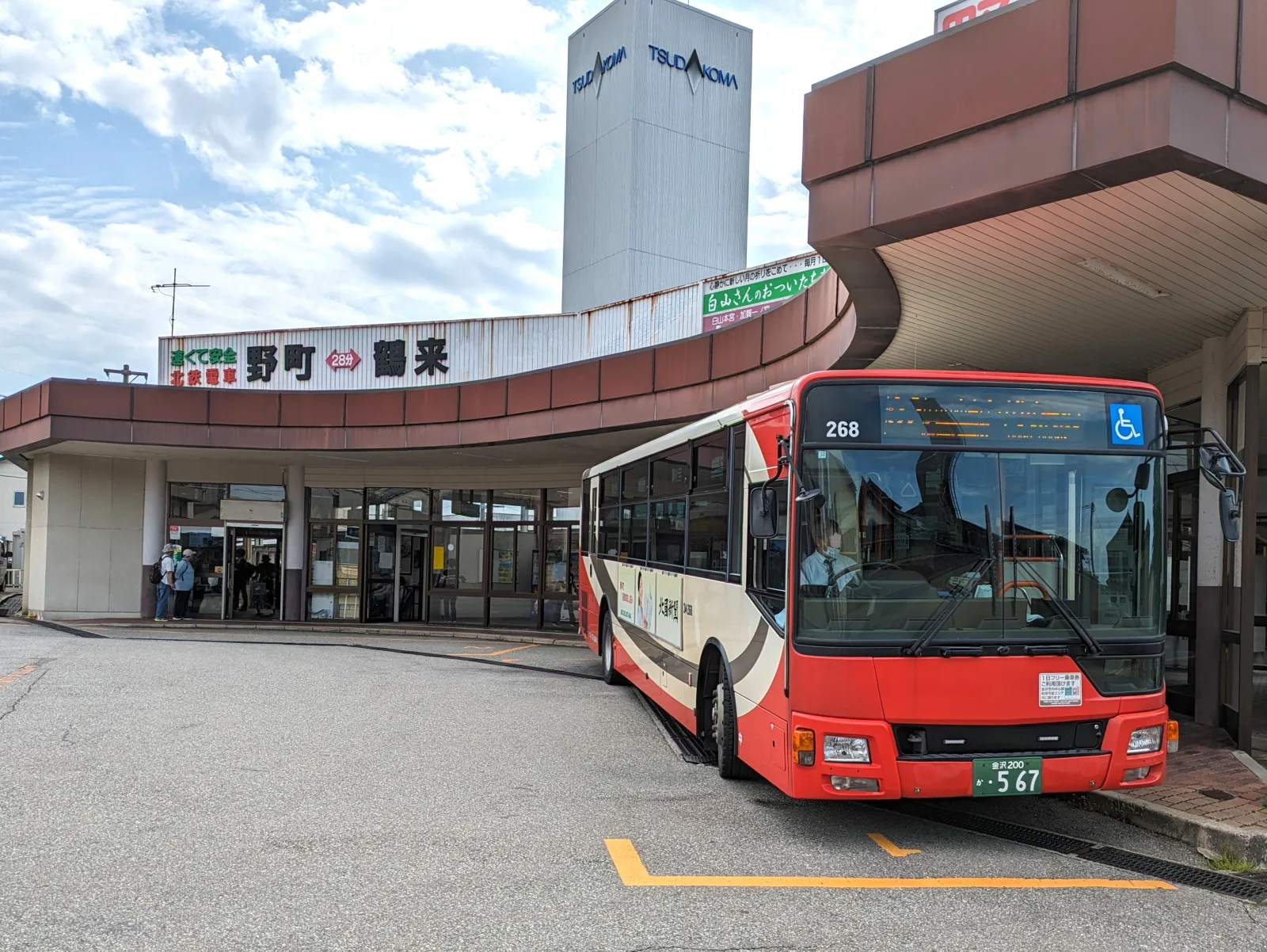
The most practical public transportation for visitors is the bus. The Kanazawa Loop Bus covers the city’s main points of interest, while the Kenrokuen Shuttle serves the Kenrokuen Garden area and its surroundings. The listed single fare is ¥200 on the Loop Bus and ¥100 on the Kenrokuen Shuttle; there is also a day pass of around ¥500 and ¥200, respectively. As these fares may change, confirm the current price before using them.
If you plan to combine more than one segment on the same day, the pass usually makes sense. If the idea is to get around more freely, walking and using a taxi when needed saves mental energy and avoids depending on schedules. The bus is especially helpful when the goal is to cross the city without adjusting the itinerary to the pace of the trip.
Practical tips for organizing your visit
Cash still helps in Kanazawa, especially in smaller markets, temples, and small tea houses. Having bills and coins on hand avoids wasting time with minimum charges or occasional card refusals. If you need to withdraw money, use convenience store ATMs or major banks, because not every terminal accepts cards issued outside Japan.
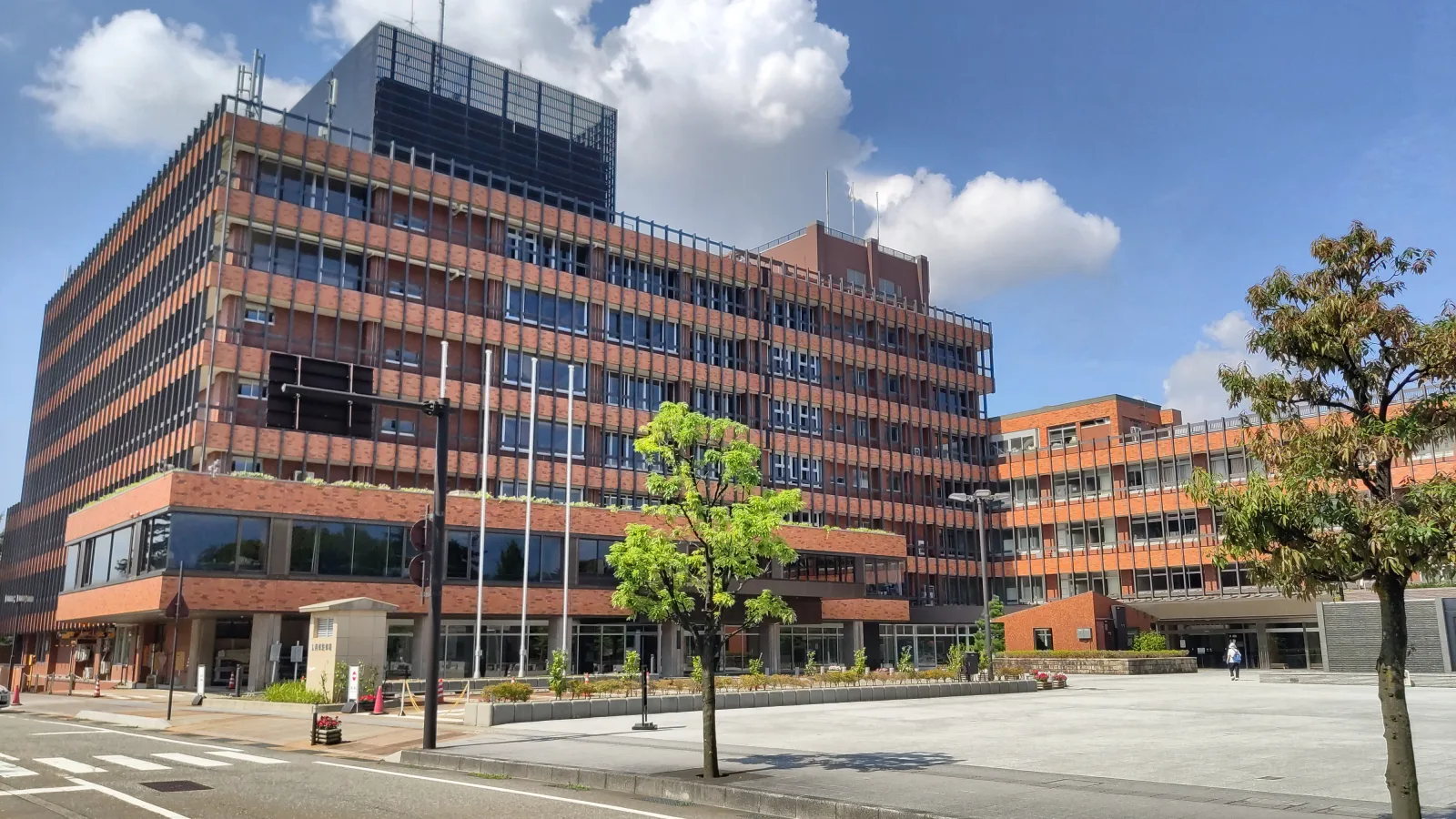
The language usually does not get in the way of the trip, but it is also not worth relying on long conversations in English. In more visited places, basic signage and some functional service are common; beyond that, the quickest solution is usually translation on your phone. Keep the names of places saved in Japanese, because that makes it easier to show the screen to taxi drivers, staff, and shop employees.
In temples, follow the flow without speaking loudly, do not block passages, and observe where photography is allowed. In geisha districts and historic streets, walk without entering doorways, leaning against façades, or treating the area like a private backdrop. If you want to take a photo, do so without stopping other people’s movement. Eating while walking draws attention in many areas of the city, so it is better to stop first. Public Wi‑Fi exists in specific spots, but eSIM or another data plan usually provides more security for maps, translation, and same-day bookings.
Frequently asked questions
How many days should I stay in Kanazawa?
Two days is the minimum reasonable amount of time to get to know Kanazawa without rushing. With three days, the itinerary feels more balanced; with four, there is room for breaks and extra visits.
What is the best time to visit Kanazawa?
From November to March, the city is usually best for those who want cold weather and good seasonal food. March and April are good for cherry blossoms, and October and November for foliage.
Where is the best place to stay in Kanazawa?
Staying near Kanazawa Station is the most practical option for getting around. The area around Omicho Market works well for those who want to do more on foot and keep a calmer pace.
What is worth visiting in Kanazawa?
Omicho Market, Higashi Chaya, Kanazawa Castle, Kenrokuen Garden, and Nagamachi Samurai District are among the most important sights. If there is time, the D.T. Suzuki Museum and the 21st Century Museum help expand the itinerary.
What should you eat in Kanazawa?
The city is strong in seafood, especially snow crab in winter, as well as kaisendon, sushi, and local dishes such as kanazawa oden and jibu-ni. It is also worth trying local-style curry and sweets with gold leaf.