Görlitz: what to do, how to get there, where to stay, and how to plan your trip
Görlitz: discover how to get there, where to stay, and what to do to plan a practical itinerary through the historic center and the border with Poland.
Why Görlitz belongs on the itinerary of anyone who likes historic cities
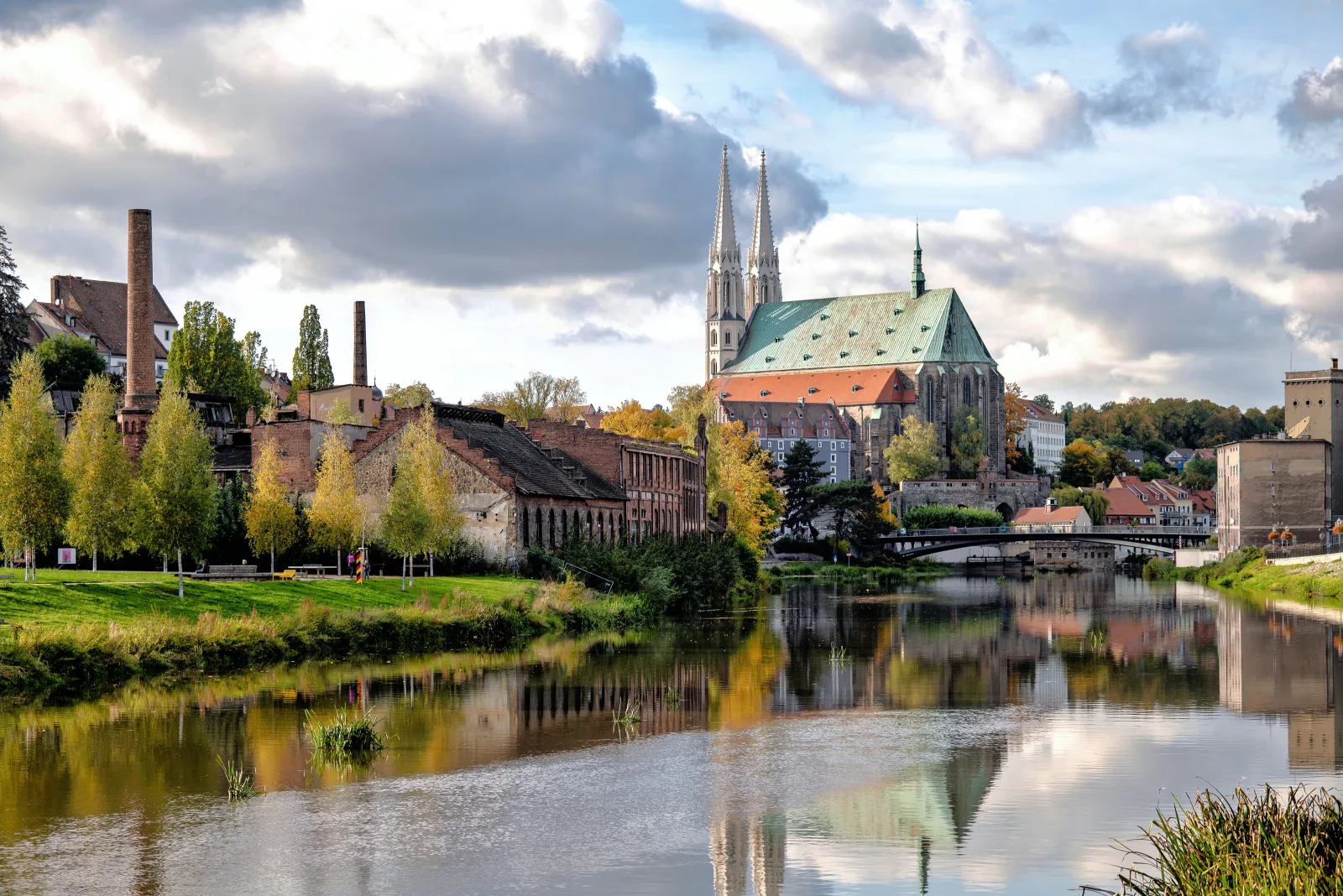
Görlitz makes sense for those who choose a destination for its urban whole, not for a single attraction. The historic center has arrived in the present almost intact, with medieval, Renaissance, and Baroque layers and a belt of 19th-century buildings around it. In practice, this changes the visiting experience: you don’t go from one tourist spot to another, you spend most of your time looking at the city itself.
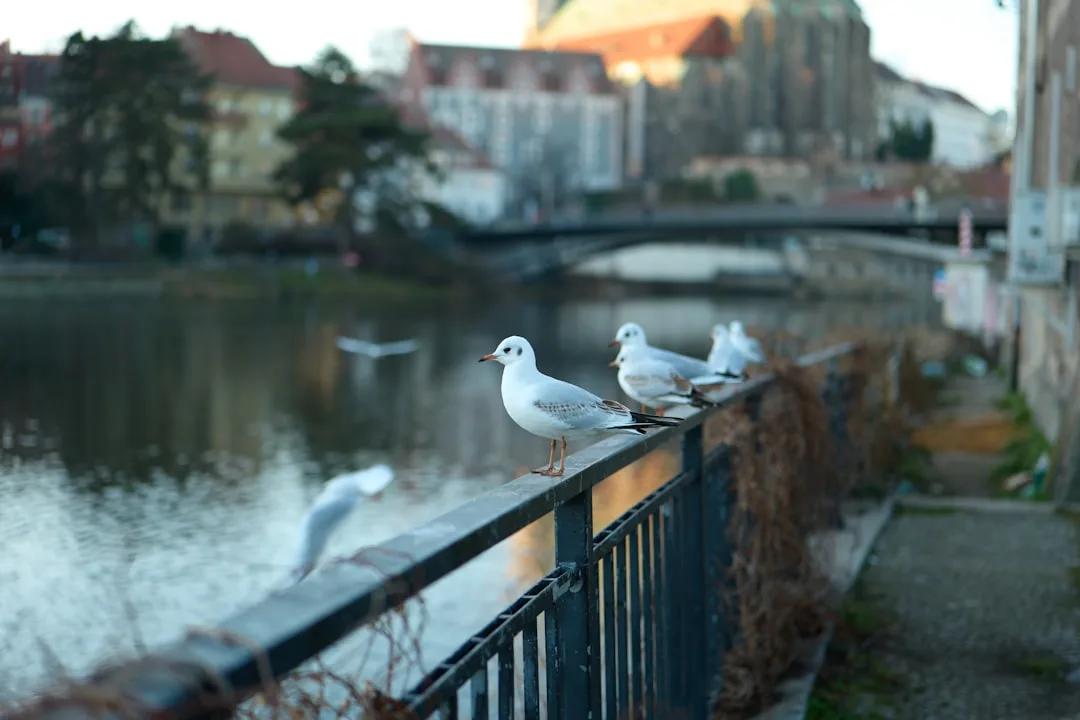
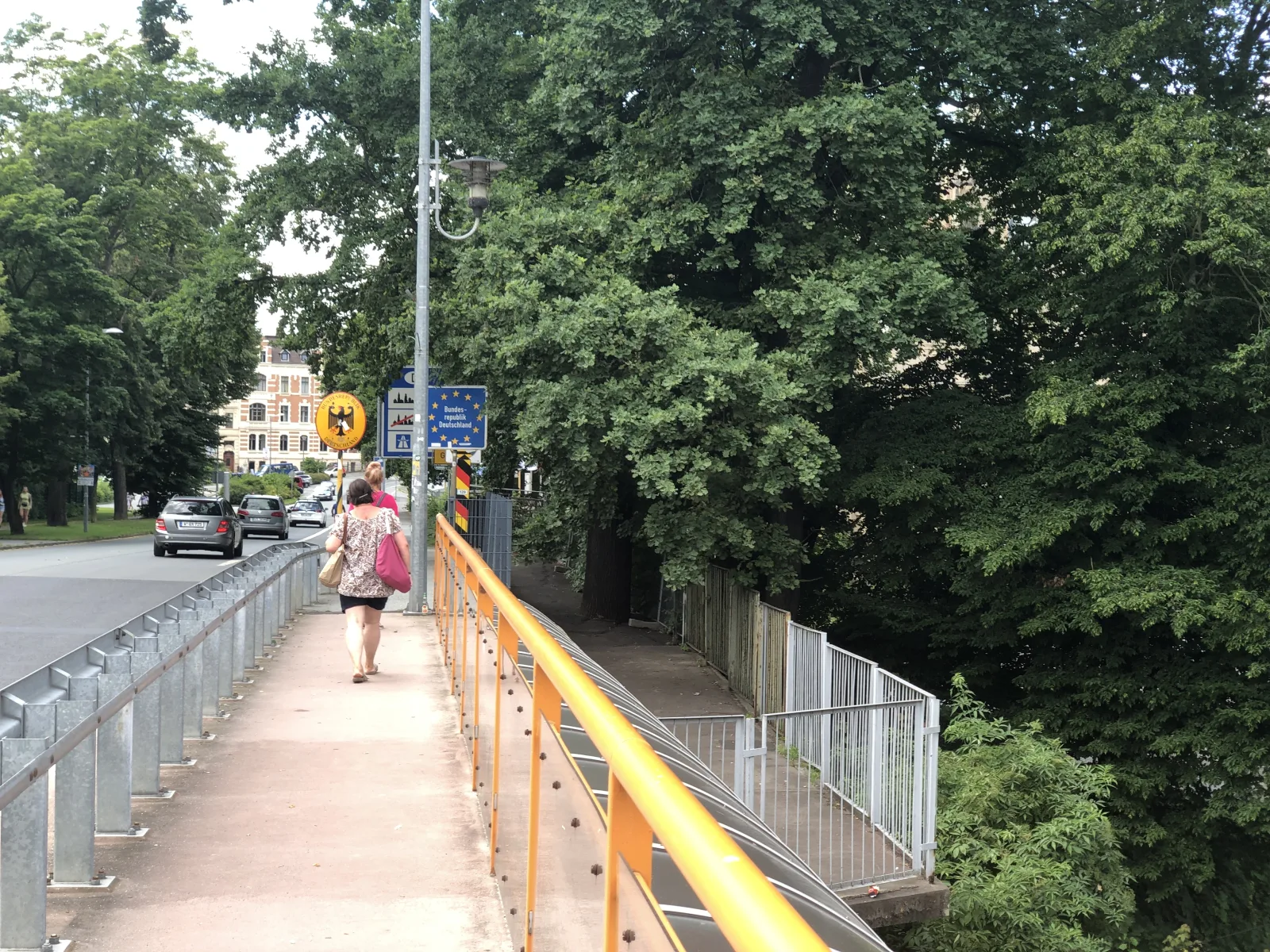
The border with Poland also weighs into the decision. Görlitz lies on the banks of the Neisse River and is directly connected to Zgorzelec, the part that remained on the Polish side after the postwar border was redrawn. This geography gives the walk a very concrete historical context. It is not a museum city detached from the present; the border is part of the landscape and the way the place is understood.
There is also the film factor, which helps explain why Görlitz draws attention far beyond Saxony. The city became a recurring setting for period productions because its streets and facades require little intervention to look like another city and another time. This frequent use in filming even earned it a local nickname, “Görliwood.” If you like recognizing filming locations and seeing how cinema makes use of a preserved urban fabric, Görlitz offers that naturally, without turning the city into a theme park.
Another strong point is its scale. The most interesting core is compact and walkable, the kind of place where it is worth heading out without a rigid itinerary and letting the streets lead the walk. For couples, solo travelers, and families, this reduces friction: less time organizing transport, more time observing facades, squares, and passages. If your criterion is a historic city that works well on foot and has its own personality, Görlitz easily belongs on the itinerary.
How to get to Görlitz and what to consider along the way
The nearest airport is in Dresden. From there, the simplest route is usually to take the train to Görlitz. Dresden serves as the main rail hub in eastern Saxony, and regional trains to Görlitz run frequently; the journey takes around 1 hour, but the timetable and interval between departures are worth checking on the day of travel.
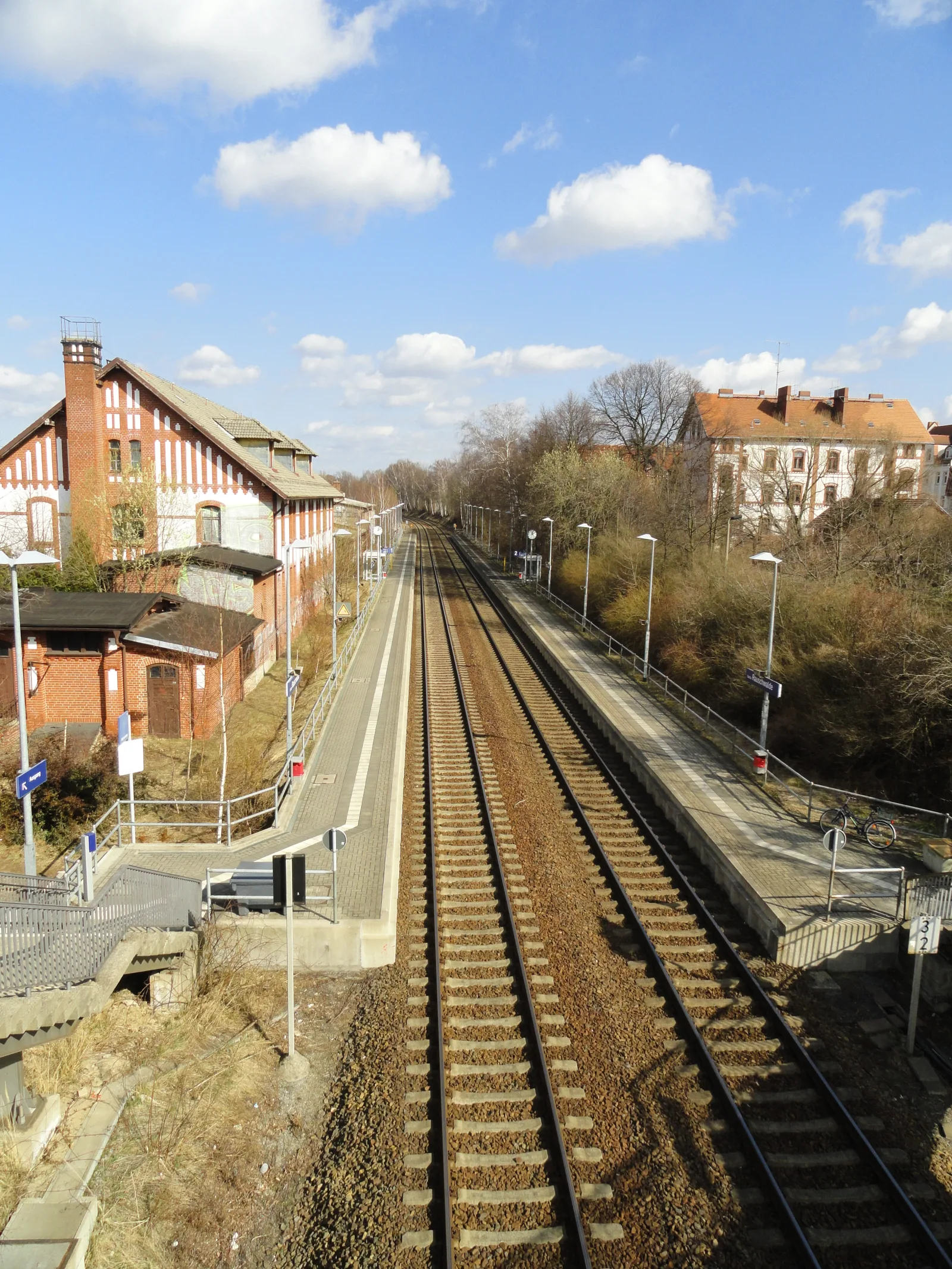
If you are already traveling around the region, there are useful rail connections beyond Dresden. Görlitz has regional links via Cottbus, which in turn connects to Berlin. There are also connections to Zittau, near the tripoint between Germany, Poland, and the Czech Republic, and on some services the train continues to Liberec. On the Polish side, Zgorzelec has more frequent connections with Wrocław, and some Polish trains also stop at Görlitz central station. For those planning to combine countries or cities in the same trip, this matters more than looking for a “direct” access at any cost.
By car, Görlitz lies on the A4, which is part of the European route E40. It is the most direct access for those coming via the Dresden–Polish border corridor, and the same road continues toward Wrocław and Katowice on the Polish side. Those coming down from the north via Cottbus use the B115; it works, but it passes through many small villages, so travel time may be less favorable than the map suggests.
If you arrive by car and plan to leave the vehicle parked during your visit, there is a tourist parking ticket sold at the tourist information office, with a stated price of € 2.50 per day. As prices and conditions may change, it is worth confirming whether it is still available and in which areas it can be used before relying on it.
Editorial transparency: Some links on this page are affiliate links. We may earn a commission at no extra cost to you. This does not influence our recommendations.
How to get around Görlitz without complicating your trip
You can handle almost everything on foot. The center and old town are compact, and that makes for a better visit since the distances between one area and another are short. If the plan is to spend the day in the central area, it makes more sense to wear comfortable shoes than to plan transportation.
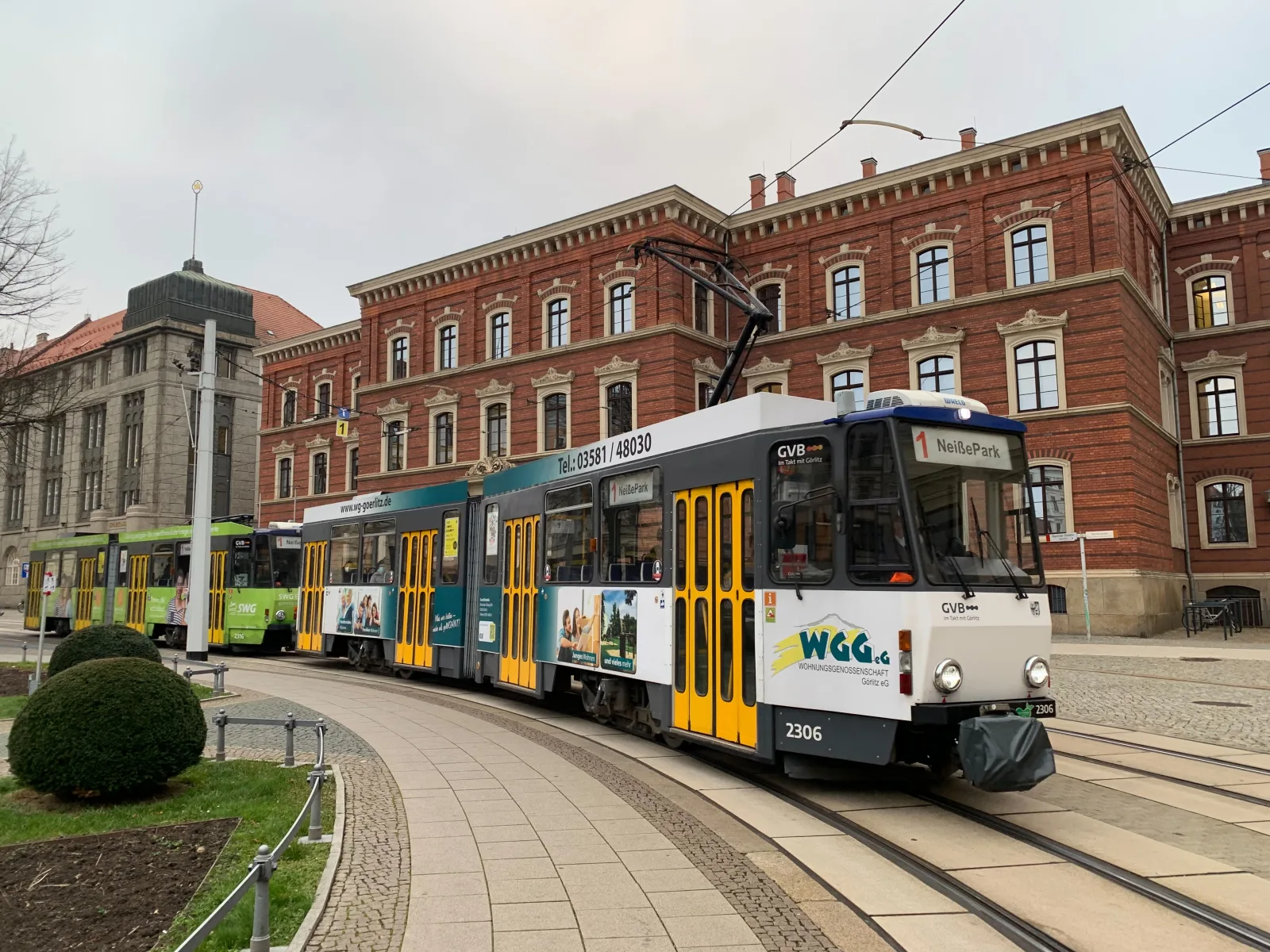
To get out of this core area, use the tram or bus. Görlitz has two tram lines connecting neighborhoods to the center, and trips to farther areas are usually short, around 15 minutes for suburban stretches of about 5 to 6 km. Where the tram does not go, local buses cover the rest.
One important detail for anyone looking at the map and thinking about crossing the city by rail: the tram does not cross the Neisse River. If you need to travel to the other side, that is not part of the tram network. On both modes, the tickets are usually the same, but fares and conditions may change, so it is worth checking the local network on the day of use and validating the ticket as soon as you board.
What to do in Görlitz: historic center, cinema, and the crossing to Zgorzelec
Start without a map. In Görlitz, the best walk is through the historic center, letting the city reveal itself block by block and corner by corner. Untermarkt and Obermarkt are the two points that most organize this walk: at the first, the feeling is of an old square surrounded by façades that invite you to linger; at the second, the space opens up more and helps you understand the city’s urban scale. Between one square and the other, what holds your attention is not a single attraction, but the sequence of streets, passages, and buildings that maintain a rare sense of unity. If you like photography or architecture, set aside time to look up.
Cinema enters the walk very naturally. Görlitz has been repeatedly used as a location for period films, so part of the charm is recognizing sets without having to turn the visit into a formal hunt for signs and trivia. The old shopping center that became an image linked to The Grand Budapest Hotel is the most obvious case for anyone arriving with that reference in mind, but the whole city works as a set. The Filmpalast completes this film-themed route: even though it was not used in the filming of Inglourious Basterds, it helped inspire the cinema shown in the film. If the schedule interests you, going in for a screening makes sense less because of what is showing and more because of the place itself.
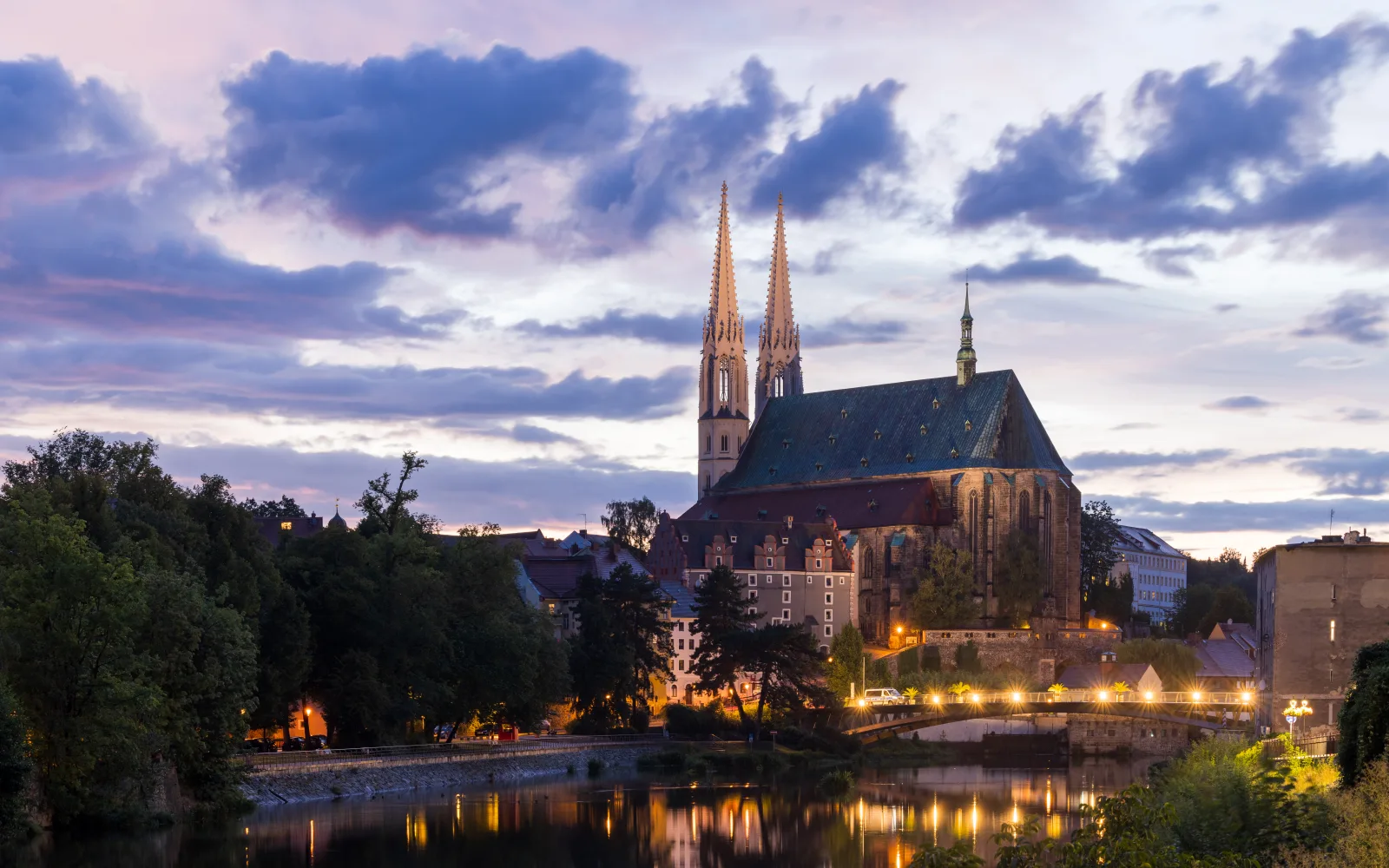
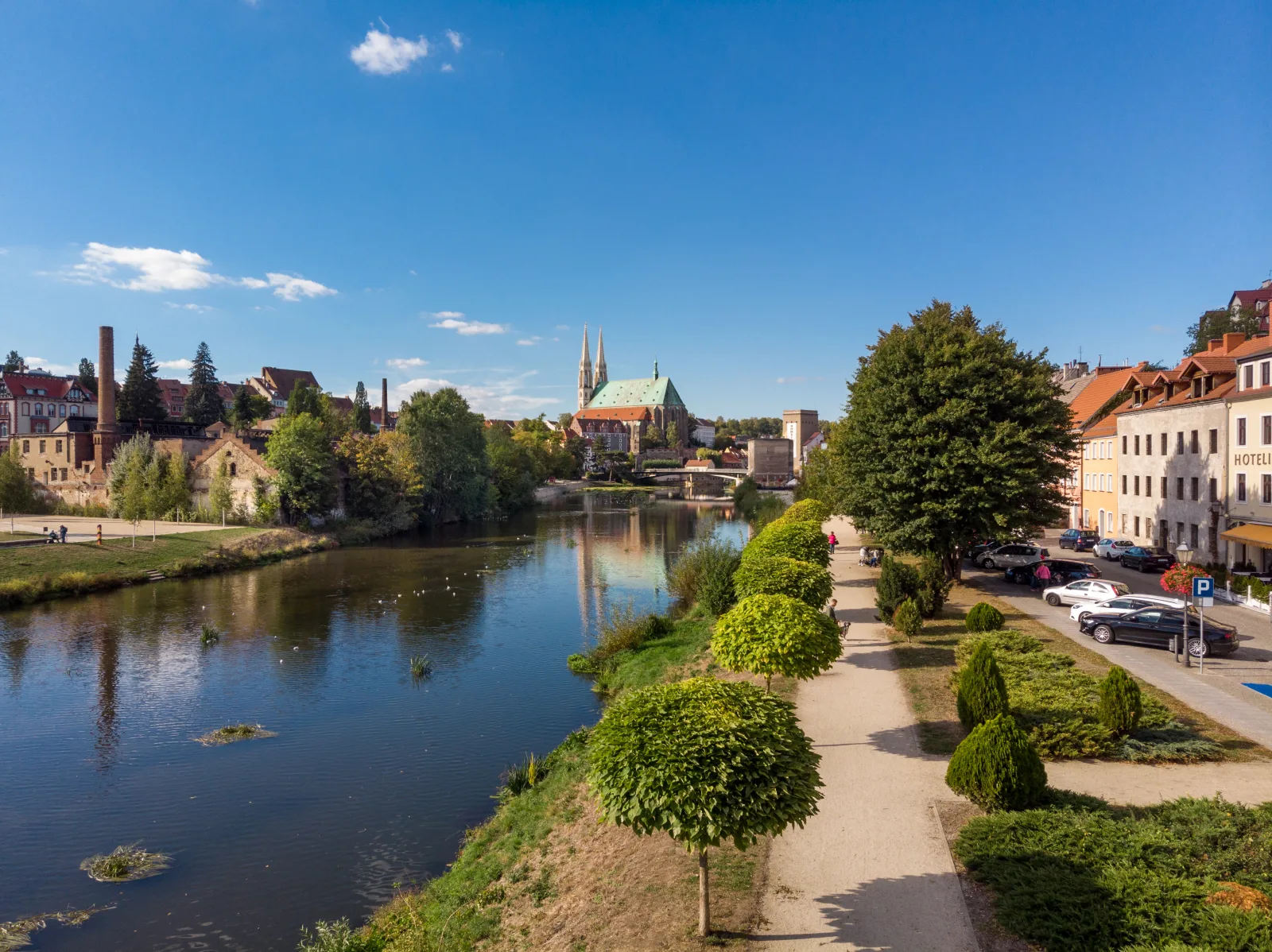
The crossing to Zgorzelec is short and worthwhile for the viewpoint. Crossing the bridge and looking at Görlitz from the Polish side helps you understand the city as a border landscape, not just as a collection of historic façades. It is from there that the urban profile appears more clearly, especially in wider photos. If you are strolling without a hurry, this is one of those short moves that changes the way you read the place.
Inside the Church of St. Peter and St. Paul, the focus is the so-called solar organ, linked to the name of Eugenio Casparini. When there is a guided visit with a demonstration, it is worth fitting into the day: hearing the instrument in the space it was made for changes the experience quite a bit compared with a quick, silent visit. Since this kind of tour does not happen all the time, confirm the current times before putting the itinerary together.
Museums, churches, and buildings that help you understand the city
The Church of St. Peter and St. Paul is the stop that best shows how Görlitz reads its own history through architecture and sacred music. The interior houses the solar organ linked to Eugenio Casparini, a centerpiece of the visit for anyone who wants to understand why this church appears so often in the city’s cultural repertoire. If there is a demonstration or guided tour on the day, it makes a difference to go in with that purpose; without the sound of the instrument, you see an important monument, but you lose part of the meaning of the place. Since this kind of visit does not happen continuously, it is worth checking the current schedule beforehand.
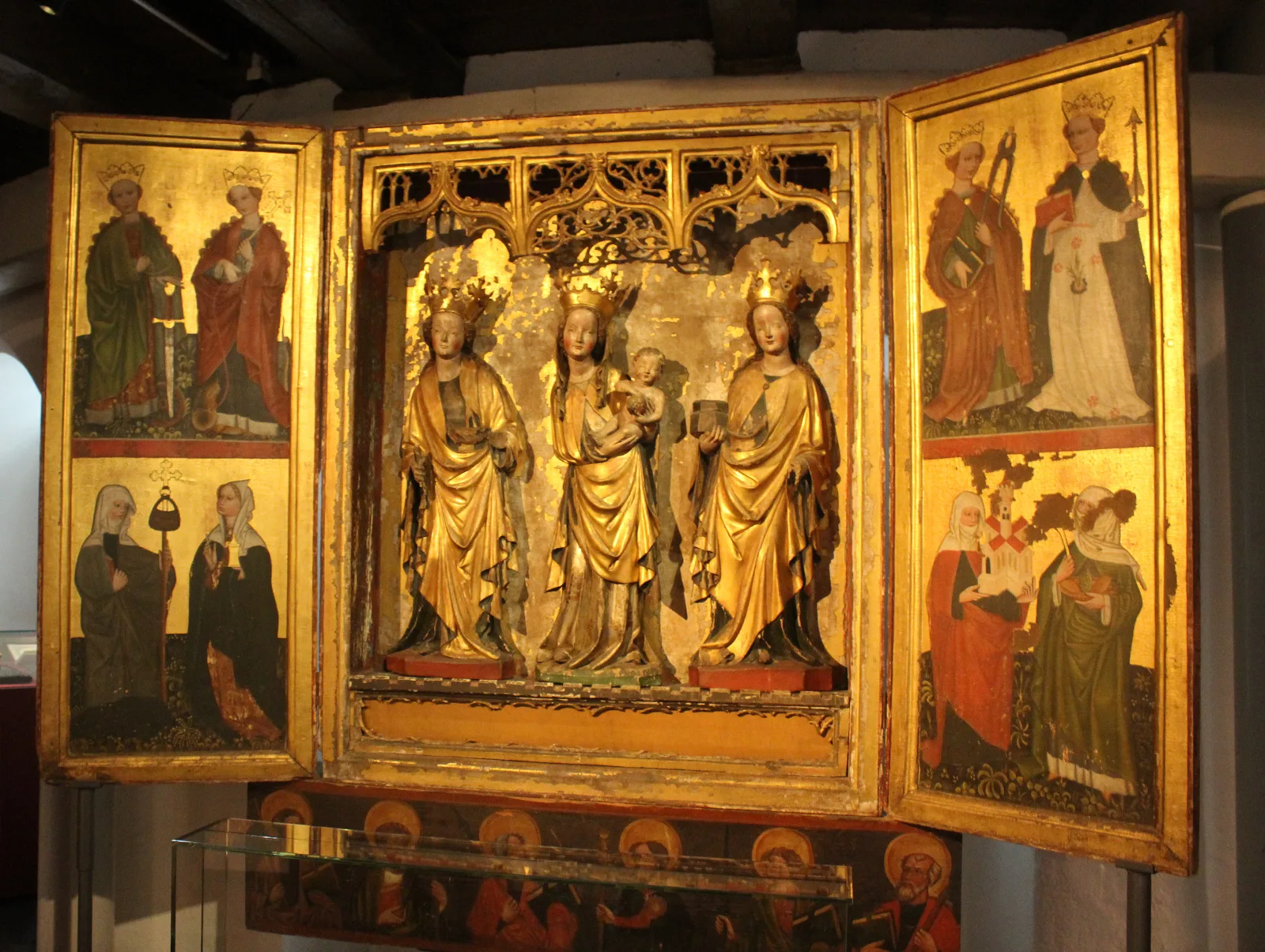
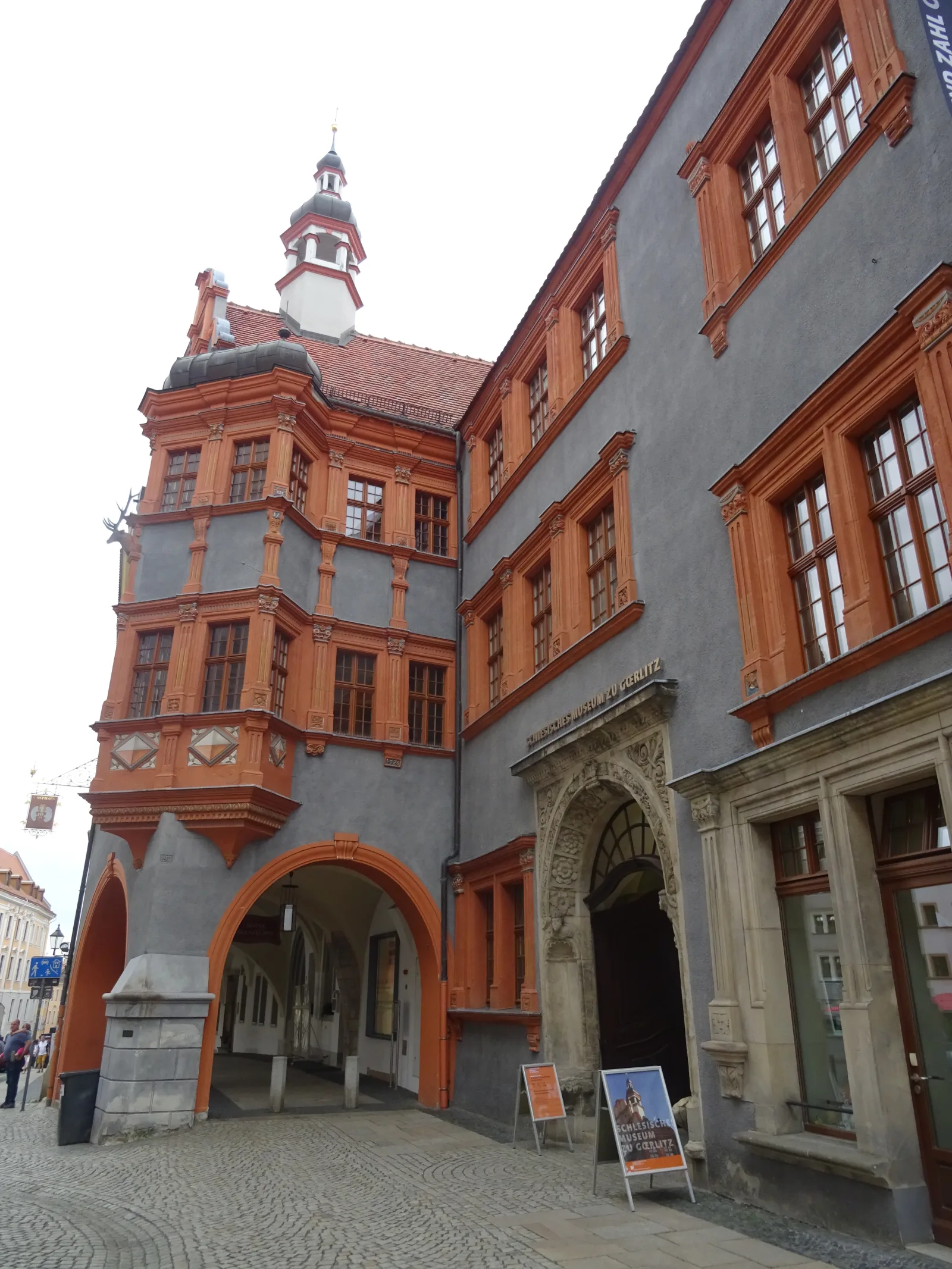
At the Schönhof, the focus shifts from contemplation to context. The building itself already matters: it is one of the historic structures that help reveal Görlitz’s urban continuity, and it houses the Silesian Museum of History. For anyone arriving without prior knowledge of the region, this is a visit that places the city on the right historical map, because Görlitz cannot be explained by present-day Saxony alone. The Silesian heritage helps explain political, cultural, and territorial layers that still appear in the landscape and in names.
The Silesian Museum deepens that same theme through another path. Instead of looking only at the city, it broadens the regional frame and helps connect Görlitz to a larger history of Silesia. If you like visiting only one museum per destination, this one makes more sense when the priority is understanding historical belonging and border changes, not collecting rooms. Before going, confirm the current exhibition and opening hours, because that weighs heavily on the experience.
The marker of the 15th meridian is less interesting as an “attraction” and more as a key to interpretation. Görlitz lies on this eastern meridian, a reference for Central European Time, and the point works as a geographical detail that gains symbolic weight in the city. It is a short stop, but a useful one for anyone who likes to leave a destination understanding something beyond the façade: here, the position on the map has also become part of the local identity.
Where to eat and drink in Görlitz
The best place to sit down at a table is in the historic center, especially in the Untermarkt and Obermarkt areas, where it makes sense to choose according to the context of the meal: a quick lunch between walks, a longer dinner, or a beer break. Hotel Börse, in Untermarkt, is a well-known name in this part of the city, and the immediate surroundings concentrate practical addresses for those who want to eat without leaving the center. Since Görlitz does not operate under the pressure and prices of larger German cities, eating out there usually weighs less on the budget, but the menu, price range, and closing days are worth checking in advance, because this changes frequently.
If the idea is to try something with a real connection to the region, look for dishes from Saxon and Silesian tradition. The most characteristic is Schlesisches Himmelreich, a recipe associated with Silesia and useful for understanding the local cuisine beyond the more obvious German repertoire. Not every restaurant keeps this type of dish continuously on the menu, so it is worth checking the daily menu or asking directly whether the place serves regional specialties.
For drinks, the easiest local reference to recognize is Landskron, the city’s beer and a natural choice to accompany a meal. If you like to decide carefully where to go in, use a simple criterion: regional menu for those who want to taste the identity of the Saxon-Silesian border; beer list for those who want to prioritize the drink; location in Untermarkt or Obermarkt to save time and keep everything within walking distance.
Where to stay in Görlitz
Staying close to the historic center saves time and simplifies the trip. That is where it makes the most sense to base yourself, especially if you want to head out and return to the hotel throughout the day without relying on planning. Hotel Schwibbogen, on Obermarkt, fits this profile and has a rare detail as well: during the renovation, a room with murals dating back about 500 years, attributed to a student of Lucas Cranach, was discovered, and it is now used for breakfast. The nightly rate was indicated in the range of €70, but this should be checked at the time of booking. Hotel Börse, on Untermarkt, is also very well positioned within the historic core; the range mentioned for rooms was about €75, which is likewise something to verify.
If the priority is historic atmosphere, Romantik Hotel Tuchmacher and Dreibeiniger Hund are names to look for in the old center, where the surroundings matter as much as the room. In this part of the city, the choice depends more on the exact address and the type of building than on major differences in travel time from one hotel to another. Check recent photos of the rooms and confirm whether there is an elevator, air conditioning, or parking, because these details can change the experience quite a bit in old buildings.
For those who prefer a quieter setting or a less conventional style, Parkhotel Görlitz and Kühlhaus Görlitz broaden the options. Parkhotel makes sense for those who want to stay in an area less dense than the immediate center. Kühlhaus usually appeals more to those who are willing to sleep outside the classic hotel format and do not need to be in the heart of the historic city. In these cases, what matters most is not the category itself, but the type of stay you want: a practical base in the center, a historic building with character, or accommodation with a more distinctive concept.
What to combine with Görlitz on a trip through the region
If you want to extend the trip without changing bases right away, Zgorzelec is the most obvious fit, because it makes sense as a direct continuation of the border context. For a larger itinerary, Dresden works better as a connection and overnight city before or after Görlitz, especially for those traveling by train. Bautzen and Herrnhut work well along the same eastern Saxony axis and help put together a regional route without major detours.
If the idea is to expand through Saxony with more variety, Meißen and Saxon Switzerland pair well with those planning to continue toward Dresden or build a route across the state. Zittau is a natural extension for those who want to keep going to the far southeast, near the tripoint border with Poland and Czechia, and it also fits well with the rail routes in the region.
On the Polish side, Bolesławiec and Jelenia Góra are good next steps for those who want to continue the trip beyond the border instead of heading back into the German interior. What helps most here is not looking for the “best” combination, but choosing the trip’s axis: Saxony, the German-Polish border, or continuing through Poland. Before finalizing the itinerary, confirm the day’s rail and road connections, because frequency and connections can vary.
Frequently asked questions
Is it worth visiting Görlitz?
Yes, especially for those who enjoy historic cities and walking tours. The preserved center, the connection with Zgorzelec, and its frequent presence in film make the visit very interesting.
How do you get to Görlitz?
The simplest way is usually to take a train from Dresden, which is about 1 hour away. There are also regional connections via Cottbus and access by car via the A4.
What to do in Görlitz in one day?
Start in the historic center, passing through Untermarkt and Obermarkt, and then cross over to Zgorzelec to see the city from the other side of the river. If you have time, include St. Peter and Paul Church and the Schönhof.
Where to stay in Görlitz to make sightseeing easier?
Staying near Untermarkt or Obermarkt is the most practical option. That way, you can do almost everything on foot and reduce the need for transportation.
Does Görlitz have a connection to film?
Yes. The city is frequently used as a filming location for period films and became known by the nickname Görliwood. Part of the fun of the visit is recognizing these settings during the walk.