Erfurt: what to do, where to stay, how to get there and when to visit Germany’s medieval city
Learn what to do in Erfurt, where to stay, how to get there, and the best time to visit, with practical tips for planning your itinerary.
Where is Erfurt and how to get to the city
Erfurt is in Thuringia, in central Germany. Because of its location on the map, it fits easily into itineraries that include Berlin and Frankfurt, and it works well as a stop between the two cities. If you are putting together a longer route through the country, Erfurt makes more sense as a base on the central axis than as a detour.
The most practical way to get there is usually by train. The main station is Erfurt Hauptbahnhof, well connected to the German railway network and used by travelers coming from major cities in the country. For those who prefer to drive, access is straightforward via the A4 and A71 highways. By car, the city works best for those who will continue their trip to other stops in Thuringia or nearby regions.
If you are arriving by plane, the most commonly used entry points are the airports in Berlin and Frankfurt, with onward travel by train or car. There is also Erfurt-Weimar Airport, closer to the city center, but with a more limited range of connections; before finalizing your logistics, it is worth checking whether it serves your route on your travel dates.
When to visit Erfurt throughout the year
Erfurt works year-round, but choosing the time of year changes the experience quite a bit. If the priority is to walk a lot and catch more favorable weather for outdoor activities, the safest window is from late June to early September. That is when the weather tends to be more cooperative, and the city is better for those who want to spend hours out on the streets without relying so much on heavy layers of clothing.
In spring, the visit is usually more pleasant for those who prefer milder temperatures and a calmer pace. Autumn follows the same logic: days that still allow you to explore on foot comfortably, but with a greater chance of cold, especially outside the central hours of the day. In both cases, it makes sense to pack layered pieces and check the forecast a few days before the trip.
Winter calls for different expectations. Erfurt remains visitable, but with low temperatures and a routine more dependent on a coat, hat, and footwear suitable for cold weather. In December, the city gains a specific appeal because of the Christmas market, which is usually the main reason to travel at this time of year. If that is your plan, it is worth confirming the exact dates of the market and the month’s calendar before finalizing the trip.
If you do not have a special interest in Christmas and want to maximize time outdoors, summer and early autumn are usually the easiest choices. If you prefer a seasonal atmosphere and do not mind the cold, December delivers a very different experience. In the other months, the main point is simple: go prepared for low temperatures.
Editorial transparency: Some links on this page are affiliate links. We may earn a commission at no extra cost to you. This does not influence our recommendations.
Where to stay in Erfurt
The historic center is the most practical base for staying in Erfurt. Staying there reduces almost everything to walking and makes a difference especially on short trips, when you want to leave the hotel and already be in the heart of the city. It is also the area with the most classic-style options, in buildings well located for those who prioritize convenience over space or easy car access.
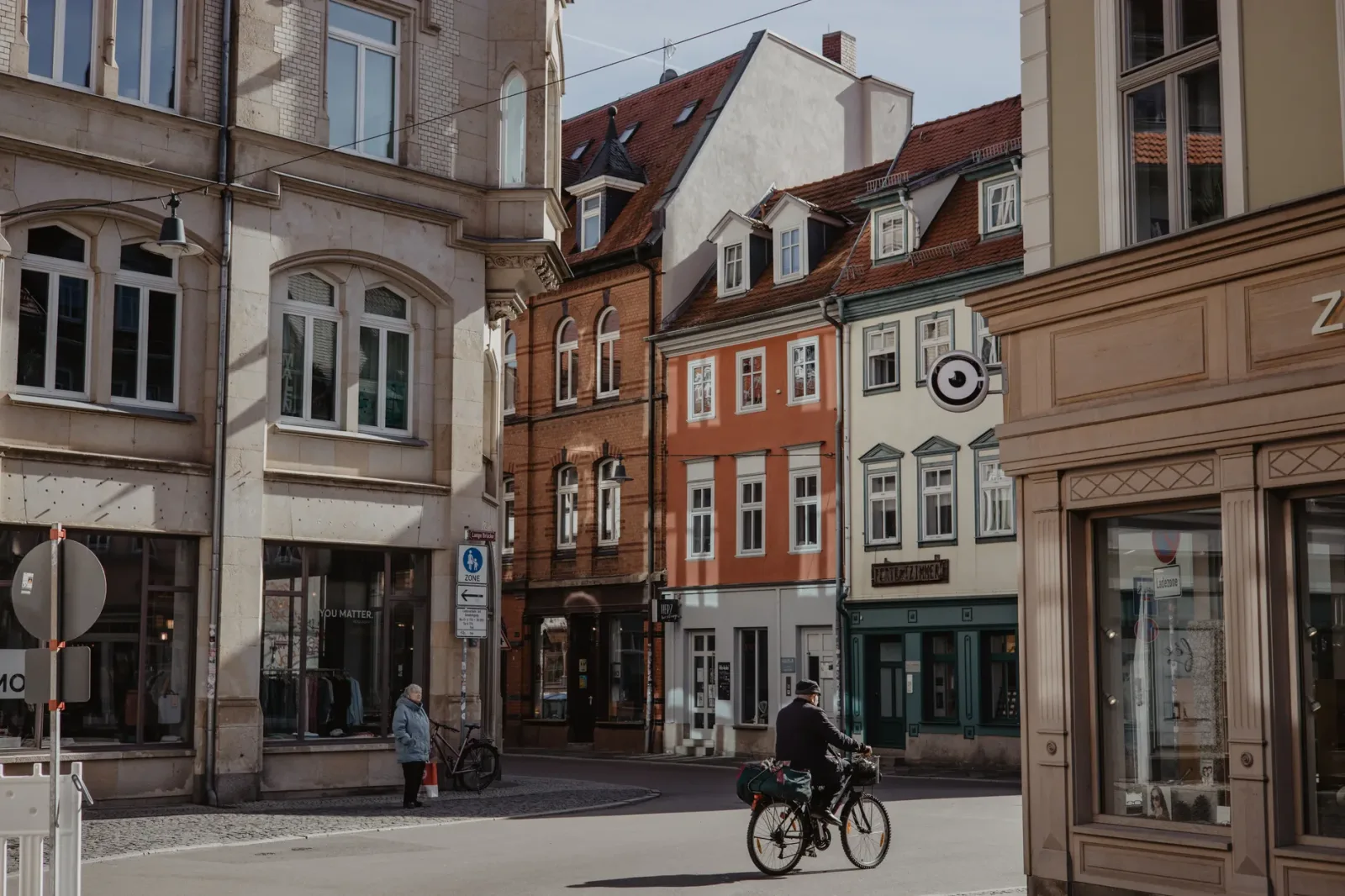
If you are traveling by car, the Domplatz area usually works better. The reason is simple: in the historic center, many streets are narrow and there are many pedestrian-only areas, which makes arrival, quick stops, and parking more complicated. Around the square, logistics tend to be less troublesome. In this stretch, the Hotel Garni Am Domplatz is well placed for those who want to be close to the center without dealing too much with the limitations of the oldest core. The Mr.& Mrs. President, in front of the cathedral, suits those who want a very central location and are willing to pay for it.
To stay in the heart of the historic center, the Hotel Am Kaisersaal is one of the most straightforward choices, with an address that favors those planning to do almost everything on foot. The Gästehaus Glücksmoment makes more sense for those who want better control over their budget without leaving this same central area. The DAS KEHRS – Hotel auf dem Petersberg serves a slightly different profile: those who prefer a stay outside the most immediate core of the center, in a higher and quieter area.
Before booking, it is worth checking two things on the accommodation’s website: how car access works, if that applies to you, and whether there are specific check-in rules in smaller buildings or guesthouses. In Erfurt, the choice of neighborhood matters more than the hotel’s list of amenities. If the priority is walking mobility, historic center. If the priority is arriving and parking with less friction, Domplatz and the surrounding area.
Erfurt’s historic center and its most walkable areas
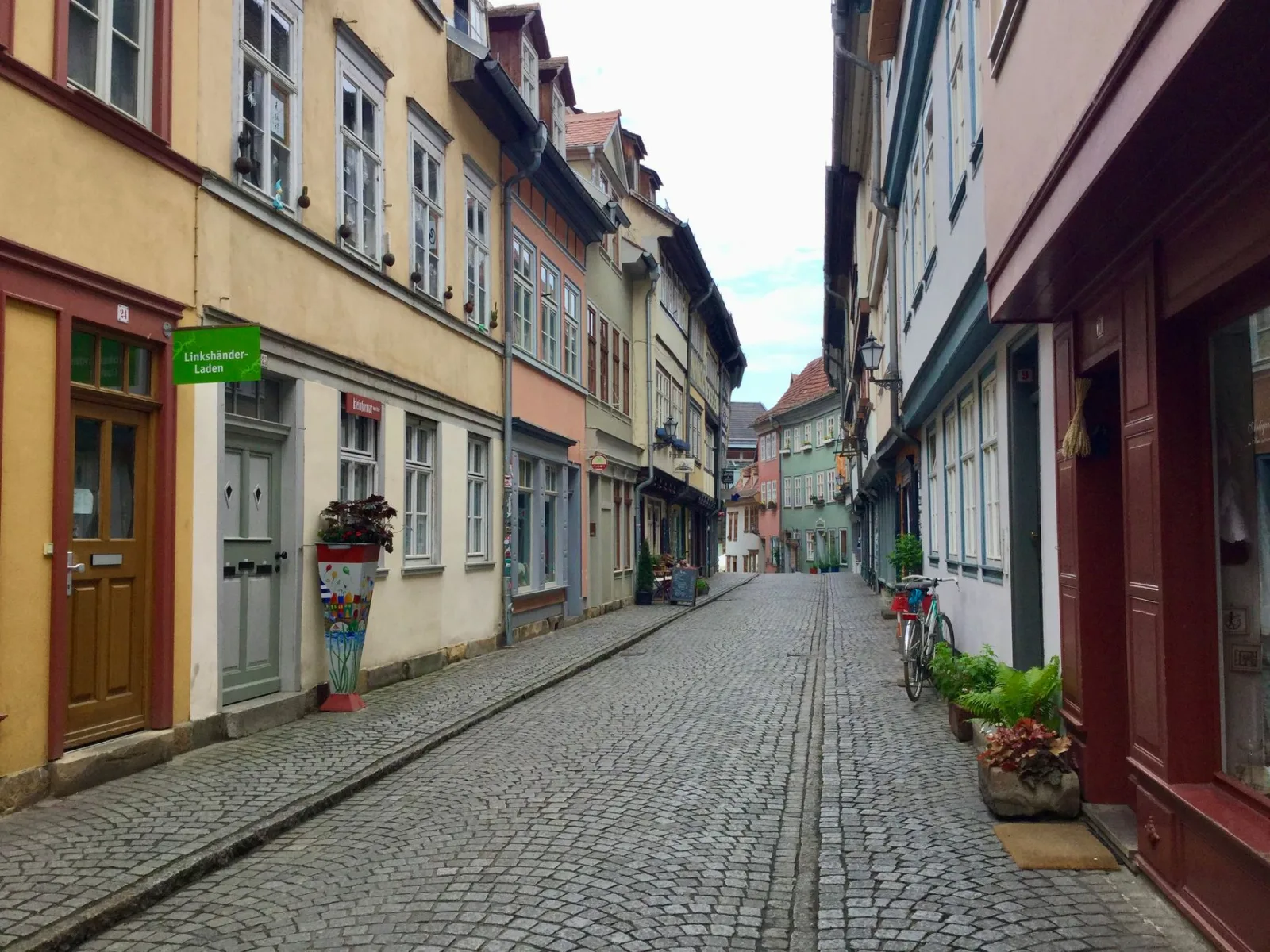
The historic center is where Erfurt makes the most sense on foot. The cobblestone streets, half-timbered houses, and sequence of old squares create a compact urban fabric that is easy to read without a map all the time. Instead of thinking “neighborhood by neighborhood,” it is worth treating this area as one continuous core, to explore slowly, stepping into the smaller streets when something catches your attention.
The most pleasant area for walking lies between the streets and squares of the old center, where traffic gives way to pedestrians and the city changes pace. It is there that you will find historic facades, small shops, cafés, and short stops that work better without a rigid itinerary. If the idea is to feel the city beyond the photos of the famous sights, this is the stretch to set aside free time for, with no rush to move from one attraction to another.
Fischmarkt helps you get oriented because it works as one of the central squares on this walk, with locals passing through, outdoor tables in milder seasons, and historic buildings all around. From there, the connections to the old streets feel natural. Domplatz has a different scale: more open, with a broader view of the surroundings and space for events. Between one and the other, the center reveals itself in the details, a small storefront, a narrow passage, a corner that invites you to change course.
Wear comfortable shoes. In Erfurt, the best part of the visit is less about “covering” the city and more about walking well through this historic core. If you like old centers that still function as a real city and not just as a backdrop, this is where Erfurt delivers best.
The main tourist attractions of Erfurt
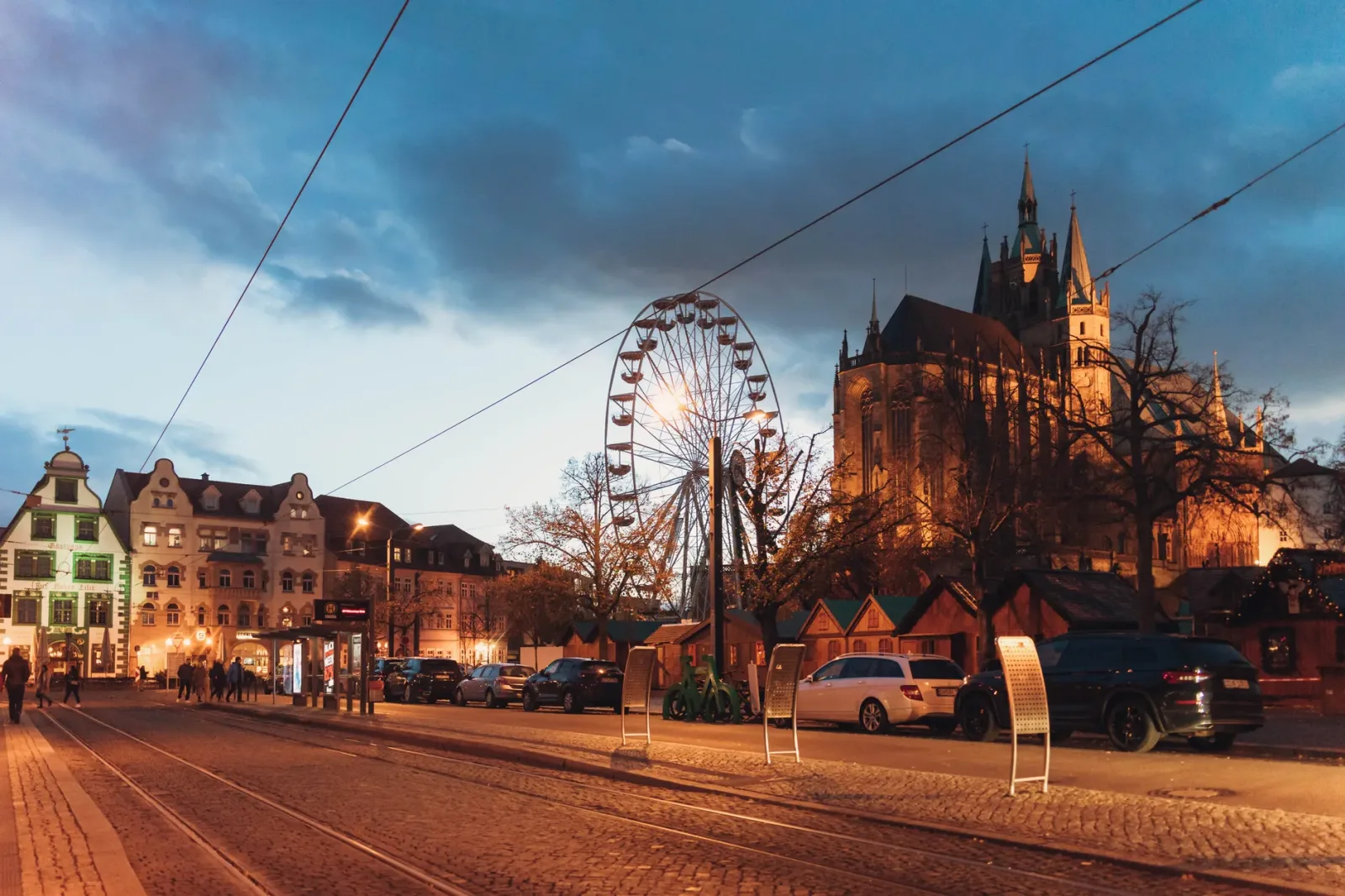
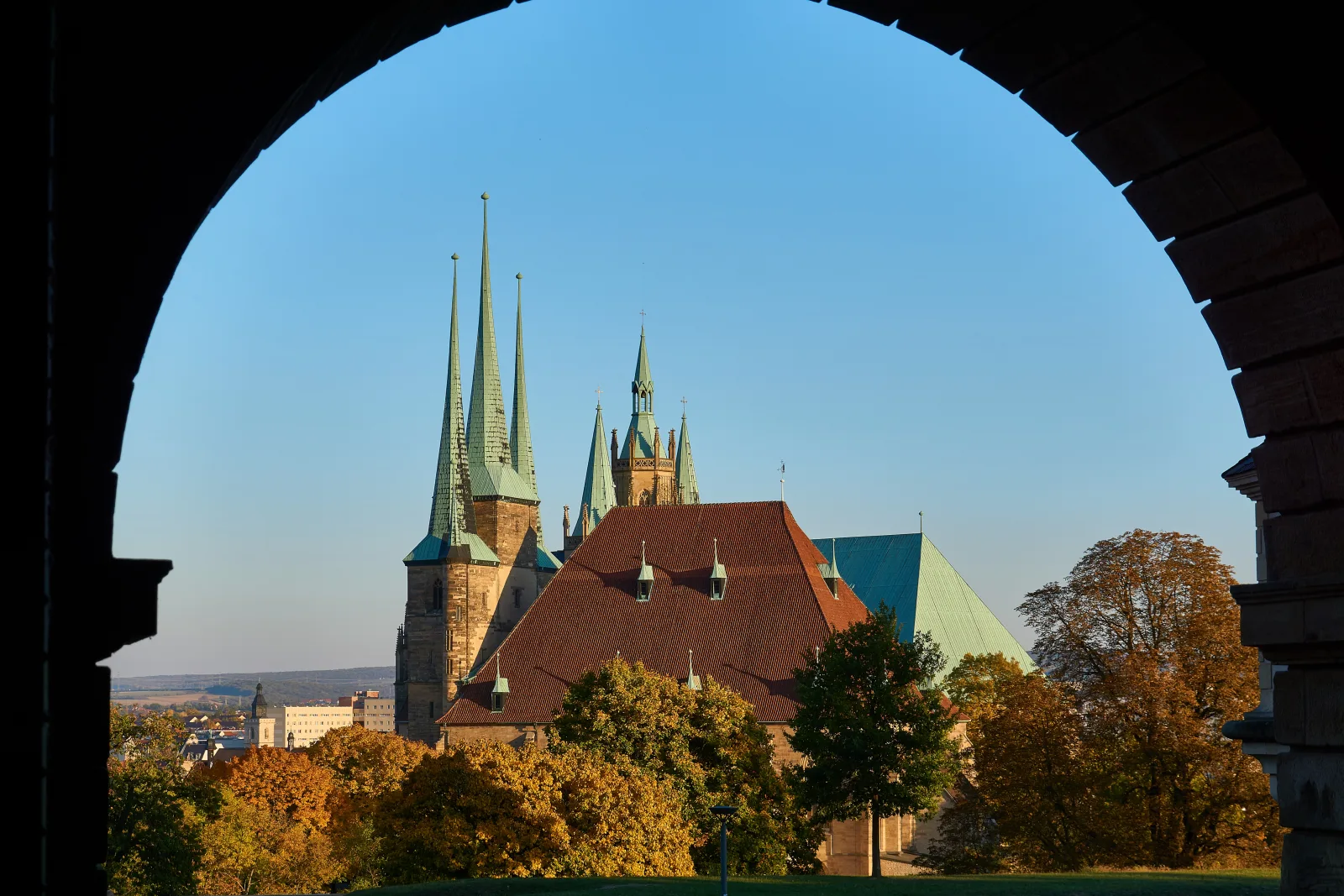
A visit usually revolves around a small set of places that tell the story of Erfurt well. Up high, Erfurt Cathedral carries the city’s monumental weight, with Romanesque and Gothic architecture and a more ornate interior, where items such as the relic of Saint Maurice and the Marian Pulpit are located. Next to it, Severi Church forms, together with the cathedral, Erfurt’s most recognizable image. It is Gothic, from the 14th century, and stands out for its tower and stained glass windows. If you plan to go inside the cathedral, the opening hours listed are usually daily from 10 a.m. to 12 p.m. and from 1 p.m. to 5 p.m., but it is worth confirming before your visit.
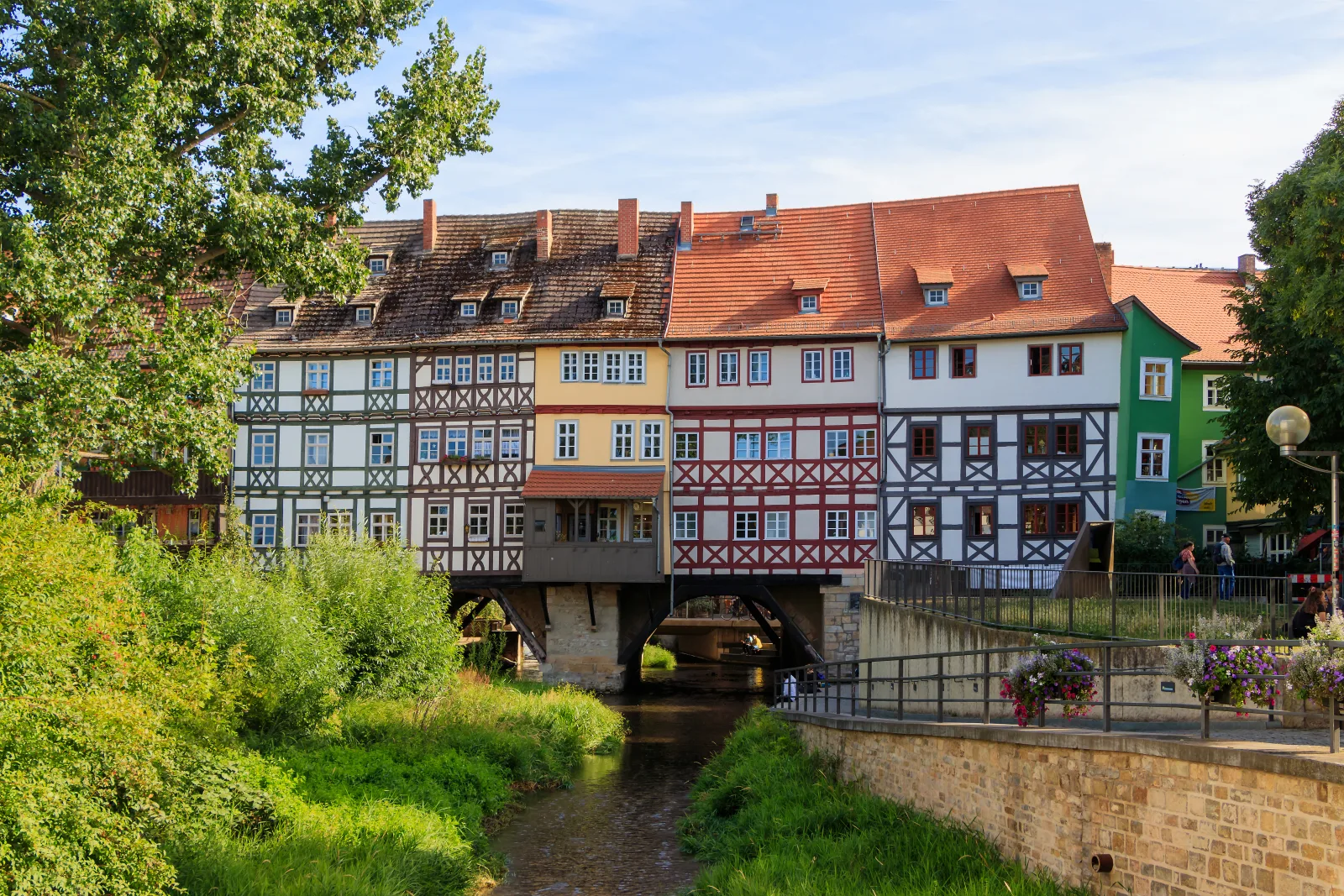
In the old center, the Krämerbrücke is the city’s most distinctive landmark. It is a medieval inhabited bridge, with half-timbered houses lined up along its entire span, now occupied by craft shops, galleries, and cafés. It is a stop to cross slowly, look at the storefronts, and then step off the bridge to see it from the outside, where the photos work better. Nearby, Fischmarkt shows another layer of Erfurt: a historic square used since the 10th century, surrounded by old buildings and still connected to urban life, with shops, events, and local activity.
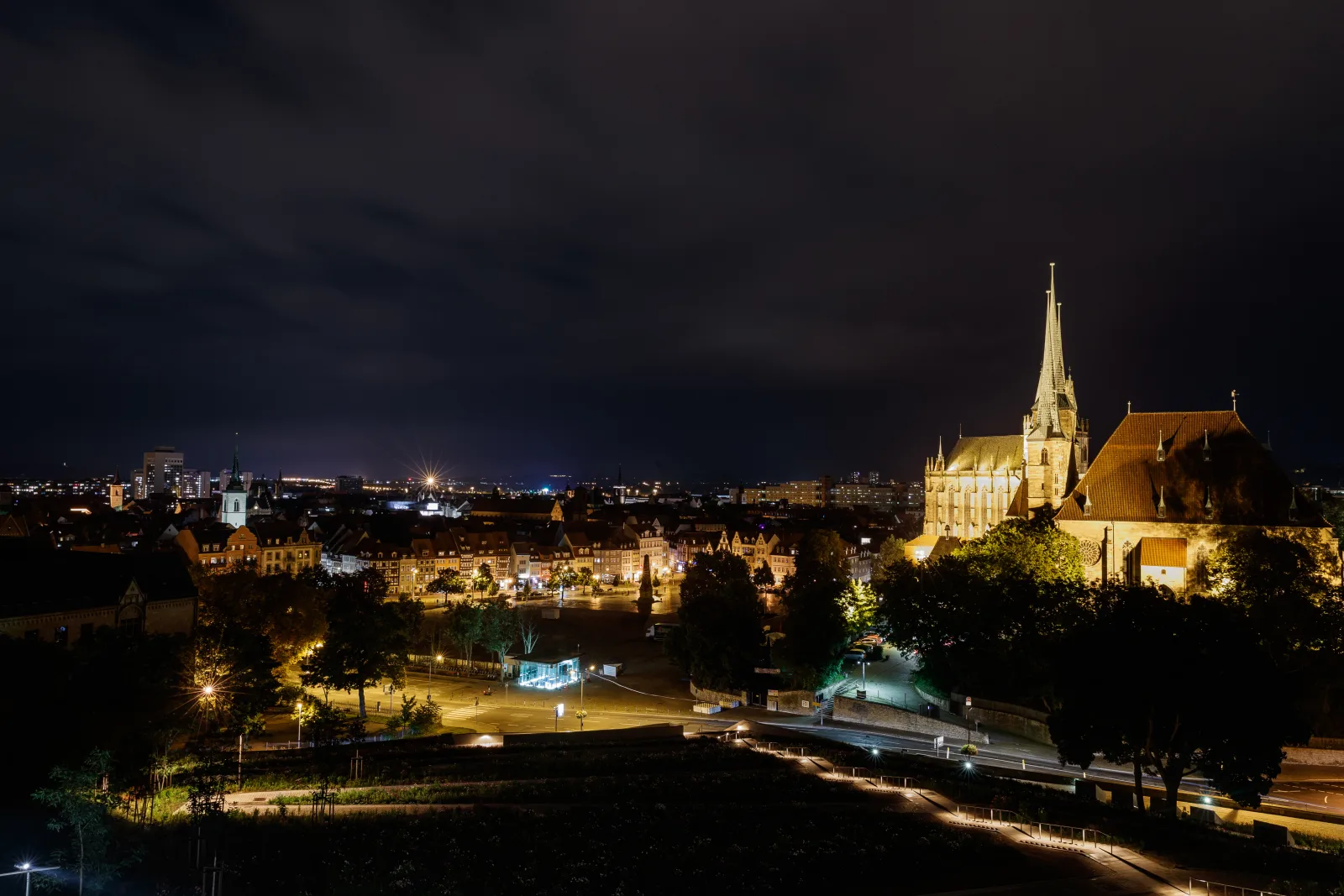
In the upper part of the city, Petersberg Citadel reveals the city’s military side. The fortress, linked to Erfurt’s defense over the centuries, has walls, towers, and historic buildings that make more sense as an open-air walk than as an interior visit. Access is listed as free. Within this complex, the castle lookout point is one of the most useful stops on the route because it helps you read the city’s geography: from there you can see the historic center, Domplatz, and the church ensemble. Access can be via glass elevator or walkways, and it is also usually free. Just below, Domplatz functions less as a closed attraction and more as a large civic space, good for photos and for understanding the scale of the area between the center and the hill.
For a more specific historical perspective, the Old Synagogue is one of Erfurt’s most important visits. The building dates back to around 1100 and combines Romanesque and Gothic elements, along with a museum on local Jewish history and historical objects. The listed opening hours are usually Tuesday to Sunday, from 10 a.m. to 6 p.m.; confirm before going. On the same schedule, the Museum of Natural History is generally open Tuesday to Sunday, from 10 a.m. to 6 p.m. and is especially worthwhile for families or for those who want to vary the historical itinerary with a more exhibition-focused visit, centered on geology, paleontology, botany, zoology, and regional ecology.
How to plan a day in Erfurt without rushing
Start with the historic center early in the morning and use this first stretch to stroll unhurriedly through the streets between Fischmarkt and Krämerbrücke. This order works because you get into the rhythm of the city before heading up to the upper part. The bridge fits nicely early in the morning or in mid-morning, when you can still cross, look at the shops, and move on without feeling like there is a human queue in the way.
From Krämerbrücke, walk toward the cathedral and Domplatz. Erfurt’s center is compact, and this journey makes sense without transportation. If you plan to go inside the cathedral, try to fit the visit within the stated opening window and confirm the current hours before you leave, because this is the only point in the day when it is worth organizing your watch more carefully. Domplatz works well right after that, without requiring much fixed time: it can be a short photo stop or a longer break, if you want to sit down for a meal nearby before continuing.
Leave Petersberg Citadel for the second half of the day. It comes naturally after Domplatz, because it avoids backtracking and concentrates the uphill stretch for when you have already covered the main core of the center. If the idea is to keep the walk light, do Petersberg as your last major stop and set aside some time for the viewpoint before finishing. From there, you can head back down to the historic center and end the day without a rigid schedule, returning to the streets and cafés that were left out at the start. This sequence, done entirely on foot, works well for a full day without rushing.
Where to eat in Erfurt
For a meal with a Thuringian feel, look for tables in the old center and around the more central squares, where regional menus and more traditional dining rooms usually appear. Erfurt makes more sense in this register than in a search for a “special occasion” restaurant: the appeal is in trying local food between one walk and another, without taking the day off course. If you want this kind of experience, the best filter is simple: check whether the place serves regional Thuringian cuisine and look at the current menu before you go, because the offer may change depending on the season and the day.
If variety is the priority, the center also concentrates international options. Here it pays less to choose by “fame” and more by context: a quick lunch near your route, a seated dinner on a quieter street, or a short stop without a reservation. Since the historic core is compact, you can compare menus on foot and decide on the spot with little loss of time. For families and groups with different preferences, this usually works better than settling on a name in advance.
For coffee and a quick break, the most practical stretch is on the streets of the center and around the busier areas, with cafés, pastry shop windows, and places that are well suited to a break between outings. Erfurt is a city for stopping a few times throughout the day, so it’s worth noticing where there is local foot traffic, instead of going into the first place with a free table in front of the most photographed sights.
Late in the afternoon, bars and drink spots work better as an extension of the walk than as a standalone destination. If you want to end the day without extra travel, stay in the historic center and choose by atmosphere: a more casual counter, outdoor seating when the weather is good, or a quieter place for a glass of wine or beer. Since opening hours and days may vary, confirm on the day, especially outside Friday and Saturday.
Practical information for visiting Erfurt
The everyday language is German. In hotels, restaurants, and central areas, you can usually get by in English, but this is not something to take for granted in any brief interaction, especially in small businesses. If you want to reduce friction, keep the names of places, reservations, and tickets saved on your phone so you can show them without relying on a long explanation.
The currency is the euro (€). Cards usually cover most expenses, but in Erfurt it makes sense to carry a small amount of cash for simple expenses or smaller establishments. This avoids wasting time looking for an alternative payment method on the spot. Before sitting down to eat or buying something in small shops, check at the entrance or at the register whether they accept cards and, if so, which type.
To get around the city, public transport helps when you do not want to do everything on foot, especially in rain, intense cold, or tiredness at the end of the day. Since tickets, ways of purchase, and validation can change, confirm the current system as soon as you arrive, preferably at the station, the main stop, or on the local network’s official website. If you plan to use public transport more than once in the same day, compare the available options before buying trip by trip.
The outlets follow the European two-round-pin standard, with 230 V current and a frequency of 50 Hz. If your devices use a different plug, bring an adapter. For items such as a laptop, phone charger, and camera, it is also worth checking the charger label before traveling: many work with a wide voltage range, but that is a detail to verify on the device itself, not something to assume.
Frequently asked questions
What is the best time to visit Erfurt?
From late June to early September is usually the most comfortable time for walking. December also attracts visitors because of the Christmas market.
Where should I stay in Erfurt to do everything on foot?
The historic center is the most practical base for those who want to explore the city on foot. It concentrates the main attractions and reduces travel time.
How do I get to Erfurt in the most practical way?
The train is usually the most practical option, with arrival via Erfurt Hauptbahnhof. It is also possible to go by car via the A4 and A71 highways.
What are the main tourist attractions in Erfurt?
Highlights include Erfurt Cathedral, St. Severi Church, Krämerbrücke, Fischmarkt, Petersberg Citadel, and the Old Synagogue.
Is Erfurt a good city to visit in one day?
Yes. The historic center is compact and allows for a walking itinerary without rushing too much, combining a medieval bridge, central square, cathedral, and Petersberg.