Dartmouth, Canada: what to do, when to go and how to plan your visit
Dartmouth, Canada: find out when to visit, how to get there, and which free tours, trails, and places to eat are part of the itinerary.

When to visit Dartmouth
May and June are usually the easiest months to visit Dartmouth at a relaxed pace. The crowds are still moderate, flowers fill the gardens and riverbanks, and the town tends to be less pressured than at the height of summer. For those who want to walk unhurriedly, take photos, and find friendlier accommodation prices, this period makes sense.

From July to August, Dartmouth enters its busiest season. That’s when the summer calendar picks up pace and the Royal Regatta draws a lot of attention to the town, with more people on the streets, on the quay, and at riverfront activities. For families and anyone wanting a more social atmosphere, this is the liveliest window; for those who prefer to avoid crowds, it’s worth booking in advance and accepting that everything gets more competitive, from accommodation to restaurants.
September is usually the sweet spot. The weather remains mild, the streets are quieter, and the light is ideal for long walks and outings without the pressure of peak season. It’s a strong month for couples and solo travelers who want good weather without the volume of July and August.
From October to April, Dartmouth slows down. The town becomes quieter, pubs take on more importance in the itinerary, and walks become more contemplative, especially on days with low skies and a cold breeze. In December, the Christmas lights create a very specific reason to visit: those who enjoy a winter atmosphere and shorter stays will find a rhythm of their own during this period, while those who want long days and a full schedule should aim for another month.
How to Get to Dartmouth
By car, Dartmouth is accessible by road from London via the M4, M5, and A38, in a journey of about 4.5 hours. From Exeter, the trip takes about 1.5 hours via the A380 and A3122. If you’re planning to drive, it’s worth checking in advance whether your accommodation has on-site or nearby parking, as this usually makes arrival much easier.

Without a car, the most practical option is to take the train to Totnes or Paignton. From there, bus 92 takes you to Dartmouth, and the River Link ferry makes the crossing from Kingswear. This route requires more connections, so the main thing is to align the train, bus, and boat schedules well to avoid a long wait.
If your idea is to arrive without driving, Totnes usually works well as a gateway, while Paignton can be useful when the bus connection works better. The ferry from Kingswear completes the journey directly for those who want to enter the town by water, without relying on a car.
Editorial transparency: Some links on this page are affiliate links. We may earn a commission at no extra cost to you. This does not influence our recommendations.
Where to stay in Dartmouth
Those who want to stay in Dartmouth with autonomy usually do best in country houses and cottages. This format works well for stays of a few days or more, because it offers space to store luggage, make simple meals, and settle into the rhythm of the town without relying on strict schedules. The logic is to look for comfort, convenience, and an address with local character, rather than generic accommodation that could be anywhere.

In summer, it’s worth booking early. That’s when demand rises and the best-located options tend to go first. If the trip is short and you want everything sorted before you arrive, prioritize a place with nearby or included parking, especially if you plan to use the town as a base to explore without hassle.
For couples or solo travelers, a smaller, well-equipped place close to the center is usually enough. Families tend to benefit more from units with a kitchen and living area, because that allows for simple routines and more time in their own space. If the plan is to stay more nights, the comfort of a house with personality matters more than extras you may not even use.
When choosing, look less at promises of charm and more at what actually makes the stay work: easy access, a functional kitchen, space to dry clothes, and a layout that fits your pace. In Dartmouth, this type of accommodation usually makes more sense than trying to fit the trip into a quick-stop model.
Free places worth the walk
Royal Avenue Gardens makes a good no-cost break in the center. The garden sits between the quay and the historic area, so it works as a vantage point for local life: benches, well-kept flowerbeds, ferries crossing the river, and, in the right season, flowers and occasional events. If you want a quick read on the city’s pace without going into a museum or shop, it’s a good start.

Bayard’s Cove Fort draws attention for its position and scale. It is a small 16th-century fortification at the end of the riverside area, and the appeal lies less in “doing something” and more in looking at the stone walls, gun ports, and its direct relationship with the estuary. The view toward Kingswear helps explain why this spot had strategic value.
The self-guided historic routes in the center work for those who prefer to walk without committing to a fixed itinerary. The cobbled streets, quiet courtyards, old façades, and traces of maritime history come through best when you follow the Dartmouth Town Trail or simply cross the old area at a leisurely pace. The benefit here is noticing details that pass too quickly on a rushed visit: ornate doors, plaques, narrow passageways, and stretches where the town still preserves the scale of an old port.
Gallants Bower is worth the climb when you want a view without paying for an enclosed attraction. The route goes up to the former earthworks of a Civil War fortification, and what makes it worthwhile is the openness of the landscape: woodland, cliffs, boats in the estuary, and the coastline on the horizon. Butterwalk Arcade fits the same logic, but from another angle. From the outside, the covered arcade stands out for its Jacobean timber structure and carved pillars; looking from the outside already reveals much of the ensemble’s historical value, even without paying to go in.
Outdoor walks in Dartmouth and the surrounding area
The most interesting route for walking outdoors in Dartmouth combines water, hillside, and open views in short stretches, without requiring a full day. The South West Coast Path route toward Dartmouth Castle and Sugary Cove works well for those who want a walk with varied scenery and an easy pace to sustain. Instead of a flat route all the way, you alternate between climbs, descents, and stopping points where the estuary appears unexpectedly.

Along the way, Warfleet Creek serves as a natural pause. It is a quieter section of the estuary, with a sense of distance from the movement of the center, and that is precisely why it is worth it. Those who like to walk unhurriedly can treat this stretch as a break to observe the water, the wooded banks, and the changing light throughout the day. If photography is the goal, early morning and late afternoon usually provide the best reading of the landscape.
Gallants Bower serves as a walking viewpoint, not as a passing point. The climb is rewarded by the open view, with the river, rooftops, and coastline appearing in layers. The historic ground up there gives context to the place, but what usually captures attention is the wide perspective over Dartmouth and the surrounding area. It is a good choice for those who want to walk without depending on a beach or an indoor attraction.
The walk to Dartmouth Castle completes this set nicely. The scenic stretch delivers the kind of view that makes sense at a leisurely pace, and Sugary Cove offers the smaller scale of a short cove, with a more secluded feel than a long, busy beach. If you choose only one route, think less about distance and more about what you want on the way back: successive viewpoints, a calmer water spot, or the feeling of having walked along the edge of the estuary.
What to do in the historic center
Walking the stone streets of the center already covers much of the visit. The urban layout is compact, so you can observe old façades, narrow passages, and the plaques that mark the maritime history without needing a rigid itinerary. If you like walking with attention to detail, the Dartmouth Town Trail helps string this route together and points out stretches that go by too quickly on a hurried pass.
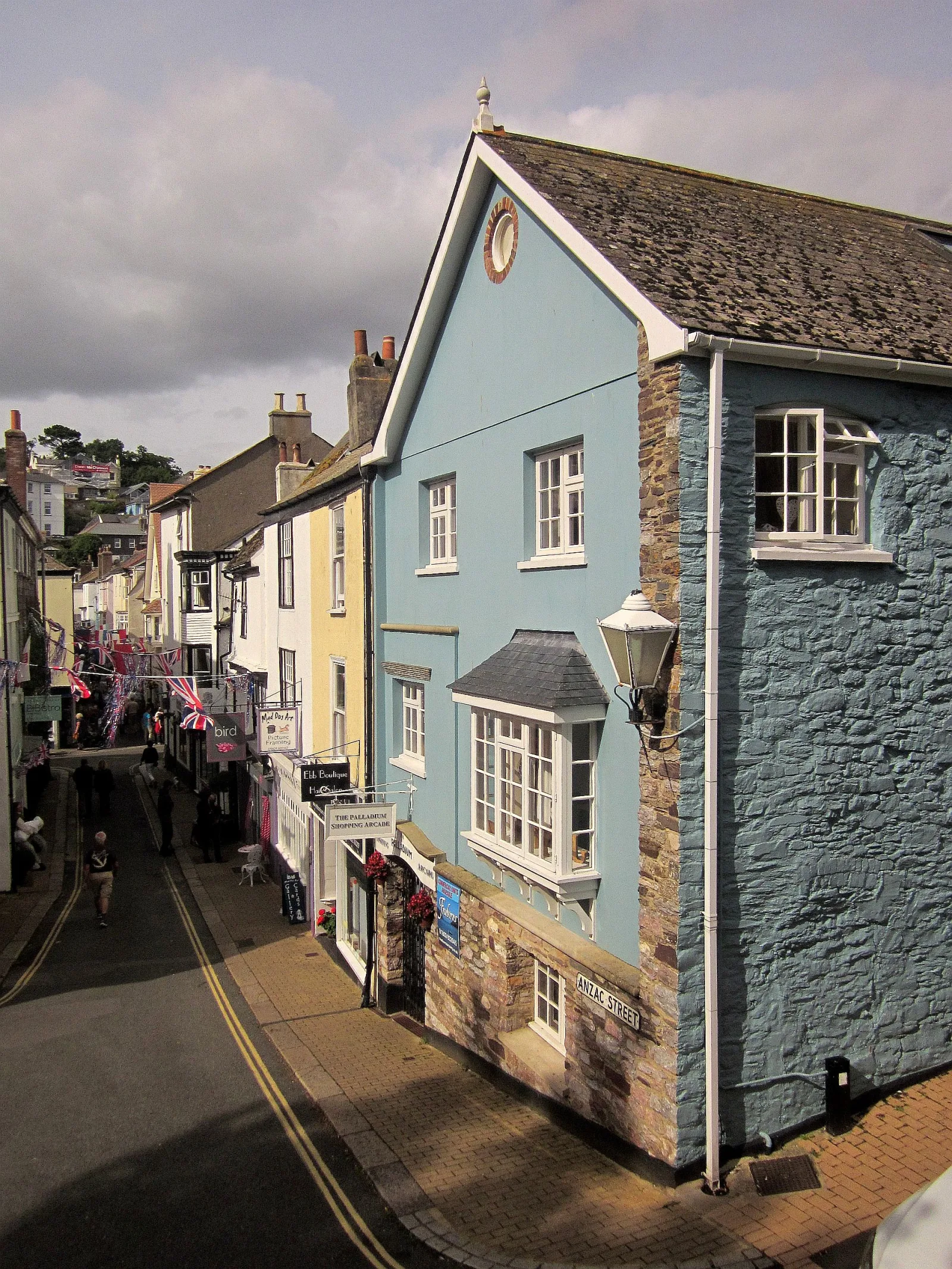
The Dartmouth Museum is a good choice for anyone who wants context before or after the walk. It occupies a 17th-century building and brings together nautical objects, ship models, and stories linked to the city’s maritime past. Since admission is paid, it is worth confirming the current price and opening hours on the day, especially outside peak season, when schedules may change.
On Fridays and Saturdays, the Farmers’ Market in Old Market Square adds a practical use to the center: you’ll find bakery products, preserves, plants, and handmade items. It’s the kind of stop that works best if you’re already walking around the historic area, because it fits nicely between one cultural visit and another. If you want to arrive with time to choose at your leisure, go early.
The Butterwalk Arcade is worth walking through, because its value lies as much in the covered passage as in the wood-and-stone ensemble that preserves the street’s old scale. Inside there are shops, but the interest is not in buying anything, and rather in noticing the carved pillars, the crooked beams, and the way the space preserves the atmosphere of a historic center still used in everyday life.
Trip to Greenway and Kingswear
Greenway works well as a natural extension of a visit to Dartmouth. You can get there by seasonal ferry, by car, or by train, and the main choice usually comes down to how much time you want to spend getting there and which season you’re traveling in. If you plan to prioritize the crossing by water, check whether the seasonal service is operating on the day of your visit; outside that period, car and train are usually the more direct alternatives.

Agatha Christie’s house is the main draw of the trip. What attracts people there is the combination of the preserved rooms, the surrounding gardens, and the café, which fits nicely into an unrushed stop. It is not a place to “quickly pass through”: it calls for a slower pace, especially if you like visiting historic houses with time to observe details and wander the grounds without hurrying.
Kingswear fits well into the same day, with the short crossing separating the two banks. The charm lies in walking past the colorful cottages and observing the village’s relationship with the river, which changes a lot depending on the tide and the light. Some pubs there make good use of that waterfront location; if you’re thinking of stopping for a drink, it’s worth looking at the activity in the window or on the terrace before going in, because the view matters as much as the menu.
If you’re combining Greenway and Kingswear in the same outing, the best order depends on the kind of day you want to have. Greenway usually works better when you want a calmer block, with house and garden; Kingswear fits better as a short continuation, with more street walking and a stop to sit by the river.
Where to eat and drink in Dartmouth
For fish and chips and seafood, Rockfish Dartmouth is the most straightforward choice. It works well when the idea is to eat without ceremony, with the focus on the dish and the view of the water. If you want a simpler meal, but still tied to the place, that’s the name to put on the itinerary.
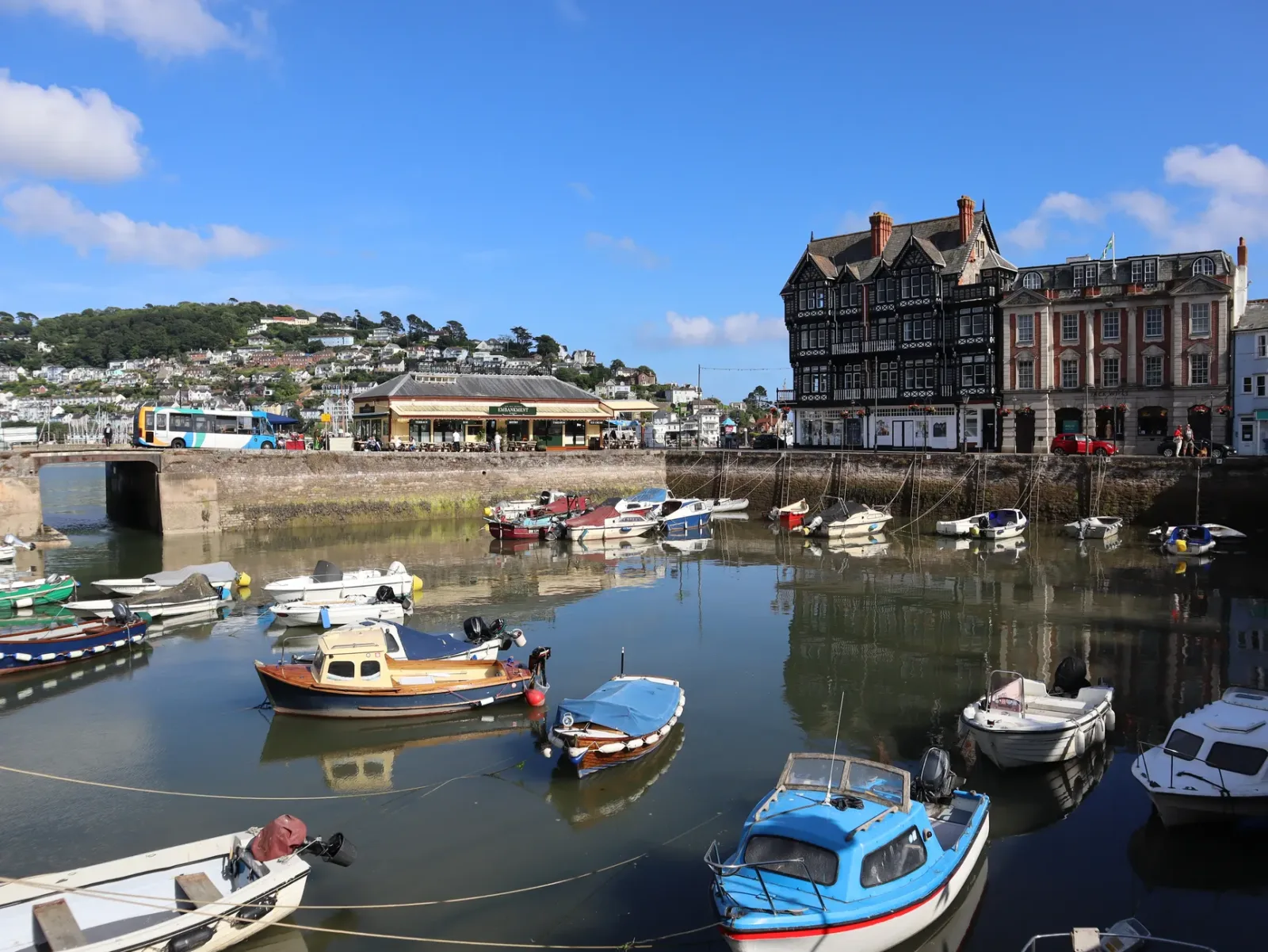
The Cherub Inn leans toward a riverside pub with more of a long-stop feel. It’s the kind of place that makes sense for an afternoon drink or for a leisurely meal, with an atmosphere that suits those who want to sit and watch the river flow. If the priority is pub vibes, it fits better than a café.
For breakfast, a light lunch, or buying items for a picnic, Smith Street Deli does the job with ease. Bayards Cove Inn follows the same casual-meal line, with a useful option for starting the day or taking a break in the center without wasting time. Café Alf Resco is the most natural spot for coffee and brunch, especially if you want a less formal place with a local crowd.
If the choice depends on the time of day, think of it like this: fish and shellfish for the main meal; riverside pub for a drink and a while; deli and café for a quick bite, breakfast, or snack. On busy days, it’s worth arriving early or being prepared to wait, because the city’s best-known places tend to fill up first.
Frequently asked questions
What is the best time to visit Dartmouth?
May, June, and September usually offer milder weather and fewer crowds. July and August are the busiest months, while from October to April the city is quieter.
How do you get to Dartmouth without a car?
The most practical way is to take the train to Totnes or Paignton and then catch bus 92 to Dartmouth. You can also use the River Link ferry from Kingswear.
What are the free places to visit in Dartmouth?
Royal Avenue Gardens, Bayard’s Cove Fort, Gallants Bower, and Butterwalk Arcade are among the free highlights. The historic center and the Dartmouth Town Trail also make for good walks at no cost.
Is it worth staying overnight in Dartmouth?
Yes, especially if you want to explore the city at a leisurely pace. Cottages and country houses work well for stays of a few days, especially for those who want more independence and space.
What can you do in Dartmouth’s historic center?
Walking along the cobblestone streets, following the Dartmouth Town Trail, visiting the Dartmouth Museum, and stopping by the Farmers’ Market are good options. Butterwalk Arcade is also worth crossing.