Christchurch: practical itinerary for planning a trip to the largest city on the South Island
Plan your trip to Christchurch with tips on where to stay, ideal days, accommodation, getting around, and day trips across the South Island.

Why Use Christchurch as a Base for Your Trip
Christchurch works well as a base because it brings together what makes life easier for anyone planning an itinerary through the South Island: it is the largest city in the region, receives the island’s main flights through Christchurch Airport (CHC), and has the infrastructure to stock up for the trip before hitting the road. For those traveling by car or campervan, that makes a difference on arrival day: you’ll find supermarkets, rental companies, and campervan and motorhome operators more easily than in many smaller places on the island.
It is also a practical place to fit into the middle of a circular itinerary. Those crossing between the North Island and the South Island usually pass through here almost by obligation, and the city works well as a transition stop rather than just a rushed overnight stay. You can arrive, sort out shopping, pick up the vehicle, and head off toward the coast, the mountains, or the interior without depending on a smaller town to handle those steps.
The logic is simple: if the trip will include long drives across the South Island, Christchurch reduces improvisation. You can start with a stocked pantry, choose a vehicle with more options available, and get the logistics sorted before moving on to areas where infrastructure is more spread out. That applies both to those doing a full circular route and to those using the city as a stopover between one island and the other.
How many days to stay in Christchurch
If the idea is just to get to know the essentials of Christchurch, a few hours are enough. You can get around the city center, feel the city’s scale, and continue on your way without turning the stop into a full program. In this format, the focus is on walking calmly between the central points and using the time to understand the local rhythm, not to cram attractions into the clock.
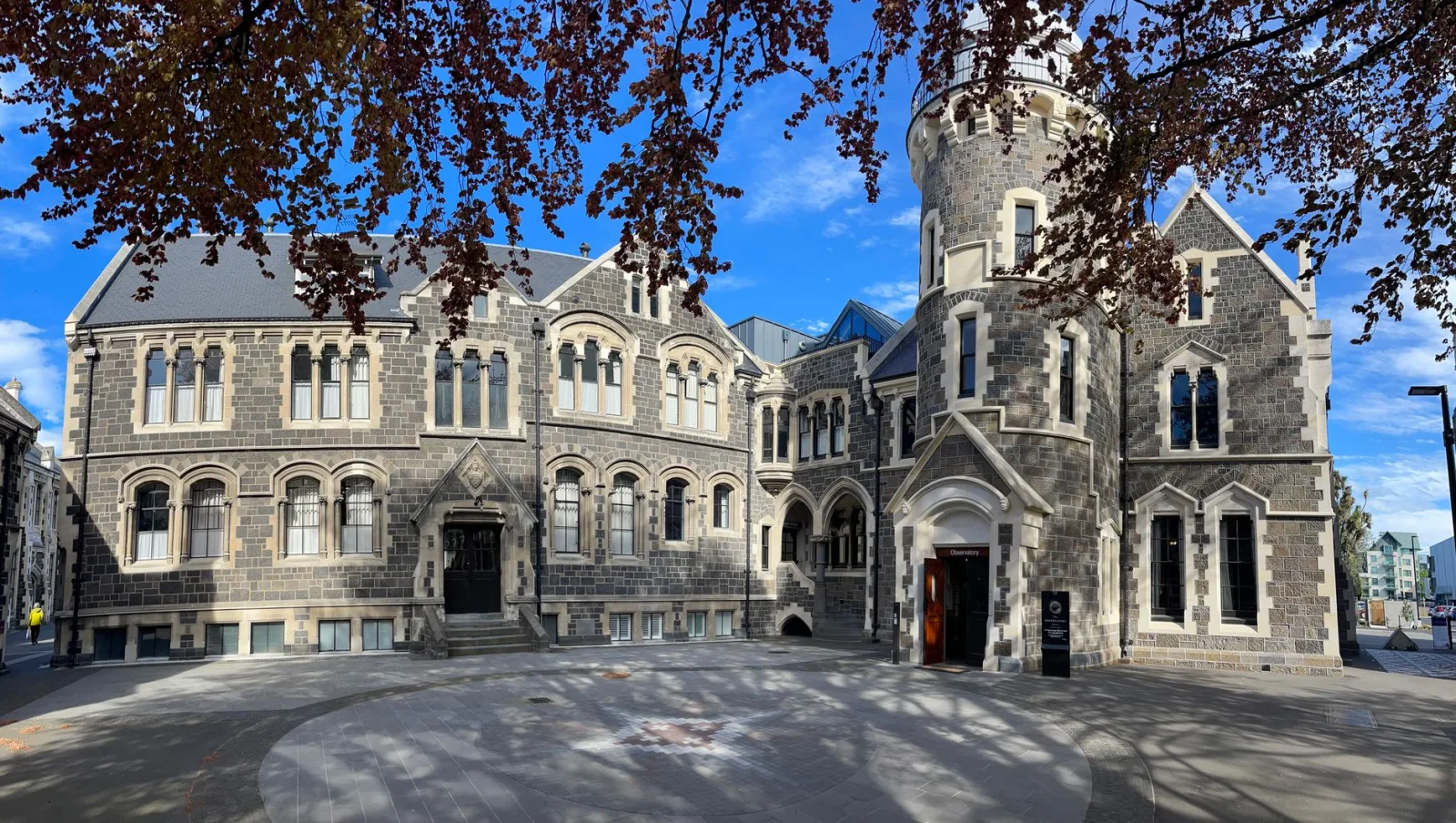
With 1 night, the city truly becomes part of the itinerary. You can see the center without as much of a rush, have dinner there, and return the next day without the feeling that you only passed through Christchurch. It is the minimum comfortable time for those who want to include the urban core without relying on a tight schedule.
2 nights make a difference if you want to fit in short outings to the surrounding area. The first night takes care of the center; the second opens space to choose between a more scenic outing or a half-day trip without rushing between arrivals and departures. This interval also helps those who like to travel with some margin for unstable weather, something relevant on the South Island.
Less than that works for a stopover. More than that only makes sense if Christchurch is really your base, or if you want to explore the city at a relaxed pace before heading to other areas of the island.
Editorial transparency: Some links on this page are affiliate links. We may earn a commission at no extra cost to you. This does not influence our recommendations.
How to get to Christchurch and continue traveling
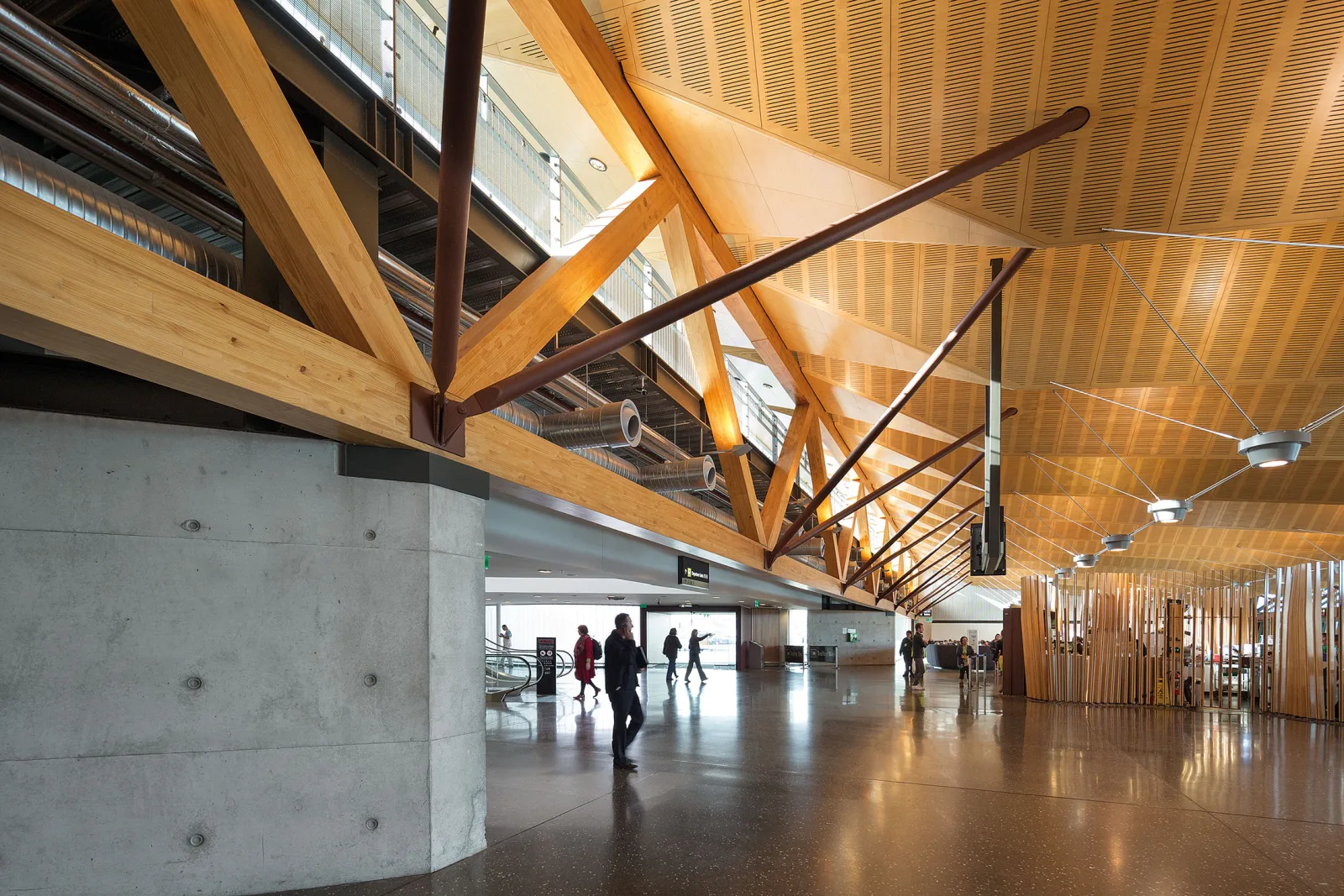
Arriving by plane is usually the most direct way to fit Christchurch into an itinerary. Christchurch Airport (CHC) receives domestic flights from Queenstown, Auckland, Wellington, and smaller cities, which makes both arrival and departure easier without having to return by road. If the idea is to pick up a car, campervan, or motorhome right after landing, that also usually works well here, because the city concentrates this type of operation more easily than many smaller points on the island.
To continue traveling overland, the most commonly used routes are SH 1 and SH 73. The first is for those coming from the north or south of the South Island; the second is the natural connection for those heading toward the West Coast and wanting to pass through the Arthur’s Pass section. Christchurch is 244 km from Greymouth and 226 km from Lake Tekapo, two useful reference points for planning the order of stops without wasting time on unnecessary detours.
Those who prefer not to drive can find Intercity buses with connections to the north and south of the island. To get to the West Coast by public transport, the TranzAlpine is the most practical option: it links Christchurch to Greymouth and crosses Arthur’s Pass along the way. If you are putting together a round-trip itinerary through the South Island, it is worth deciding in advance whether the city will be an arrival point, a vehicle pick-up point, or a departure point to continue by road; this choice changes the logistics of the rest of the trip.
Where to stay in Christchurch
For those who want to walk to the central attractions, staying downtown is the most practical choice. The urban layout is flat, which makes a big difference for anyone who prefers to get around on foot. In this area, there are options with very different profiles: BreakFree on Cashel, Quest Christchurch Serviced Apartments, Southwark Apartments, and Pavilions Hotel. If the idea is to save money, YMCA Christchurch and YHA Christchurch are simpler alternatives.

Those arriving late, leaving early, or just needing one night between legs of a trip usually do better near the airport. There, the logic is less about sightseeing and more about logistics, with easy access to get on the road the next day. Among the options mentioned for this profile are JUCY Snooze Christchurch, Sudima Hotel Christchurch Airport, and Airport Gateway Motor Lodge.
If you’re traveling by campervan or motorhome, it’s worth looking for a park that accepts this setup without making arrival complicated. Christchurch TOP 10 Holiday Park and Amber Kiwi Holiday Park & Motels are among the practical choices for this type of overnight stay, especially when the priority is to park, sleep, and keep traveling without depending on the city center.
Getting around the downtown area and the Avon riverfront
The center of Christchurch was made to be explored on foot. The main attractions are relatively close to one another, and leaving the car parked is usually the most sensible choice, since parking is not always easy. For those who want to get the visit done without hassle, the best strategy is to walk between the spots in the urban core and save the car for trips beyond it.
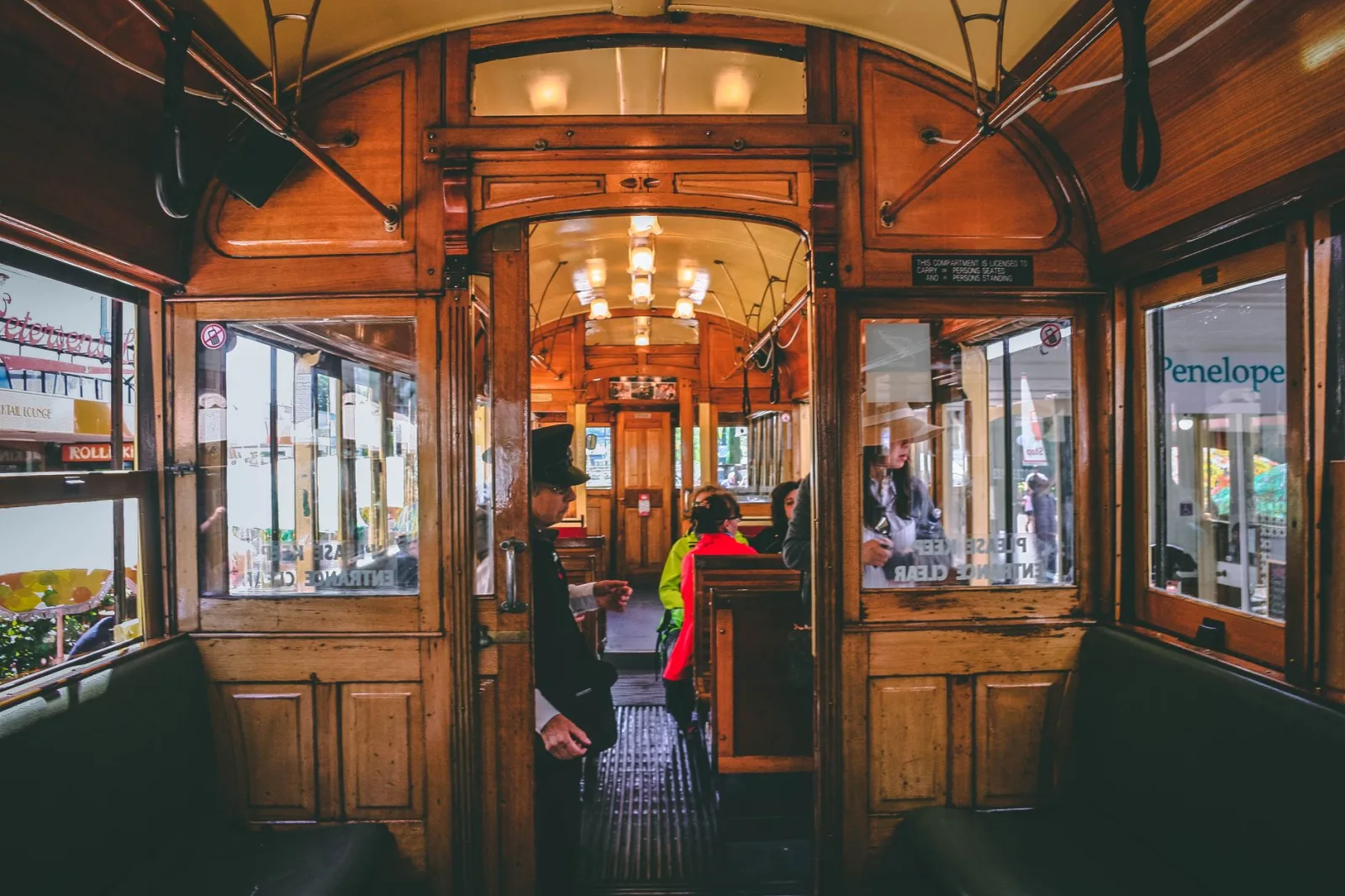
The historic tram helps with this short-distance movement. It connects points in the center and works well when you want to save walking between central stops or use the ride as part of the experience. It is not a means of transport designed to cover large areas of the city; it works better as a practical way to link urban landmarks without depending on multiple transfers.
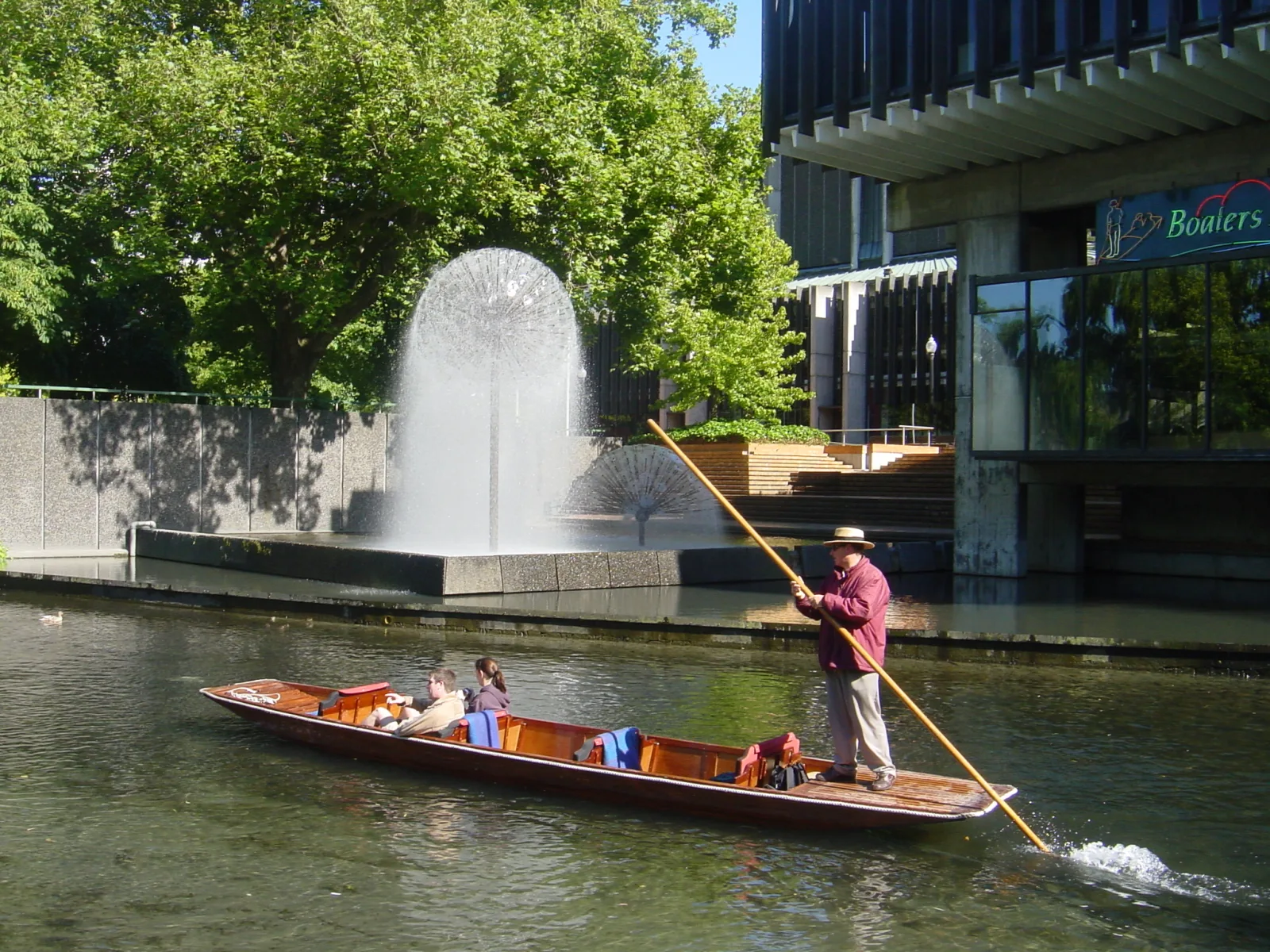
The Avon River also shapes the way people move around Christchurch. The riverfront creates a natural sightseeing axis, especially for those who want to combine bridges, the riverbank, and nearby areas without leaving the central perimeter. It is a stretch best explored at a leisurely pace, because the city invites you to move from one point to another without rushing and without relying on transport at every stop.
If the idea is to visit something near the center, it is worth choosing the most direct option: walking when the distance is short, the tram when it fits the route, and the car only if you are leaving the urban core. In the heart of the city, this usually works better than trying to move the car for every attraction.
What to do in downtown Christchurch
Downtown Christchurch concentrates the urban sightseeing that makes the most sense for those with limited time. Bridge of Remembrance is usually a good starting point, because it already places you along the Avon River and in the stretch where walking between the main points makes the most sense. From there, it is worth continuing to Quake City and Canterbury Museum if the idea is to understand the impact of the earthquakes and the regional history without leaving the central core.

For art and architecture, Christchurch Art Gallery Te Puna o Waiwhetu fits well into the same circuit. After that, Christchurch Cathedral and Cardboard Cathedral help you read the city through what it lost and what was rebuilt. If there is time, the Tūranga library is a practical stop in the heart of downtown, especially when you want to alternate between sightseeing and rest without moving too far from the rest of the route.
New Regent Street works better as a walking stretch than as a standalone visit. It is a short street, easy to fit in between the other stops, and the heritage tram passes through there, which helps connect the central points without relying on a car. Re:Start and The Tannery fit into the shopping and architecture route; the former is more tied to the downtown commercial atmosphere, while the latter calls for a longer visit and works better when you already have time to get around.
If your visit is short, choose three core areas: earthquake memory, art, and a street to walk along. If you have more flexibility, the heritage tram ties the outing together and keeps downtown from becoming just a sequence of points on a map.
Parks, botanical garden and boat ride on the Avon
Hagley Park is the most useful stretch for anyone wanting to take a breather between one outing and another without leaving the city center. It works well on a clear day, especially because it connects directly with Christchurch Botanic Gardens, which are right next door. If you like walking without a strict itinerary, this is the area where the city really slows down.

Inside the gardens, Cuningham House is worth a stop for the combination with the greenhouses and the cultivated areas around it. It doesn’t require any special logistics: you go in, stroll at your own pace, and continue on through the park itself. It’s the kind of plan that fits nicely before or after lunch downtown, without needing to turn the whole morning into travel time.
On the Avon River, the best base for water activities is the Antigua Boat Sheds. From there, kayak, canoe, and stand up outings depart, as well as the boat ride that the city associates with this stretch of the river. For anyone wanting to see Christchurch from another perspective, the contrast between the green banks and the calm water makes more sense than any long explanation. If your priority is the view, the gondola ride is an alternative that is higher and more panoramic, with a good look at the waterfront and the surrounding hills.
If the idea is to choose just one outdoor outing, think of it this way: park and gardens for unhurried walking, river for paddling or riding on the water, gondola for gaining height and seeing the city from above.
Day trips from Christchurch
Banks Peninsula makes sense when the idea is to leave Christchurch to hike, cycle, or simply swap the urban layout for hills and bay. It is the most natural area in the city’s immediate surroundings for those who want trails and mountain biking, with hilly terrain and routes that make for a full-day outing without requiring much logistical complexity. If you like to leave early, spend a few hours on the move, and return in the late afternoon, it is the kind of day trip that fits well.
Port Hills works differently. Its appeal lies in the viewpoints and the panorama over Christchurch and the bay, with the advantage of being able to cover part of the route by car, bike, or on foot. For those who want less trail and more views, it is the most direct option. It also suits those who do not want a long commitment to distance, but still want to feel they truly left the city.
Castle Hill calls for a different logic. It sits at the start of Arthur’s Pass National Park and works very well as a strategic stop on the way to the West Coast. The place stands out for its limestone rock formations, and a walk of about an hour is enough to explore much of them. If your itinerary includes Greymouth, glaciers, or the stretch of Arthur’s Pass, it is worth fitting Castle Hill into the route rather than treating it as a standalone detour.
In the stretch connected to Arthur’s Pass National Park, the appeal lies more in the road scenery and the scale of the mountains than in an urban visit. It is an outing that works best for those already planning the crossing of the island and wanting to turn the journey itself into part of the trip. If the goal is to choose just one day trip, think about the kind of day you want: physical effort in Banks Peninsula, viewpoints in Port Hills, route stop in Castle Hill, road and mountains on the way to Arthur’s Pass.
Where to eat and drink in Christchurch
Christchurch has a café scene that fits easily into a day’s itinerary, especially for brunch, fresh bread, and a long break between outings. The city’s standard is small counters, informal service, and tables that fill up early, so it makes sense to arrive without much rush, especially at the more popular spots. Belle, C1 Espresso, and Little Poms are among the most memorable names for this kind of stop; Addington Coffee Co-op, Grater Goods, Grizzly Baked Goods, and Dune Cafe complete the café and brunch circuit with offerings ranging from simple coffee to a light lunch.

For dessert, the city has a few spots that work well in the late afternoon or after dinner. On New Regent Street, the combination of cafés, sweets, and bars concentrates much of this activity, with a focus on smaller places worth stopping for when you want something quick rather than a long meal. Mapu, Longo, and Butter fit into this logic, as do the dessert spots and bars that fill the street at its liveliest hour.
Those looking for a more laid-back dinner can aim for wine, beer, or cocktail bars and fit the meal in before or after them. Lyttelton also belongs on the map for anyone looking to eat and drink without keeping the itinerary tied to the city center, with options that are better suited to a short outing at the end of the day than to rushed sightseeing. If your idea is to choose well and lose little time, look first at the type of service: café for brunch, dessert place for after lunch, bar to end the day.
Hours vary quite a bit, so the best filter is what you want to eat and what time of day you plan to stop. In Christchurch, that usually matters more than trying to hunt down a single “right” address for everything.
Frequently asked questions
How many days should you stay in Christchurch?
A few hours are enough to see the essentials. One night already lets you get to know the city center at a relaxed pace; two nights help if you want to include short outings in the surrounding area.
Is Christchurch a good base for exploring the South Island?
Yes. The city has the airport, rental agencies, services, and infrastructure to stock up before hitting the road. This makes things much easier for anyone traveling by car, campervan, or motorhome.
Where should you stay in Christchurch?
The city center is the most practical option for walking to the attractions. Those arriving late or leaving early usually prefer the airport area, and travelers by campervan may look for holiday parks.
What is there to do in downtown Christchurch?
It’s worth putting together a route with Bridge of Remembrance, Quake City, Canterbury Museum, Christchurch Art Gallery, Cathedral, and New Regent Street. If you have time, the historic tram helps connect the central sights.
Which day trips from Christchurch make sense?
Banks Peninsula, Port Hills, and Castle Hill are the most practical outings. Arthur’s Pass also works well for those heading toward the West Coast and wanting to make the journey part of the trip.