Campos do Jordão: how to plan the trip, what to do and where to stay
Campos do Jordão: see how to plan the trip, choose where to stay, and put together an itinerary with parks, culture, food, and sightseeing.
What to expect from Campos do Jordão before planning your itinerary
Campos do Jordão is at an altitude of 1,628 meters, and that changes the trip from the very first day. The air is usually colder than in lower areas of the mountains, especially in winter, so it’s worth packing in layers, even outside the coldest season. The city also has a very popular mountain-town profile, with heavy traffic on holidays and weekends, which affects traffic, lines, and accommodation availability.
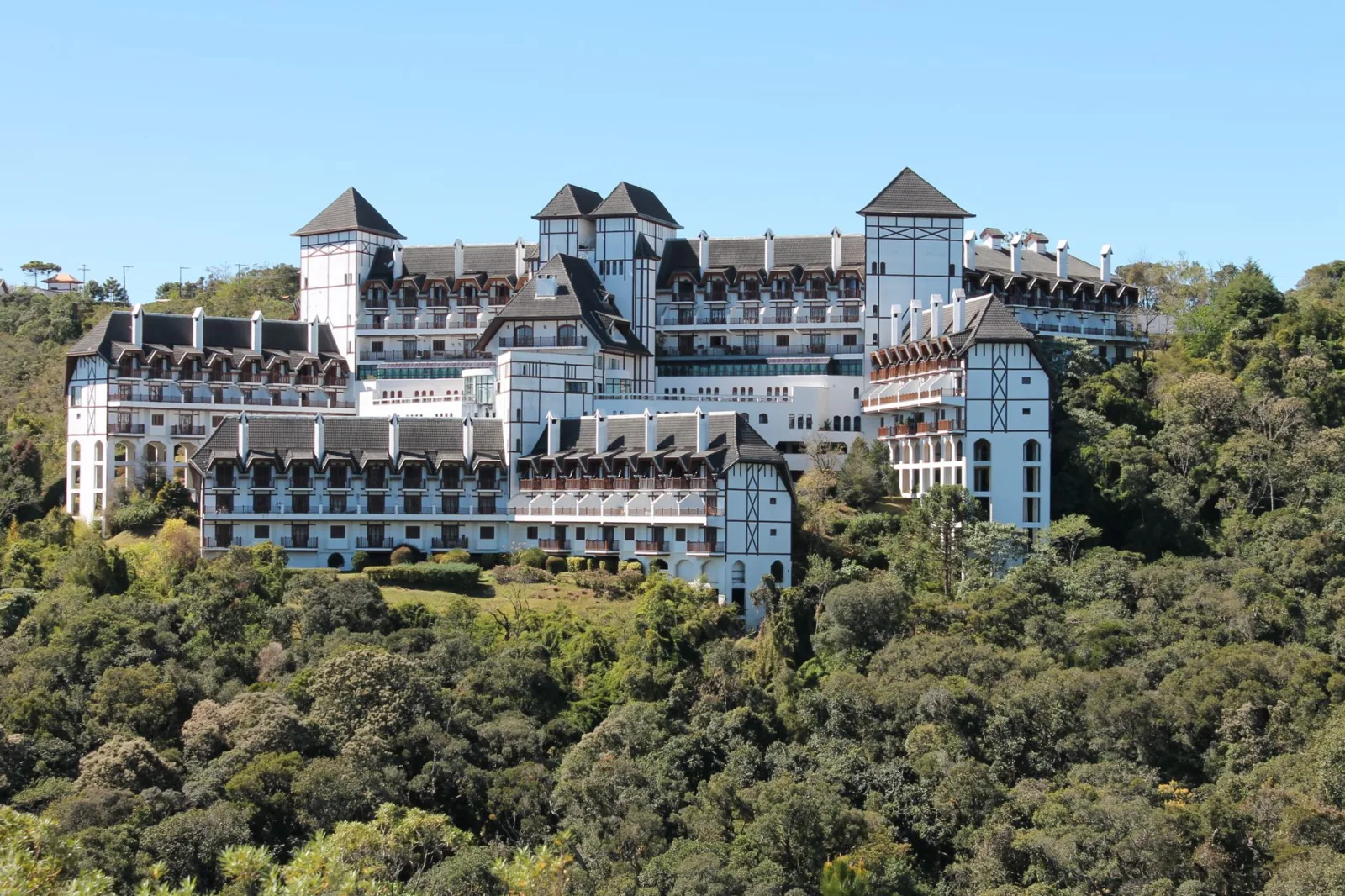
To decide when to go, think about the pace you want to set for your itinerary. A weekend is enough to cover the best-known sights and gives you a good feel for the destination, especially if the idea is to move around without too much rush. Five days already allow you to expand the schedule and fit in outings with less hurry, which makes a difference in a city where getting around and stopping along the way often take more time than they seem to on the map.
The weather helps define the kind of experience. In winter, the city enters its most sought-after mode: cold nights, a mountain atmosphere, and a higher concentration of visitors. At other times of the year, Campos do Jordão tends to be more comfortable for those who want to walk around at a more relaxed pace and combine attractions without relying so much on overcast weather. If the trip is short, choose carefully what goes into the itinerary; if it’s longer, spread out the outings so everything doesn’t end up concentrated in a single day.
The key point is this: Campos do Jordão works well at different paces, but the time available greatly changes what you can see without feeling rushed. The shorter the stay, the more selective the itinerary needs to be. The longer it is, the more room you have to explore the city beyond the basics.
How to get to Campos do Jordão and what to consider along the way
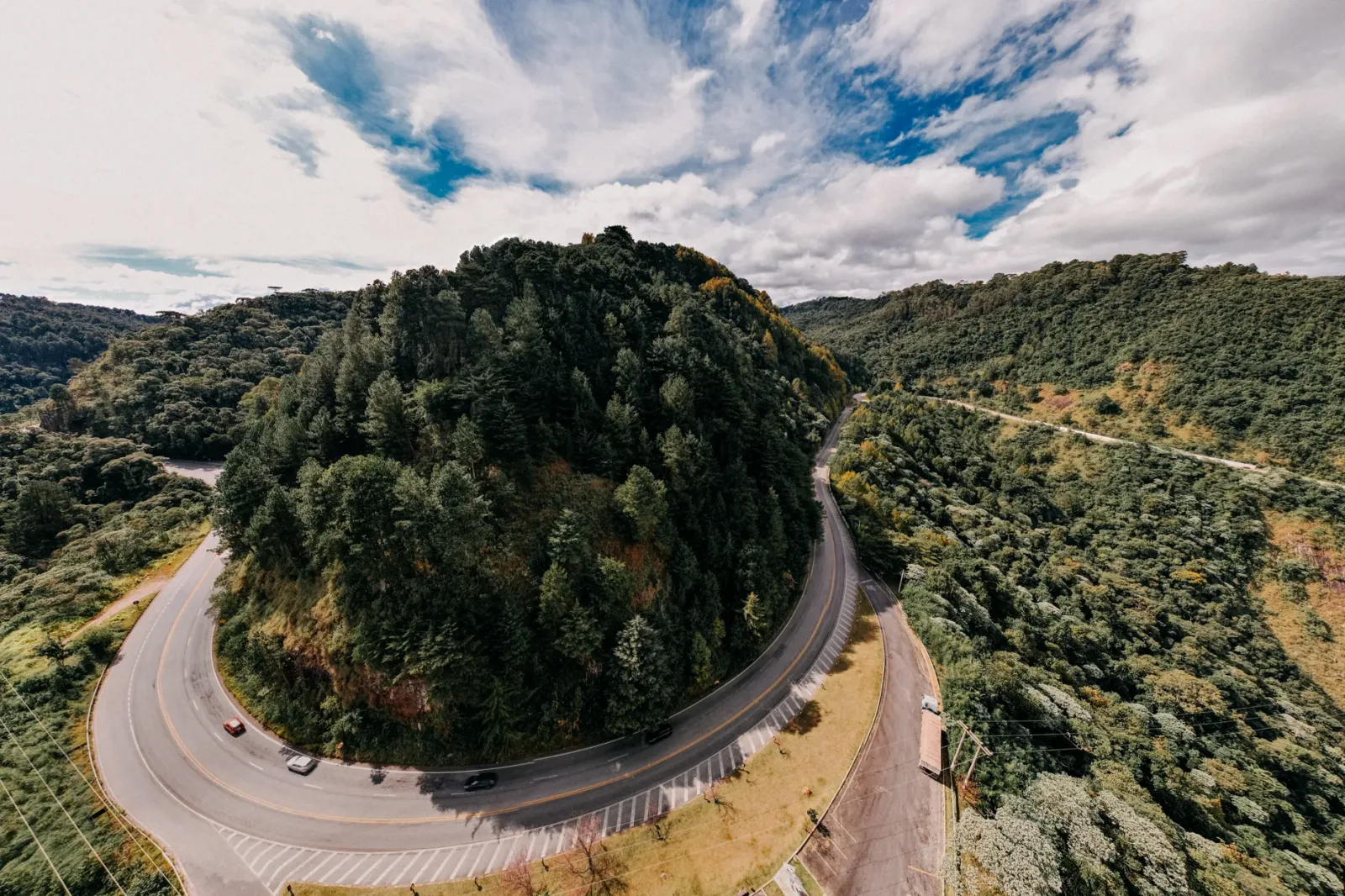
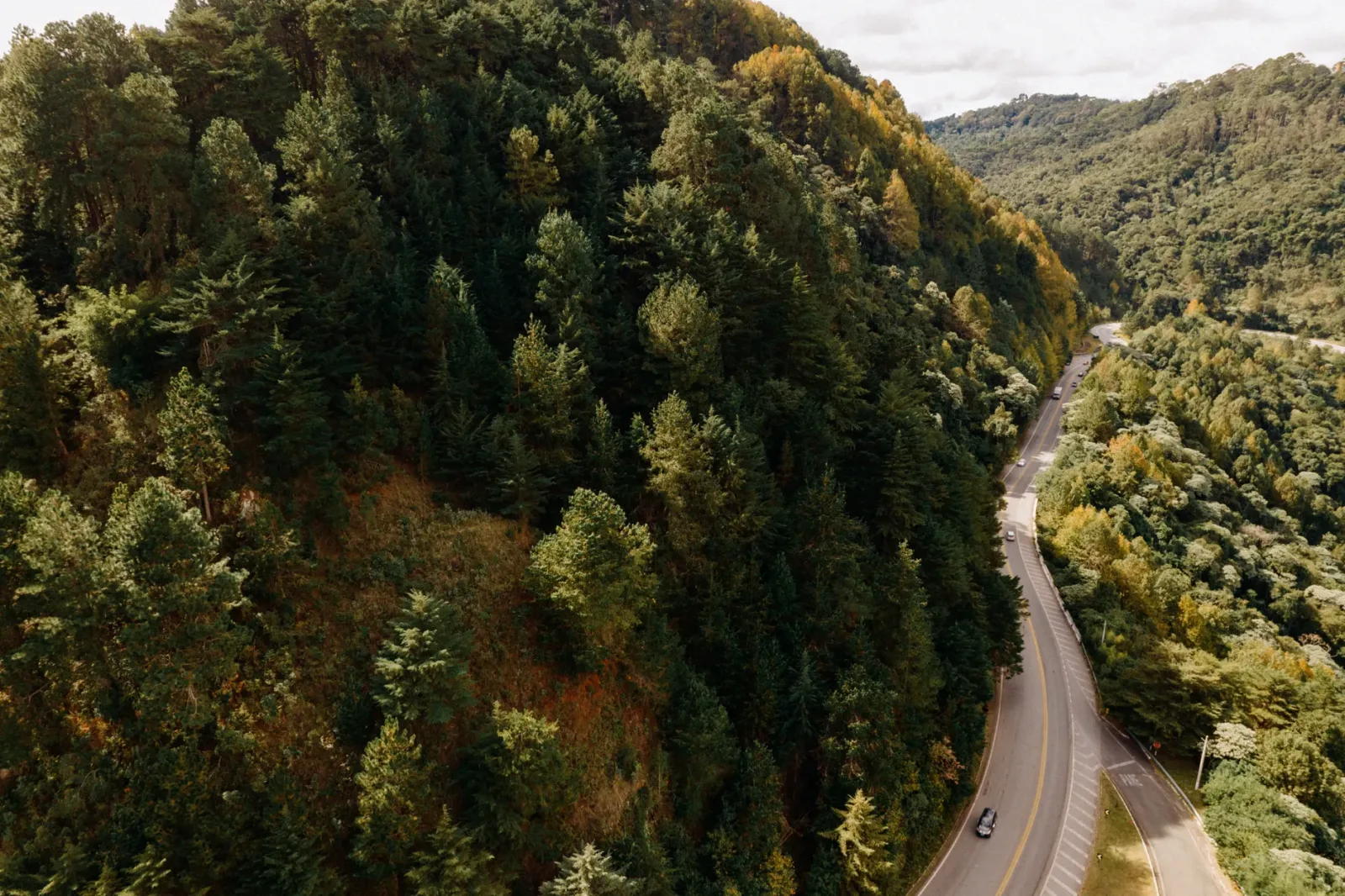
The drive up to Campos do Jordão is usually made via the mountain highways SP-123 and SP-50, with a winding final stretch. This calls for a calmer drive, especially if you arrive at night, in the rain, or for the first time. On the other hand, the route usually offers viewpoints and stopping points along the way, which helps break up the trip at a leisurely pace.
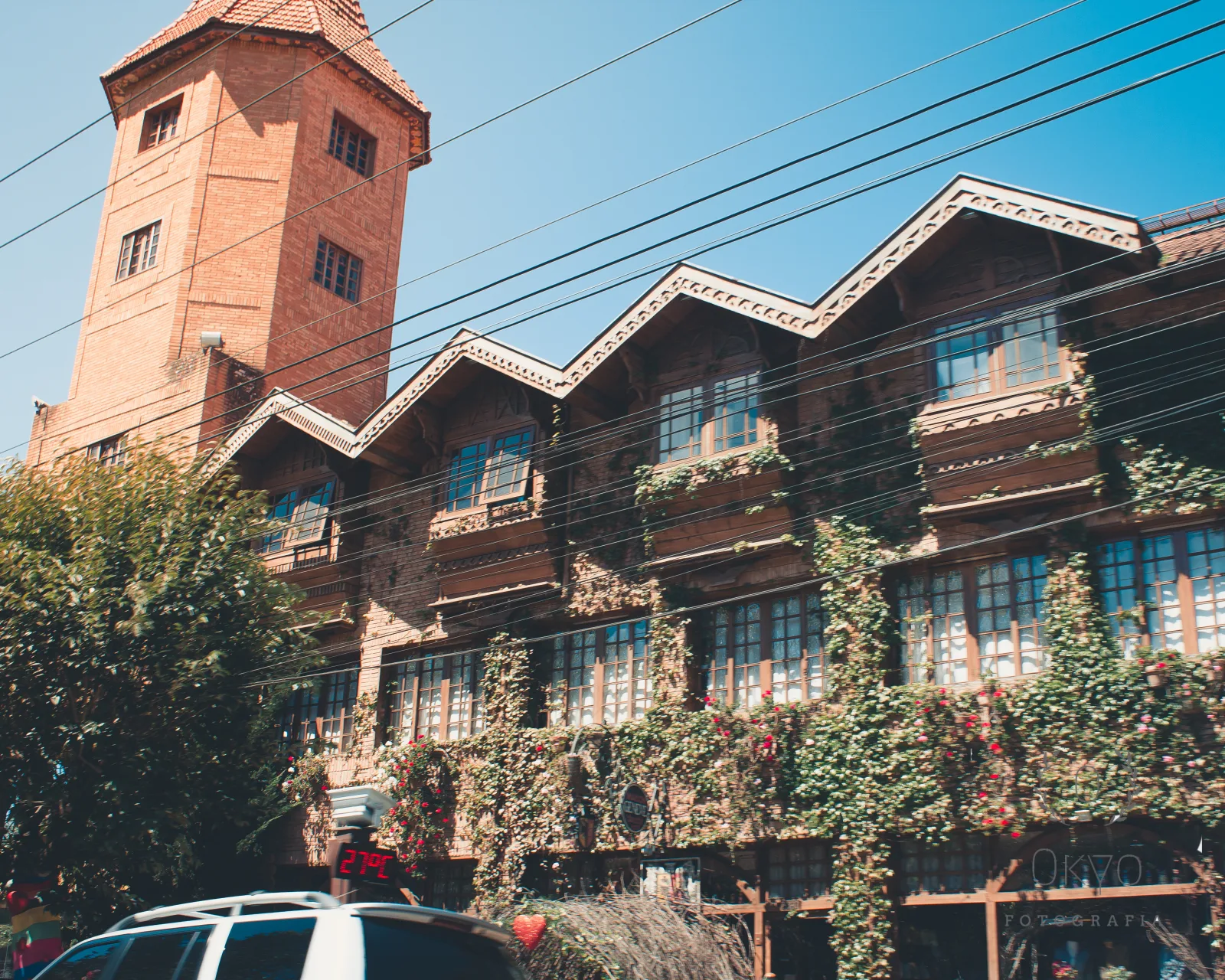
Leaving from São Paulo, the trip is about 170 km. From São José dos Campos, the journey is much shorter, around 90 minutes. These times vary depending on traffic, weather, and time of year, so it is worth checking the route on the day you leave, especially on holidays and weekends, when access to the mountains tends to be busier.
For those traveling by car, the main point is to avoid arriving exhausted. The road calls for attention on curves and uphill stretches, so it makes a difference to leave with extra time and without relying on a tight schedule upon arrival. If the idea is to stop along the way, plan for that in advance: the mountains are more enjoyable when you do not turn the trip into a race.
Editorial transparency: Some links on this page are affiliate links. We may earn a commission at no extra cost to you. This does not influence our recommendations.
Where to stay in Campos do Jordão without getting the location wrong
Staying in Capivari is usually the most practical choice for a first trip. You can do a lot on foot, reduce your dependence on a car, and still handle meals, shopping, and short outings without wasting time commuting. It’s the base that works best for those who want to get around easily, especially if the stay is short.
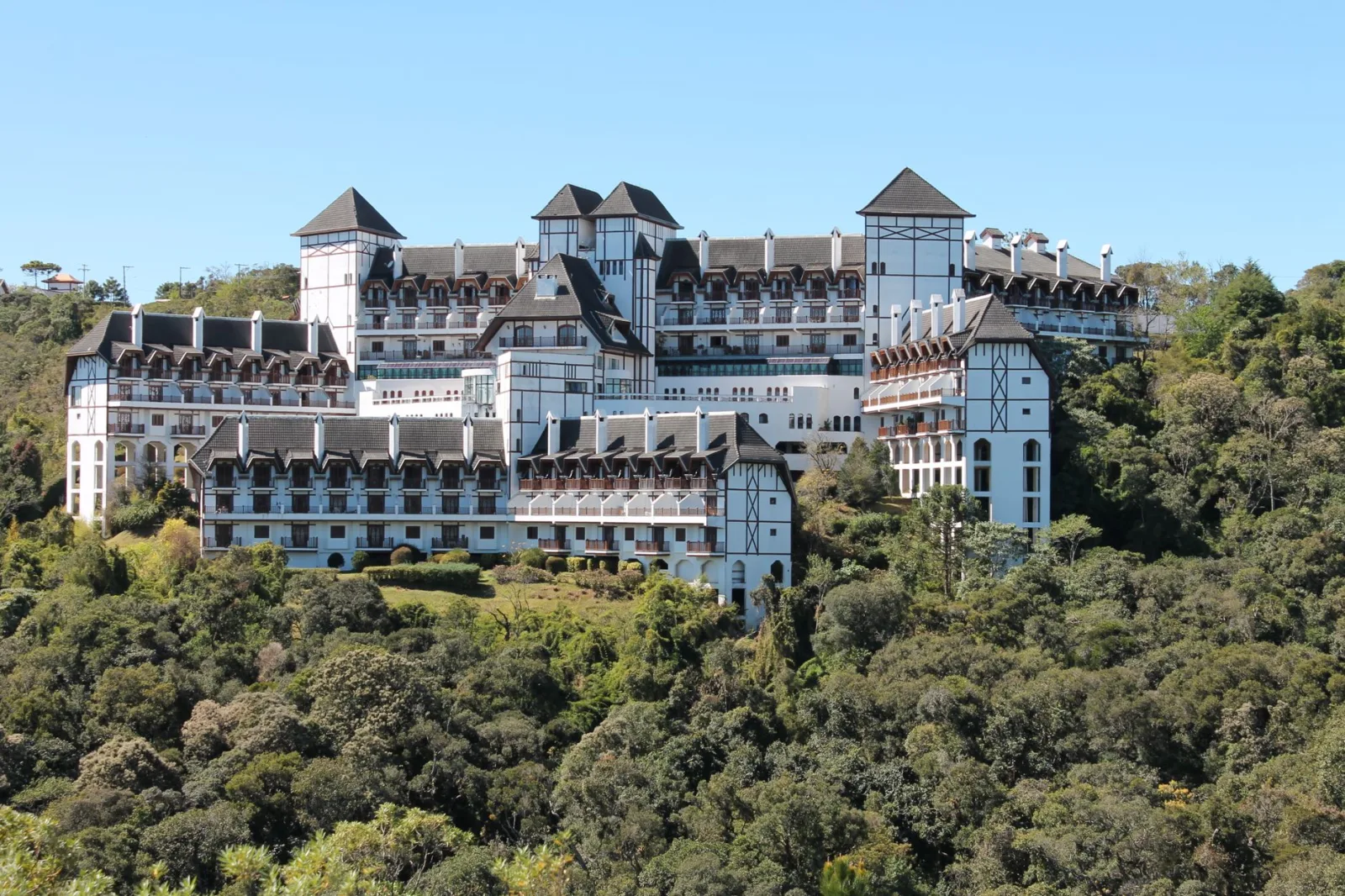
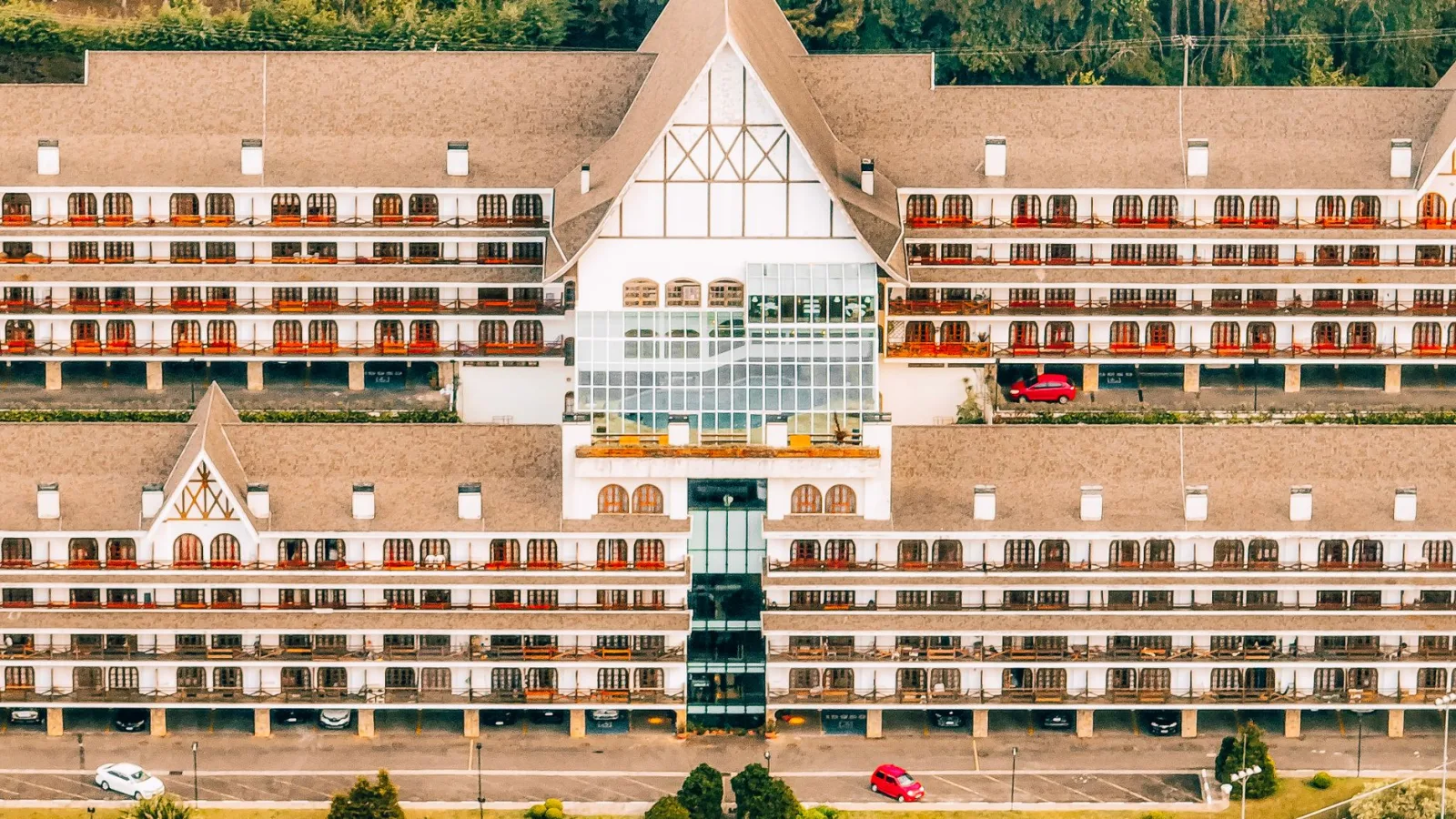
If the idea is to balance location and value for money, it’s also worth looking at areas close to the town center, as long as the accommodation has easy access to Capivari. In Campos do Jordão, straight-line distance can be misleading: going up and down streets can change your daily routine quite a bit. So, before booking, check the exact position of the hotel or inn on the map and see whether access is direct or whether it depends on a car all the time.
For those who prefer more quiet, staying away from the most touristy area may make sense, but the trade-off is clear: you gain a less busy environment and lose convenience for going out at night or doing activities without planning. This type of choice works better on longer trips, when the accommodation matters as much as the itinerary.
When deciding, the most useful criterion is simple: if the priority is to walk around the city with little logistics, stay close to Capivari; if the priority is to save money or seek a more low-key pace, accept the need to get around and choose a base that makes entering and leaving the city easier.
Capivari: the little downtown that brings together sightseeing, shopping, and dining
Rua Djalma Forjaz and the pedestrian street concentrate Capivari’s most predictable movement: shops, restaurants, chocolaterias, and bars are practically in sequence, and the stroll happens at an unhurried pace, window-shopping and stopping to eat along the way. The urban landscape helps create this rhythm, with flowers, lights, umbrella-covered walkways, and European-style buildings.
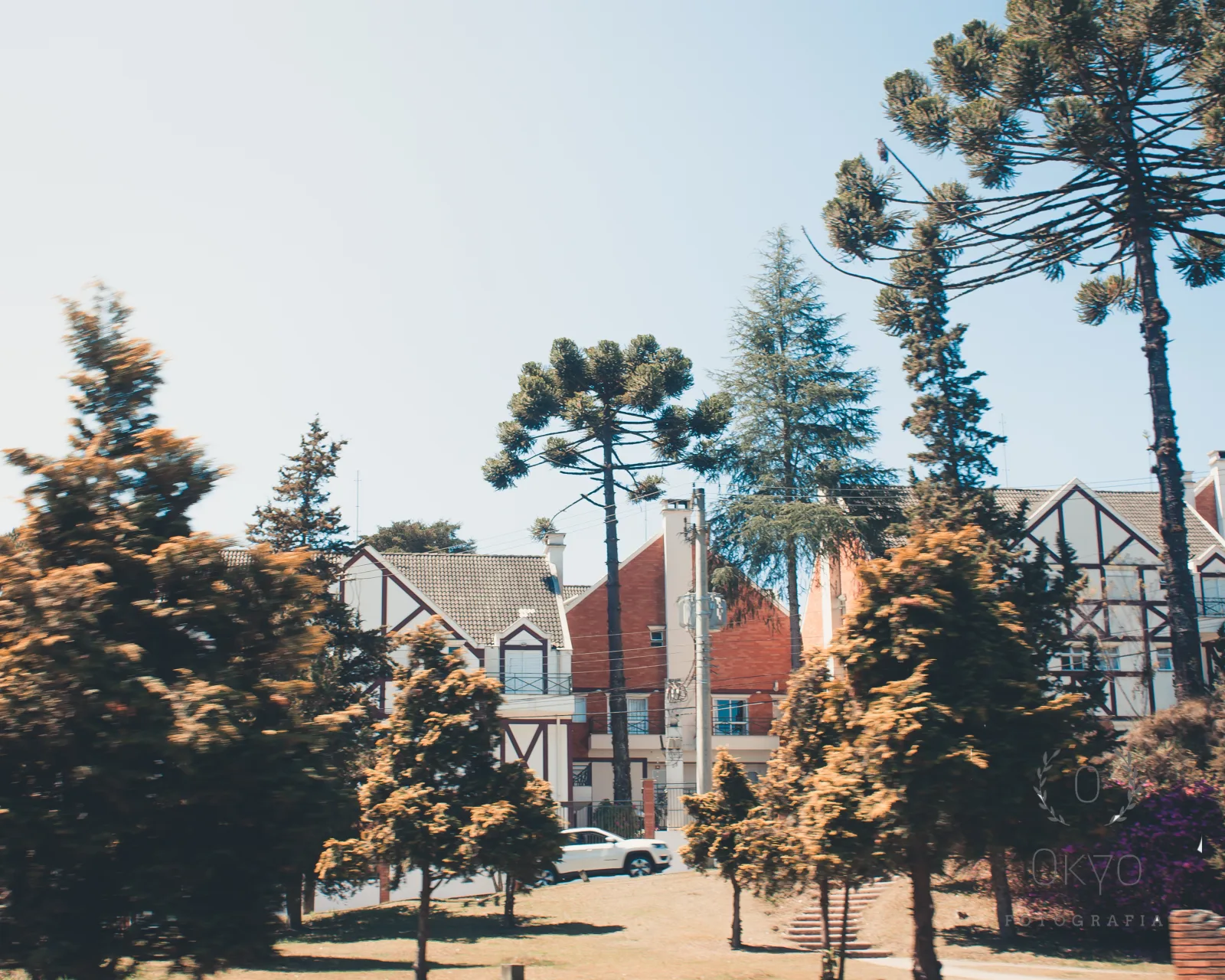
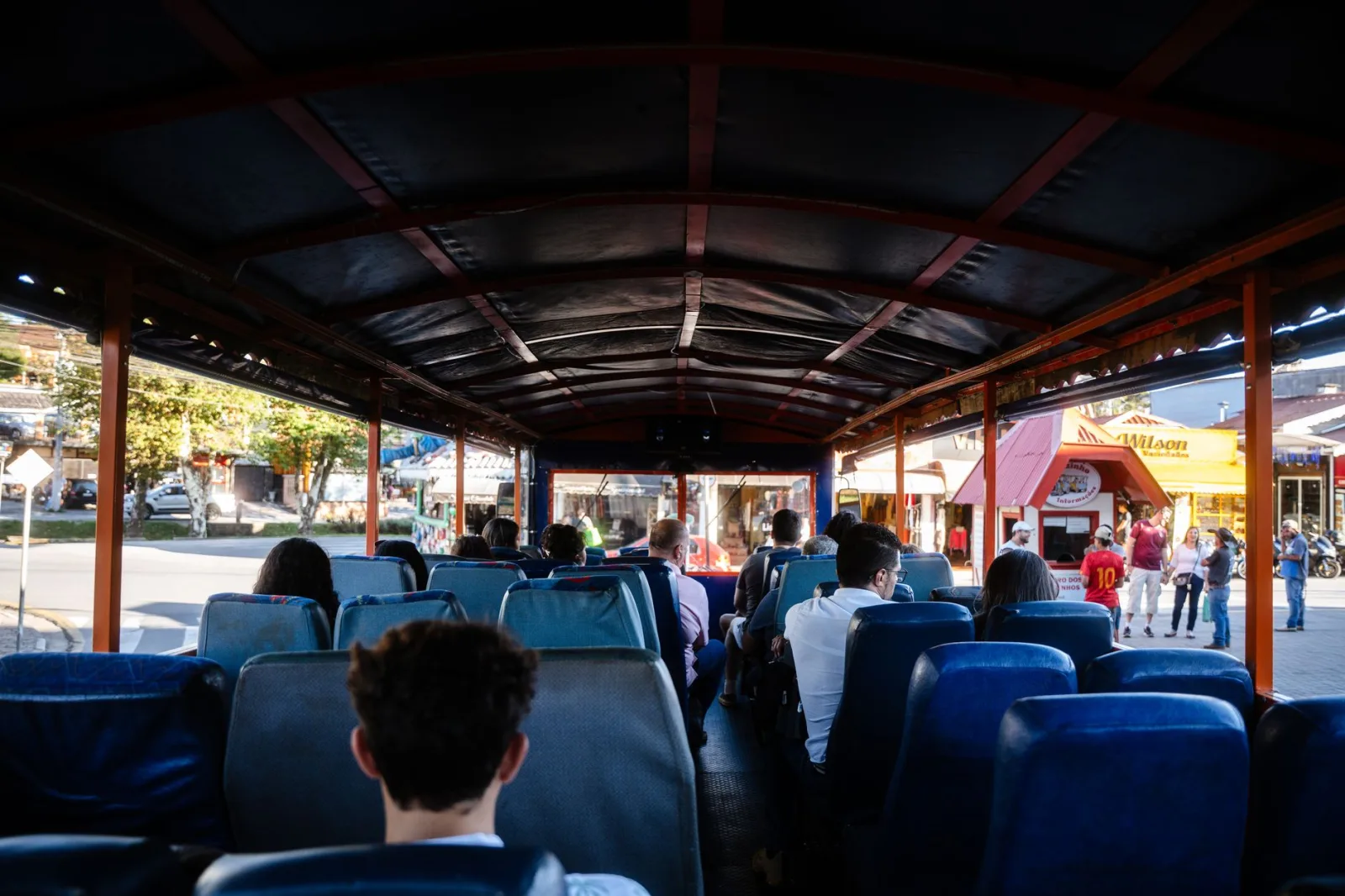
If the idea is to experience the neighborhood without relying on a car, this area does the job well. It is also where you’ll find the cable car, the Maria Fumaça, and the Fonte do Amor Eterno, along with a steady flow of people going back and forth between shopping and meals. For those who like to sit and watch the activity, this is the part of town where that happens most easily.
Parque Capivari is on the same stretch and expands the outing with attractions that work well for families or couples: carousel, Ferris wheel, lake with pedal boats, children’s train, cable car, and mountain sled. The area is set up for a short itinerary, so you can drop in just for a quick ride or combine several attractions in the same visit, depending on the time available.
At night, the neighborhood takes on a different rhythm. The focus remains on the tables, chocolate shops, and bars, with people moving around more slowly and spending more time around the square and nearby streets. For those who want to eat well and avoid long trips, Capivari is usually the most practical base during a stay.
Parks and nature areas to fit into the itinerary
Horto Florestal is the most straightforward choice for anyone who wants trails and dense forest without complicating the logistics. The park has paths of different styles and a small waterfall, so you can adjust the outing to the time available and the level of effort you want to tackle that day. If the plan is to walk at a relaxed pace, it works better than a rushed visit.
Amantikir calls for a different pace. The gardens were designed to be explored without haste, with areas inspired by different landscapes and a clear care in the layout of the paths. It is the kind of visit where the interest lies less in “doing” and more in walking through, observing, and stopping for photos without relying on a viewpoint or a long trail.
Bosque do Silêncio is close to Capivari, but the concept is already different: trails, fresh-air areas, and stretches that demand more physical energy than an urban stroll. Pico do Itapeva and Pico do Imbiri come into play when the idea is to look at the mountains from above. Itapeva usually stands out for its wide view of the Mantiqueira on clear days; Imbiri is also a good spot to head up in search of open scenery, so it makes sense to include both only if the weather helps.
Parque Bambuí and Parque da Cerveja work well for those who want more time outdoors without depending on a rigid itinerary. Ducha de Prata, on the other hand, requires less planning: it is a short stop, with artificial waterfalls and easy circulation, good for fitting in between other activities. If you are putting the day together by priority, leave the trail parks for solid, clear mornings and the viewpoint spots for moments when visibility is cooperating.
Museums, palaces and other cultural attractions
Palácio Boa Vista is worth adding to the itinerary when the idea is to see the state governor’s winter residence up close, but the real appeal lies in the whole experience: the building, the guided tour, and the collection of more than 4,000 works. If you enjoy art in an institutional context, it is a visit that offers more than a quick photo stop at the facade. It’s worth checking in advance how entry works on the day of the visit, because this kind of tour usually depends on scheduling and internal organization.
Museu Felícia Leirner changes the experience to an open-air visit, with sculptures spread throughout the landscape. The concept works well for those who want to combine a short walk with viewing contemporary works without the formality of an enclosed room. In the same complex is the Cláudio Santoro auditorium, which concentrates the cultural program and hosts the Winter Festival, as well as other events throughout the year. If your trip coincides with a performance, this is one of the places that most justifies checking the schedule before leaving home.
In the city, Casa da Xilogravura offers a more specific focus, centered on this printing technique and the collection dedicated to the theme. It is a straightforward visit, good for those who want to vary the itinerary between nature and culture without relying on a long tour. Mosteiro de São João follows another line: in addition to the architecture and monastic atmosphere, many people go to listen to Gregorian chants and see the routine of the Benedictine nuns.
Casa do Papai Noel na Montanha works best for those who want a themed, lighter outing, especially if traveling with children or with extra time in the itinerary. Before fitting any of these places into your day, the most useful criterion is simple: see whether you want contemplation, a collection, live programming, or a short visit. Each of them delivers one of these things more clearly than the others.
Programs for families and children in Campos do Jordão
Those traveling with children tend to focus the day on outings with a clear beginning, middle, and end, and Campos do Jordão has three places that work well in this logic. Fazendinha Toriba is for contact with animals and green space, without requiring the pace of an adventure park. Tarundu leans toward a more active side, with zip lines, tree climbing, and activities like boia cross. Parque Capivari handles the lighter part of the schedule, with attractions that usually hold little ones’ attention without complicating logistics.
At Parque Capivari, the carousel, little train, and pedal boats usually fit well into family itineraries because they allow short breaks and repetition without wear and tear. For those with younger children, this helps a lot: you go in, walk around, do one attraction, stop to eat or rest, and continue without turning the outing into a marathon. The same logic applies to the rest of the park, which works best when the goal is to spend a few hours there, not to check off a list.
Fazendinha Toriba makes sense for children who enjoy observing and interacting with animals in a calmer environment. Tarundu requires more energy and usually works better with older children or with families looking for a more active day. If you’re putting together the itinerary, the most useful choice is to think about the group’s energy level: a quieter program for a day of arrival or tiredness, and an outing with more movement when the idea is to spend the whole afternoon away from the hotel.
If the trip has only one or two full days, it’s worth prioritizing one of these three and not trying to fit everything into the same period. The gain lies less in piling up attractions and more in choosing the one that matches the children’s age and the amount of time they can enjoy without turning it into a long commute between stops.
Where to eat, taste beer and buy local products
Fondue, rösti potatoes, pastelão and hot chocolate appear frequently on the tables in Capivari, especially in the houses more geared toward the neighborhood’s tourist flow. If the idea is to eat without missing the itinerary, focus your choice there: it is where the typical mountain menu is usually easiest to find and where you can sort out a meal without leaving the city’s busiest axis.
To buy chocolate, a visit to the Araucária stores and factory is the most direct route. The experience usually includes tastings, which helps you compare before taking it home. The focus here matters more than the display: try the hot chocolate and hazelnut dragees if you want to test what the brand sells best at the point of sale.
The Baden Baden tour is of interest to those who want to understand the brewery from the inside, not just taste it afterward. The visit shows the production process and includes a tasting lineup with six beers, with explanations about characteristics and pairings. Since it is an outing subject to capacity limits and operational changes, it is advisable to confirm availability and book in advance, especially in high season.
If you want to concentrate food and shopping in a single part of the itinerary, Capivari takes care of much of what makes sense to take home or taste in Campos do Jordão. It is more practical to alternate between table, store and tasting there than to spread these stops across the entire city.
Frequently asked questions
What is the best area to stay in Campos do Jordão?
Capivari is usually the most practical base, especially on a first trip. Staying close to the center makes it easier to go on tours, have meals, and shop without relying as much on a car.
What is there to do in Campos do Jordão besides Capivari?
The destination has parks, viewpoints, museums, and cultural activities. Highlights include Horto Florestal, Amantikir, Museu Felícia Leirner, Palácio Boa Vista, and the Mosteiro de São João.
Is Campos do Jordão a good destination for a short trip?
Yes. A weekend is enough to get to know the best-known sights and get a good feel for the destination. With more days, you can better distribute parks, culture, and meals.
Which activities work best for families with children?
Parque Capivari, Fazendinha Toriba, and Tarundu usually work well for families. They offer attractions with different energy levels and make it possible to plan a simpler day for children.
Is it worth visiting Campos do Jordão in winter?
In winter, the city gets colder and busier, which changes the experience. It is a good time for those who want a mountain climate, but it is worth planning accommodation and transportation in advance.