Brienz in one day: a practical itinerary to see the lake, the village, and the region’s excursions
Itinerary in Brienz to choose between lake, village, mountain, and museum, with half-day options and tips for organizing your visit.
Where is Brienz and how to get there
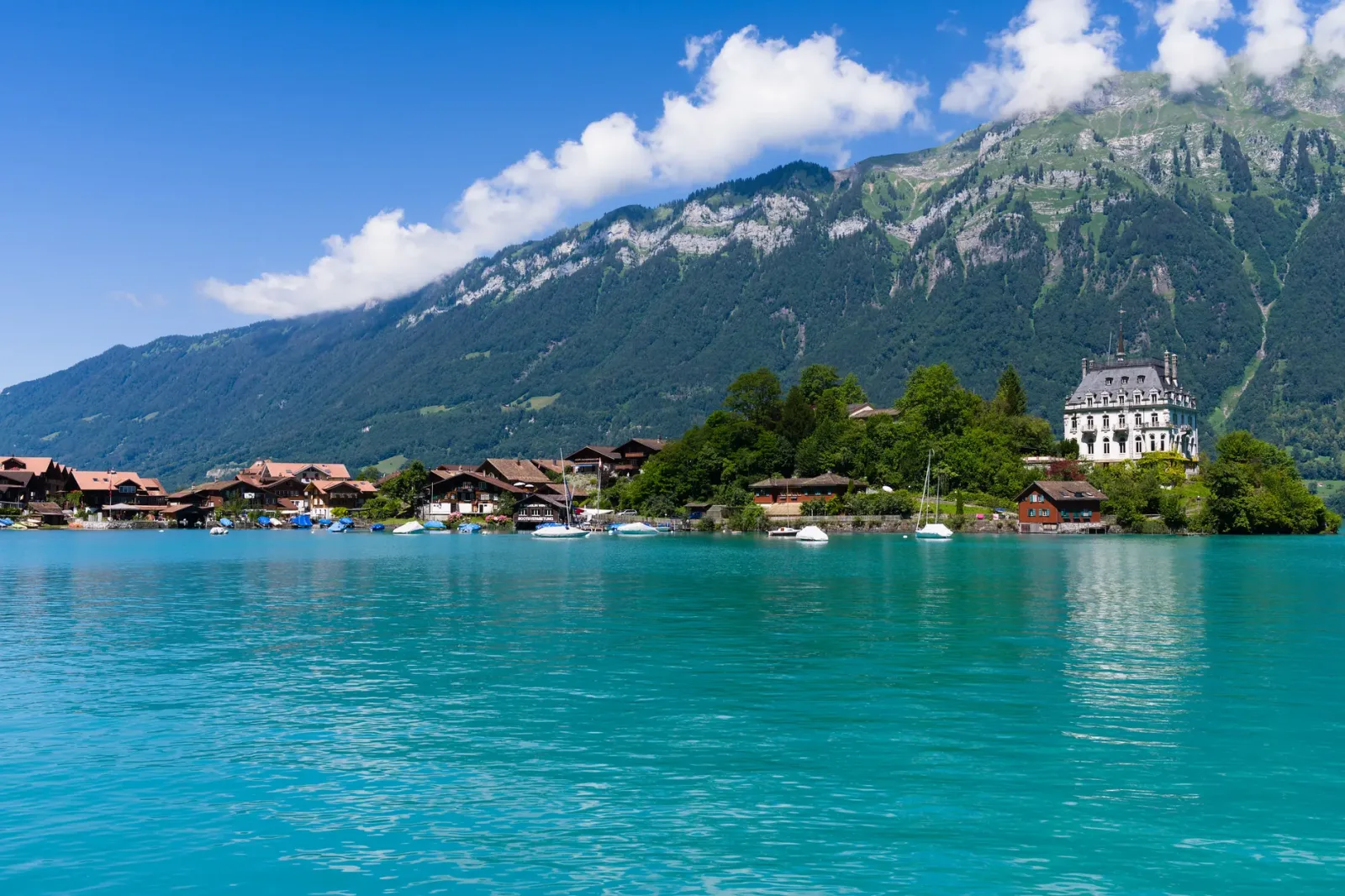
Brienz is in the Bernese Oberland, on the northern shore of Lake Brienz, about 18 km northeast of Interlaken. The railway station is in the center of the village, which makes it easy to arrive and leave without relying on a car for the urban area.
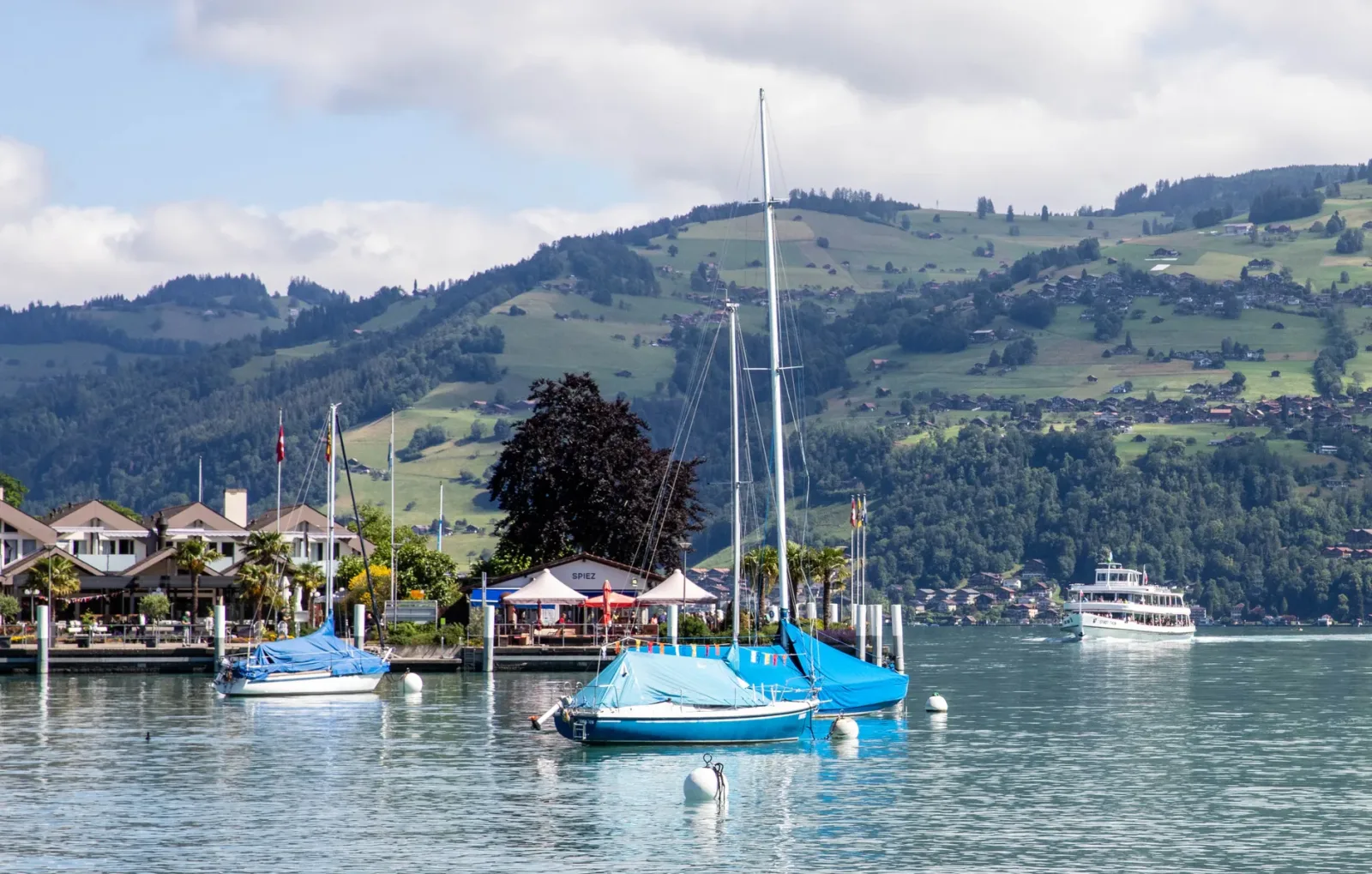
By train, the simplest connection is from Interlaken Ost, in about 20 minutes. There are also connections from Lucerne, around 90 minutes by train, from Zurich, about 2h30, and from Thun, about 1 hour by train or 90 minutes combining train and bus. By car, the times usually cited are about 20 minutes from Interlaken Ost, 60 minutes from Lucerne, 2 hours from Zurich and 50 minutes from Thun.
The boat is part of the arrival and also of the sightseeing. Brienz has a boat station near the train station and the main bus stop, and the stretch across Lake Brienz connects the village to other shores of the lake between April and October. If you want to cross the region with fewer transport changes, this combination of train and boat is usually the most direct way to fit Brienz into the itinerary.
If the plan includes a car, it is worth weighing convenience against parking, which is difficult in Brienz and is usually a point of attention throughout the region.
How to get around Brienz and what to consider before your visit
Brienz works well on foot, especially in the central area. The village attractions are close to one another, which makes most short trips easy without complication. To leave the urban core and visit places in the region, public transportation is usually the simplest way to avoid driving.
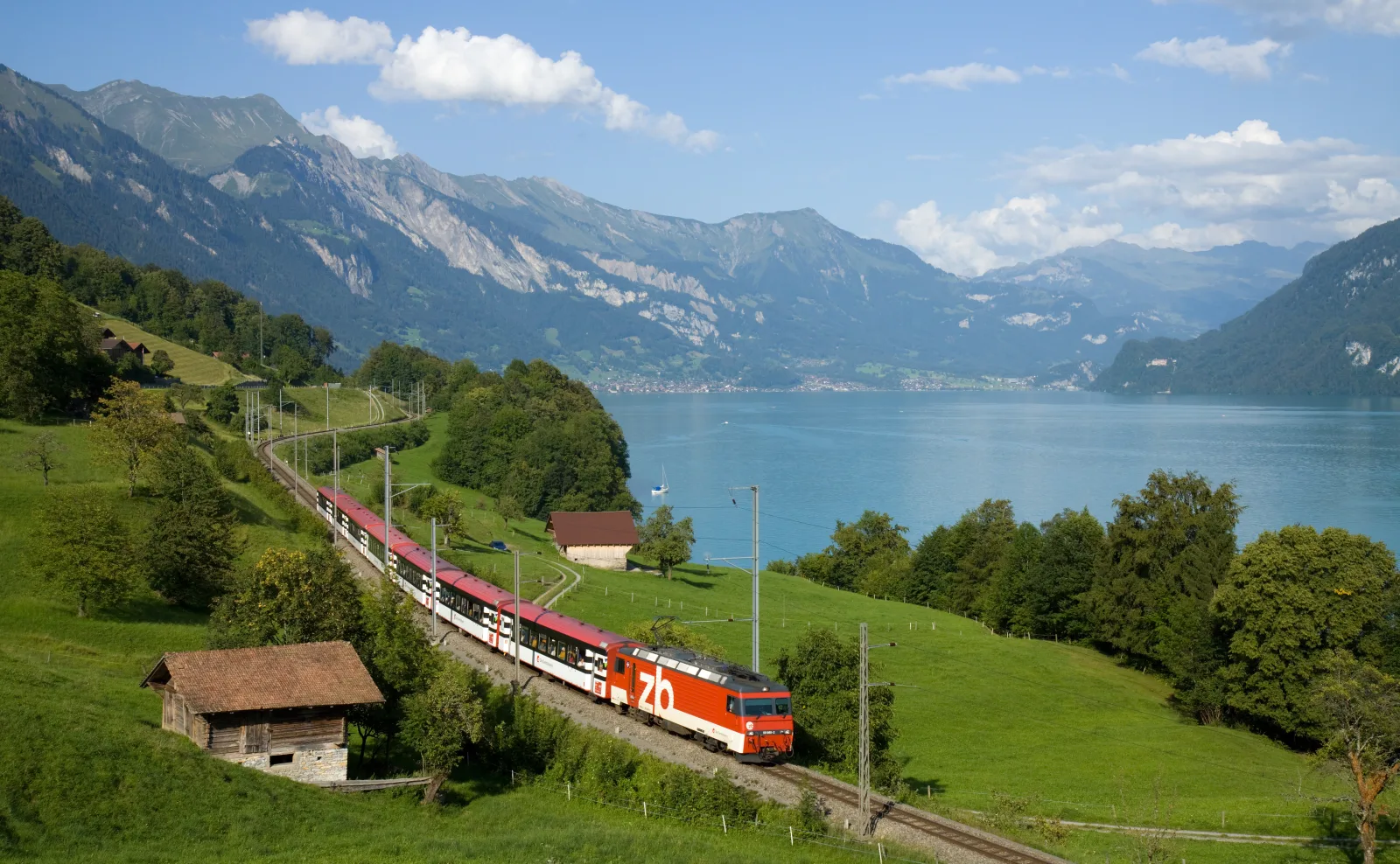
If you plan to use buses, boats, or trains for attractions outside the center, it is worth organizing the day with some flexibility. In Brienz and the Interlaken area, the network works well, but some outings depend on seasonal connections or weather changes throughout the day. Before heading out, check the trail conditions, service operations, and any local advisories, especially after periods of heavy rain.
Going by car gives you freedom, but parking in Brienz is limited and can turn into a waste of time. If you are putting together a short itinerary, a car is usually more of a hassle than a help within the village. For those who stop by cafés, small restaurants, or family-run shops, do not assume that cards will be accepted for every purchase; bringing Swiss francs helps. Euros may be accepted as an option in some places, but the change and exchange rate do not always work in your favor.
The weather also has a big impact on how the day is organized. In a lake and mountain destination, the same route can change a lot with rain, fog, or wind. If your plan includes outdoor activities, adjust the order of visits and keep a shorter alternative in case the weather turns.
Editorial transparency: Some links on this page are affiliate links. We may earn a commission at no extra cost to you. This does not influence our recommendations.
Half-day itinerary in downtown Brienz
Start on Brunngasse, the short street of carved wooden houses that concentrates the most characteristic part of the center. It is small enough to be walked unhurriedly in just a few minutes, so it is worth taking a close look at the facades before continuing to the surrounding streets.
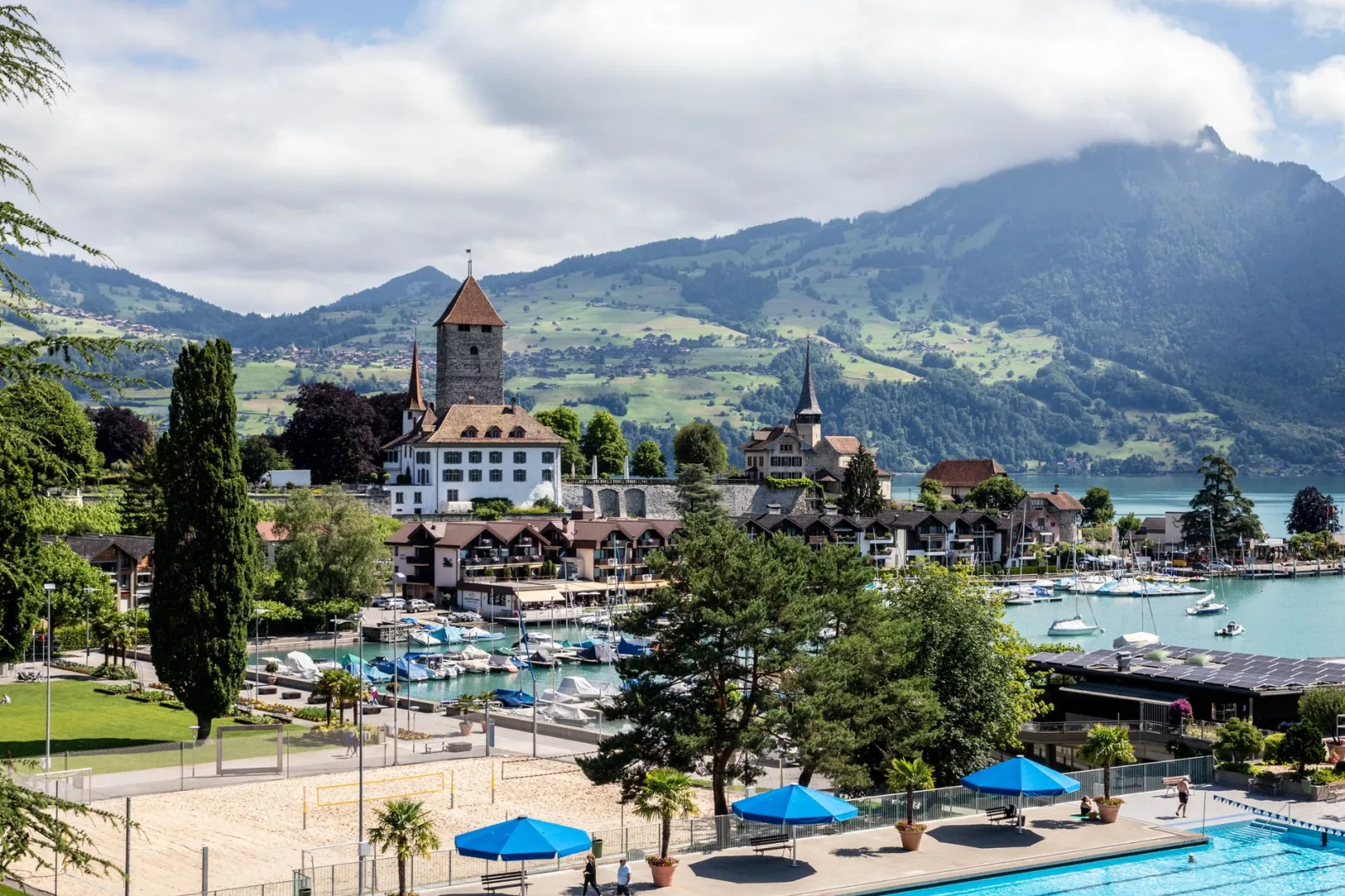
Then, stroll through the village center. There, the appeal lies less in a sequence of formal attractions and more in the scale of the place: a few buildings, wooden houses, changes in perspective at every corner, and the immediate proximity to the lakefront. If you are short on time, this combination already delivers the essence of Brienz without leaving the center.
From the waterfront, continue on foot along the shore for a short stretch. The walk offers different views of the lake and the village, and works well as a natural extension of the stroll through the center. It is neither a long nor a technical route; the goal is to open up the landscape and allow time to observe the water, the houses, and the outline of the mountains around you.
If you want to end the half day with one last loop, head back slowly along the same central axis or along the lake’s edge. In Brienz, the urban route works best this way: a short walk, attentive observation, and little movement from one point to the next.
One-day itinerary on Lake Brienz
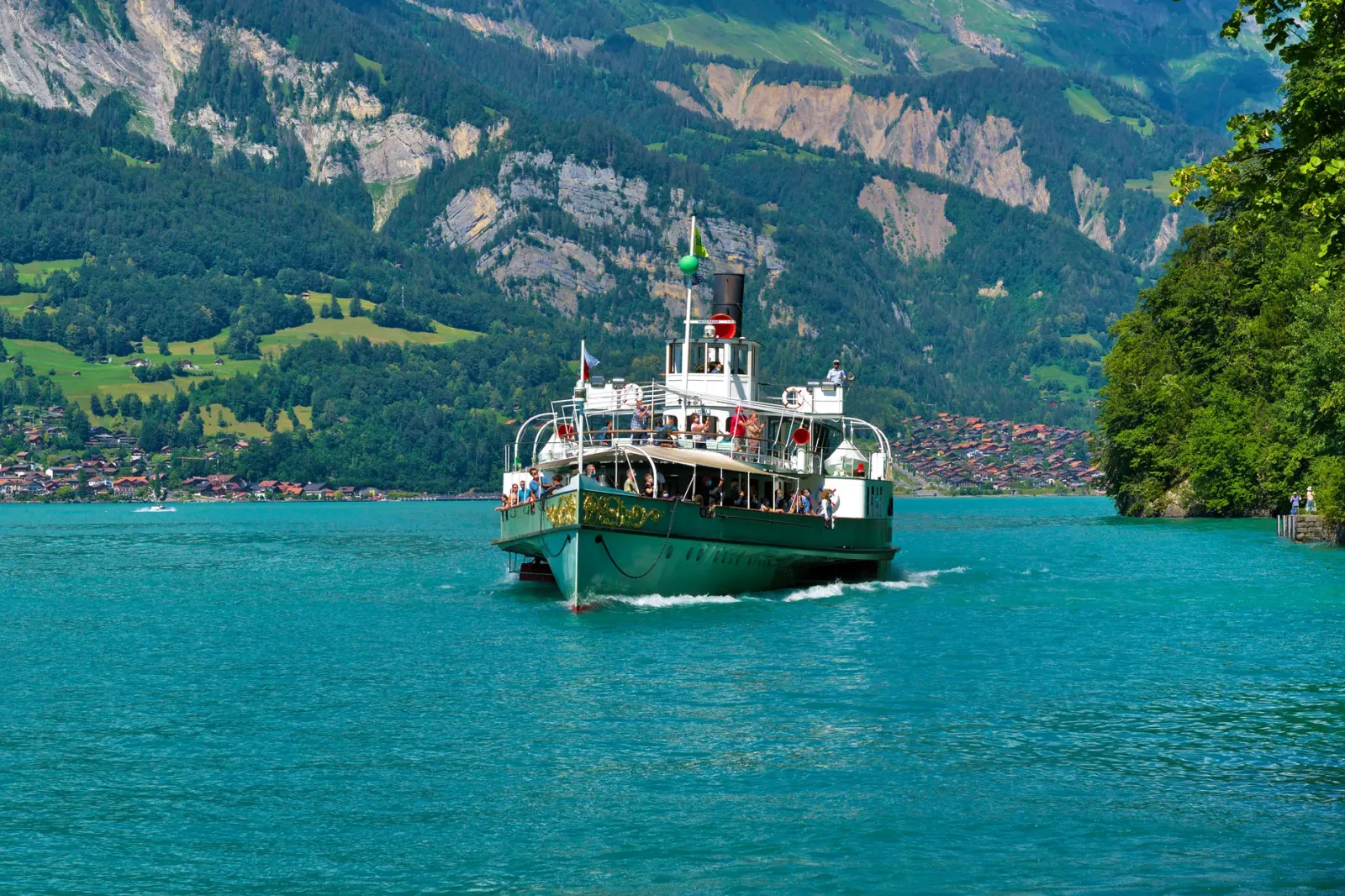
The most straightforward plan on Lake Brienz is the boat. The cruise segment lasts about 90 minutes and makes stops between April and October, departing near the train station and the main bus stop. If you are structuring the day around the lake, this route works well as the main axis of the itinerary, because it lets you see the shoreline without needing to drive.
To fit in a swim in the lake, go to the access points near the station or walk along the shore until you find a comfortable area to enter the water. The lake is cold even in summer, so it makes more sense for a short stop than for spending hours swimming. Those who prefer to stay in the water only briefly usually make the most of the visit. Bring appropriate clothing and check the local conditions on the day, especially after rain or wind.
If you want something more active, Brienz has rentals and water sports departures right on the lake. Wakeboard, wake surf, jet boat, and kayak are among the most common options. Kayaking is the calmest choice; wakeboard and wake surf require more control and usually depend on available equipment; the jet boat is the fastest alternative. It is worth checking operation, reservations, and age or safety requirements before relying on any activity.
If you want to combine two things on the same day, a simple sequence is boat in the morning and lake swimming or a water sport in the afternoon. This avoids rushing between attractions and leaves room to adjust the program to the weather, which changes quickly on the lake.
One-day itinerary with mountain and panoramic views
Going up to Brienzer Rothorn is the right choice when the day calls for scenery without rushing. The steam train takes about an hour to the summit, at 2,350 meters, and service is limited to the summer months. If the weather is clear, the ride alone is worth it; if the idea is to do a bit of walking, it makes sense to buy a round trip, since it’s also possible to hike down on selected sections.
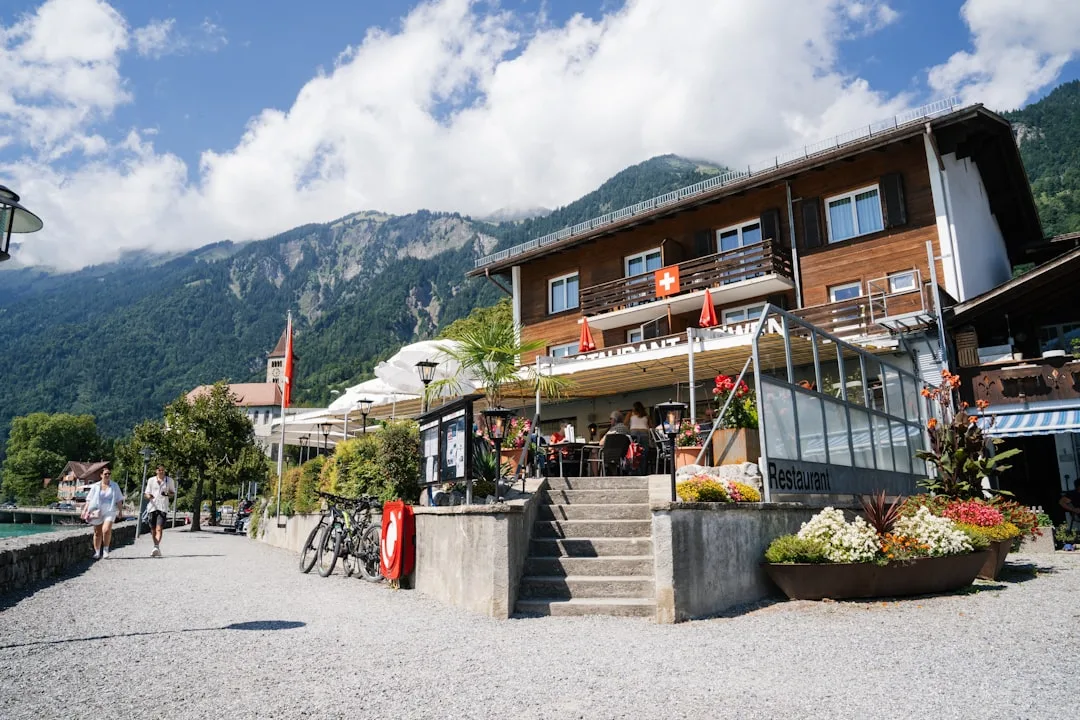
At the top, the reward is not just the altitude. You are above the valley and have sweeping views over Lake Brienz and the surrounding Alpine range. It is an ascent that works best under clear skies; on cloudy days, the appeal remains in the journey and the mountain setting, but the reach of the view changes considerably. That is why it is worth checking the day’s operation and the conditions on the mountain before setting out.
If you like combining scenic transport with hiking, this is the outing where the choice matters more than the pace. The downhill stretch on foot is usually the simplest way to extend the experience without turning the plan into a full-day strenuous hike. Those who prefer to go up and back by train get more comfort; those who want to mix both need to leave early and allow time for the ascent, the visit at the top, and the partial descent.
To put together this day, make Brienzer Rothorn the main activity and don’t try to fit too much in alongside it. Service is seasonal and depends on summer, so the best strategy is to confirm the operating date and weather before finalizing the rest of the itinerary.
Itinerary for families: Ballenberg and wood sculptures
The Ballenberg Open Air Museum works well for families because it turns the visit into something easy to understand on site: there are more than 100 historic buildings, spread across a wide area, with houses, barns, and other buildings brought from various parts of Switzerland. There are also about 250 farm animals and workshops that help provide context for what you see along the way. For children, the appeal lies in strolling at a leisurely pace and stopping wherever something catches their attention; for adults, the value is in the scale of the whole and the way the museum organizes the country’s rural architecture.
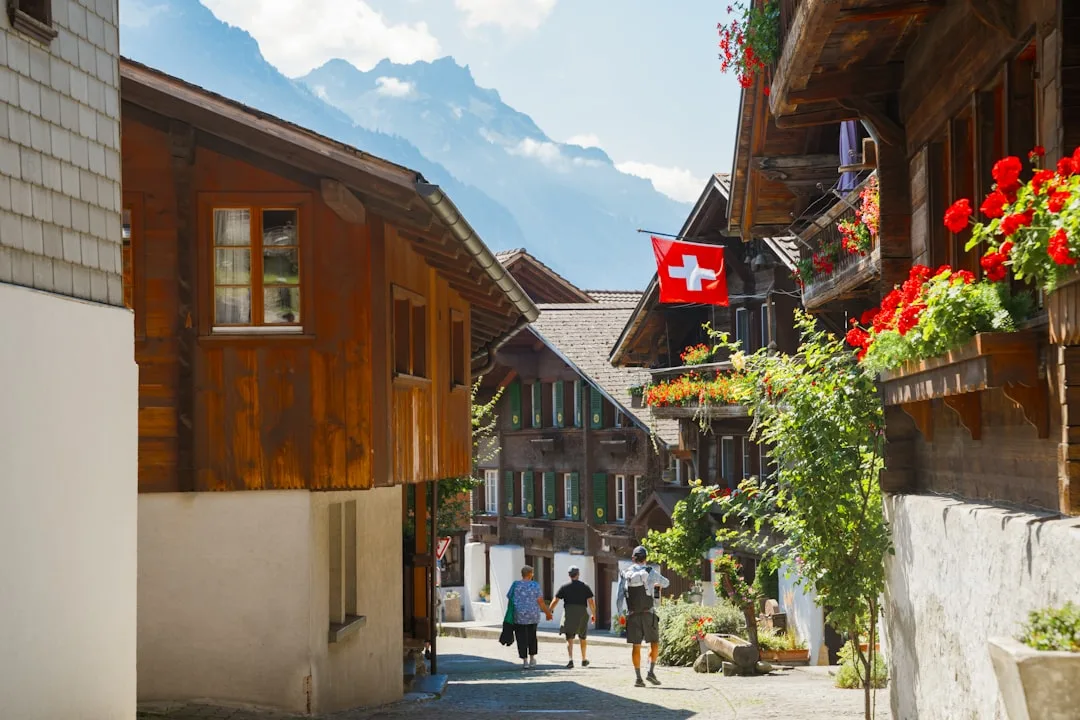
From Brienz, access is easy to fit into the day, and it makes sense to set aside a few hours for the visit. If you are putting together the itinerary with a small child, it is worth considering the pace: the grounds are large, so the experience is better when you do not try to see everything at once. The museum also has main entrances on different sides, which helps when planning arrival and departure according to the day’s route.
Back in the village, the wood sculpture trail reinforces a feature that has long been present in Brienz: working with wood. The walk along the shore features pieces from an international wood sculpture meeting, and the stroll becomes more interesting when you realize how this tradition remains alive in the town, including dedicated training in sculpture and violin making. For families, it is an easy add-on after Ballenberg, because it keeps the cultural theme without requiring complicated travel.
If your group enjoys experiences that lead to conversation afterward, this combination works well: an open-air museum to spend a few hours in, followed by a short walk among the sculptures and wooden houses of the village.
Short trips from Brienz: Giessbach, Iseltwald, Interlaken and Jungfraujoch
Giessbach is on the southern side of Lake Brienz and is often included in the itinerary as a short detour from Brienz. The most direct access is by boat, which drops you near the waterfall; from there, the climb to the Grand Hotel Giessbach can be done by funicular or via a trail of about 10 minutes, which is steep. If you want to extend the visit, continue beyond the hotel to see the water up close and walk a short stretch around the falls.
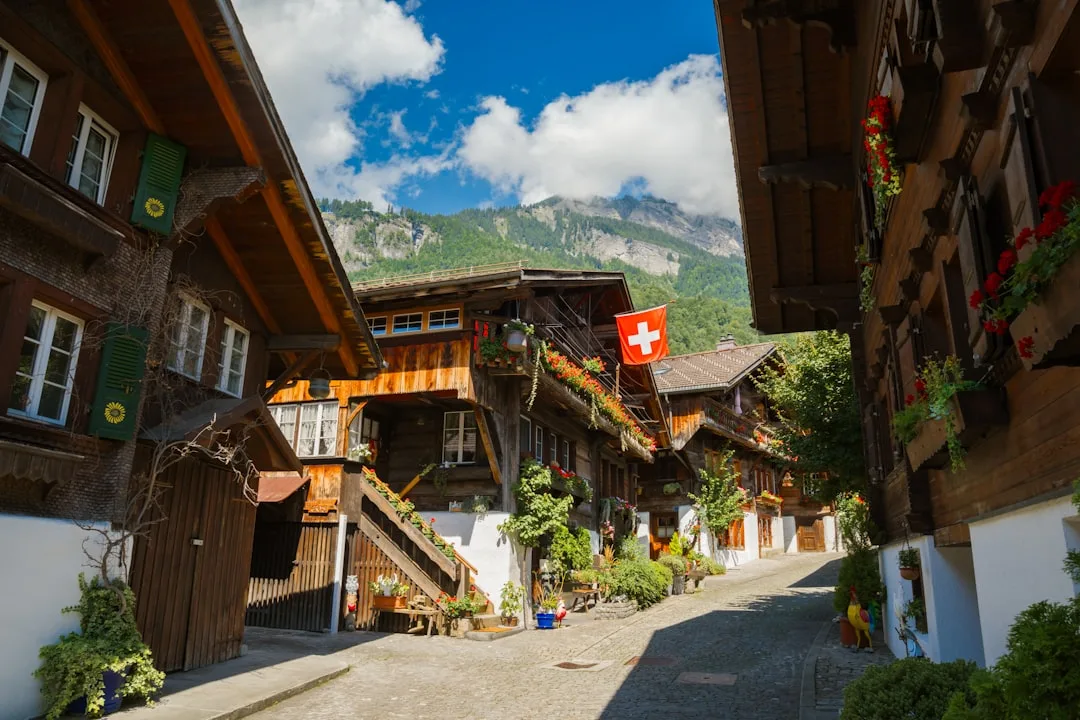
Iseltwald is on the southern shore of the lake and works well as a half-day stop, especially if the goal is to see another small village without putting together a long itinerary. The appeal is by the water and the wooden houses; it is not a place to fit in many activities. If you are organizing the day between Brienz and Interlaken, it works better as a break along the way than as a base for several hours.
Interlaken is a quick connection from Brienz and is the most practical point for expanding the regional itinerary without complicating the logistics. The town takes care of transport connections and is usually the gateway to larger excursions in the area. Jungfraujoch also fits into this plan, but it makes more sense to treat it as a full day: it is a long, expensive outing and weather-dependent. If the priority is to enjoy Brienz without rushing, choose one of these extensions rather than trying to add all of them on the same day.
Best time, how many days to stay, and how to plan the itinerary
The most practical window to visit Brienz runs from April to October, when the boat ride on Lake Brienz is in operation and the region is more complete for those who want to combine village, water, and mountain in the same itinerary. In summer, the day is longer for outdoor activities and for the ascent to Brienzer Rothorn, which only operates in the warm months. On clear days, the lake and viewpoints have better visibility; with fog, rain, or wind, the plan needs to be adjusted, because the landscape changes quickly and some outdoor stretches lose their appeal.
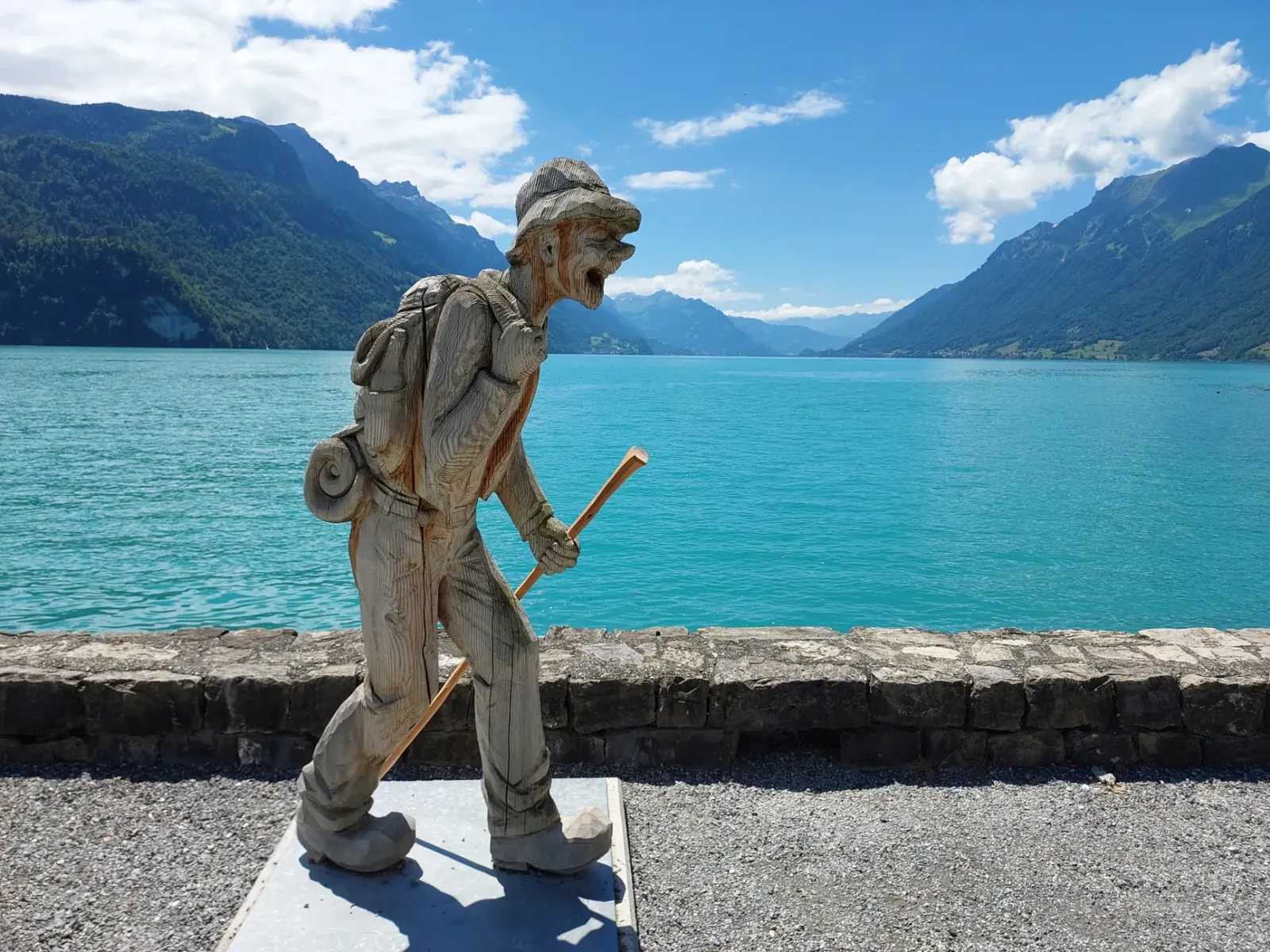
To see the basics without rushing, one day is usually enough. In that time, you can fit in the village center, the lakeshore, and one main activity in the region. If the idea is to walk around at a relaxed pace, setting aside one night usually makes a difference: it gives you room to choose between lake, mountain, or museum depending on the next day’s weather, instead of trying to cram everything into the same date.
Planning the itinerary depends more on seasonal operation than on the clock. During boat and mountain train season, Brienz works well as a base for a full day or two well-chosen half-days. Outside the high season, the focus tends to shift to the village and to the outings that remain active on solid ground. If the weather is unstable, keep the plan flexible and leave the outdoor activities in the block that can be swapped without a major loss of time.
If the visit is short, choose a priority before you leave: lake, mountain, or museum. Trying to fit all three into the same day usually makes the itinerary too rushed for a place that calls for short transfers and generous time windows between one outing and another.
Frequently asked questions
What can you do in Brienz in one day?
In one day, you can explore the village center, walk along the shore of Lake Brienz, and choose one main activity, such as a boat ride, a mountain visit, or a museum.
What is the best time to visit Brienz?
The most practical window is from April to October, when the boat service is running and there are more options to combine lake and mountain. In summer, the Brienzer Rothorn is also part of the itinerary.
Does Brienz work well without a car?
Yes. The village is easy to explore on foot, and train, boat, and bus make it easy to reach the region’s attractions. For the center, a car is usually more inconvenient because of parking.
Is it worth going up the Brienzer Rothorn?
Yes, especially on clear days and during the summer months, when the steam train is operating. The ascent offers wide views of Lake Brienz and the alpine landscape.
What is there to visit with family near Brienz?
The Ballenberg Open Air Museum is a good choice for families, because it brings together historic buildings, farm animals, and plenty of space to move around at a relaxed pace.