1-Day Itinerary in Bregenz: What to Do in the Lakeside City on Lake Constance
See a 1-day itinerary in Bregenz with Pfänder, the historic center, the lake, and boat options to better organize your visit.
How to Organize a Day in Bregenz
Start early and think of the day in three blocks: mountain, center, and lakeshore. This order works well because the Pfänder usually calls for the freshest part of the morning, the center fits into the middle of the day, and the lake calls for less hurry at the end of the afternoon, when the light is more pleasant for walking.
If the priority is to see the city without rushing, put the climb up the Pfänder first, then head to the central area and leave the walk along the shore of the Bodensee for the end. If you want to stretch the itinerary, it is easier to make room for a cultural activity after the center, include a boat ride when the weather is stable, or swap part of the mountain visit for longer trails. In that case, the day stops being just a quick stop and starts requiring more buffer between blocks.
The logic also helps with logistics: the cable car and the center follow one another naturally, so you avoid unnecessary transfers in the middle of the day. The lakeshore works well as a final stretch, because it does not depend on a rigid schedule. If your interest is more cultural, it is worth reserving a larger portion of the day to go into a museum, performance, or seasonal event; if it is more outdoors, the most useful adjustment is usually to reduce time in the center and extend the mountain or the lake.
For those staying overnight in Bregenz, the itinerary becomes even simpler. Start with the part that requires more energy, move on to the urban core, and leave the most flexible part for last. This reduces back-and-forth and leaves room to adapt the day to the weather, which in Bregenz has a big impact on the experience.
Climb the Pfänder and understand the view of Bregenz
Ride up to the Pfänder by cable car, by car, by bicycle, or on foot, but the Pfänderbahn is usually the easiest way to fit the visit into a short itinerary. For those who only want the basic experience, it usually makes sense to set aside about 2 hours to go, explore the main sights, and return. If the idea is to have lunch there, it is worth adding another hour.
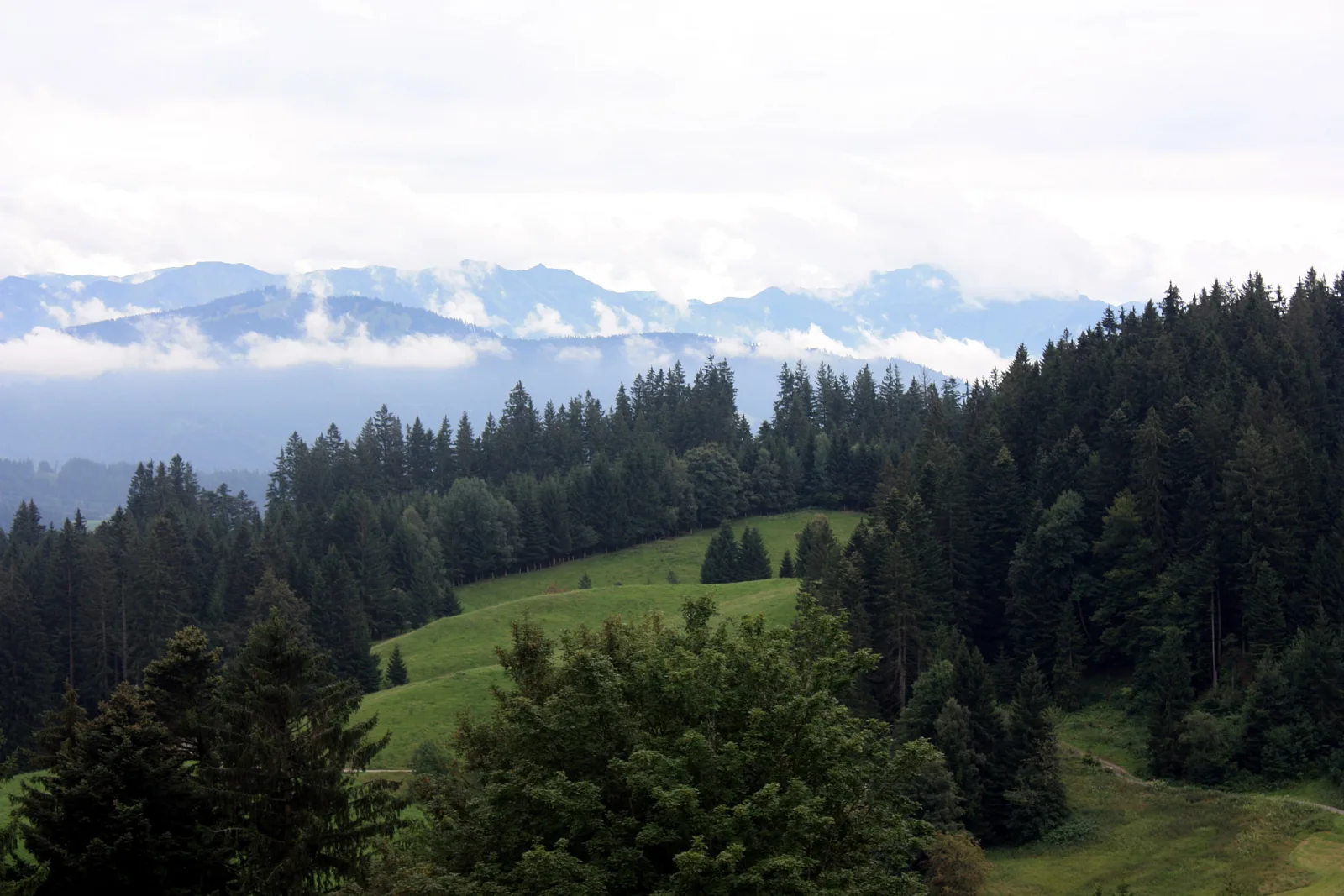
At the top, what makes a difference are the two viewpoints. One looks out over Lake Constance, the other over the Alps, and both help you understand Bregenz’s position in the landscape. The panorama is easy to read even on a quick visit, because the viewing points are set up to show where each section of the view is located.
The easy walk around the cable car station takes about 30 minutes and is a way to see Alpine wildlife without much effort. There you can spot species such as Alpine ibex, deer, wild boar, mouflon sheep, and marmots, as well as smaller animals that often catch the attention of families with children. There is also a network of marked trails for those who want to keep walking or cycling, but with a longer, less improvised route.
For food, the mountain has inns and restaurants scattered near the station and along the trails. Some close in winter, so it makes sense to check what is open on the day of your visit before heading up.
Editorial transparency: Some links on this page are affiliate links. We may earn a commission at no extra cost to you. This does not influence our recommendations.
What to See in Downtown Bregenz and at Kornmarktplatz
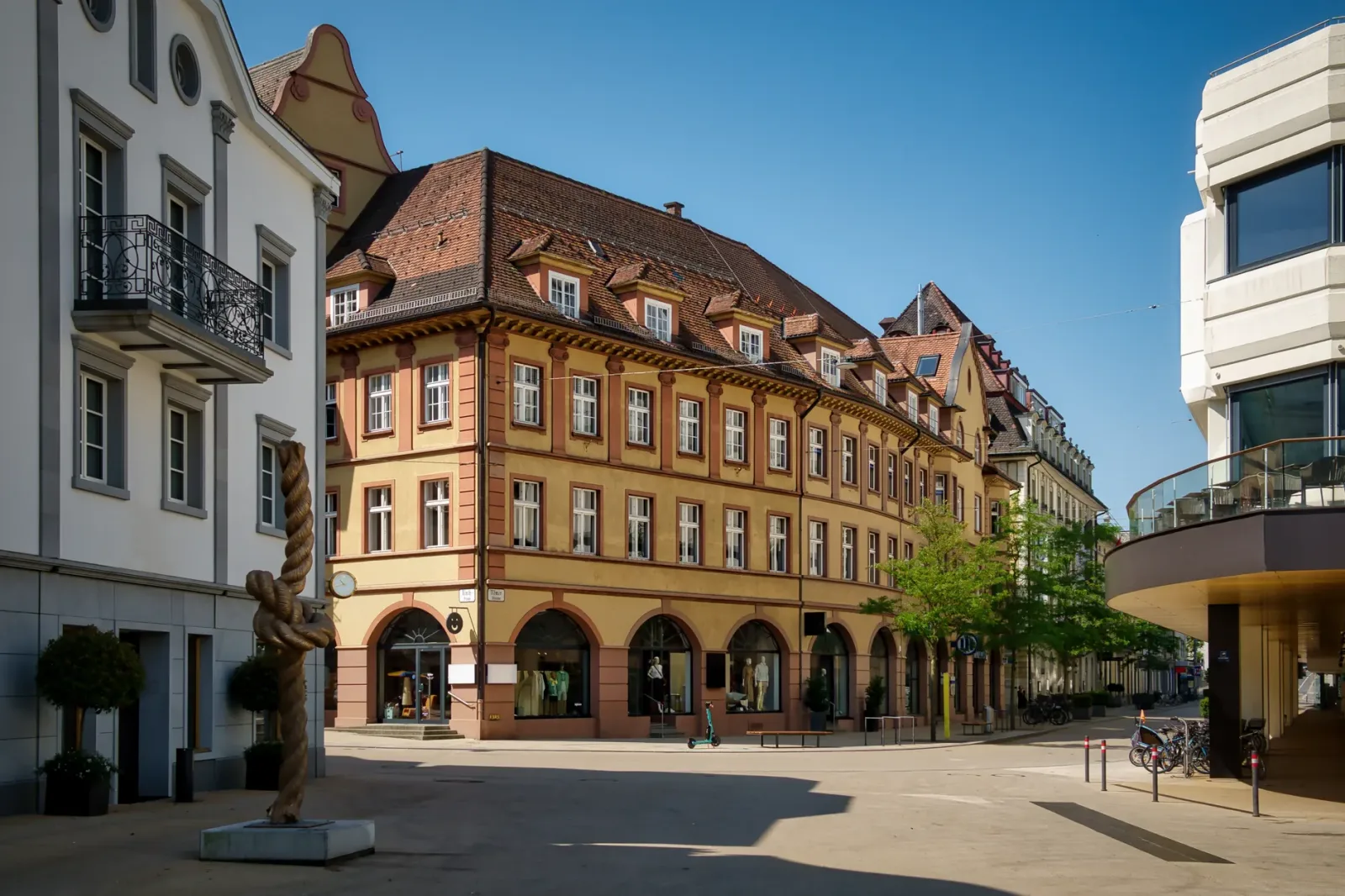
Kornmarktplatz is the most practical starting point for getting to know downtown Bregenz. Shops, bars, and restaurants are concentrated there, and the square works well both for a quick break and for fitting in a coffee, a leisurely lunch, or a stop between one walk and another. If you arrive in the city with little time, it makes sense to go through this area before heading on to the older streets.
It is also in this central part that you find the face most associated with Bregenz’s contemporary architecture. Kunsthaus Bregenz stands next to the square, the Vorarlberg Museum is at the beginning of it, and the Hauptpostamt Bregenz is near the train station, just a short walk away. Even without going into all of them, walking around the area already helps you understand why the city catches the eye of anyone who likes well-designed public buildings.
This is a good area for shaping the rest of the day on foot. From Kornmarktplatz, the transition to the historic area is direct, with no need for transportation. This allows you to first take in the more modern center and then continue on to the old town without breaking the rhythm of the itinerary.
If your plan is to stay longer in the city, this central area also serves as a base for organizing meals and short breaks between outings. In Bregenz, it is the kind of area where you take care of the essentials without leaving the attractions circuit.
Walk through the monasteries and the Upper Town
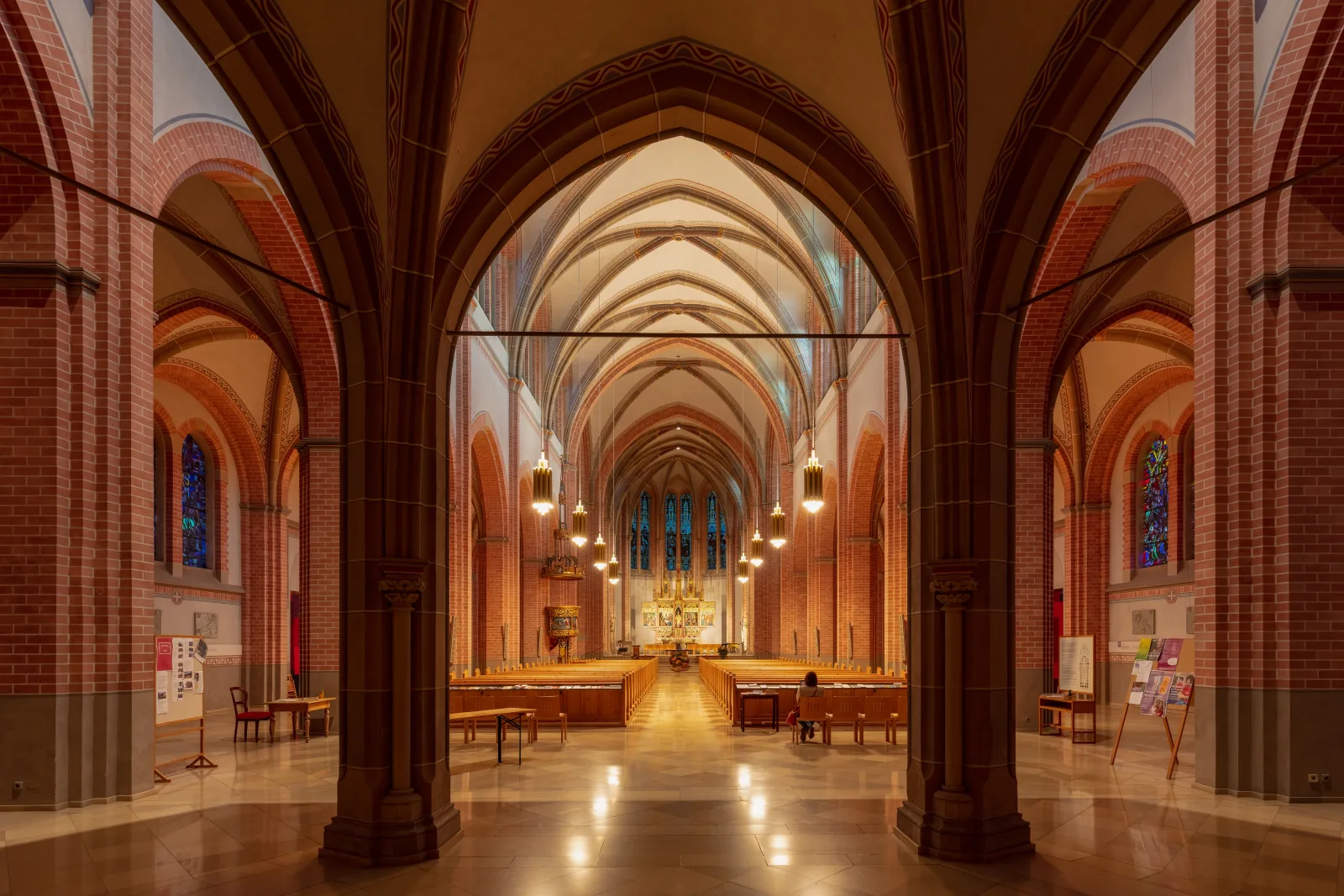
The walk along Kirchstrasse is the most direct way to enter Bregenz’s historic side. The first stop stands out for its very irregularity: the house with the narrowest façade in Europe is at number 29, squeezed between two buildings. A little farther on, the street climbs and leads to the Kapuzinerkloster, with the chapels of the complex and a lookout point that already opens up the reading of the Upper Town. A bit higher up, the Kloster Thalbach and the Church of St. Gallus complete this stretch, which works well without rushing, because the interest here lies more in the walk itself than in “checking off” attractions.
From Kirchstrasse, the ascent via Stadtsteig leads to the gate of the old town and connects the route to the medieval core in a continuous way. It is a short stretch, but steep, so it is worth taking your time to look at the details of the façades and the hillside relief. At the top, the passage by Martinsturm, Martinskapelle and Altes Rathaus rounds off the historic walk with a sequence of landmarks that help explain how Bregenz grew in layers, from the slope downward.
If you want to take this section at a leisurely pace, the best approach is to set aside at least some flexibility without a strict schedule. The area is easier to appreciate when you walk without cutting the route between the main points. For those who enjoy photography, the order also helps: start on the lower street and finish in the Upper Town, because the light and the hillside angles usually produce better results at the end of the climb.
Walk along Lake Constance
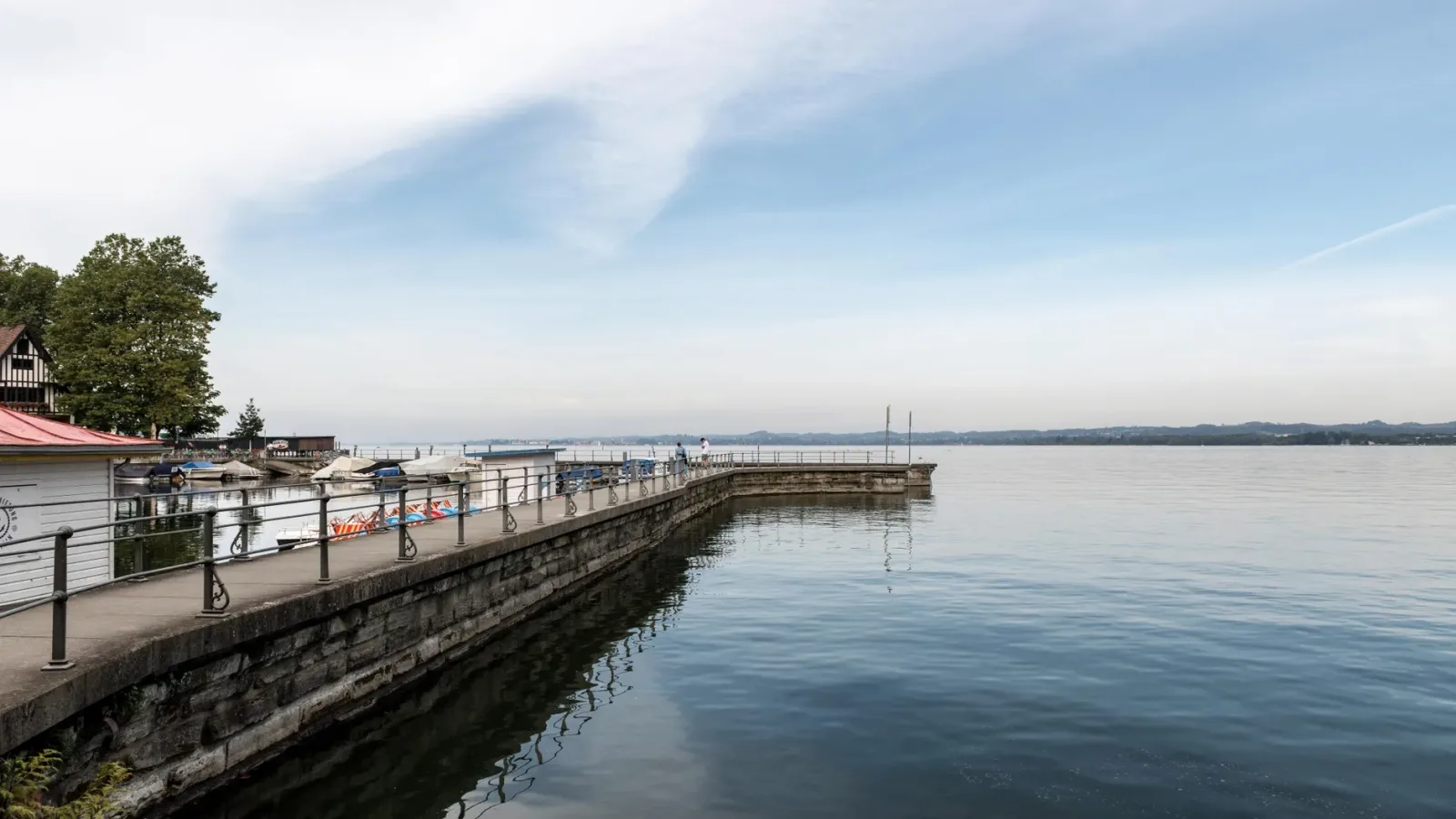
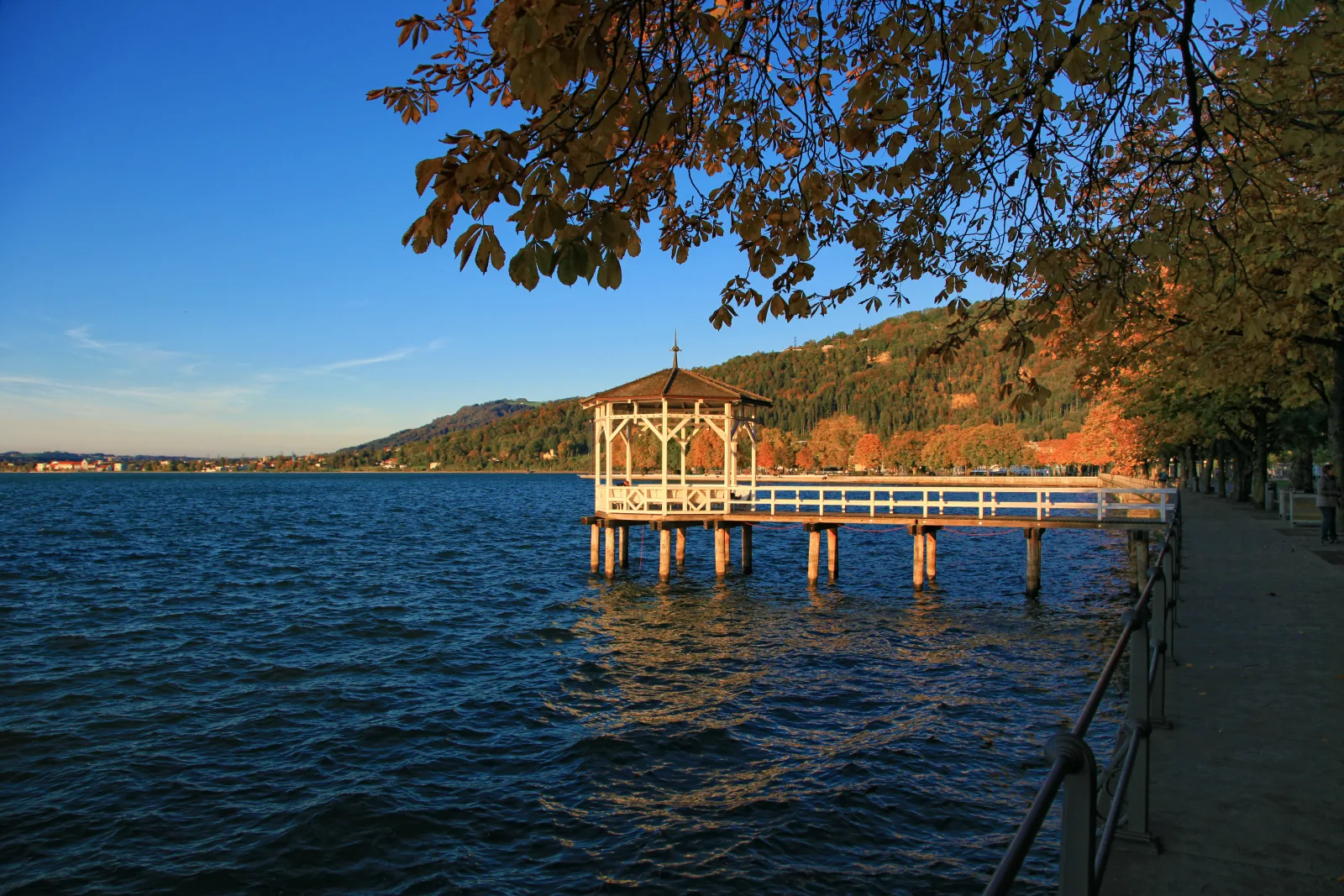
The Bodensee shore in Bregenz works well for a leisurely walk, with the kind of route where you can stop, watch the harbor activity, and keep going without having to “tick off” a fixed itinerary. If the day is warm, the stretch by the lake takes on another use: swimming in summer, as long as you choose the appropriate spots and follow the local signage. In Bregenz, this makes more sense when you have time to linger a bit, rather than just passing through.
In the sections where it is allowed, some areas also permit barbecues, but it is worth checking on site before making any plans. The shore does not call for haste, and that helps families and couples alike: you can stop for a simple picnic, play with children, or պարզապես sit and watch the light change over the water.
Late in the afternoon, the lake becomes the best reason to stay in the city a little longer. Sunset is usually when the walk pays off most, because the promenade and viewpoints are less crowded and the scenery changes quickly. If you have a more relaxed day, this is the easiest stretch to extend without extra effort.
Boat trips and activities on the lake
Lake Constance fits into Bregenz’s itinerary in a simple way: by water. From the harbor, there are trips and connections that work both as transportation and as an activity in themselves. Among the best-known options are the MS Sonnenkönigin, the steamship Hohentwiel, and the shipping lines between Hafen Bregenz and places in Vorarlberg. If the idea is just to get around, it is worth checking which route best suits your day; if you want to extend your time on the lake, the boat departures already take care of that without any hassle.
For those who prefer to keep their own pace, there is rental of electric boats and rowboats. It is the kind of outing that makes more sense on stable days, when you want to control your return time and be less tied to schedules. There are also sailboats, as well as the marina, which helps convey the scale of nautical activity in Bregenz and concentrates much of the activity related to boating.
If the question is between transportation and sightseeing, the choice is usually practical: regular lines are better for getting from one point of the lake to another; private boats make more sense for those who want a short experience without a fixed itinerary. Before setting out, confirm the day’s operation, because availability and services may change depending on the season and the weather.
Bregenz Festival and other cultural events
Bregenz’s main cultural highlight in summer is the Bregenzer Festspiele, which takes place in July and August and dominates the season with large-scale productions. The festival’s centerpiece is the floating stage set on Lake Constance, a setting designed for operas and musical performances on a grand scale. If this is the priority in your itinerary, it’s worth checking the program in advance, because the schedule changes quite a bit depending on the production currently on stage.
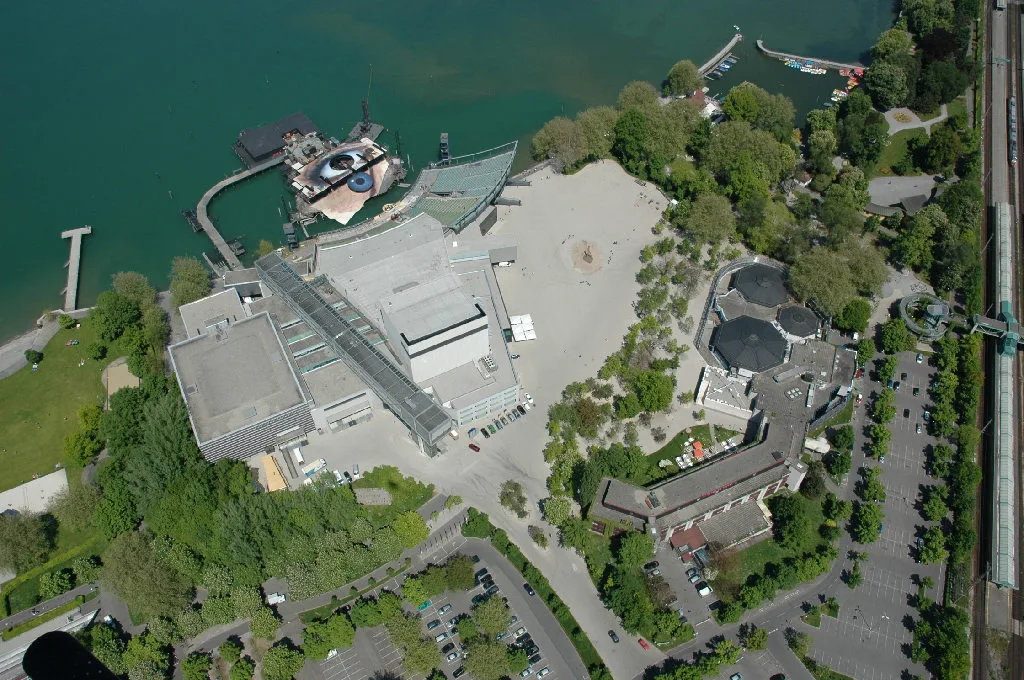
The Festspielhaus Bregenz serves as the other important hub for this agenda. That is where events in different formats take place throughout the year, including the Bregenzer Frühling Tanzfestival and the Bregenzer Jazz Festival. For those looking to fit in a cultural evening during the trip, this is the area that concentrates the most relevant dates; ideally, confirm the current calendar before planning the day, since the schedule is seasonal and may vary.
If you are planning your trip around the festival, think about it early in the itinerary planning. Performance nights call for a wider time margin between late afternoon and the event start, especially during busier periods. On crowded dates, the city also sees more visitors in the area near the lake, so allowing time to arrive calmly makes a difference in the experience.
Outside the height of summer, Bregenz still has a cultural agenda, but the pace changes. The city does not rely only on the festival to justify a visit: the Festspielhaus calendar keeps things moving throughout the year, and that helps you choose whether the trip will revolve around one performance night or an entire season devoted to culture.
Where to stay in Bregenz and how to get around between attractions
To stay in Bregenz, the most practical choice is to be near Kornmarktplatz and the center. This area reduces unnecessary walking, puts you close to shops, bars, and restaurants, and makes both the start of the itinerary and the return after a fuller day easier. If logistics are the priority, it is worth looking for accommodation in this central area, or in the vicinity of the train station, where the Hauptpostamt Bregenz is also within a short distance.
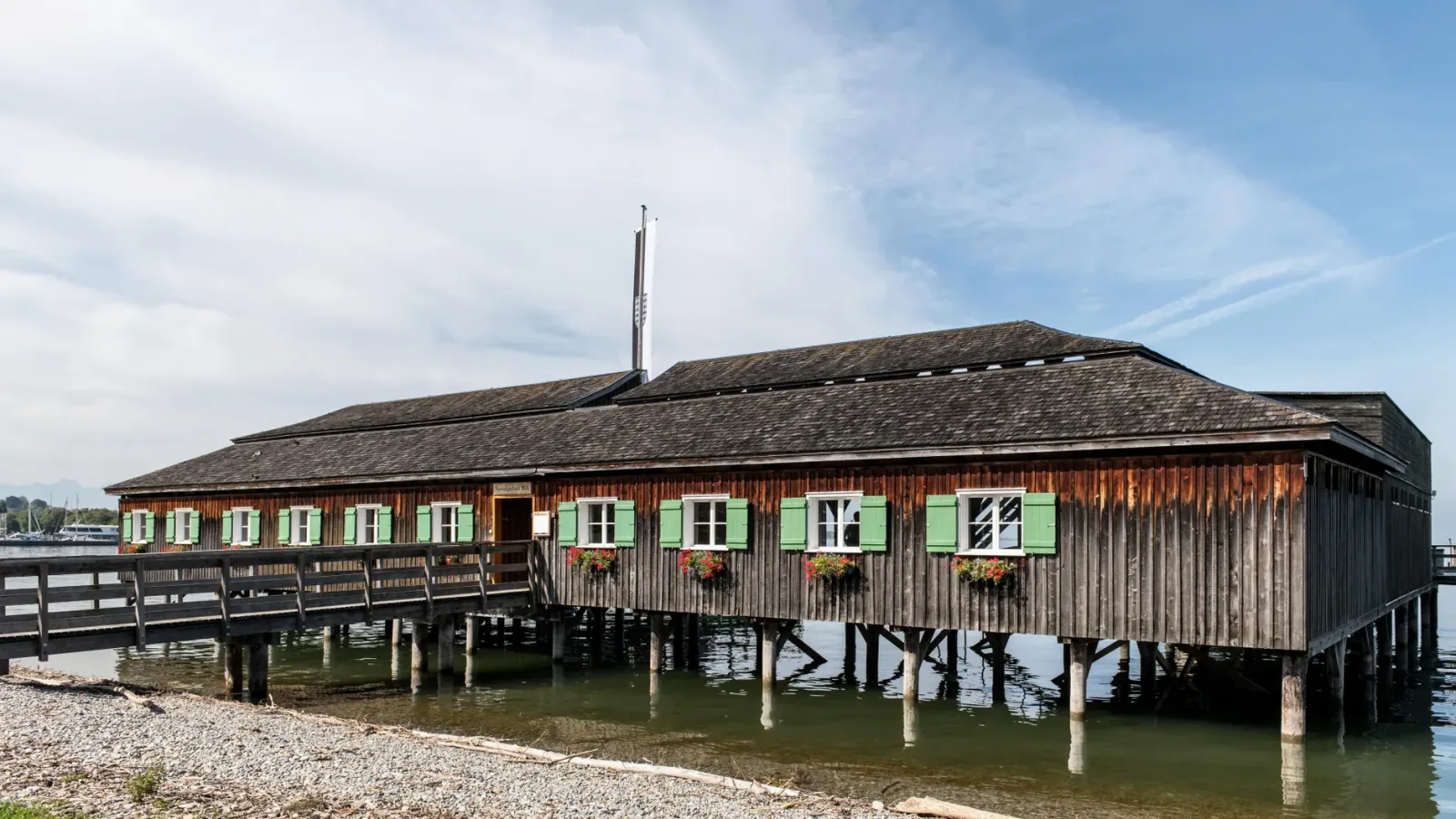
Among the examples mentioned in the city, the Hotel Weisses Kreuz and the Gasthaus Goldener Hirschen stand out as references for a convenient location for getting around the center on foot. It is not just an area for “passing through” to sleep: it works well as a base because it shortens the trips between the modern part of the city and the start of walks toward the historic area.
To connect the attractions, the simplest route is almost always on foot. From the center, you can reach the main streets and squares without relying on local transport, and this is especially useful for fitting the urban parts of the itinerary into the same block. For the mountain, the Pfänderbahn handles the trip more efficiently than going up by road or trail if the goal is a short visit. If you plan to include Pfänder in the day, it is better to set aside the ascent and the return within the same period, rather than counting on improvised combinations.
Those who want to minimize changes of base usually do best by staying in the center and using the cable car as a direct exit to the mountain. In this way, the itinerary is fully connected by short walks, with the cable car only when it truly saves time and energy.
Frequently asked questions
What to do in Bregenz in 1 day?
In one day, it’s worth combining the ascent to Pfänder, a walk through the center of Bregenz, and a stroll along Lake Constance. If you have time left, include a boat ride as well.
How much time should you set aside for Pfänder in Bregenz?
For a basic visit to Pfänder, it’s ideal to set aside about 2 hours. If you want to have lunch there or walk more, it’s worth allowing extra time.
What is the best area to start visiting the center of Bregenz?
Kornmarktplatz is a good starting point, because it concentrates shops, cafés, and restaurants. It also makes it easy to connect on foot with other central and historic areas.
Is it possible to do the Bregenz itinerary on foot?
Yes, much of the itinerary can be done on foot, especially between the center and the historic area. For Pfänder, the cable car is usually the most practical way to save time.
When is it most worth staying on the shore of Lake Constance?
In the late afternoon, the walk along the lake usually pays off more because of the light and the quieter atmosphere. On warm days, this area also works well for breaks and time outdoors.