What to do in Valencia: practical guide to planning your trip
What to do in Valencia with an itinerary, best neighborhoods, beaches, ideal time to go, and tips for organizing your trip without wasting time.
Where is Valencia and how to get there
Valencia is on the eastern coast of Spain, facing the Mediterranean Sea. On the map, it sits between Barcelona, to the north, and Alicante, to the south. This location is very convenient for anyone looking to include the city in a longer trip around the country, since it fits well both in itineraries coming down from Catalonia and in routes heading up from the Alicante region.
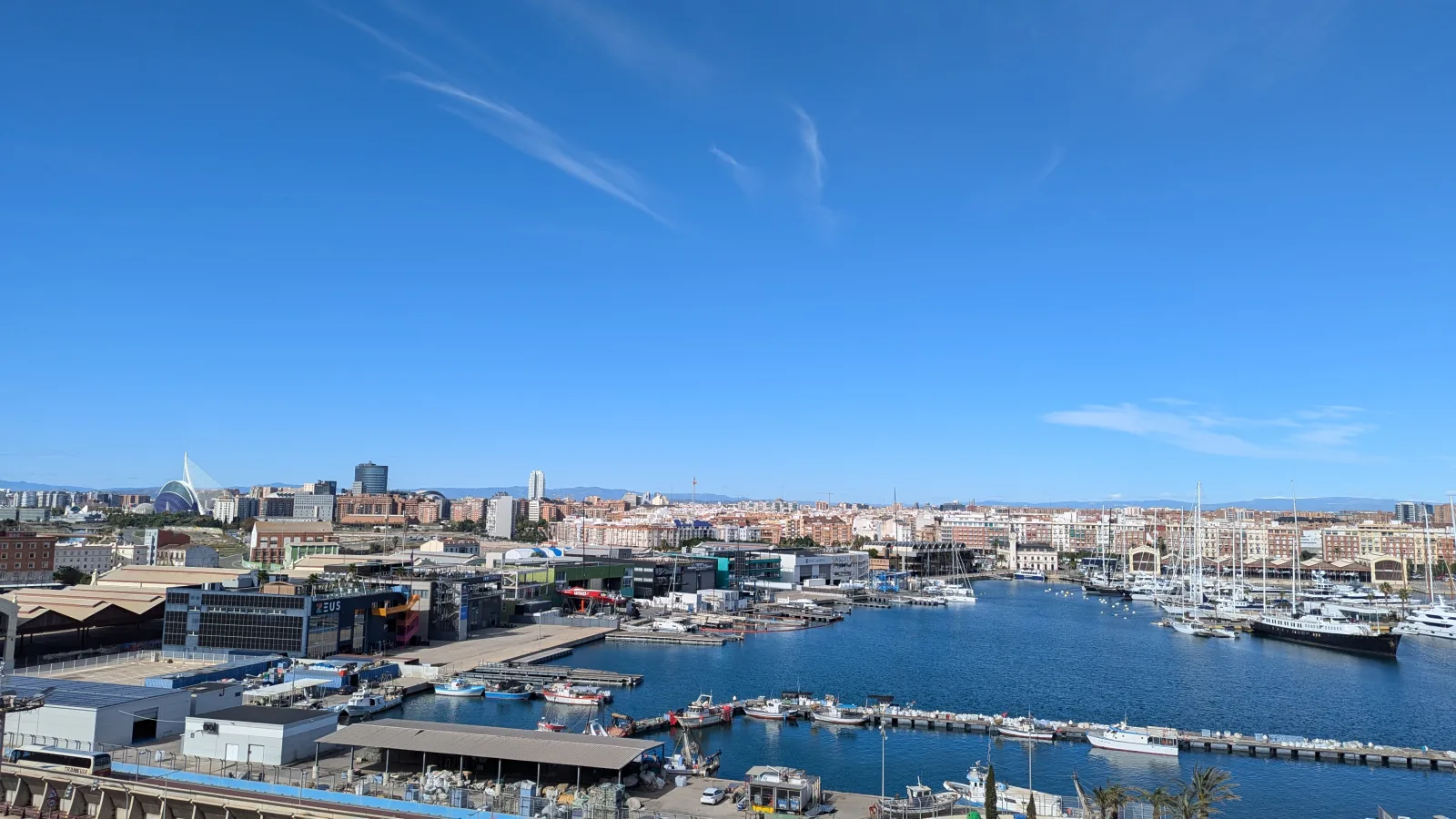
Getting there by plane is usually the simplest option. Valencia Airport, in Manises, is about 8 km from the city center. From the terminal, you can continue by metro on lines 3 and 5, by bus, or by taxi. The trip to the central area takes around 20 minutes by metro. For those coming from Brazil, the most common option is to connect in Madrid, Barcelona, or another European city.
By train, the city works well for those already traveling around Spain. Valencia Joaquín Sorolla station receives AVE trains from Madrid in about 1h40 and from Barcelona in about 3h. By bus, the Estación de Autobuses de Valencia brings together the main arrivals and has easy access to the metro. By car, the drive from Madrid takes around 3h30 via the A-3. Just keep one thing in mind: you can’t park in the historic center, so those renting a car usually need to leave the vehicle outside the oldest area and continue on foot or use public transportation.
Where to Stay in Valência
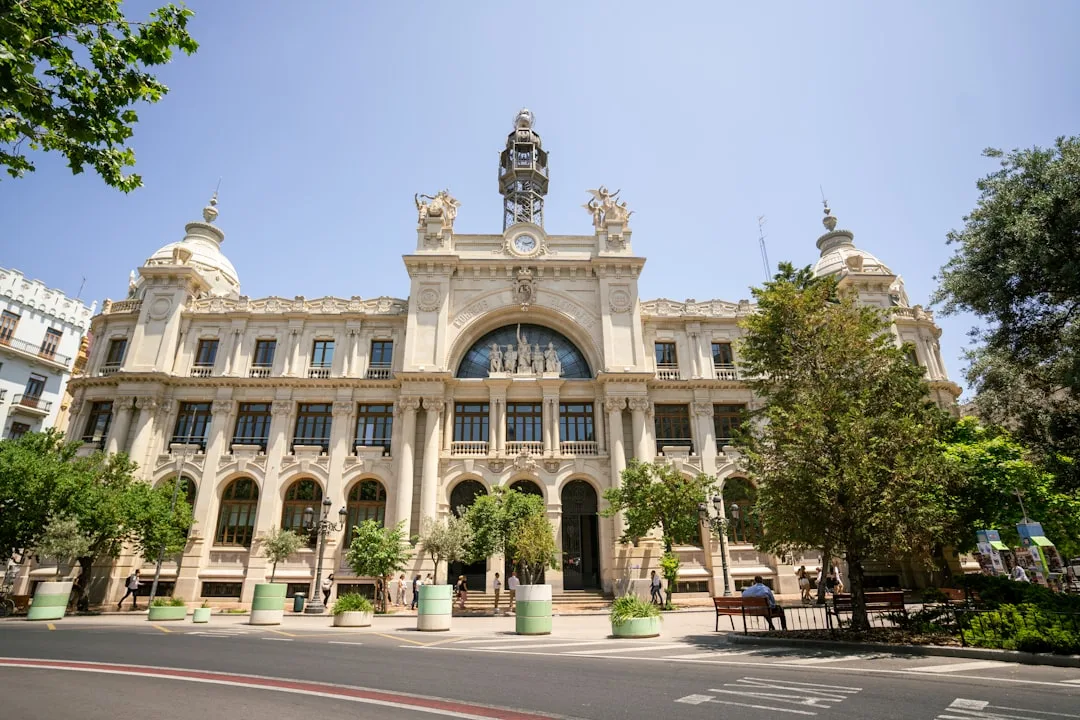
If you want to stay close to the main attractions and do almost everything on foot, the historic center is the most straightforward choice. It works well for those with only a few days, because it concentrates what matters most to first-time visitors and reduces the need for transportation. The atmosphere is more touristy and busy, with narrow streets and a pace that changes quite a bit between day and night.
El Carmen fits into this logic, but with a more distinctive profile. It is the best area for those who prefer to leave the hotel and find bars, street art, and a more alternative scene without moving away from the center. It also works well for those who like going out at night, as long as they accept a livelier environment.
Ruzafa suits those who want to stay close to the center, but in an area with a more contemporary profile. It is a practical neighborhood for travelers who value cafés, independent shops, and accommodations with good value for money. The walk to the center is short, so it works well for those who want mobility without staying in the city’s more traditional core.
For those who think of the beach as a central part of the trip, Malva-rosa changes the experience. You stay near the sea, in an area with a calmer atmosphere during the day and more activity at night along the promenade. It is a strong choice for families and for those who want to alternate between city and coastline without long commutes.
Campanar and Benimaclet come in as more local and, in general, quieter options. Campanar is the choice for those who want to save money and are okay using the metro or other means to reach the most visited areas. Benimaclet has a residential feel, a neighborhood atmosphere, and prices that are usually more reasonable; it works well for those who prefer a less touristy stay and don’t mind being outside the most obvious accommodation area.
Editorial transparency: Some links on this page are affiliate links. We may earn a commission at no extra cost to you. This does not influence our recommendations.
What is the best time to travel
The best window for traveling to València is usually spring, especially from March to May. Temperatures are around 15°C to 25°C, which makes it easy to walk around the city without suffering from the heat. March requires extra attention: the city enters the rhythm of Las Fallas, when demand rises, activity increases, and accommodation tends to get more expensive. If you plan to travel during this period, book in advance.
Summer runs from June to August and brings the hottest side of the city. Temperatures easily go above 30°C, so this is the time when the beach makes the most sense. It is also the busiest season, with more people in the coastal areas and higher prices, especially in August. If you travel in this season, it is worth planning early outings and long breaks during the hottest hours.
Autumn, from September to November, is usually a balanced choice. Temperatures return to the 15°C to 25°C range, the sea is still usually pleasant for swimming until October, and the city loses part of the summer crowds. Prices also tend to be better than in the high season. It is a good time for those who want to combine city and beach without competing for space all the time.
In winter, from December to February, València remains milder than much of Europe, with temperatures between 8°C and 17°C. It is the most economical period for finding accommodation and flights, with less pressure on tourist services. For the beach, it is not the most inviting time, but the days are usually still sunny, so the city still works well for those who want to walk around and avoid excessive heat.
What to do in Valencia in the historic center
Ciutat Vella works well as a walking tour area, because the main stops are close together and make sense in the same walk. Start with the Torres de Serranos, one of the old entrances to the walled city. Going up to the top helps you understand the layout of the historic center and gives you a good reading of the urban plan before heading into the inner streets.
From there, continue to the Lonja de la Seda, a World Heritage site and one of the most important works of civil Gothic architecture in Valencia. The highlight is the Hall of Columns, with its palm tree-shaped pillars. It is a quick visit, but it is worth taking time to look at the interior details, because that is where the building really makes sense.
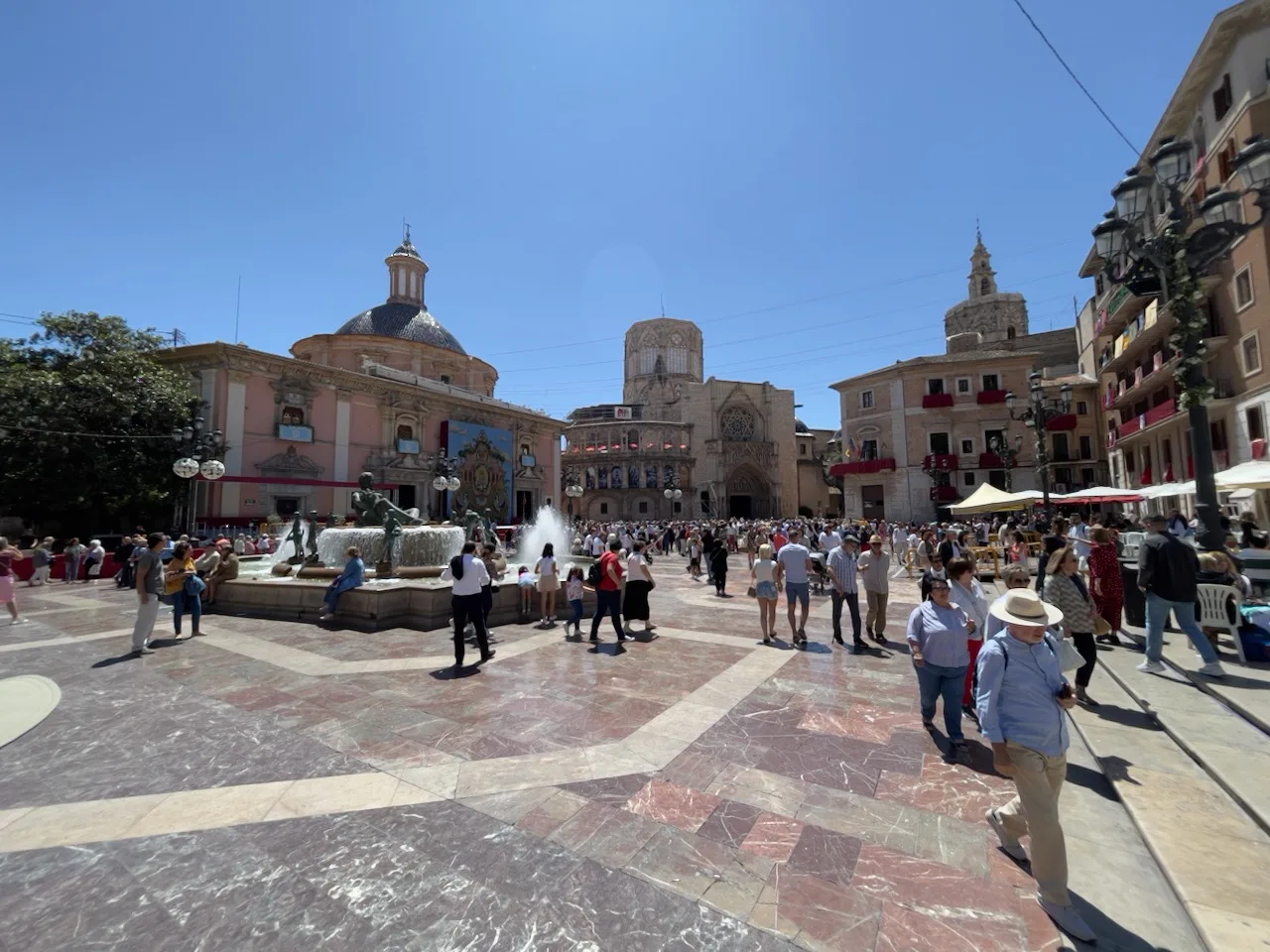
Then continue to the Catedral de Valencia. It combines Gothic, Romanesque, and Baroque elements, and that already says a lot about the building’s history. If you want to climb the Torre del Miguelete, keep in mind the 207 steps. The climb takes some breath, but the view is worth it for anyone who wants to see the historic center from above. If time is short, visit the cathedral and leave the tower as a priority choice.
To organize the area without wasting time, think of a simple sequence: Torres de Serranos, Lonja de la Seda, Catedral, and Torre del Miguelete. That way, you cover the essentials of the historic center without unnecessary backtracking. If you are fitting everything into half a day, the order helps more than trying to “see whatever comes up”.
How to Use the Jardín del Turia and Get to the City of Arts and Sciences
The Jardín del Turia occupies the former riverbed and cuts through Valencia for about 9 km. For those putting together an itinerary, it works as an axis for getting around and taking a break: you can cross it on foot, travel through it by bicycle, or simply use the park as a path between one part of the city and another. The space has paths, walking areas, and stretches that are good for running or cycling, so it is worth including on the day you head toward the City of Arts and Sciences.
The connection with the complex is direct: following the park, you arrive without difficulty at Valencia’s modern area. The route makes sense for those who want to combine an outdoor stroll and a cultural visit in the same block, without relying on a car. If you are on a bicycle, getting around is usually the most practical way to make the most of the entire route; if you are on foot, choose a shorter stretch and focus the visit on what you want to see inside the complex.
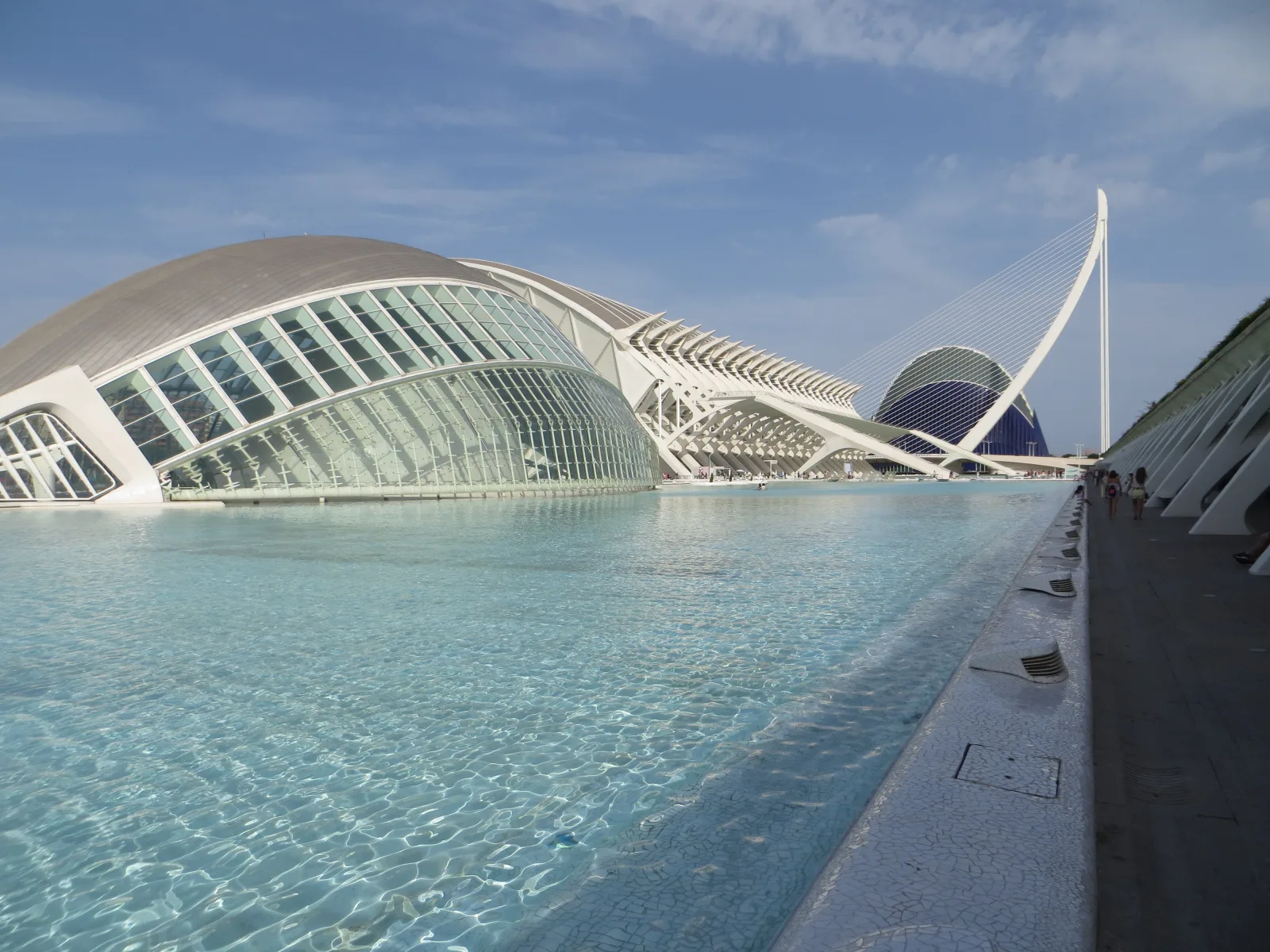
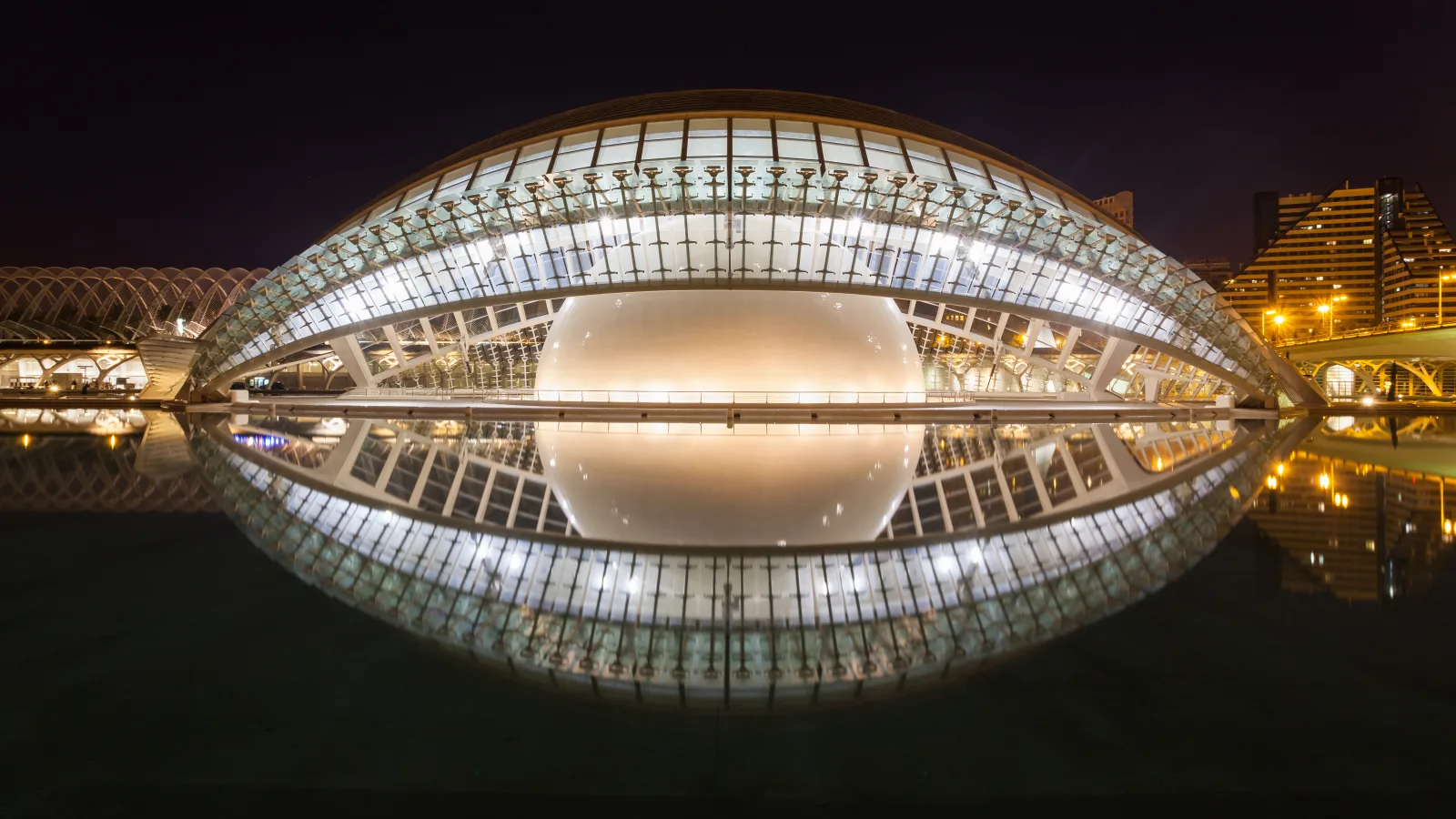
The City of Arts and Sciences brings together spaces with very different profiles. The Príncipe Felipe Museum of Sciences is interactive and calls for time to move around at a relaxed pace. The Hemisfèric has the eye-shaped building and shows documentaries on a concave screen. The Palau de les Arts Reina Sofía hosts operas, concerts, and ballet. The Umbracle works as an elevated garden and free viewpoint. L'Àgora hosts events and exhibitions. L'Oceanogràfic is the complex’s aquarium and usually requires more time, because the area is large and the number of species is high.
If you are organizing the visit, think of the park as the route and the complex as the main stop. Those with little time can stay at the Umbracle and choose one or two paid spaces. Those who want to explore more calmly need to reserve a large part of the time for the Science Museum and L'Oceanogràfic, leaving the rest to walk among the buildings and observe the complex from the outside.
Where to eat and what to try in Valencia
Mercado Central is one of the most useful places for those who want to eat well in Valencia without turning the meal into a long outing. The appeal lies in walking among the stalls, seeing fresh produce, and choosing what makes sense for the time of day. If the idea is just to snack on something, Central Bar works well as a quick stop: look for whatever is trending at the moment and confirm the day’s menu on site.
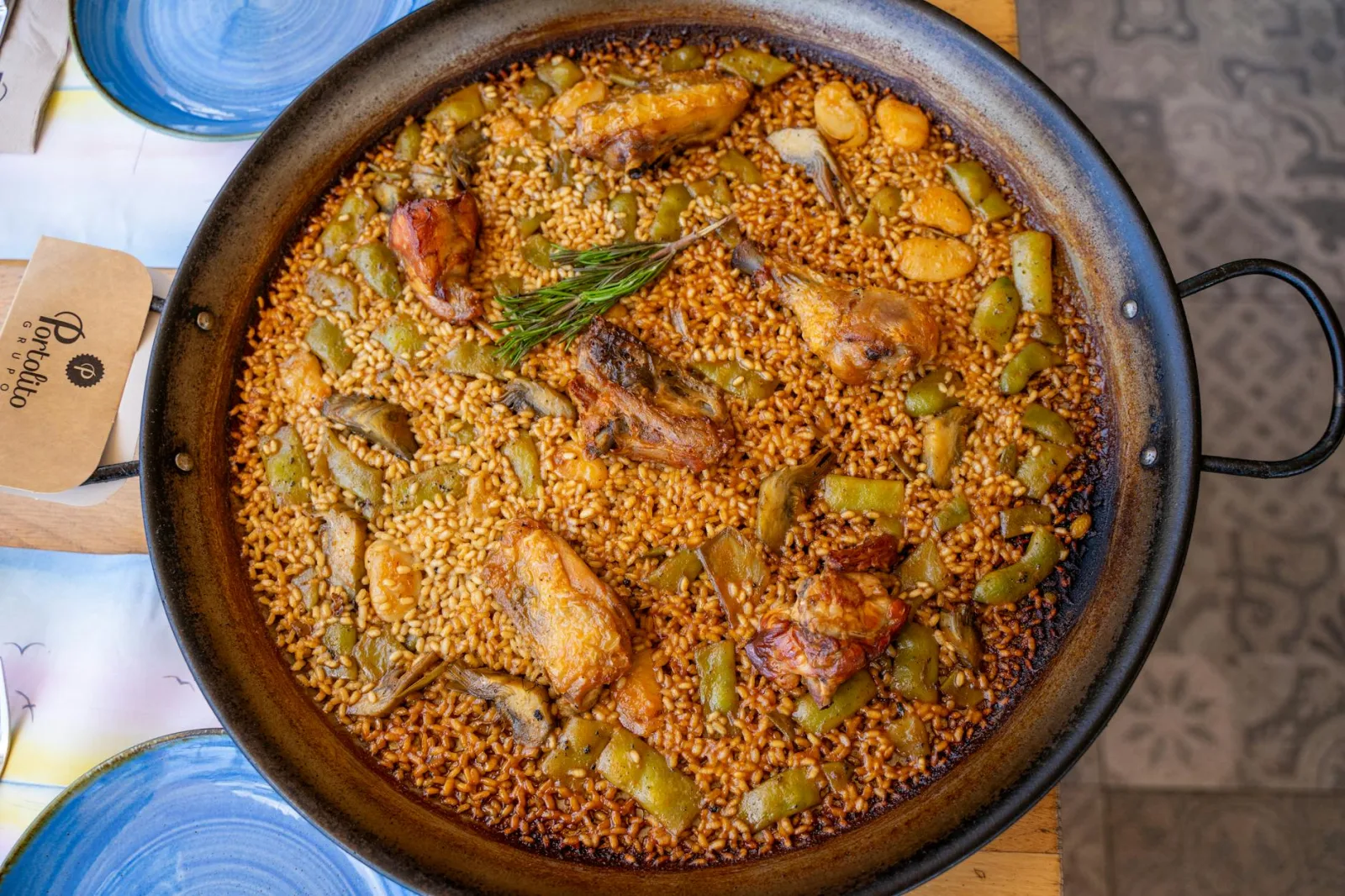
Paella valenciana deserves attention because it is not a generic Spanish dish, but rather a recipe closely tied to the city and its surroundings. If you want to try the most traditional version, check the ingredients listed on the menu and do not assume that any paella served in Valencia follows the classic recipe. For those who want to understand the dish in its local context, it is worth comparing what appears in restaurants in the center, at the market, and in the beach areas, because the offer varies quite a bit.
Beyond paella, tapas also come into focus, helping you put together lighter meals, as well as the drinks that appear frequently in the city: horchata de chufas and granizado de limón. Horchata usually works best as an afternoon break; granizado is a more refreshing option on hot days. If you’re deciding what to try, think less about “checking off a list” and more about the kind of hunger you have at that moment.
To eat strategically, combine the market with a more informal lunch, save the paella for a meal when you can sit without rushing, and leave the local drinks for the breaks. In Valencia, what makes a difference is not piling up dishes, but choosing the right moment for each one.
Valencia’s beaches and the trip to Albufera
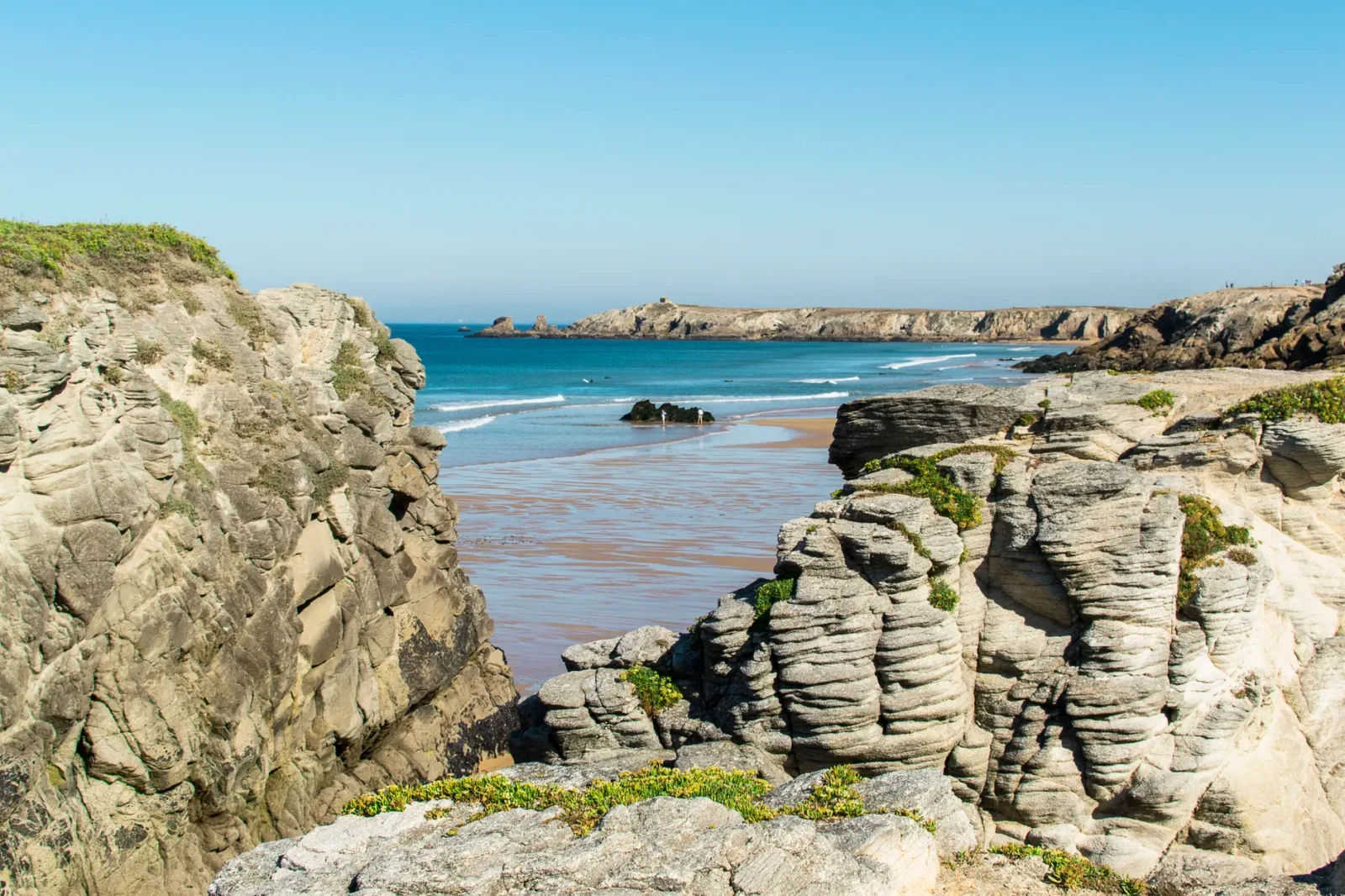
Valencia’s coastline works well for those who want to fit in some beach time without leaving the city. Malva-rosa is the most popular, with fine sand and full amenities on the promenade, including showers, deck chair rentals, and restaurants. Arenas, next door, follows the same line, but it tends to be quieter and is a better fit for those who want to stay at the beach without as much activity. Patacona, north of Malva-rosa, has a more residential and less touristy profile; it is the choice for those who prefer a more local and calmer atmosphere. El Saler is outside the immediate urban core and offers a landscape of dunes and protected areas within Albufera Natural Park, with a very different vibe from the central beaches.
If the idea is to spend the day by the shore, it is worth choosing based on logistics. Malva-rosa and Arenas concentrate more services and are usually the most practical for those who want to arrive, sit down, and have everything close by. Patacona is better for those who want to walk around with less movement and do not care as much about having lots of options on the sand. El Saler requires a longer trip, but offers a setting more closely tied to nature and usually makes sense for those who want to combine the beach with Albufera on the same day.
Albufera is about 10 km from the center and is worth it for the boat ride on the lagoon, which helps explain the region’s connection to Valencian paella. This is where the most direct link comes from between the rice-field landscape, the shallow water, and the dish that became a symbol of the city. If you go there, make it clear in your planning that the outing is not just to “see a lagoon”: what is interesting is to fit in the boat ride, the natural surroundings, and a meal in El Palmar, where paella gains its original context.
1, 2, and 3-day itineraries in Valencia
1, 2, and 3-day itineraries in Valencia
With 1 day, you need to choose between the historic center and the modern area. If the idea is to get away with a basic understanding of the city, do it like this: morning at the Torres de Serranos and the Cathedral; midday at the Mercado Central; afternoon at the City of Arts and Sciences to see the complex from the outside or go inside one of the venues; night in the historic center, where it’s easier to end the day without long transfers. If you still have energy, cut time at the market and fit in a quick stop in El Carmen.
With 2 days, the split becomes more balanced. On the first day, focus on the historic center: Torres de Serranos, the Cathedral, Torre del Miguelete, Mercado Central, and Lonja de la Seda, leaving the afternoon to walk through El Carmen. On the second day, follow the Jardín del Turia to the City of Arts and Sciences, set aside part of the afternoon for Malva-rosa beach, and leave the evening for dinner near the sea or head back to Ruzafa. This combination avoids crossing the city several times in the same day.
With 3 days, you can include Albufera without rushing. The first day is for the historic center. The second is for Jardín del Turia, the City of Arts and Sciences, and the beach. The third begins with a boat ride through Albufera, continues with lunch in El Palmar, where paella has a direct connection to the lagoon, and ends back in the city with free time to revisit what was left out, whether the Oceanogràfic or an unhurried walk. If you prefer a more relaxed trip, swap the beach day with the Albufera day depending on the weather and the crowds.
Practical Tips for Organizing Your Trip
Brazilians can enter Spain for tourism for up to 90 days without a visa, but they need to carry a valid passport. Since the entry rule may change with the implementation of ETIAS in 2026, it’s worth checking the current requirement before boarding. Travel insurance is not a detail: it is part of the basic organization of the trip and helps avoid headaches with medical care or unexpected issues.
On public transport, the Mobilis card makes things easier if you’ll be traveling more than once a day. It helps avoid buying individual tickets for each trip, which makes a difference when you alternate between metro, bus, and short rides around the city. For those who want internet from the moment they arrive, eSIM is the most practical option: you activate it before the trip and land already connected, without relying on a SIM card store or expensive roaming.
The city is good for getting around with the usual caution appropriate for an urban destination. In busier areas, take basic precautions with your backpack, phone, and documents, especially at night and in crowded places. If football is part of your itinerary, the Mestalla Stadium is worth attention: check the schedule in advance, because a match can affect transportation, traffic around the area, and transport availability.
On the logistics side, the trip becomes simpler when you sort out before leaving home the items that require validation: passport validity, insurance coverage, any ETIAS requirement, and the type of transport ticket you plan to use. This avoids improvisation upon arrival and reduces time lost with operational tasks.
Frequently asked questions
How many days are enough to get to know Valência?
With 1 day, you can see the historic center and the City of Arts and Sciences. With 2 or 3 days, you can also include the beach and Albufera at a more relaxed pace.
What is the best time to visit Valência?
The best time is usually spring, from March to May, when temperatures are more pleasant for walking. Autumn is also a good option, with mild weather and fewer crowds.
Where should I stay in Valência to do everything on foot?
The historic center is the most convenient area for those who want to visit the main attractions on foot. El Carmen and Ruzafa also work well for those who want to stay close to the center.
Which beaches are worth visiting in Valência?
Malva-rosa and Arenas are the most convenient and have the best infrastructure. Patacona is quieter, and El Saler has a more nature-oriented profile.
What should I eat in Valência besides paella?
Besides paella valenciana, it’s worth trying tapas, horchata de chufas, and granizado de limón. The Central Market is a good stop for a more casual meal.