What to do in Mérida, Mexico: practical guide to planning your trip
What to do in Mérida, Mexico: see the historic center, markets, local food, accommodation, and day trips to better plan your trip.
Where is Mérida and how to get there
Mérida is in the state of Yucatán, in southeastern Mexico, and serves as a natural base for getting around the peninsula. The city is about 2h30 from Valladolid and 4h from Cancún by road. These times help you understand the logistics: Mérida connects well with both points, but Cancún usually comes more as an entry point for those continuing on by land.
Getting there by car is straightforward, and getting there by bus too. The most practical option often mentioned is to combine a flight to Cancún and an ADO bus to Mérida, with the possibility of changing buses at the ADO station in Cancún, if necessary. It is worth checking and booking in advance, because the most convenient schedules can sell out.
There is an airport in Mérida, so air access is another real alternative, especially if you prefer to avoid the road segment. The Tren Maya is also planned, with a future connection from Cancún airport, which should expand the transportation options between the main points in the region.
If you are putting together your route through the peninsula, the most useful criterion is simple: car for flexibility, bus for convenience, and plane for the fastest arrival in the city.
What Is the Best Time to Visit Mérida
March usually works well for getting to know Mérida: the heat is already setting in, but the city still offers a breeze that brings relief and cooler nights, which changes the experience quite a bit outside the central hours of the day. For those who will be getting around on foot and spending time outdoors, this matters more than the “dry” weather on paper.
The main point is the heat. During the day, it feels heavy and calls for breaks, shade, and more careful planning of outings. When the sun goes down, the city becomes more comfortable, especially for those who like to walk after late afternoon.
If you want a trip that is calmer in terms of weather, the best criterion is simple: prefer periods when the night still makes up for the hot day. In Mérida, this usually makes a real difference in the rhythm of the trip, because it reduces the feeling of fatigue and makes the city more pleasant after dusk.
Editorial transparency: Some links on this page are affiliate links. We may earn a commission at no extra cost to you. This does not influence our recommendations.
Where to stay in Mérida
To stay in the center without complicating logistics, Hotel La Catedral Mérida is the most straightforward choice: it is very central and comes up as a good-value, clean, and practical option for those who want to explore the city on foot. At the other end of the spectrum, Mansión Mérida Boutique Hotel is the high-end choice, with a restaurant and a more sophisticated approach. If the idea is a resort-style stay, Villa Mercedes Curio Collection By Hilton and Casa Lecanda Boutique Hotel are both options, described as spacious, well-kept, and with attentive staff; Casa Lecanda is also treated as a luxurious option, with gardens and well-designed rooms.
Those looking for something more budget-friendly usually first consider Hostal La Ermita, which is popular and includes breakfast. T´úubul K´iin Bed & Breakfast sits somewhere in the middle: spacious rooms, a clean environment, and well-rated breakfast. Villa Merida Boutique Hotel, on the other hand, has a different appeal, more about the stay itself than the cost: it is located in a restored hacienda, with a pool that is often one of the most memorable features for those who stay there.
The most useful choice comes down to location and the pace of the trip. If you want to get around the historic center without relying too much on transportation, prioritize Hotel La Catedral Mérida. If accommodation is an important part of the trip, it is worth aiming for Villa Merida, Mansión Mérida, or Casa Lecanda. For a simple base, Hostal La Ermita and T´úubul K´iin Bed & Breakfast work well without complicating the budget.
What to do in the historic center of Mérida
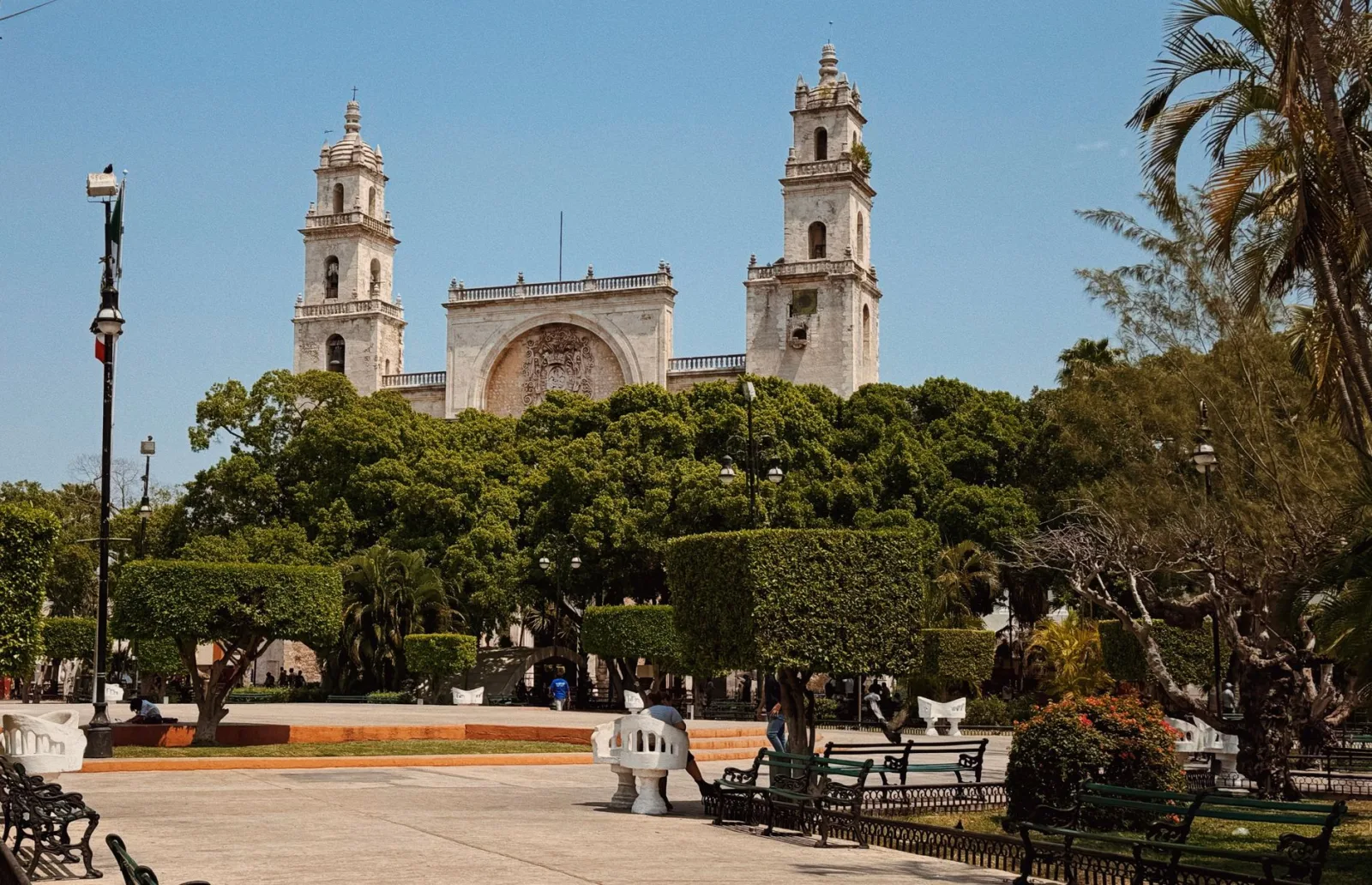
Plaza Grande concentrates much of what makes sense to see first in the historic center. There are the Catedral de Mérida, the Casa de Montejo, the Palacio de Gobierno and the Palacio Municipal, along with the constant movement of those who cross the square or pause for a moment to look at the surrounding buildings.
The Catedral de Mérida faces the square and can be visited inside. On some Friday, Saturday, and Sunday nights, the area in front is closed to vehicles, which makes the whole complex easier to explore on foot. The Palacio de Gobierno is also open to the public: it is worth going up the two floors and looking at the murals by Fernando Castro Pacheco, as well as the rooms with views of the city. The Casa de Montejo functions as a free museum and occupies a restored old mansion, with a one-way visit inside. It is a short route, but enough to understand the scale of the square and the historical weight of that axis.
From there, the walk continues nicely along Calle 64 and Paseo de Montejo. Calle 64 features colorful colonial facades and makes for a pleasant stretch to stroll without rushing. Paseo de Montejo brings together historic houses and two places of interest for those who want to go inside museums: the Palacio Canton and the Casa Museo Montes Molina. Farther on, the Quinta Montes Molina stands out for its garden and the guided visit to the mansion.
On the same route, you’ll also find the Palacio de la Música, Parque Hidalgo, Rectoría El Jesús Tercera Orden, and Parque de La Madre. It is also worth looking for the city arches, such as the Arco de San Juan and the Arco de Dragones, as well as a bit of the historic residential architecture that appears in the surrounding streets. To do everything on foot, the best approach is to choose a smaller area and combine the places that are closest to one another, rather than trying to cover the entire center at once.
Mérida and Maya culture in everyday life
The markets and craft stores in Mérida help show how the city blends everyday use and local production. The Mercado dos Lavradores is useful for seeing fruits, vegetables, and fish in circulation; prices can be high at some stalls, so it makes sense to compare before buying. Among the shops, Coqui Coqui stands out for the space set up in a converted colonial house and for its selection of fragrances, home items, and gifts. For souvenirs more closely tied to craftsmanship, it is worth checking names such as Artesanías Mitnal, TEJON ROJO, and Happening Mérida.
The Sunday program is an important part of this cultural routine. Merida en Domingo takes over the main square and brings together craft and food stalls around it, with a local fair atmosphere and lots of people passing through. If you want to buy something without rushing, this is the time when the city is most favorable for comparing pieces, seeing techniques, and noticing what is made for everyday use and what was designed as a souvenir.
At night, the city also stages its memory. The Cathedral show takes place on Fridays, with light projections on the façade and narration about the building’s history; it is usually free and, if you want to sit, arrive early. On Sundays, Mexican Night at Remate Montejo brings together folk dances from various regions of the country and a reenactment of a mestizo wedding. Pok Ta Pok is presented on Saturdays at 8 p.m. in front of the Cathedral, with free admission and bleacher seating for the public; those who want a better spot usually arrive around 7 p.m.
These performances work as a good barometer of the city: they do not require complex planning and, in general, call for more attention to timing than anything else. Since events and schedules change, it is worth checking the local agenda before heading out.
Where to eat and drink in Mérida
Taqueria La Lupita and Taqueria Los Chupas make the list because they do street food well in a way that makes sense in Mérida: simple, direct, and no fuss. The first stands out as the strongest stop among the taquerias mentioned, and the second rounds things out for anyone who wants to compare styles without leaving this more local register.

Mercado dos Lavradores is worthwhile for the everyday rhythm, not for appearances. That is where you see fruit, vegetables, and fish circulating in a routine way. Prices can be high at some stalls, so it pays to look around carefully before buying and, if it makes sense, compare with other shops.
The cantinas La Negrita, El Cardenal and El Dzalbay help you understand the city’s nightlife without requiring a fixed plan. The choice here depends more on the kind of atmosphere you want at each one than on any mandatory route between them. Since opening hours and operations change, confirm the day and time before you go out.
If you want to combine food and drink in the same itinerary, the best criterion is simple: market for observing everyday use, taquerias for a quick meal, and cantinas to stretch the night without rushing.
Day Trips from Mérida
Chichén Itzá is usually the most sought-after outing, and it makes sense to combine it with an early start to avoid the hottest part of the day. Izamal fits well into the same circuit when the idea is to include a smaller town in the itinerary and return to Mérida the same day. Valladolid works differently: it can be used as a stopover base before or after other visits in the region, especially if you are putting together a broader route through the peninsula.
Cenotes require less explanation and more careful selection. What changes from one to another is access, infrastructure, and how well the visit fits your pace. If you want to avoid long transfers, it is worth looking for ones that fit along the way to other outings; if you prefer a dedicated excursion, choose a cenote with more time on site and confirm in advance whether a reservation or guide is required.
Uxmal and Kabah make sense on the same day for those who want to see Mayan sites outside the most obvious circuit. Uxmal calls for more time; Kabah works as a complement if the route is well organized. Celestún is the outing that most changes the type of trip, because it takes you to a coastal environment and natural areas, so it is best to keep this day separate from the archaeological itineraries.
Guided experiences help when you want to reduce logistics and fit in more than one point without having to drive everything yourself. Among the options that appear most frequently are itineraries to Chichén Itzá and other sites in the region, as well as combinations with cenotes and smaller towns. Before booking, confirm what is included, where the departure point is, and how much time the excursion actually allows at each stop.
Frequently asked questions
What is the best time to visit Mérida?
March usually works well because the heat has already started to set in, but the evenings are still cooler. In general, it is worth choosing a period when late afternoon and nighttime are more comfortable for walking.
Where should you stay in Mérida to do everything on foot?
For that, the most practical option mentioned is Hotel La Catedral Mérida, since it is very central. It makes it easier to get around the historic center without relying so much on transportation.
What is the first thing worth seeing in Mérida’s historic center?
Plaza Grande is the best starting point. From there you can reach the Catedral de Mérida, Casa de Montejo, Palacio de Gobierno, and Palacio Municipal in the same route.
Which day trips from Mérida make the most sense?
Chichén Itzá, Izamal, Valladolid, Uxmal, Kabah, and Celestún appear to be the most useful outings. The choice depends on the type of itinerary: archaeology, a smaller town, cenotes, or nature.
Does Mérida have simple food and nightlife options?
Yes. Taqueria La Lupita, Taqueria Los Chupas, and cantinas like La Negrita, El Cardenal, and El Dzalbay fit well into a more straightforward itinerary, without a fixed plan.