Québec: how to organize a trip to Canada’s historic city
Plan your trip to Québec with tips on where to stay, what to see on foot, and how much time to set aside in the historic center.
Why Québec is worth the trip
Québec differs from other Canadian cities because it still functions as a real old city, not as a recreated setting for visitors. The walls that surround Vieux-Québec are still standing, and that changes the experience: you enter a compact area, with an urban layout born of defense and European settlement, not modern expansion.
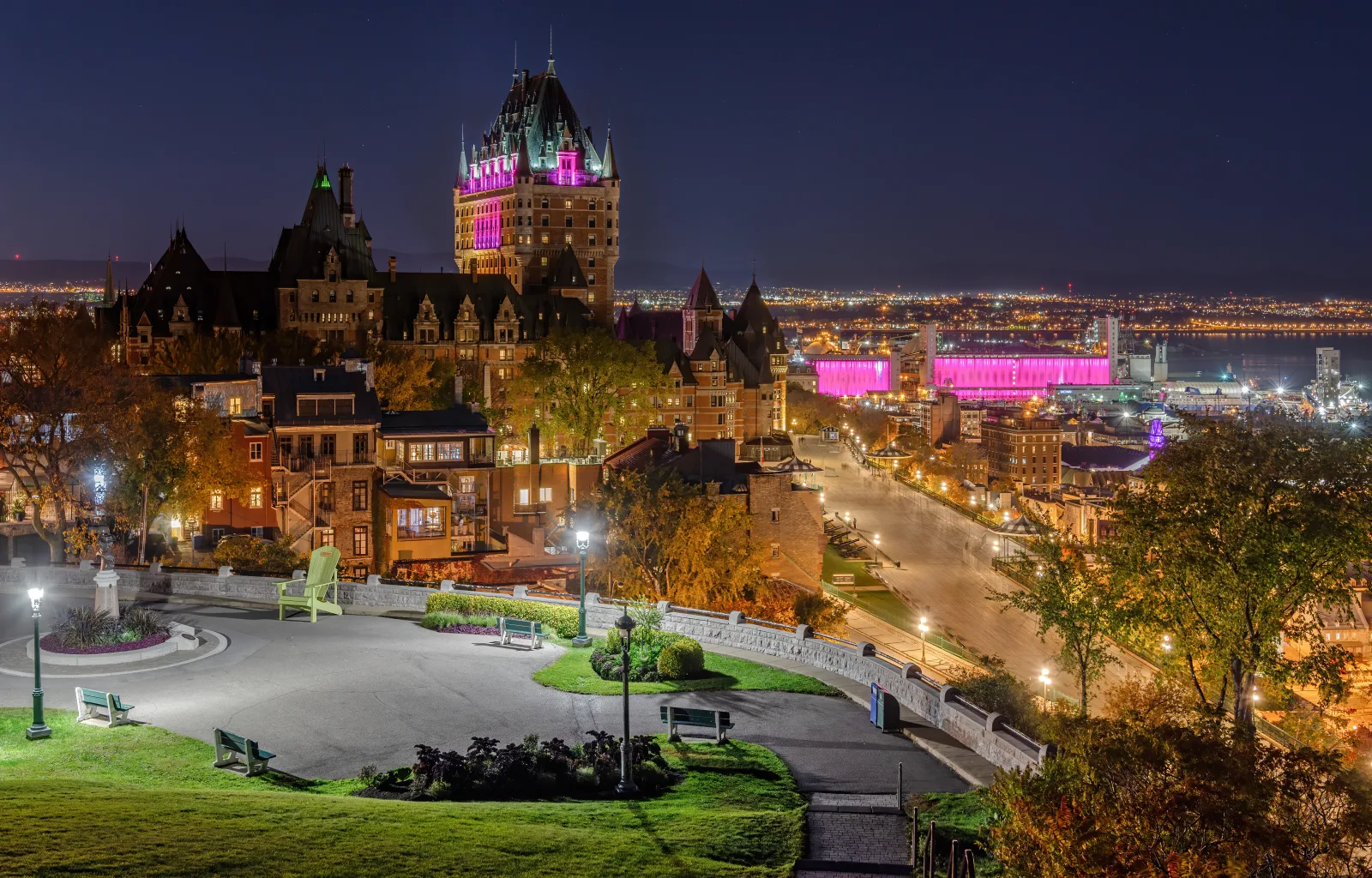
The city is more than 410 years old, which weighs heavily in the decision for those who want to visit for the first time. The historic center bears the mark of the French presence since 1608 and of the rivalry between empires that shaped the region for centuries. Instead of a generic reading of Canadian history, you find a city where that past remains visible in the street layout, the fortifications, and the atmosphere of the old neighborhood.
Vieux-Québec is a UNESCO World Heritage Site, and that makes a practical difference: the historic ensemble is preserved much more consistently than in destinations where the past appears only in a few monuments. For visitors, this means walking through an urban core in which the scale, architecture, and cobblestone streets help quickly explain why Québec stands out even for those who already know other North American cities.
The Franco-Canadian heritage is also a central part of the visit. French is very present on the streets, on signs, and in the rhythm of the place, and that gives the city its own identity within Canada. First-time visitors quickly realize that Québec calls for time to walk, observe, and accept that the city reveals itself better on foot than through hurried trips.
Best time and how long to stay
For a first trip, set aside at least two full days. Less than that usually feels too tight, because the historic center calls for long walks and time to go up and down between different parts of the city. With three days, the itinerary becomes more relaxed and you can include transfers without rushing between the main sights.
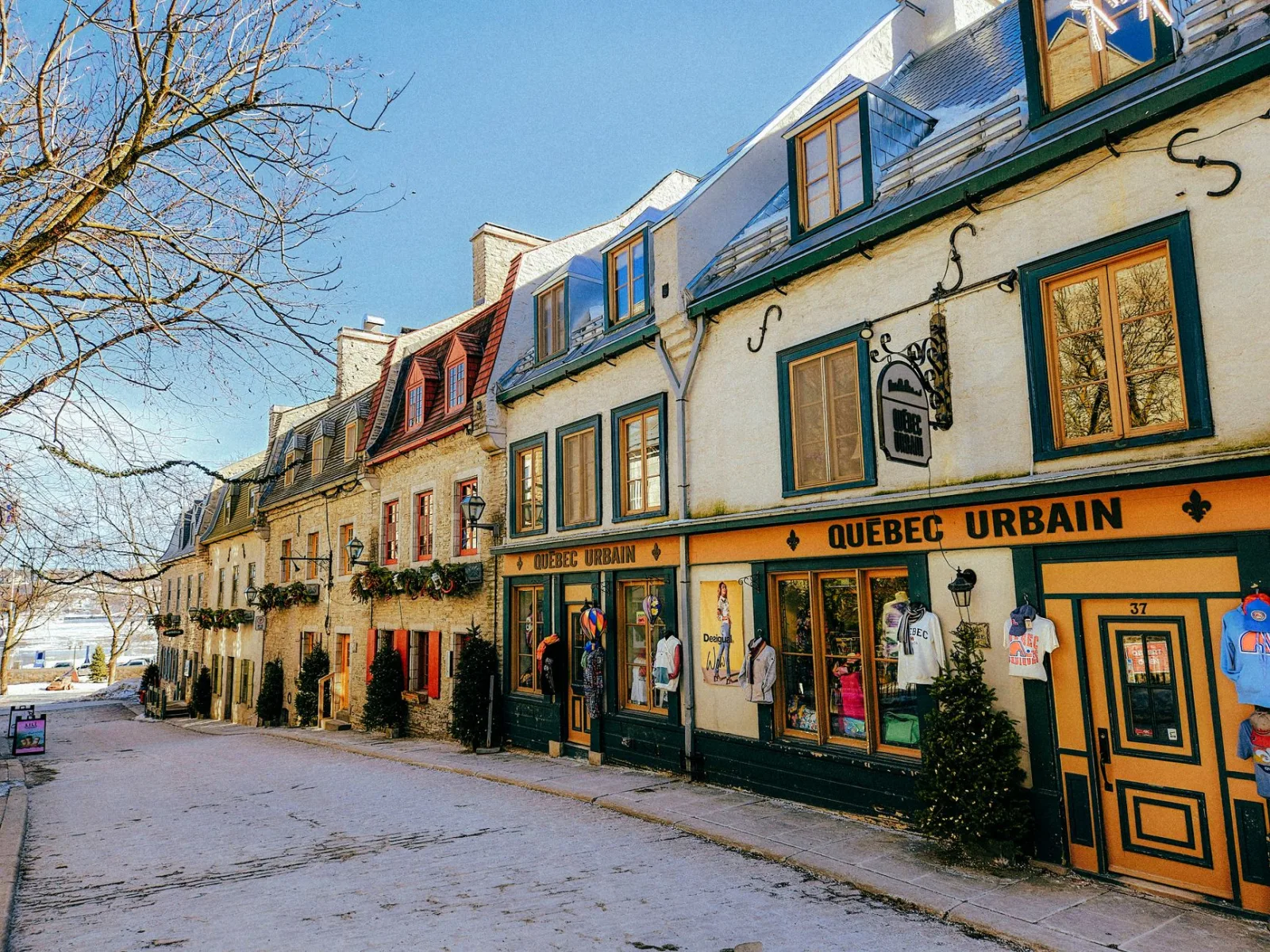
The city works year-round, but the pace changes a lot depending on the season. During peak periods, the historic center gets busier and the cobblestone streets require more patience to get around, go into shops, stop for photos, and cross busy stretches. On cold days or when it snows, walking remains part of the experience, but the route gets slower and more tiring; in milder months, the visit works out better, but it also attracts more people.
If the goal is to take a short trip, the best rule is simple: the more you want to explore on foot, the more time you should set aside. Québec does not work well as a quick stopover city. What looks close on the map usually takes longer because of the hills, stairs, and natural detours of the historic center, so it is worth planning with some margin between one outing and the next.
For those who like a light itinerary, two days cover the essentials. If you want to walk unhurriedly, stop for meals, and still leave room for an excursion outside the historic core, three days makes more sense. Five days already allow you to revisit areas that deserve more time, but when deciding on the trip, the gap between two and three days is usually the most practical point.
Editorial transparency: Some links on this page are affiliate links. We may earn a commission at no extra cost to you. This does not influence our recommendations.
Where to stay in Québec
Staying within Old Québec makes the trip much easier because it reduces the daily back-and-forth and makes the city simpler to explore at the pace of someone who wants to walk without rushing. If the idea is to head out early, come back to rest in the middle of the day, or photograph the area when it is less crowded, location matters more than the size of the room. Outside the historic core, lodging can make sense if you are willing to use a bus or taxi to get in and out, but then the experience depends more on transportation.
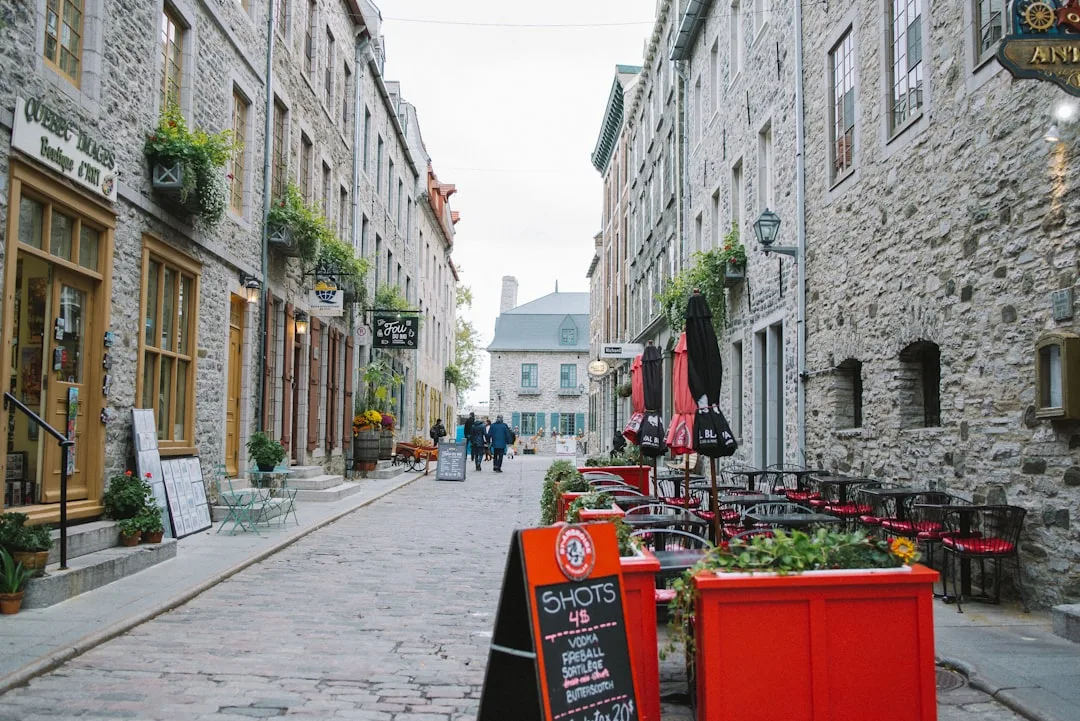
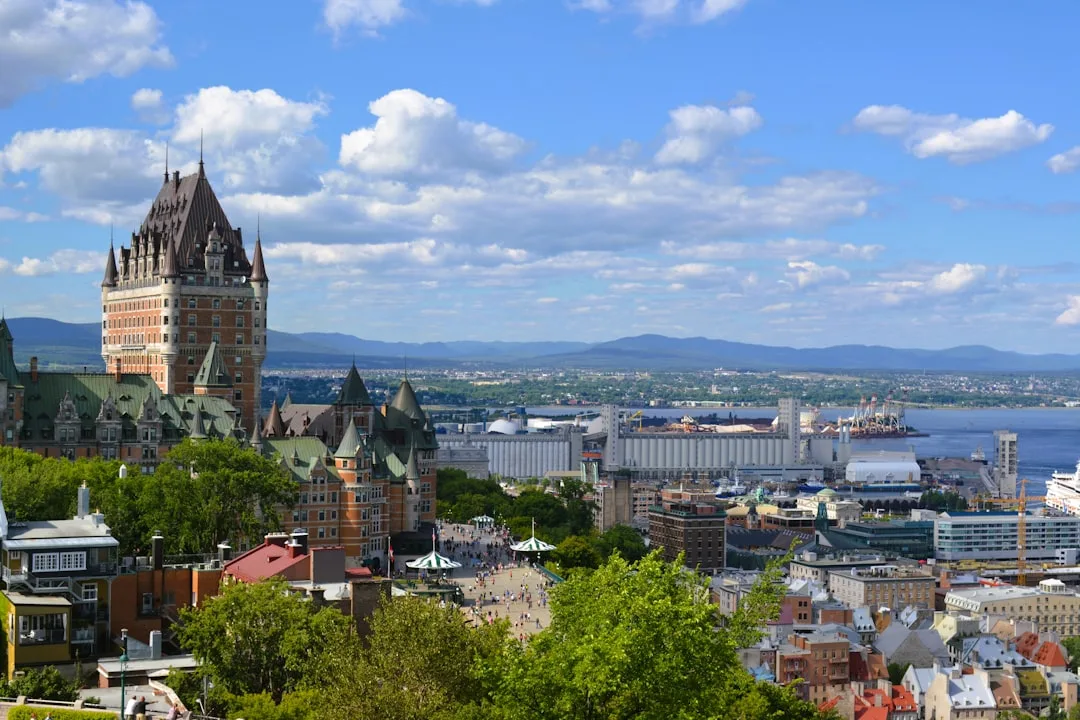
Among the best-known addresses, Château Frontenac is the name everyone looks at first. It is the city’s most emblematic hotel and also one of the most expensive, so it makes sense for those who want to stay at the most visible spot in the historic center and are willing to pay for the location and the building itself. It is not a budget-conscious choice by chance: you are paying for the address, the view, and the chance to sleep in a city landmark, not for economic convenience.
Le Monastère des Augustines follows a different logic. It is in the heart of Old Québec and occupies a former monastery tied to the history of care and healing, with rooms restored in a monastic spirit as well as contemporary accommodations. It is a good option for those who prefer a quieter stay, focused on well-being, without leaving the historic center. The place has 33 authentic rooms and 32 contemporary ones; if that difference matters to you, it is worth checking which category is available for your travel dates.
If the priority is to walk a lot and reduce travel time, it is worth looking for something near the walls even if it is not inside them. If the trip calls for more space or better value, staying outside the historic core can work, as long as you are willing to return to the center by transport and do not expect short trips from one point to another.
How to get around the historic center
Québec’s central area works best on foot. The streets change level, there are narrow stretches, and the appeal lies precisely in the sequence of short walks between one part of the historic center and another. If you are staying in the old core, getting around each day is usually simpler than the map makes it seem, but it calls for a strolling pace, not a transit pace.
Between the upper and lower town, the funicular saves your legs and time. It connects Terrasse Dufferin to the Petit Champlain area, and is especially helpful when you want to avoid going up or down the stairs. There are plenty of stairs, and they end up part of almost everyone’s route at some point; for that reason, it is worth thinking about the order of your stops before heading out, rather than trying to solve everything in a straight line.
If your accommodation is outside the historic core, buses or taxis make more sense, especially at the beginning and end of the day, when you want to arrive without facing the climbs with luggage or return tired after many hours of walking. Inside the old center, however, the real advantage comes from reducing transport changes and accepting that much of the experience happens in the journey from one street to another.
For those who enjoy walking, the best approach is to divide the visit into short blocks, with breaks. Québec is more tiring because of its slopes than because of distance, so the most common mistake is underestimating stairs and hills and overestimating what fits into a few hours.
What to see in Old Québec on a first visit
Start with Rue Saint-Louis and Rue Saint-Jean, two streets that help you understand the logic of the historic center effortlessly: shops, old facades, and a well-defined flow of pedestrians. Rue du Trésor works as a short and useful detour, because it brings together artists and offers a more direct reading of the city’s old layout. If you like walking attentively, these three streets work as the initial axis of the visit.
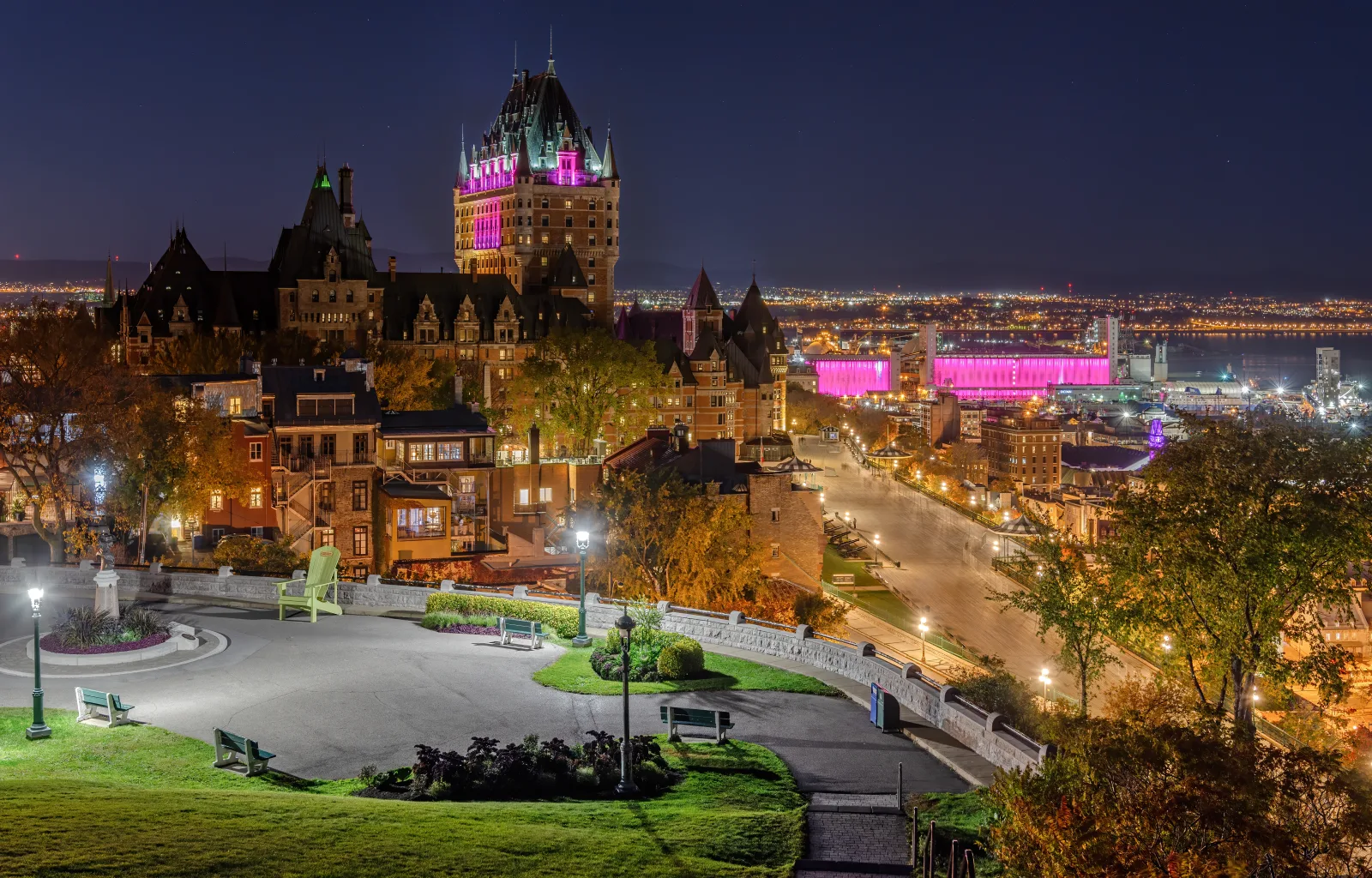
From there, follow the sequence through the fortifications, the gates, and the area around Château Frontenac and Terrasse Dufferin. The castle-hotel occupies the most recognizable point in the local skyline, and the esplanade next to it serves as a natural lookout over the river and the lower city. Nearby, the Saint-Louis Forts and Châteaux National Historic Site shows older layers of occupation, with archaeological remains beneath the terrace. Still in this area, the Citadelle is worth it for the military scale of the complex and for the reading it gives of the city’s defense; in summer, the changing of the guard takes place at 10 a.m., but check the official website if you want to watch, because this may change.
When going down to the lower city, Quartier Petit Champlain deserves time of its own, along with Place Royale and Notre-Dame-des-Victoires, which help visualize the French origins of the neighborhood. The murals spread across the area provide a contemporary counterpoint without taking focus away from the historic core, and the Old Port works well as an extension of the walk. If you still have energy left, the Musée de la civilisation and the Notre-Dame Basilica-Cathedral fit into the same itinerary without forcing a long trip. The Morrin Centre and the Observatoire de la Capitale round out a first visit well: one for those who want a more discreet historical layer, the other for a panoramic reading of the city and to decide what deserves a slower return later.
Out-of-town excursions that fit into a short itinerary
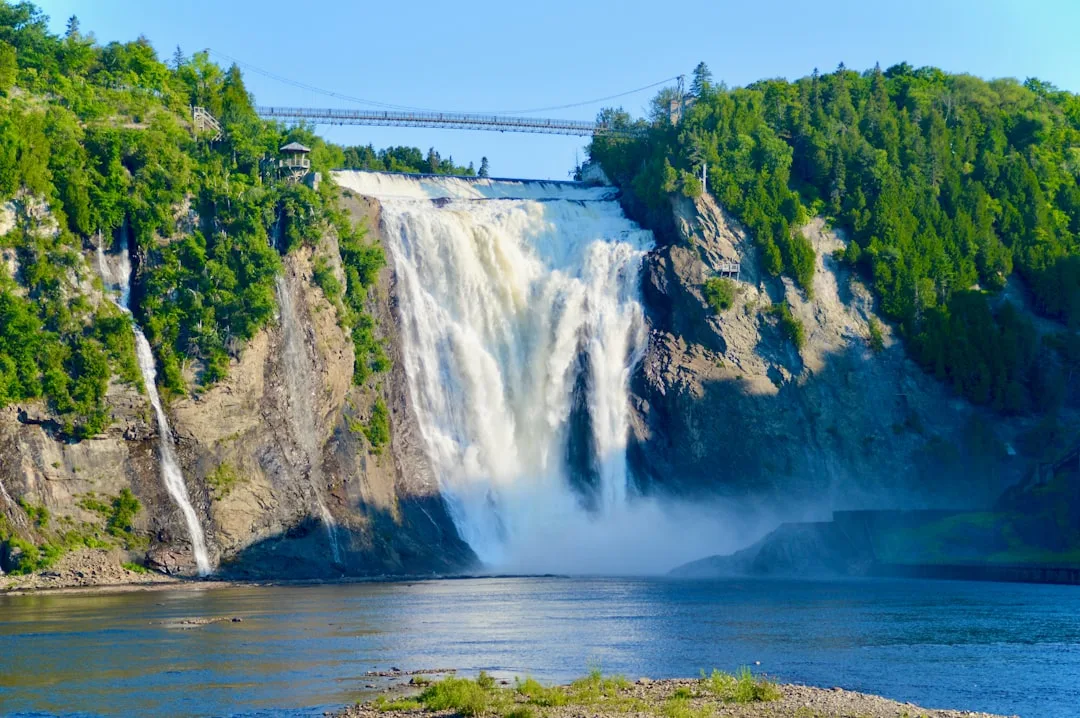
Montmorency Falls fits well into a short itinerary because it offers a lot in a single stop: viewpoints, walkways, a cable car, and staircases. If you like walking, the circuit is rewarding without requiring complicated planning; if you prefer to save your legs, the cable car handles the most tiring part. The central point here is choosing how much of the whole you want to explore at a leisurely pace, since the visit can range from a quick look at the highlights to a longer stroll through the observation structures.
Île d’Orléans works differently. Its appeal lies less in a single attraction and more in the sequence of small stops: local products, roadside markets, river scenery, and places to eat or sample regional items. It’s the kind of outing that calls for a car and time to stop unhurriedly, because the interest is in crossing the island with frequent pauses, not in checking off one point and heading back.
If your Québec itinerary only allows one of these outings, choose Montmorency Falls when you want a more direct, easy-to-follow excursion. Choose Île d’Orléans if the idea is to eat at a relaxed pace and fit in food shopping or local tastings along the way. Both work better as a half-day than as a heavy commitment, but the experience is quite different: one is focused on viewpoints and vertical movement; the other depends on roads, stops, and appetite.
To decide, think about the pace of the day. Those who want to return early to keep exploring the historic center usually adapt better to the waterfalls. Those who are willing to spend more time between stops tend to enjoy the island more. In both cases, it’s worth checking current access and operating conditions before you go, because this kind of outing often changes depending on the season and the day’s conditions.
Where to eat and what to try in Québec
Québec cuisine has its own personality. In the historic center, what appears frequently is a mix of traditional dishes and local interpretations with game meats, bolder flavors, and recipes that go beyond the more predictable repertoire. If you want to try something typical of the city, look for escargot, duck, rabbit, bison, deer, and tourtière, the seasoned meat pie that appears frequently on more classic tables.
For breakfast, there are simple and convenient options for those who want to start early: Le Petit Château is next to the Château Frontenac and serves crepes and sandwiches; L’Antiquaire Buffet works like a French-style diner, with an outdoor area when the weather is nice; Smith Café has several locations around the city and is a practical choice for coffee and a light breakfast. For lunch, it is worth checking out Place Dufferin, inside the Château Frontenac, if the idea is to have afternoon tea with a view of the river; L’Escale Bistro et Crêperie, in Petit Champlain, for crepes; Baguette & Chocolat, if you want something quick; and Chez Bourlay Counter, which offers sandwiches, salads, and sweets with local flavors and works well for takeaway.
At dinner, the map becomes more interesting for those who want to eat at a relaxed pace. Le Repaire has light dishes and a terrace; Aux Anciens Canadiens serves game and traditional food, including tourtière; Le Lapin Saute is in Petit Champlain and is one of the most straightforward choices for rabbit dishes; Le Sam Bistro Évolutif serves with a dining room view; Maison Livernois Distillerie & Pub combines pub dishes with a French touch and house gin; and Chez Rioux & Pettigrew is a more formal option, with seafood and seasonal dishes.
If the break is for dessert, the route is short: Dolce Gelato Resto Café for gelato, Chocolato Saint-Jean for chocolate and ice cream, and COWS Quebec for ice cream. Those who want to try more than one thing in the same day benefit from splitting their stops between a main meal and a dessert at the end of the walk.
Language, etiquette and practical precautions before going out for a walk
French is everywhere in Québec: on the street, on signs, in storefronts and in everyday conversation. In more touristy areas, many people also understand English, but it is not worth relying on that as the norm. If you want to get around with less friction, start with the basics: bonjour, merci and excusez-moi. Greeting people counts a lot, especially when entering a store, asking for information or brushing past someone on the sidewalk.
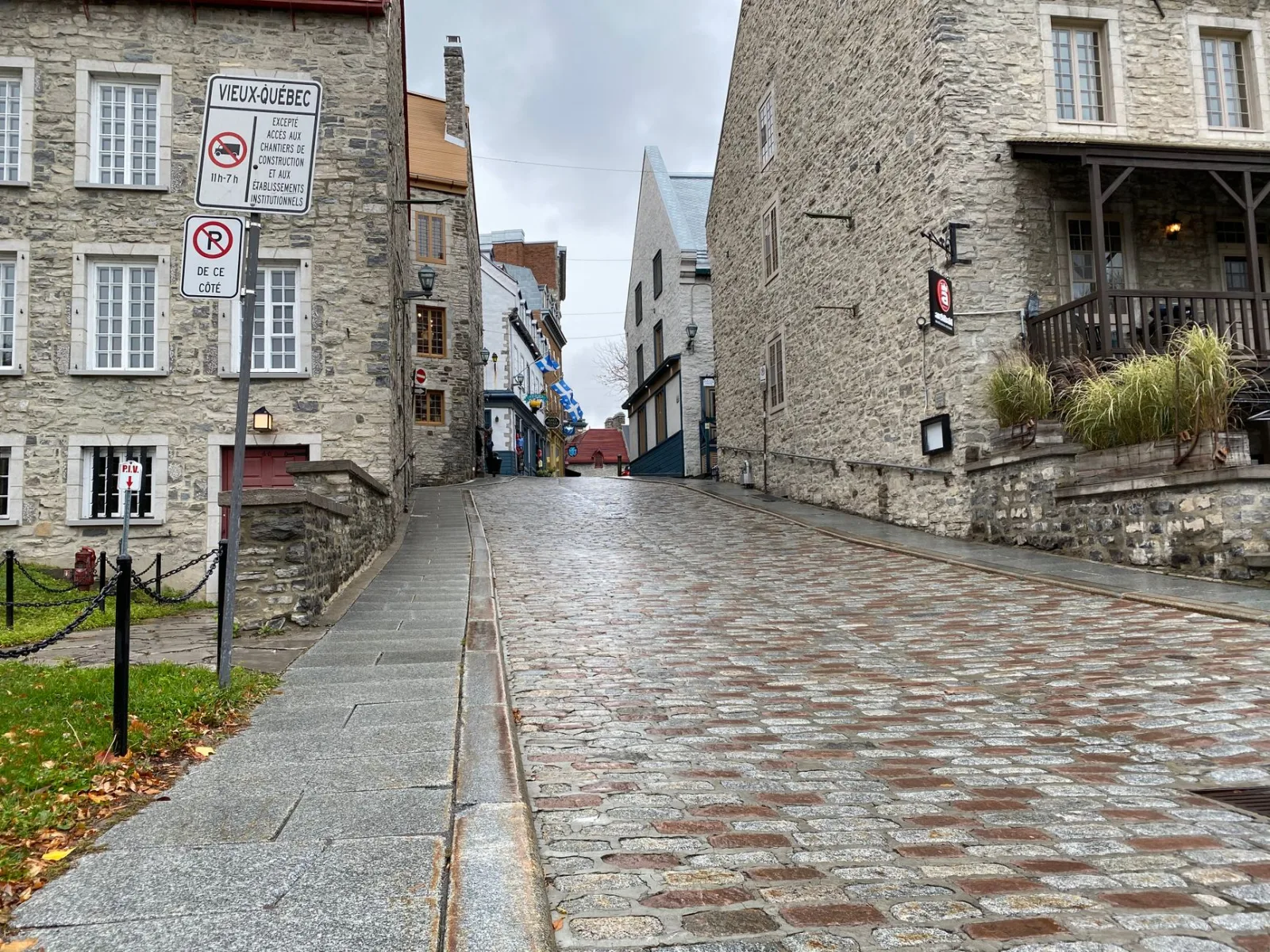
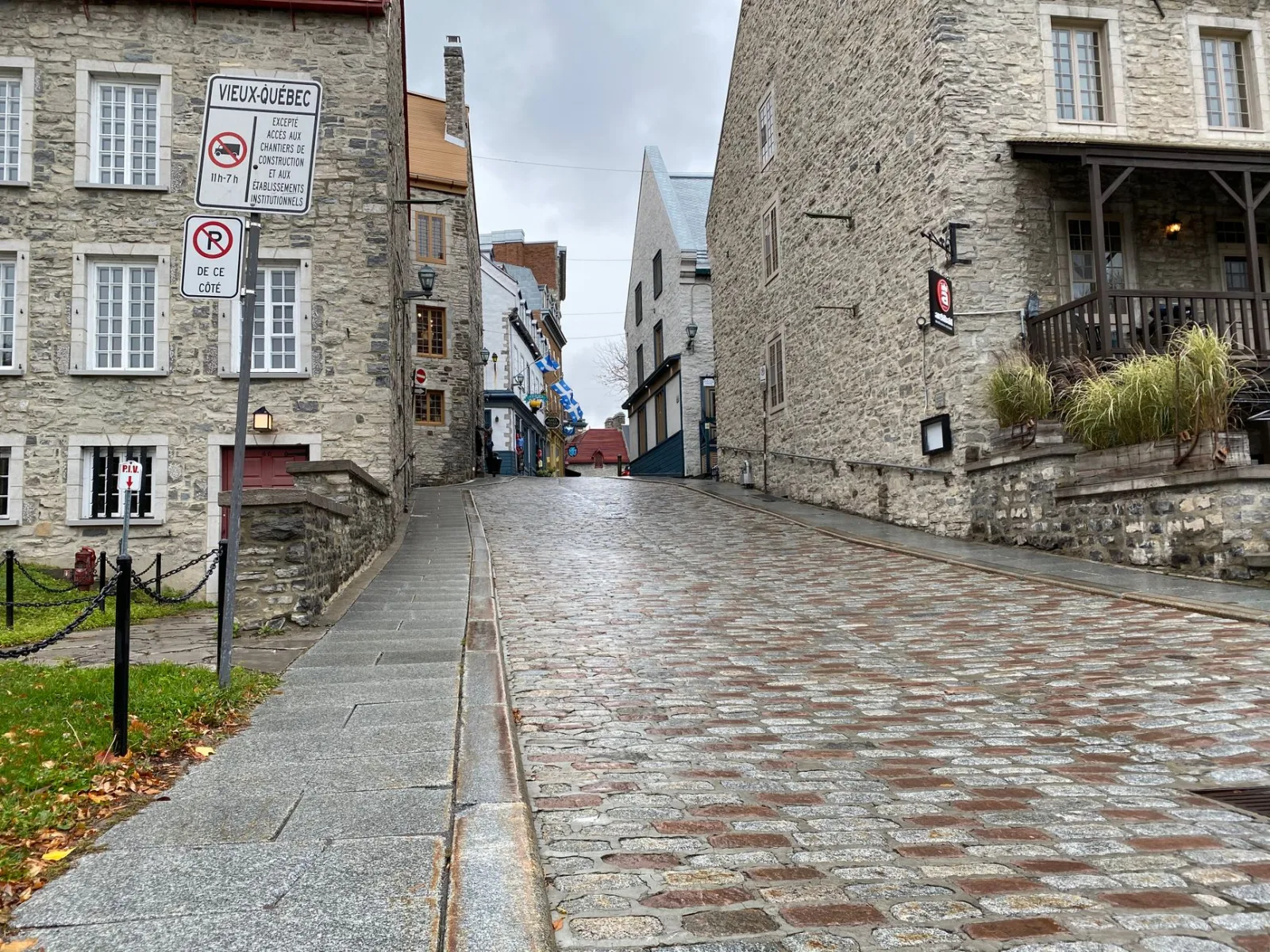
The city calls for more walking preparation than many people imagine. The historic center has sections of cobblestone, hills, slopes and stairs that enter the itinerary without warning. Comfortable shoes make a real difference, and the same goes for clothing suited to the season. If the plan is to spend the whole day between streets and viewpoints, bring water, take short breaks and spread out the visits.
It also helps to accept that Québec works best at a street-level pace. Part of the experience is crossing short blocks, changing levels and going in and out of shops, cafés and squares without rushing. If you tend to put together a very strict itinerary, leave room to adjust your pace to the terrain and foot traffic.
Before heading out, check the day’s conditions if rain, snow or severe cold is forecast. In those situations, the route is still manageable, but the strain increases quickly. In Québec, what seems like a short trip can take more energy than you expect.
Frequently asked questions
How many days are enough to get to know Québec?
For a first trip, two full days cover the essentials. With three days, you can walk around more leisurely and include an outing outside the historic center.
What is the best area to stay in Québec?
Staying in Old Québec makes the trip much easier because it reduces travel time and makes the city easier to explore on foot. Staying outside the historic core also works, but it requires more transportation.
Is it easy to visit Québec on foot?
Yes, the central area works best on foot. Just keep in mind that there are hills, slopes, and many stairs, so comfortable shoes make a difference.
What is worth seeing on a first visit to Québec?
On a first visit, prioritize Rue Saint-Louis, Rue Saint-Jean, Terrasse Dufferin, Château Frontenac, Petit Champlain, Place Royale, and the fortifications. These spots give a good sense of the historic center and its connection to the lower city.
Is it worth taking trips outside Québec on a short itinerary?
Yes, if you have half a day available. Montmorency Falls is the most direct option, and Île d’Orléans works best for those who want to eat at a relaxed pace and make stops along the way.