Puebla: practical guide to what to see, eat, and visit in Mexico’s historic city
Puebla guide with what to see, where to eat, and how to get around the historic center, as well as practical tips on accommodation and museums.
How to get to Puebla and get around the city
Getting to Puebla by road is simple, and the bus is usually the most practical option for those who don’t want to deal with a car in the city. The main bus terminal is CAPU, which is located outside the historic core. This matters because, when you get off there, you almost always still need to complete the trip to the center by taxi or ride-hailing app.
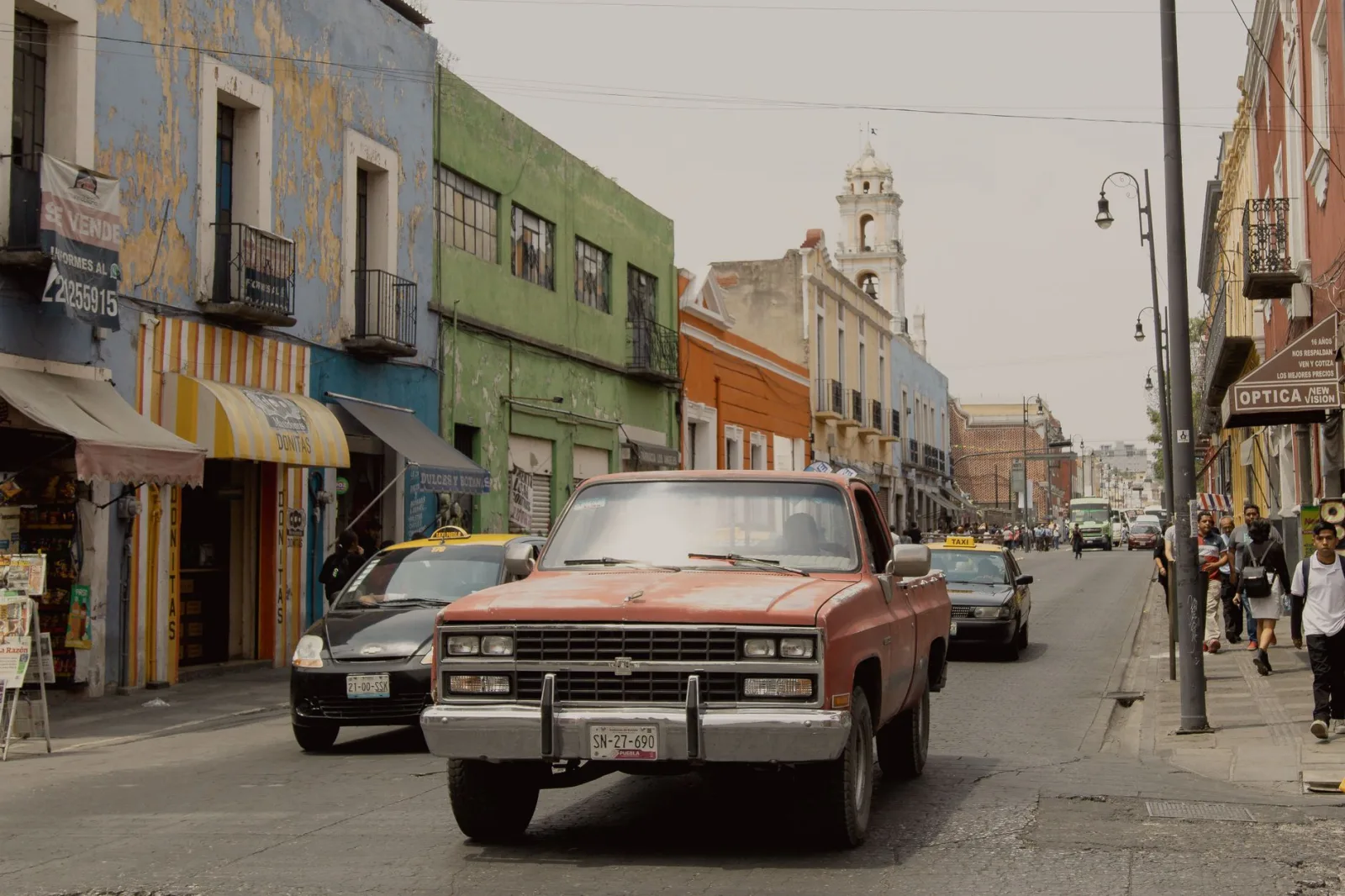
If you’re staying in the historic center, factor in this arrival and departure transfer. The time between the terminal and the central area varies depending on traffic, so it’s worth treating this step as part of the normal logistics, not as a detail. For those traveling with luggage, a child, or limited time, Uber works well in Puebla and usually handles this stretch without any hassle.
Within the historic center, many things are at a comfortable walking distance. This is especially true for those staying near Zócalo Square and the most visited streets in the central area. Walking is the most efficient way to see the urban ensemble, and it also avoids depending on a car for short distances.
If you plan to get around beyond the center, taxis and ride-hailing apps remain useful. For trips between terminals, hotels, and farther-flung neighborhoods, it’s better not to rely on walking alone. The city is easy to navigate when you combine buses to get there, an app or taxi for the leg between bases, and your own two feet for the rest of the itinerary.
Where to stay in Puebla
Stay in the historic center if you want to do most of your trips on foot and have easier access to the buildings, squares, and streets of interest. The central area also reduces your reliance on transportation for dinner or for getting back to the hotel at night. If the idea is to use Puebla as a base to explore the city without wasting time on transfers, this is the most practical choice.
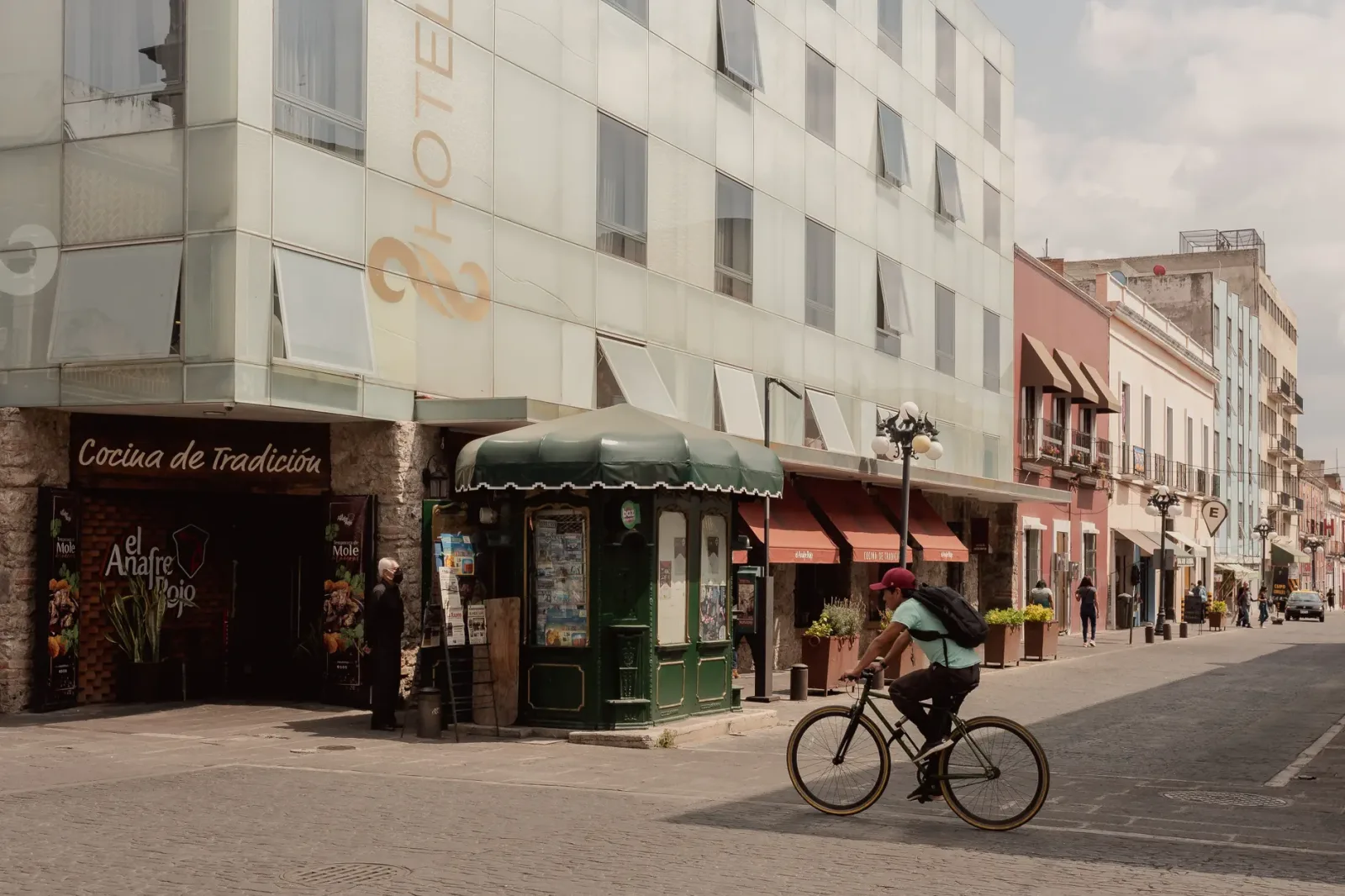
For higher-category accommodation, the Palacio Julio Hotel is a safe bet for its location and the comfort of its rooms. The highlight here is the combination: large windows, breakfast, and comfortable beds. It is the kind of hotel that works well for those who want a more comfortable stay without leaving the central area.
If food is the priority, the Casona María fits well. It is a small, colorful boutique hotel, with a good location and a concept also focused on the gastronomic experience. For those who like to handle their stay and meals in the same place, it makes sense to take a close look at this address.
If you want to spend less without leaving the city’s most convenient area, the Hotel Bacantes is a central and simple option. The rooms are basic, but the location helps a lot, especially for those planning to get around the historic center without relying on a car. The choice is usually more about the location than the room itself, so it is better to go in knowing exactly that.
Editorial transparency: Some links on this page are affiliate links. We may earn a commission at no extra cost to you. This does not influence our recommendations.
The historic center and Zócalo Square
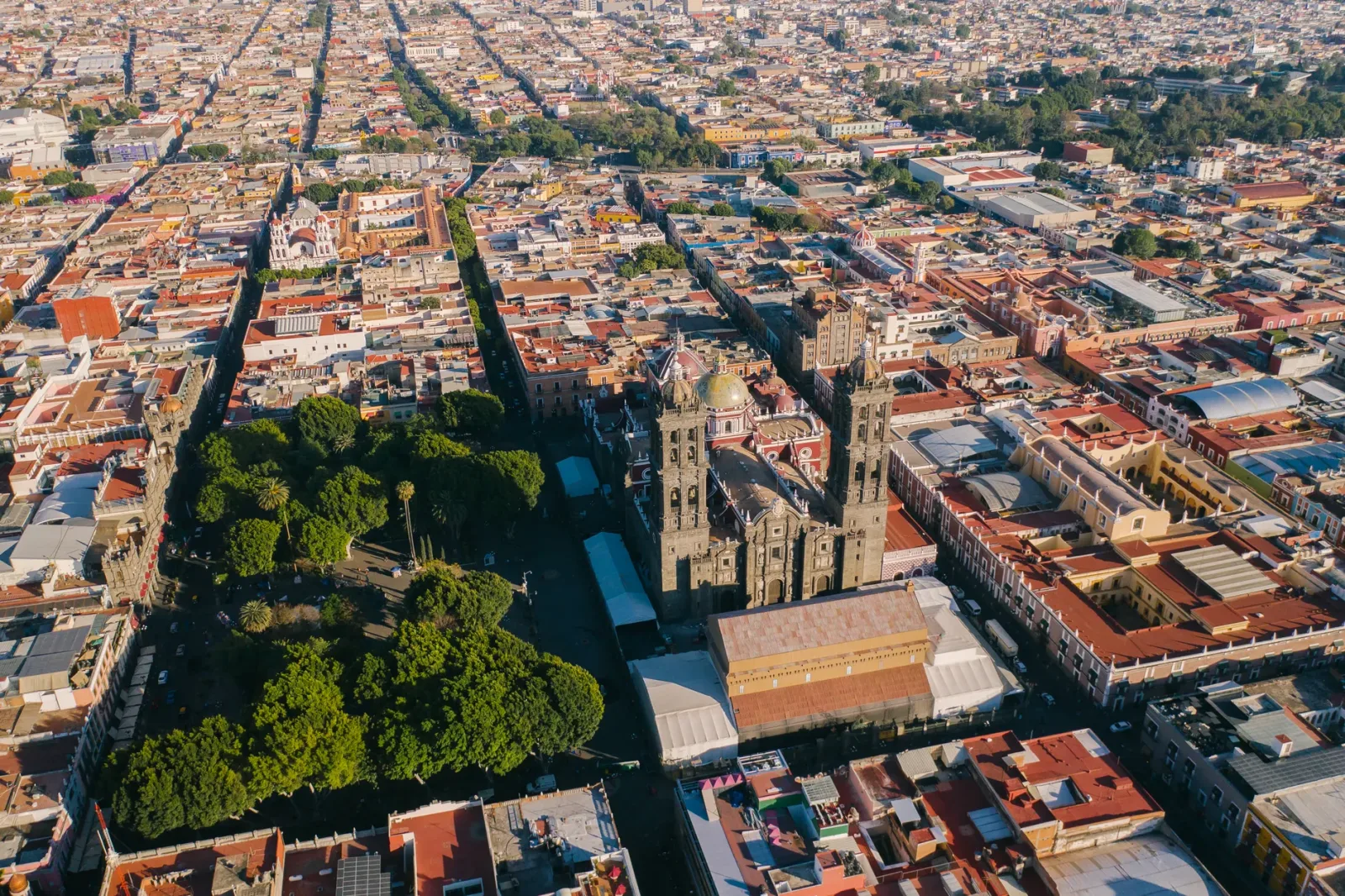
The Zócalo is the easiest starting point for understanding Puebla’s historic center. It is a wide square, used by residents and visitors throughout the day, with constant movement around the edges and enough space to walk around at an unhurried pace. Stay for a while observing the flow of people, because that is where the center finds its rhythm.
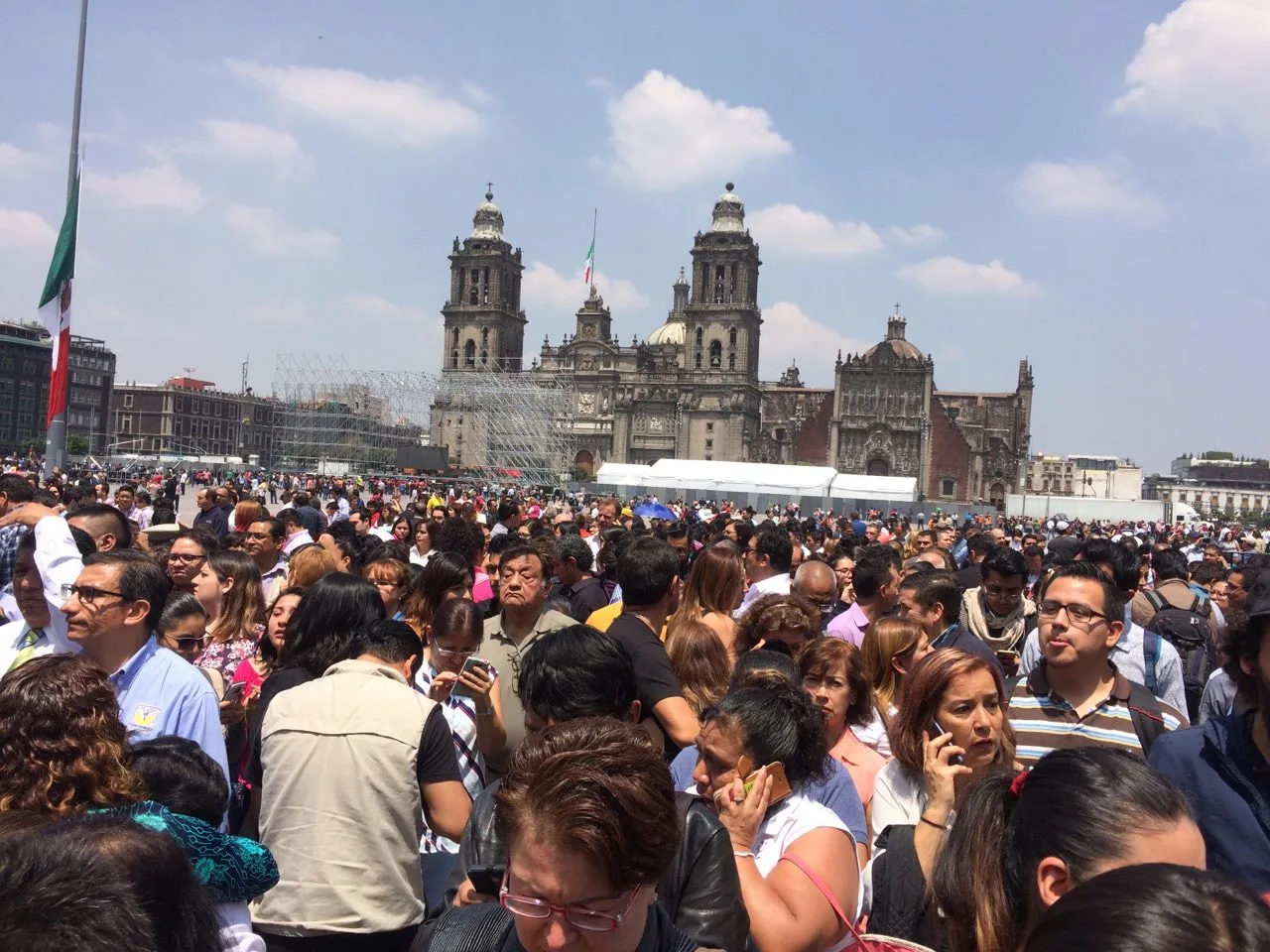
From the square, the surrounding streets invite a short walk without a rigid itinerary. Calle 5 de Mayo concentrates much of the most obvious walking route, with facades, one corner after another, that help orient those arriving for the first time. If you keep going without a fixed goal, the center organizes itself in your mental map.
Calle de los Dulces is worth it for the concentration of shops and the street’s own logic: it is a simple stretch to walk through, with shop windows and counters that are part of the urban landscape. Pasaje del Ayuntamiento also fits well into this stroll, especially if the idea is to walk between the square and the nearby axes without leaving the most walkable area.
This is the part of the city where it makes the most sense to slow down and observe. People sitting on the edges of the square, families, vendors, those crossing to run everyday errands, all of this says more about Puebla than a hurried route. If you are staying in the center, this network of streets is naturally close at hand and makes for the best kind of urban walk: short, useful, and without the need for transportation.
The main monuments and churches of the center
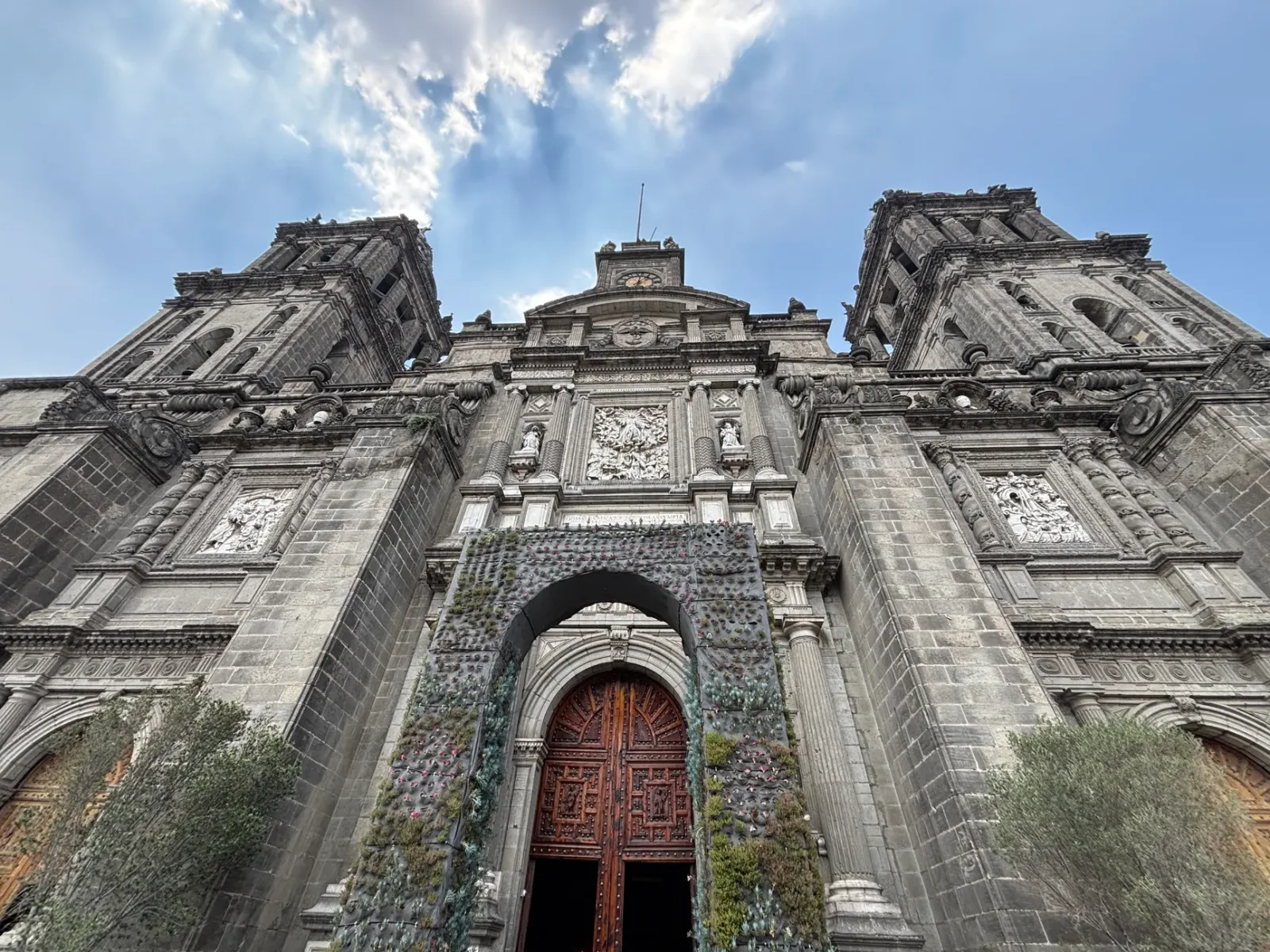
Puebla Cathedral is usually the first building to draw attention in the historic center. It is on 16 de Septiembre, between 3 and 5 Oriente, and it is worth going inside to see the scale of the interior and the tall towers that define the façade. Around it, the urban ensemble already gives a sense of the city’s colonial center, which is part of the UNESCO World Heritage.
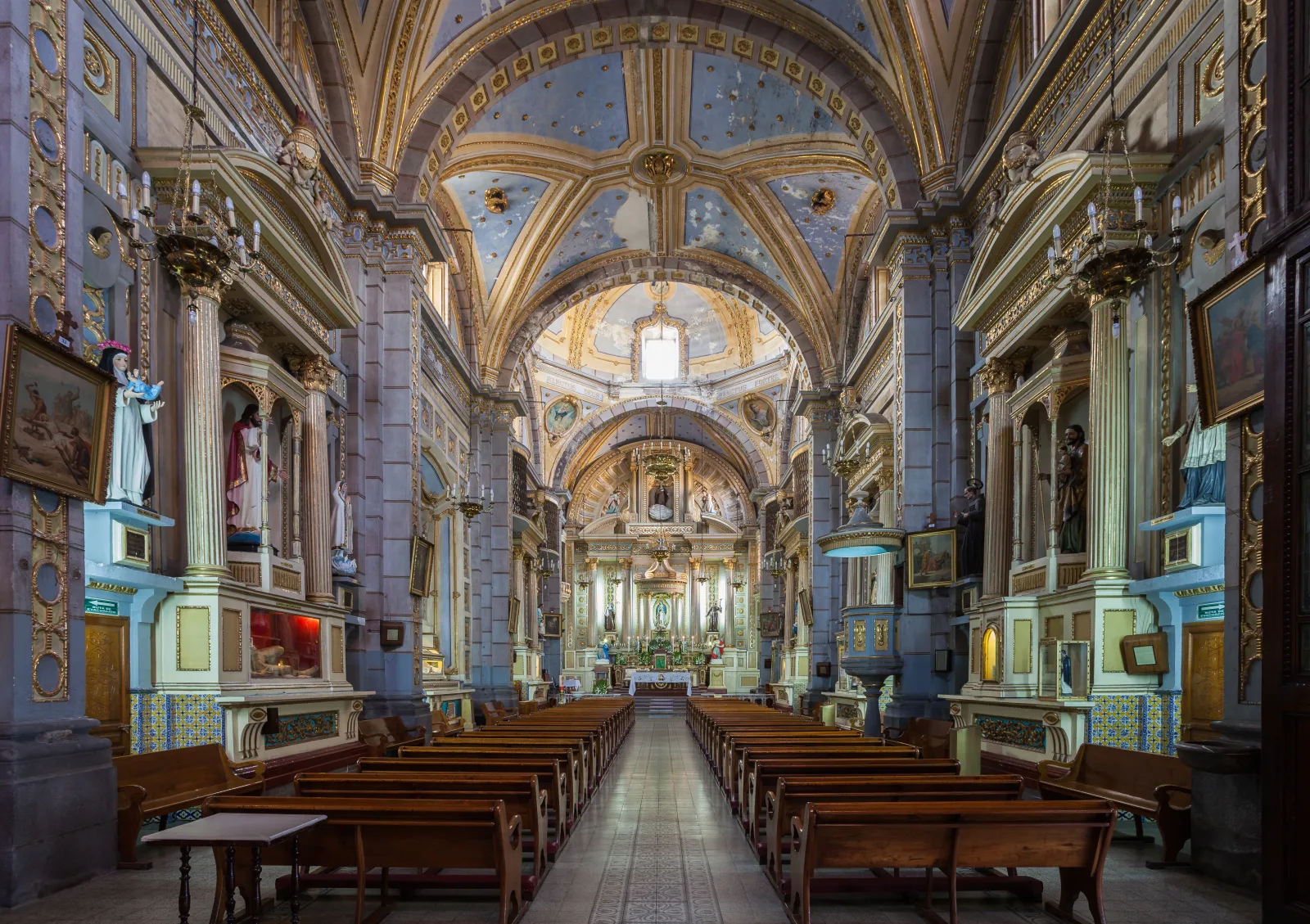
A few blocks away, Santo Domingo and the Chapel of the Rosary show another side of local religious architecture. The church of Santo Domingo, at the intersection of 5 de Mayo and 4 Poniente, has a severe exterior and a much more ornate interior, with gilded stucco and the main altar from 1688. The Chapel of the Rosary, next door, is one of the best-known examples of Mexican Baroque, with extensive use of gold leaf and onyx stone. If you have limited time, this complex deserves priority.
The Convent of Santa Mónica, on Calle 5 de Mayo and 18 Poniente, now operates as a museum and preserves the kitchen, chapel, and religious pieces. The visit helps explain convent life and the local tradition linked to Puebla cuisine. In the same area is the Templo Santa Mónica, where you can see the image of the Lord of Miracles, very present in the Good Friday processions. The Convent of Santa Rosa, at 14 Poniente #301, draws attention for its tilework and for the kitchen associated with the tradition of mole poblano.
Among the civil buildings, the Palacio de Justicia, at 5 Oriente 9, behind the Cathedral, is worth visiting for its interior balcony and the legal library near the entrance. Casa del Dean, at 16 de Septiembre #505, is smaller, but preserves 16th-century murals in two rooms. The Church and Convent of San Francisco, at the intersection of 14 Oriente and Blvd 5 de Mayo, completes this circuit with the surrounding old neighborhood area, where the city still shows the colonial density that led Puebla’s center to be recognized by UNESCO.
The museums that help you understand Puebla
The Palafoxiana Library is located in the Casa de la Cultura, at 5 Oriente #5, and deserves attention for its ancient collection and the Baroque hall from 1773 that houses it. Founded in 1646 by Juan de Palafox y Mendoza, it brings together more than 42,550 books, 5,345 manuscripts, and 9 incunabula, with works in several languages. It is an important stop for anyone who wants to see how knowledge circulated in the colonial city.
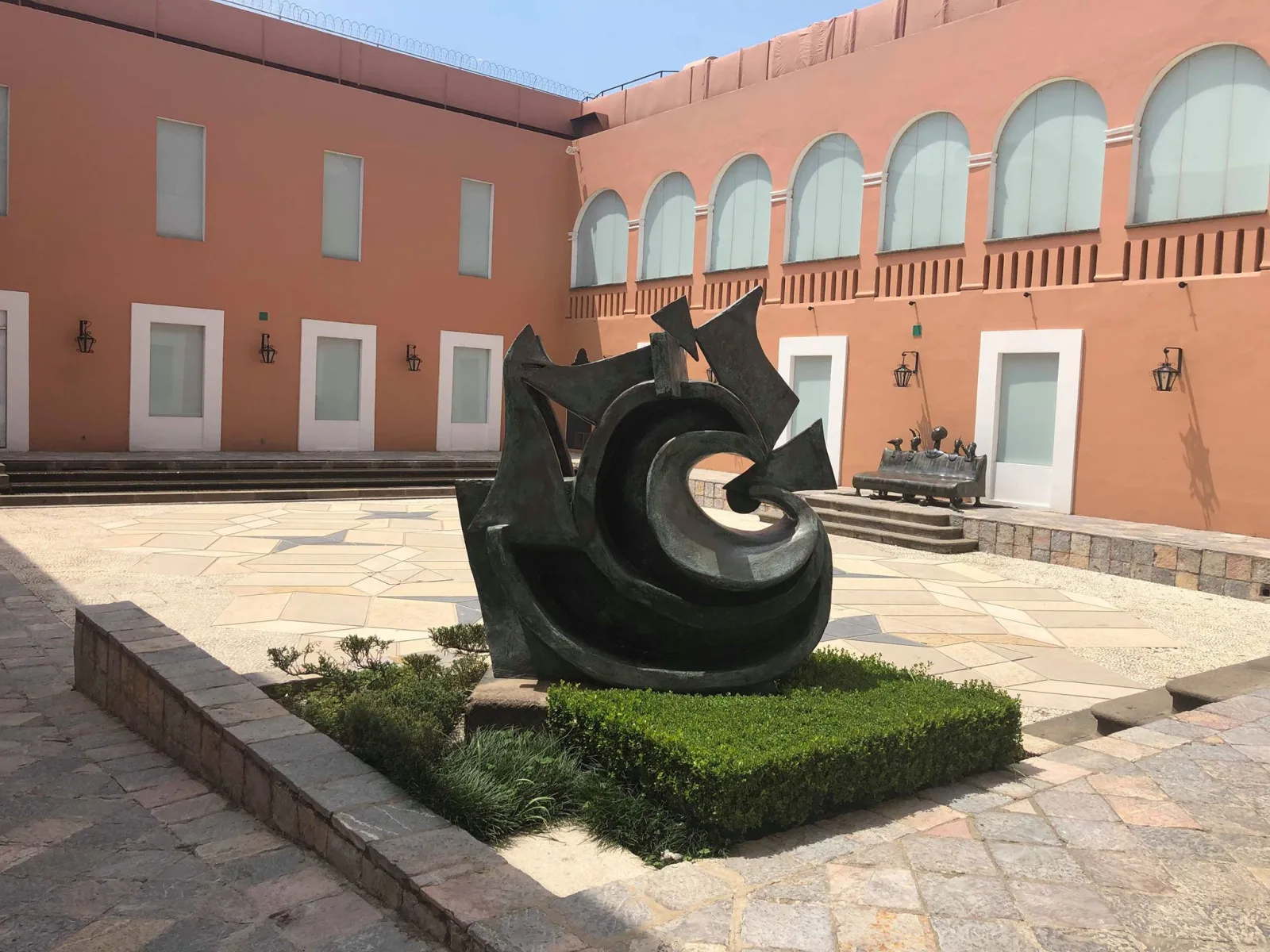
The Museo Amparo brings together pre-Hispanic holdings from various parts of Mexico, as well as temporary exhibitions of contemporary art and architecture displays. The rooftop café also adds to the experience if you want a break between one room and another. The Museo José Luis Bello y Zetina, next to Santo Domingo, preserves decorative arts and 19th-century painting, with preserved settings such as the dining room set for a party. Casa de los Muñecos, at 2 Norte 4, stands out for its highly elaborate façade and its focus on religious art, contemporary pieces, and works by Rufino Tamayo, in addition to showcasing strong traces of the local Baroque style.
To understand the city’s historical and regional scope, the Museo Casa de Alfeñique, at Av. 4 Ote. No. 416, presents regional art, commerce, industry, and period rooms from the 18th and 19th centuries. The Museo Regional de Puebla helps place the state’s trajectory in context, while the Museo Regional de la Revolución Mexicana broadens that picture with an interpretation of the revolutionary period. The Museo de la Evolución and the Museo Interactivo de la Batalla del 5 de Mayo take a different path: one explores evolution, while the other contextualizes the battle that marks the city’s civic memory. The Museo Internacional del Barroco focuses on Baroque production from the 17th and 18th centuries in a contemporary building with a minimalist design. The Museo Viviente closes this circuit with a proposal centered on observing animal life and behavior, useful if you are putting together an itinerary that is less focused solely on art and history.
Where to eat and what to try in Puebla
Mole poblano, chiles en nogada, cemitas, and tacos árabes stand out strongly in Puebla because they are part of the city’s gastronomic identity, not a generic menu. If you have little time, it is worth prioritizing a baked dish or a more elaborate sauce, and street food or snacks to feel the difference between table cuisine and everyday food.
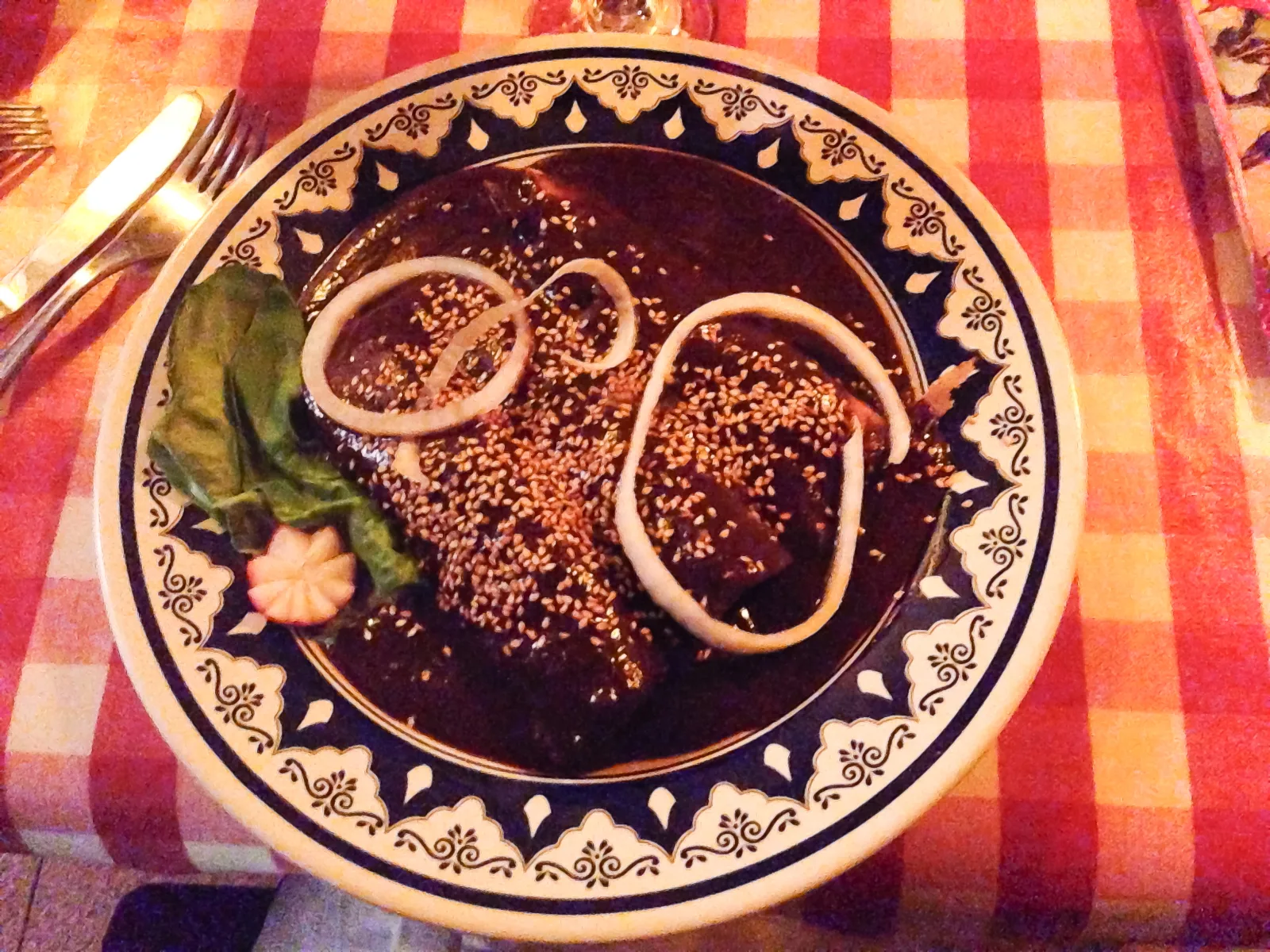
For a sit-down meal, El Mural de los Poblanos and Restaurante Bar El Parián are names that work well for local dishes. Casona María fits into the same conversation when the idea is to combine lodging and dining without leaving the central area. In September, chiles en nogada gain importance in the itinerary; it is the time when they make the most sense by context, not just by fame. If you want this dish, confirm at the time of your visit whether it is on the menu, because availability usually follows the season.
For more casual food, Taquería Oriental El Sultán is a direct choice for tacos árabes. The markets help compare styles without commitment: Mercado de Sabores is usually the most practical place to try several preparations in a single stop, while Mercado La Victoria and Mercado Cinco de Mayo are worth it for the activity and the local food available around the stalls. If the idea is to choose just one place to eat without a fixed itinerary, start with a market.
La Pasita belongs to another category: it is the classic stop to drink the eponymous liqueur, served as part of the local experience, not as a meal accompaniment. It is also worth checking out Calle de los Dulces and the markets when you want to buy traditional sweets to take home, because there the city appears in the form of a counter, a display case, and simple packaging.
Markets, shops, and streets for buying food and crafts
Mercado La Victoria works well if you want to combine shopping and a stop to eat something without leaving the central circuit. The Porfirian-style building opened in 1913, after having started as a market in 1856, and was converted into a shopping center in 1999. Today, the appeal lies less in its original function and more in the whole ensemble: the stained-glass roof and the central gazebo catch your eye as soon as you enter. There you’ll find shops and boutiques, so it’s a useful address for anyone looking for a neater setting to stroll around at a leisurely pace.
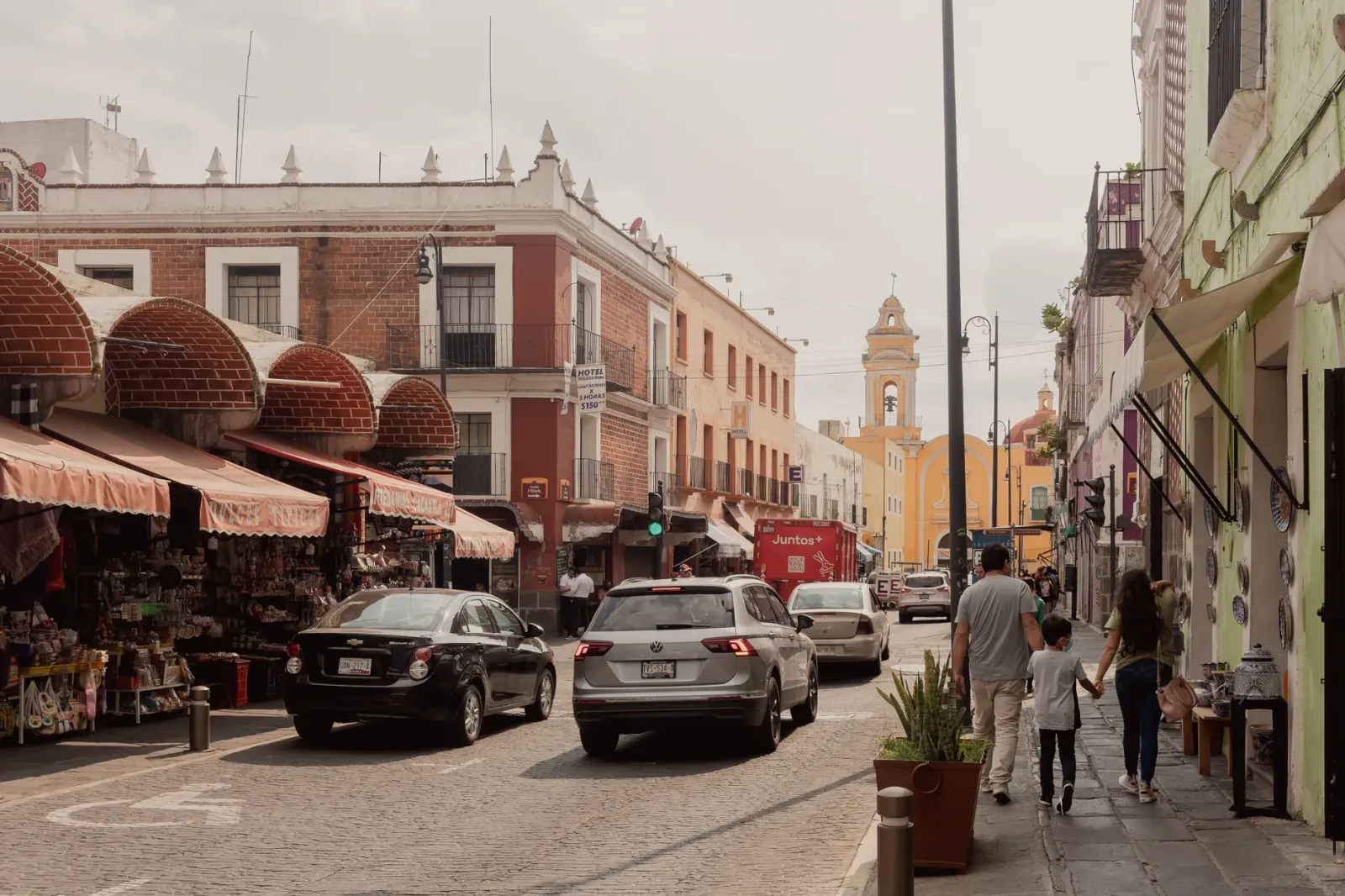
Mercado Cinco de Mayo is another strong stop for seeing local products at a true market pace. It is one of the largest in the city and is usually a good place to observe stalls, flowers, and everyday items. During periods of religious celebration, such as Holy Week, products related to home altars also appear. If the idea is to buy something that you can use immediately on the trip or to see Puebla’s commercial buzz unfiltered, this is the right kind of place.
Calle de los Dulces is worth it for the concentration of traditional candy shops along a short stretch. It’s an easy stroll, from window display to window display, and the focus here is on choosing what to take home: preserves, paste candies, small travel-friendly packages. Since the shops are one next to another, you can compare before buying, without relying on a single stall. For those who like to taste before deciding, this setup helps.
In Barrio del Artista, the appeal shifts from sweet shops to local production. The area was born from old stalls that became studios, and you can see artists working in the street and in the ateliers. It’s a good place to look for handmade pieces and observe how the artistic scene occupies public space. If you want to end the walk with a break, there is coffee and music activity in the square to the north, but what really matters there is looking at the work on display and speaking directly with those who make it.
When to visit Puebla and which seasonal experiences make sense
Semana Santa visibly changes downtown Puebla. Foot traffic in the plazas increases, processions and religious activities appear, and the streets become busier with families and vendors than on an ordinary day. If your trip coincides with this period, it is worth setting aside time to walk without rushing and accepting that the city’s pace is more geared toward the liturgical calendar than to conventional sightseeing.
5 de Mayo carries a different weight: the date commemorates the Battle of Puebla of 1862 and is celebrated on a national scale, but the city is where this memory gains the most context. It is a good time to understand Puebla’s historical importance, as long as you accept that the experience depends heavily on that year’s schedule. Since civic festivities change, confirm what will be open or taking place as the date approaches.
September concentrates the season for chiles en nogada, and that changes the logic of the trip for those interested in food. The dish appears more often because it makes sense in the local calendar and in the seasonal ingredient market. If eating well is a central part of the itinerary, this is the most straightforward time to plan your visit.
Outside these windows, Puebla still works well for those looking for a historic city, museums, and a walkable center. The difference is that you miss the calendar component, which at certain times changes the destination’s atmosphere quite a bit.
Frequently asked questions
How many days are enough to get to know Puebla?
With one day, you can see the historic center and some main attractions. With two days, you can include museums, churches, and meals at a more relaxed pace.
Where should I stay in Puebla to do everything on foot?
The best option is to stay in the historic center, near the Zócalo. That way, you reduce the need for transportation to visit squares, churches, museums, and restaurants.
Which dishes should I try in Puebla?
The ones most associated with the city are mole poblano, chiles en nogada, cemitas, and tacos árabes. Markets and restaurants in the center help you try these dishes in different styles.
What are the main places to visit in downtown Puebla?
The Cathedral, Santo Domingo, the Chapel of the Rosary, the Zócalo, the Palafoxiana Library, and Museo Amparo are among the highlights. You can do much of this itinerary on foot.