Narva, in Estonia: what to do, how to get there and where to stay
See what to do in Narva, Estonia, how to get there by bus or train, and where to stay near the border in a short itinerary.
Why Narva is included in the itinerary of those heading to the Estonia border
Narva is included in the itinerary for a very simple reason: it sits at the main border between Estonia and Russia. It is the third-largest city in the country, but it remains small by European standards, with fewer than 70,000 inhabitants. That already says a lot about the pace of the place: it is not a stop to fill the day with a thousand activities, but rather a city to observe the edge between two worlds.
For those heading on to Saint Petersburg, Narva makes sense as a rest stop before crossing. Those coming from Tallinn also find it a clear break in the route, since the city is more than 3 hours from the Estonian capital. In both cases, the logic is similar: you fit Narva in as a short stop, see what interests you, and continue the trip without rushing to turn the city into the center of the itinerary.
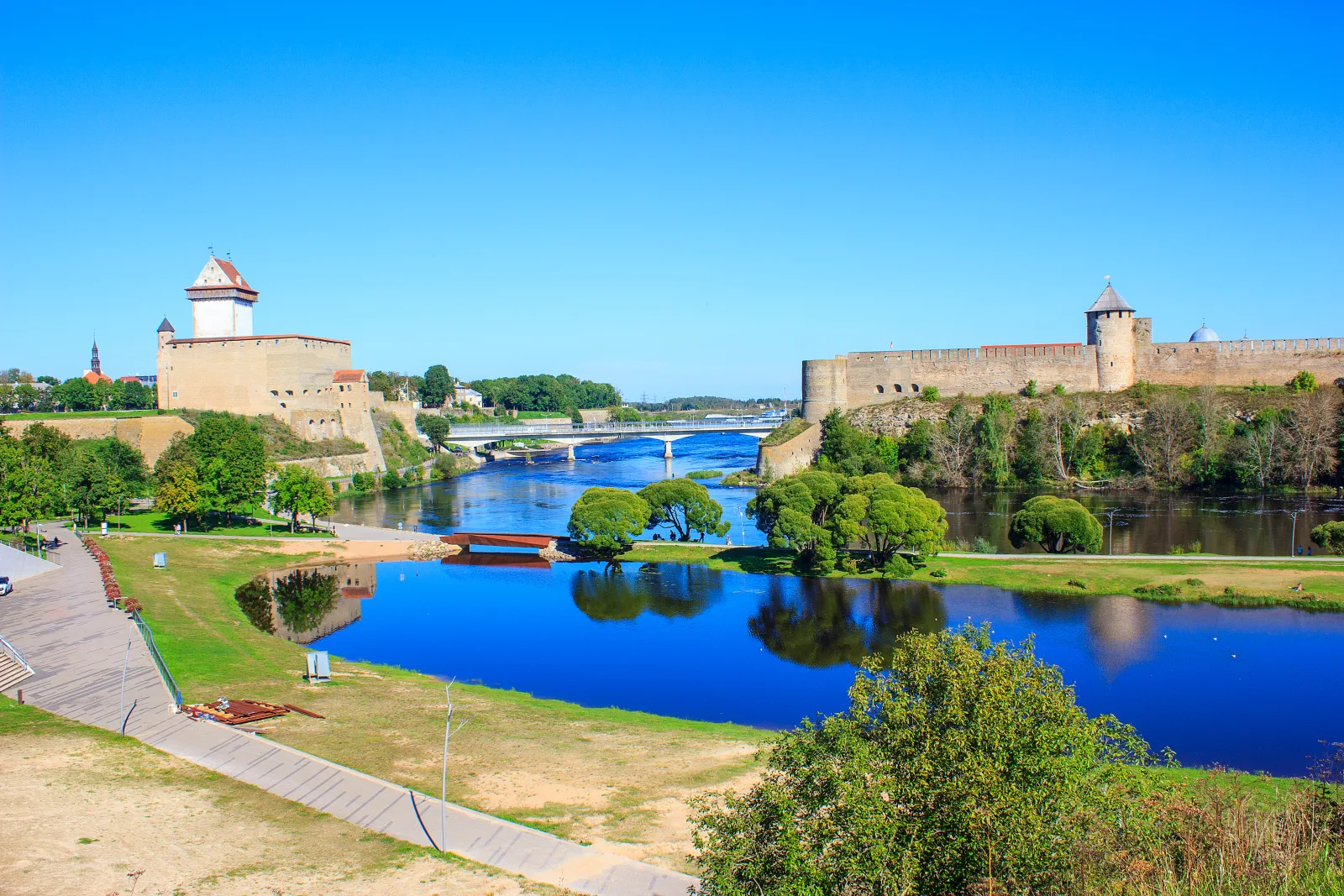
If the trip is only through the Baltic countries, or just through Estonia, Narva enters for another reason: it lets you understand how the border shapes the city. On the other side is Ivangorod, already on Russian territory, and the landscape makes that clear. The interest here is not to “use it as a base” in the city, but to choose whether it is worth including a night or a few hours to feel that transition. For those who like itineraries with geographical and historical logic, Narva fits well. For those looking for a city packed with activities, it may make more sense to move on.
How to get to Narva from Tallinn or Saint Petersburg
Narva fits easily into the itinerary of those coming from Tallinn or Saint Petersburg. By bus, the connection is made by Ecolines and Lux Express; by train, by RZD on the route with Russia. For those leaving Tallinn, the trip takes more than 3 hours. For those coming from Saint Petersburg, it takes over 4 hours. If the idea is just to get there, the bus is usually the most direct choice.
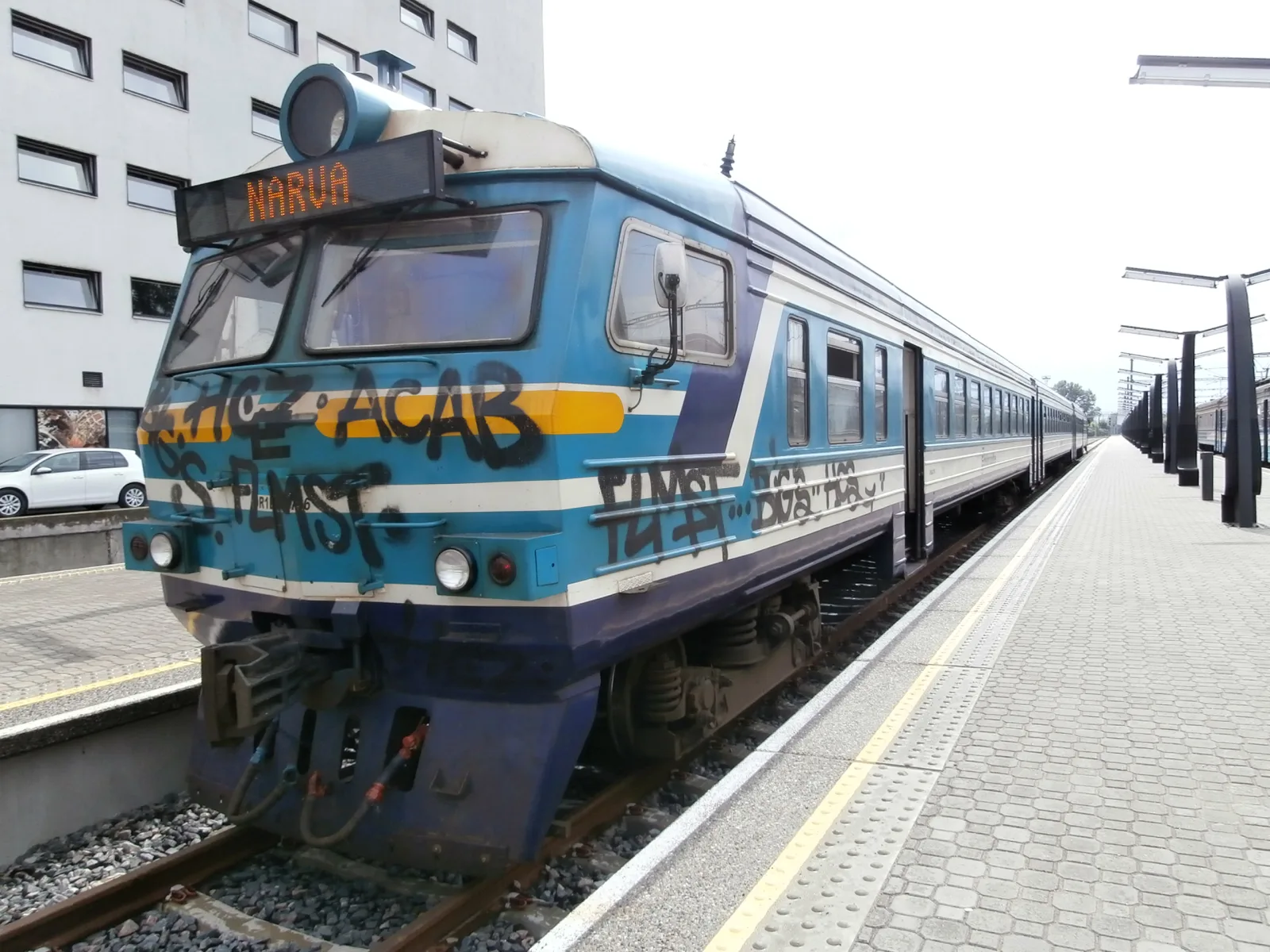
The train works, but it usually does not pay off. It is slower and more expensive in both directions, so it only makes more sense if the schedule fits your itinerary better or if you want to travel by train out of personal preference. Otherwise, the bus gets the job done without complications.
In Narva, the bus station is, in practice, a stop next to the train station. This makes arrival easier if you are combining the trip with a short overnight stay or a stop before continuing your journey.
Editorial transparency: Some links on this page are affiliate links. We may earn a commission at no extra cost to you. This does not influence our recommendations.
What to do in Narva on a short itinerary
Narva fits well into a short itinerary because the main sights are concentrated and allow for a quick reading of the city. Hermann Castle is the name that draws the visit: it is the most obvious landmark on the riverbank and the place where the border landscape becomes clearest. The experience there depends a lot on the view and the castle grounds; today there is little beyond the complex itself, and the visit can take more or less time depending on how carefully you want to look around the surroundings.
The walk along the Narva River bank is usually the most pleasant part of the trip. The promenade organizes the area well and leads to Hahni Trepp, the staircase that goes up to a small square with a viewpoint. Along that same route, the Swedish Lion appears at the end of the path, without requiring a detour. Victoria Bastion, on the other hand, changes the type of visit: it is an enclosed space, with casemates and internal passages, interesting for those who want to better understand the city from within its military structures. If you do not like confined places, it is worth thinking before going in.
In the urban core, the statue of Paul Keres works as a quick stop, more because of the honored figure than the setting itself. Nearby, Narva Town Hall helps locate the historic center, although the area has lost much of what existed before. The two cathedrals, Alexander Cathedral and Cathedral of the Resurrection of Jesus, are close to the train station and round out a concise itinerary well: one is Roman Catholic, the other is Catholic Orthodox, and the difference between them is already apparent in the design and atmosphere of each church. With this set, it is possible to see Narva calmly in a few hours, without needing to put together a long program.
Is it worth crossing over to Ivangorod?
Looking at Ivangorod from the Estonian bank already helps explain why this crossing draws attention. The castle on the Russian side is right across from Narva’s, separated only by the river, and the landscape changes noticeably as soon as you cross: on the Russian side, the atmosphere is more different than that of a typical Estonian city, including in relation to Narva.
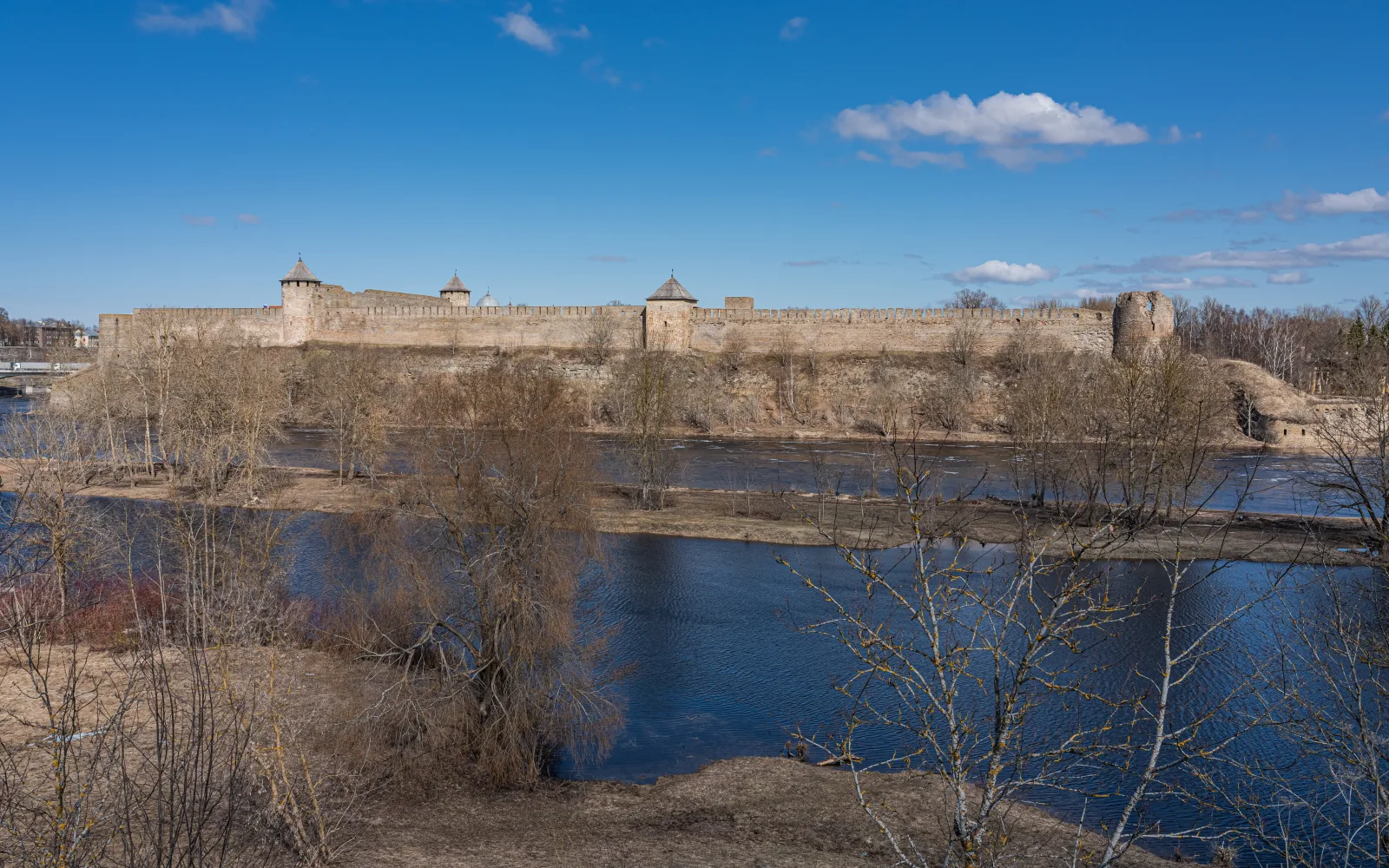
If your trip includes Russia, the visit usually makes more sense as a short detour than as a long stop. In Ivangorod, the main point of interest is the fortress, built in 1495, which sits on the riverbank and offers the most direct view of the two-fortress complex. Beyond that, the city usually doesn’t demand much of a visitor’s time.
For Brazilians, crossing does not require a visa, but the migration card must be filled out correctly. This detail matters because it is usually where the bureaucratic part of entry is concentrated, so it is worth checking in advance how the crossing is being handled on the day of your trip.
If the idea is just to satisfy your curiosity about seeing the other side of the border, crossing may be worth it. If you prefer to avoid any extra entry and exit procedures, staying in Narva and observing Ivangorod from across the river already gives you the essentials.
Where to stay in Narva
Staying near the border and the city center is the best choice for sleeping in Narva. This area puts you within a short walk of the train station and the bus stop, which makes life easier for those arriving tired or continuing their trip the next day. It also avoids unnecessary travel in a city that is easy to get around on foot.
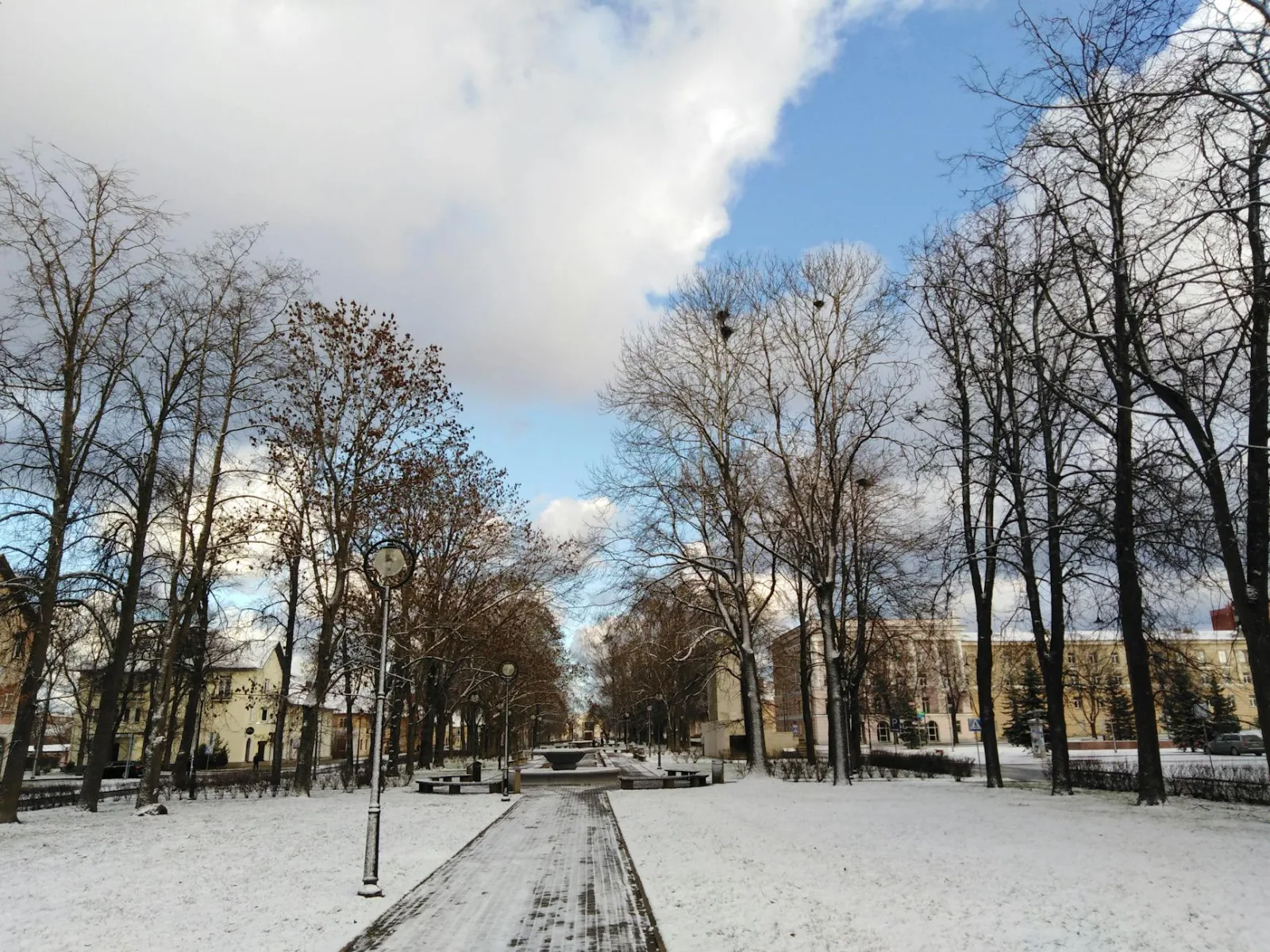
Among the practical options, an apart-hotel makes a lot of sense. Kangelaste is a good example: affordable, well located, with a clean room and a equipped kitchenette. For those who want the autonomy to eat something simple and do not need the structure of a more formal hotel, this type of accommodation works better than a place that is only “pretty on paper.”
If the idea is practicality, prioritize accommodation in this central area, without moving too far away from the border axis. In Narva, this matters more than looking for a distant address with a similar price, because you save time, reduce travel, and keep the city within easy walking distance.
When to visit Narva and how much time to set aside
Narva fits into a few hours. For those who are just passing through, that is enough to see the essentials without turning the stop into an обязательная overnight stay. The city works well as a rest break for those who are traveling on and want to stretch their legs before continuing.
The most convenient window depends on the itinerary. If the idea is simply to fit Narva into a route through Estonia or the Baltic countries, half a day is enough to move on. If the plan includes crossing the border and feeling the change in atmosphere on the other side of the river, it is worth leaving a little more room, because the visit takes on a different pace. Those on their way to Saint Petersburg usually see Narva more as a transition point than as a main destination, precisely because the city does not require much time.
The mood of the trip also changes with the time of year. In summer, the walk tends to be more comfortable for strolling and observing the riverbank. In the cold, the city becomes harsher and quieter, which suits those who like this kind of atmosphere and do not mind spending less time outdoors.
If you are putting together a short itinerary, think of Narva as a stop of a few hours, not as a long base. If the goal is to cross the border and take a calm look at the region, one day is already enough.
Frequently asked questions
How long should I stay in Narva?
Narva can be seen in just a few hours. Half a day is usually enough to see the main sights; if you want to cross the border or take it more slowly, one day works well.
What should I do in Narva on a short itinerary?
The highlights are Hermann Castle, the Narva riverbank, Hahni Trepp, Victoria Bastion, and the cathedrals near the station. It is also worth stopping by the historic center and the statue of Paul Keres.
How do I get to Narva from Tallinn?
The most direct way is by bus, with a trip of more than 3 hours. There is also a train, but it is usually slower and more expensive.
Is it worth crossing to Ivangorod?
It is worth it if your trip includes Russia and you want to see the fortress on the other side of the river. If you prefer to avoid any extra bureaucracy, seeing Ivangorod from Narva already shows the main thing.
Where should I stay in Narva?
The best option is to stay near the border and the center, because that puts the station and bus stop within a short walk. A centrally located aparthotel can be a practical choice for those who want independence.