Leipzig: what to do, where to stay and how to plan your trip
Leipzig: see what to do, where to stay, and how to get around to enjoy the historic center, churches, and museums without complicating your itinerary.
Why Leipzig belongs on the itinerary of those seeking culture and history
Leipzig belongs on the itinerary for reasons that make a difference when deciding on a trip. The city brings together Bach and Mendelssohn, two central names in classical music, with the memory of the peaceful protests of 1989 that began there and helped bring down the Wall. Add to that its tradition of trade fairs and book commerce, active for centuries, and you have a destination that helps you understand Germany from very concrete angles, without relying only on the most obvious postcard views.

The city center works in favor of those who like to get a lot done on foot. It is compact, flat, and easy to cross, with that university-town feel that often makes the atmosphere lighter in everyday life. For those traveling as a couple, alone, or with children, this matters: less time in transit, more time to go in and out of churches, squares, and shopping arcades without setting up major logistics.
Leipzig also tends to appear on the radar for a very practical reason: cost. In general, it is less expensive than larger, more in-demand German cities, which helps extend the trip or choose better accommodation without stretching the budget as much. For those who want to combine history, music, and a city that still operates on a human scale, Leipzig offers a rare balance between substance and ease of getting around.
How to get to Leipzig and get around the center
If arriving by plane, Leipzig/Halle Airport (LEJ) is outside the center, and the connection to the city is made by train or public transportation from the airport railway area. For most travelers, the most practical entry point remains the Hauptbahnhof, the central station, because it already puts you on the city’s most useful axis as soon as you arrive.
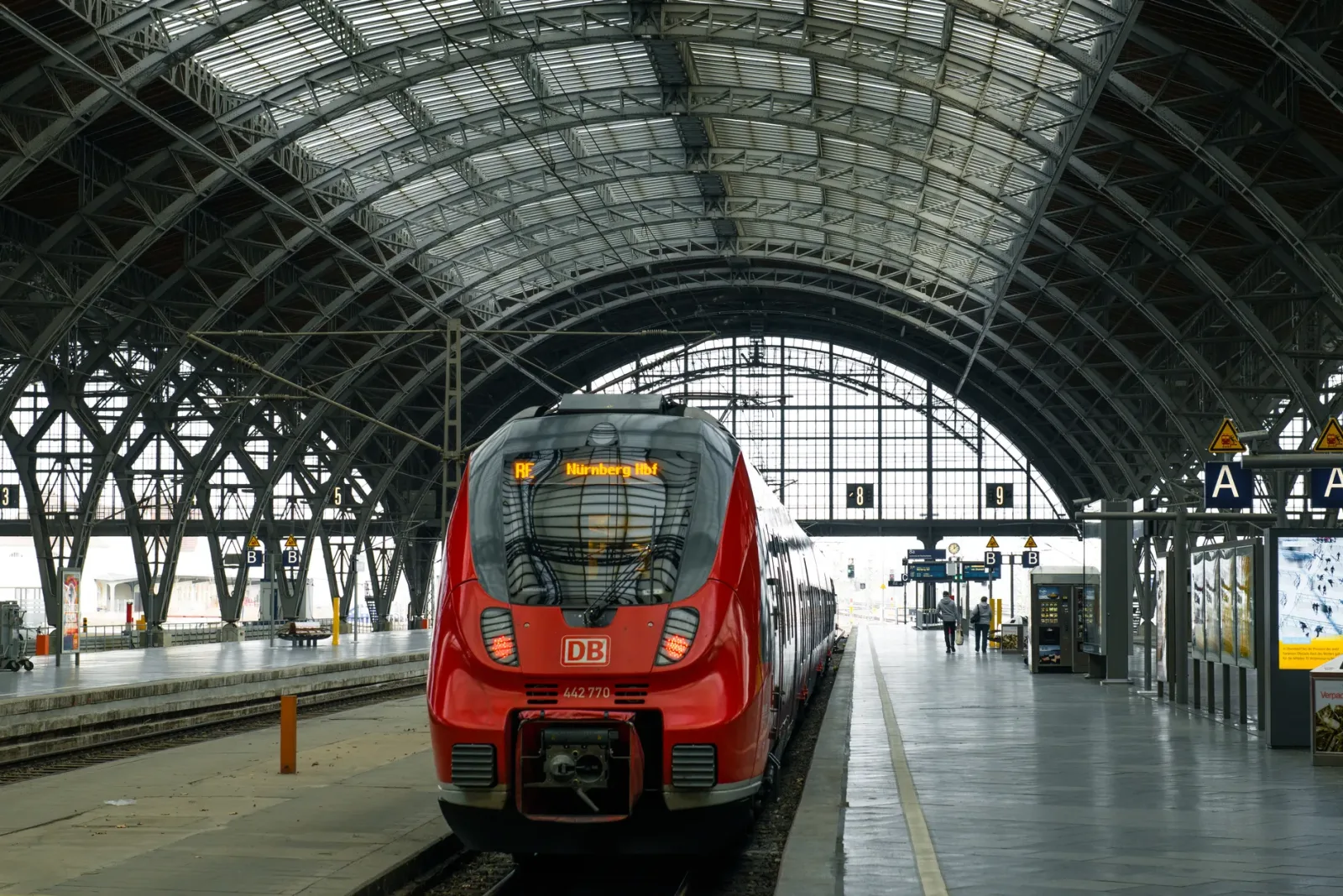
By train, Leipzig works well for those coming from major German cities: the trip takes about 1h10 from Berlin and Dresden, and around 3h from Frankfurt, depending on the service chosen. The Hauptbahnhof is about a 5-minute walk from the Marktplatz, so you can leave the station and start your itinerary without relying on a car or transfer.
In the center, the easiest way to get around is on foot. Distances are short and the flat layout helps a lot, especially on the first approach between the station, the main square, and the shopping arcades. For longer stretches, the tram works well and avoids wasting time; a bicycle also works, especially if you want to cover more area without being tied to schedules. The Leipzig Card can be useful if you plan to use public transportation a lot, since it bundles this part of mobility into a single pass.
If you’re planning your arrival, think of it like this: train to enter the city directly, walking for the historic core, and tram only when the route gets tight. That already covers the initial transfers well without complicating the trip.
Editorial transparency: Some links on this page are affiliate links. We may earn a commission at no extra cost to you. This does not influence our recommendations.
Where to stay in Leipzig
Staying in the historic center is the most practical choice for most travelers. There you reduce daily back-and-forth and can leave the hotel already close to what matters, without depending on long commutes early in the morning or at the end of the day. For those who want to simplify logistics, this is the area that makes the trip easiest.
Another smart option is to stay near S-Bahn or U-Bahn stations. This helps especially if you plan to arrive and leave with luggage fairly often, or if you want to avoid walking too much after a busier day. In Leipzig, it is more worthwhile to prioritize an address that shortens access to the hotel than to save a few euros and end up far from the central area.
When choosing, filter for high ratings and free cancellation. This combination is usually the safest when plans may still change, and it keeps you from being stuck with a bad reservation just because of the rate. It also helps to look closely at the map: in Leipzig, a short distance makes a real difference in the pace of the trip.
If the idea is to get it right without complicating things, compare hotels within the historic center and on its immediate edges, then check whether public transport access is easy from the hotel door. This usually balances comfort, location, and practicality well.
What to do in Leipzig’s historic center
The best way to get to know the historic center is to go without a fixed route. Start at Marktplatz, take a look at the Altes Rathaus, and enter the museum if you want context for what you’re seeing around you. The Renaissance building is a good starting point for understanding the city before continuing through the surrounding streets and arcades, because it concentrates the historical layer that is easiest to read on a first walk.
The commercial passages are the stretch most worth exploring on foot. Mädlerpassage is the best known, but Specks Hof and Alte Waage round out the route well. The charm lies less in “checking off sights” and more in walking through these galleries at a relaxed pace, looking at stained glass, interior facades, and the relationship between shops, cafés, and old architecture. If you like strolling without rushing, this is one of the rare places where going in and out of the corridors is part of the experience.
In practice, it’s worth setting up the route as a short circuit through the central core: square, old town hall, commercial passages, and back through the nearby streets. It doesn’t require complicated planning or long distances, which helps if you have little time or prefer a gentler pace. On a rainy day, these galleries also work well because they keep the whole outing under cover.
If you have time left, repeat the route by another street and observe the surroundings more closely. Leipzig works well when you let the center reveal itself in pieces, without trying to rush from one facade to another.
Leipzig churches linked to Bach and the 1989 protests
The Thomaskirche is the right stop for anyone who wants to connect Leipzig directly to Bach. He worked there for 27 years as cantor and choir director, and his remains have been buried in the church since 1950. If you have the chance during your visit, it is worth trying one of the Motetten, the choir concerts, which take place on Fridays and Saturdays; tickets and the small attached museum are priced separately, so confirm the current price before you go.
At the Nikolaikirche, the story is a different one. It was from there, in 1989, that the Monday prayers grew into a decisive movement against East Germany’s regime. The church has a neoclassical interior, with palm-shaped columns, and this combination of political history and unusual architecture gives the space a weight that you notice as soon as you enter.
If you want to visit both on the same day, start with the Thomaskirche and then continue to the Nikolaikirche at an unhurried pace. Together, they help you understand Leipzig from two very different angles: the city of Bach and the city that became part of the history of German reunification.
Leipzig’s great viewpoints and monuments
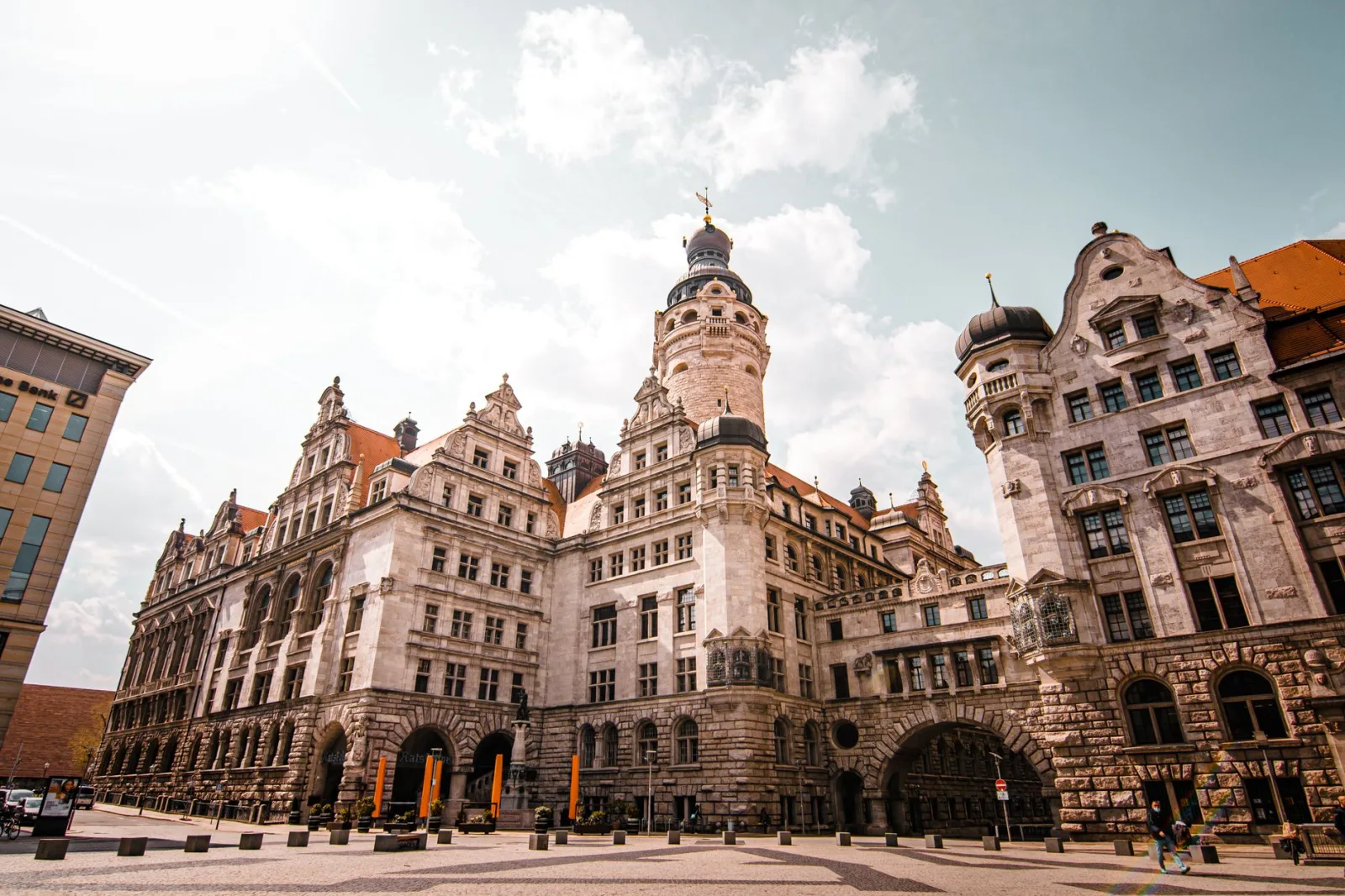
The Neues Rathaus is worth it for the tower. The building is at Martin-Luther-Ring 4–6, and the guided visit goes up the structure’s more than 114 meters, built on the foundation of the former Pleissenburg Castle. If the tower is on your list, check in advance the days when the visit takes place and whether booking is required; this kind of access often changes easily.
The climb has 250 steps to the top. It is not a long outing, but it does require energy, and it is more rewarding for those who want to understand the city from above before continuing the itinerary. The view helps you locate the center and grasp Leipzig’s scale without relying on other viewpoints. If your goal is photography, it is worth checking visibility on the day, because the tower’s payoff depends a lot on the weather.
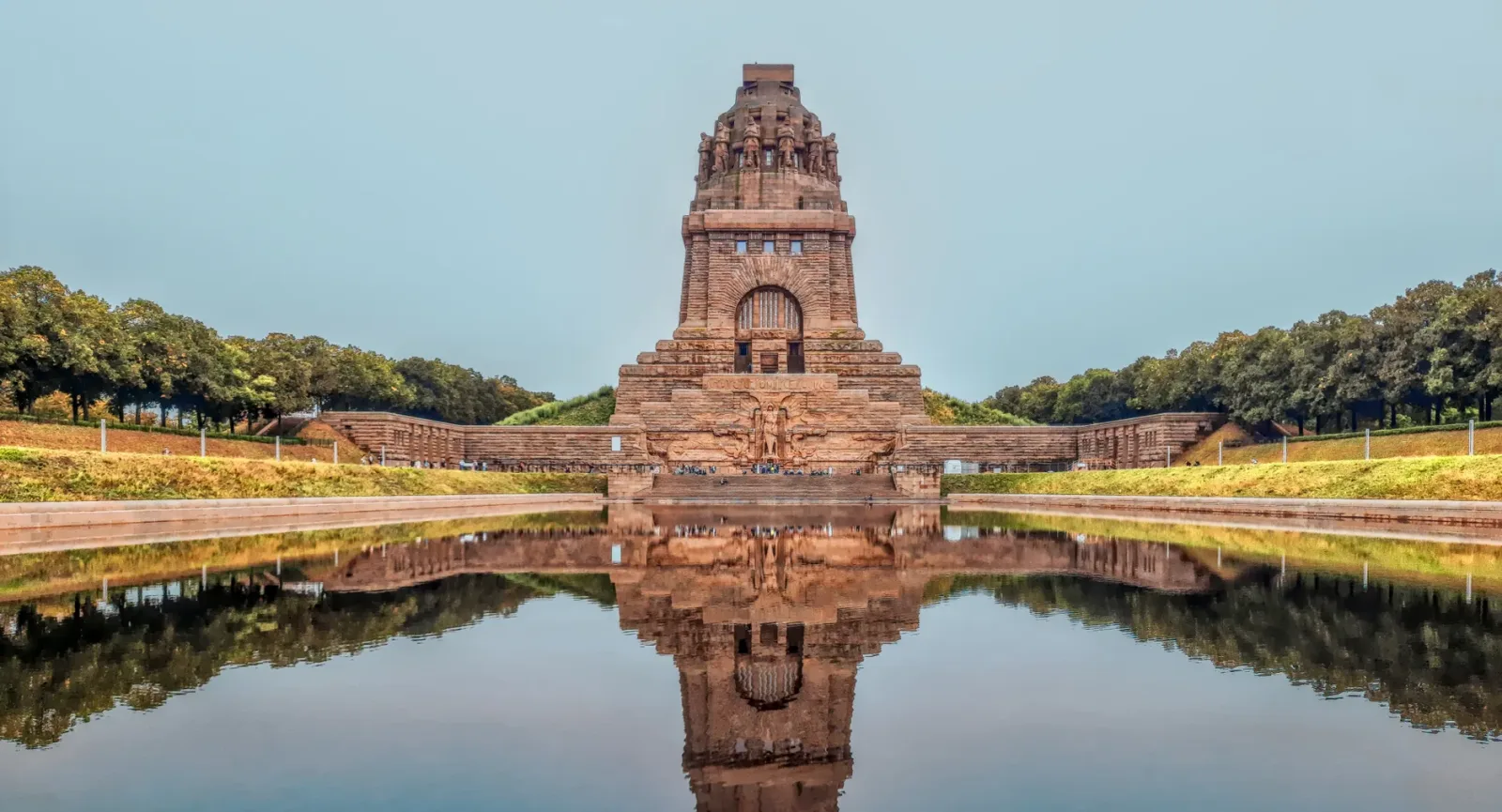
The Völkerschlachtdenkmal is the city’s major monumental landmark. It was built to commemorate the Battle of the Nations of 1813, Napoleon’s defeat near Leipzig, and the visit works well if you combine the Forum 1813 into the same outing to provide historical context before entering the monument. The interior staircase totals 364 steps to the top and includes narrow sections; anyone with claustrophobia needs to consider this before buying a ticket.
To visit, getting there works well with public transport and, in general, tram line 15 takes you to the Völkerschlachtdenkmal stop. The ticket usually ranges from €10 to €12 per adult, but confirm the current price before going, because that changes frequently. From the top, the view of the city is broad and direct, which makes sense for anyone who wants to fit just one major viewpoint into the day.
Museums and programs for a calmer day in Leipzig
Zoo Leipzig works well when the idea is to spend the day without rushing, especially with children. The part that draws the most attention is Gondwanaland, a large covered tropical area that lets you move around in an enclosed environment without depending on the weather outside. If the visit is on your list, it’s worth checking the current opening hours and buying tickets in advance during peak season, because this kind of program tends to draw quite a crowd.

Panometer Leipzig is a quieter option and a good fit for a gray day. The space uses 360° panoramas created by Yadegar Asisi, with exhibitions that change over time. It’s the kind of visit that depends more on the current theme than on the venue itself, so the right move is to confirm the current exhibition before going. For those who enjoy visual art, history, or want an unhurried program, it works well.
The City History Museum, in the Altes Rathaus, also fits well when the weather is not helping. The visit covers Leipzig’s trajectory from the Middle Ages, through the GDR and reunification, in a format that works without requiring much travel. Opening hours usually vary and Monday is a bad day to rely on this kind of visit in the city, so it’s best to check the opening on the day you choose before planning your itinerary.
If you’re short on time, choose just one of these programs per day. The Zoo and the Panometer take more hours; the museum in the Altes Rathaus fits better as a half-day visit.
Where to eat, when to go, and how long to stay in Leipzig
The best window for walking around Leipzig runs from May to September, when the weather usually helps make a walking itinerary work without getting stuck in long breaks indoors. If the trip falls in December, the focus changes: the Christmas market takes center stage in the itinerary and it makes sense to set aside at least part of a day for it, because that is when the city center gets busier and the lights really add weight to the experience. In January and February, the city is still worth visiting, but the cold calls for more time indoors and less expectation of long walks.
To see the essentials without rushing, two days usually work well. On one, you cover the historic center and the churches tied to the city’s musical and political memory. On the other, you fit in the monument, a museum, or a lighter outing. If the idea is to include the zoo or the Panometer at a leisurely pace, three days make the trip more relaxed and keep everything from turning into constant movement between one attraction and the next.
When choosing where to eat, it makes sense to combine a well-known address in the center with a stop away from the tourist core. Auerbachs Keller is the straightforward choice for a landmark meal, especially if you want to stay close to the central circuit. The café and restaurant at Gohliser Schlösschen work better when you want to sit down unhurriedly in a quieter setting, away from the more intense pace of the central area. In both cases, it’s worth checking opening hours for the day and booking ahead if the date falls in a busy period.
Frequently asked questions
How many days are enough to get to know Leipzig?
Two days are usually enough to see the historic center, the churches, and one major monument or museum. If you want to include the zoo or the Panometer at a relaxed pace, three days make the itinerary more comfortable.
Where is the best place to stay in Leipzig?
The most practical option is to stay in the historic center, because it reduces daily travel. It is also worth considering areas near S-Bahn or U-Bahn stations if you want to make arrivals and departures with luggage easier.
How do you get around the center of Leipzig?
The center is compact, flat, and easy to explore on foot. For longer stretches, the tram works well, and a bicycle can also be a good option.
Which churches are worth visiting in Leipzig?
The Thomaskirche is the one most closely associated with Bach, and the Nikolaikirche is important for the memory of the peaceful protests of 1989. Both help you understand the city from different angles.
What is the best time to visit Leipzig?
From May to September, the weather usually favors walking tours. In December, the Christmas market stands out in the center and changes the city’s atmosphere quite a bit.