Cancún: practical guide to what to do, where to stay, and how to plan your trip
Cancún: find out when to go, where to stay, and how to plan your itinerary to enjoy beaches, tours, cenotes, islands, and parks without rushing.
When to go to Cancún and how many days to set aside
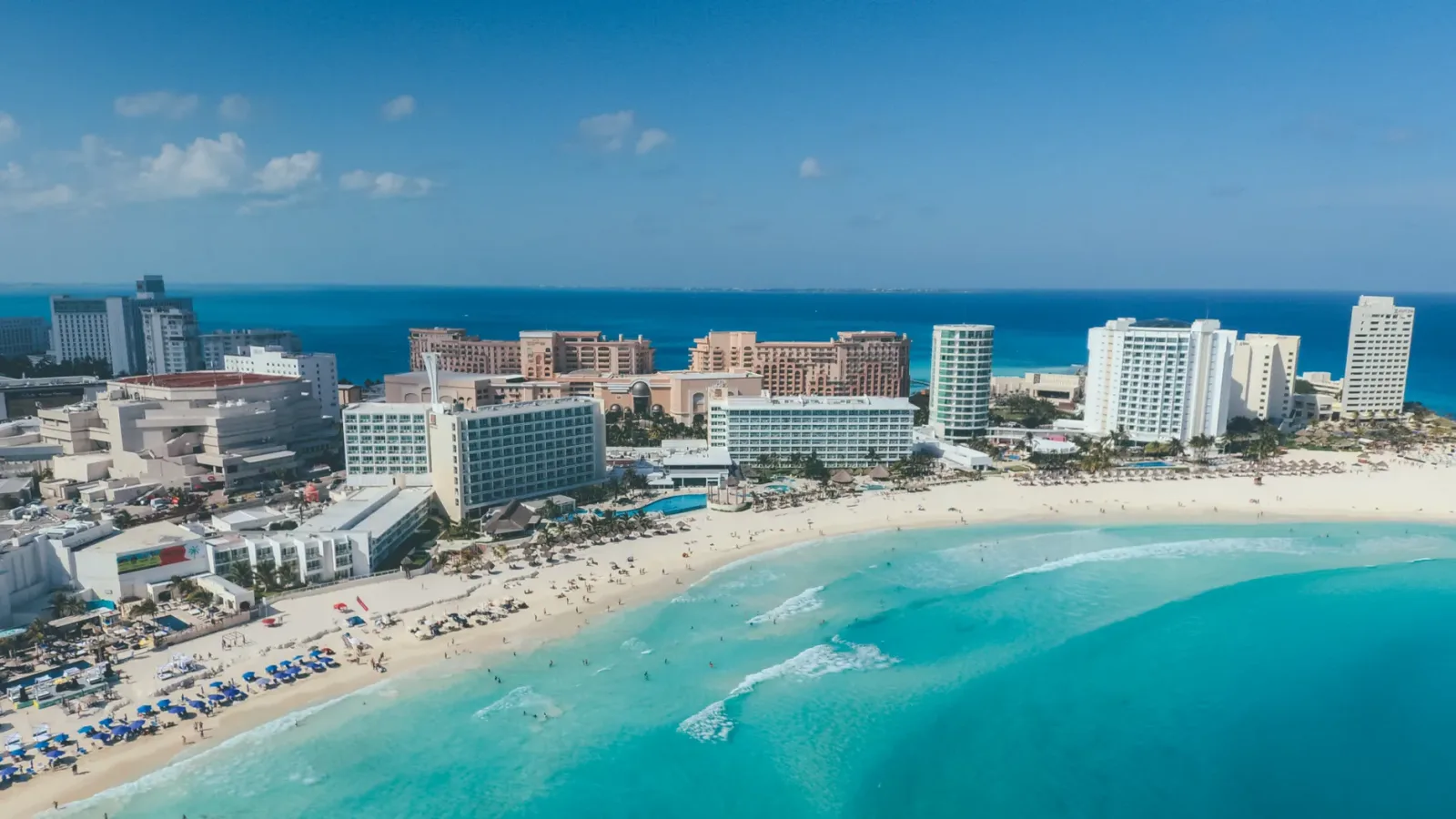
The best window to go to Cancún is usually the dry season, from December to April. During this period, the weather tends to be more stable and the chance of rain disrupting the beach and outdoor activities is lower. Between June and November comes the rainy season, with a higher likelihood of showers and, in the Caribbean, the risk of hurricanes. If your trip falls during these months, it’s worth keeping an eye on the forecast closer to the date, because the weather can change quickly.
For those who want to use Cancún as a base and visit beaches, Isla Mujeres, Playa del Carmen, Cozumel, Tulum, and a park in the area, 4 to 6 days work well. If the idea is to stay longer on the sand and fit in one or two day trips, a week makes the itinerary less rushed. Less than that can also work, but you’ll likely have to choose between relaxing and going out.
If the focus is only Cancún and the immediate surroundings, without trying to do everything, 3 days are enough for the essentials: beach, a boat trip or nearby island, and some free time in the city. For those planning to include ruins, a cenote, and a park, the itinerary needs more breathing room. The difference between a rushed plan and making good use of the city usually comes down to setting aside enough days so every outing doesn’t turn into a marathon.
Where to stay in Cancún without getting the location wrong
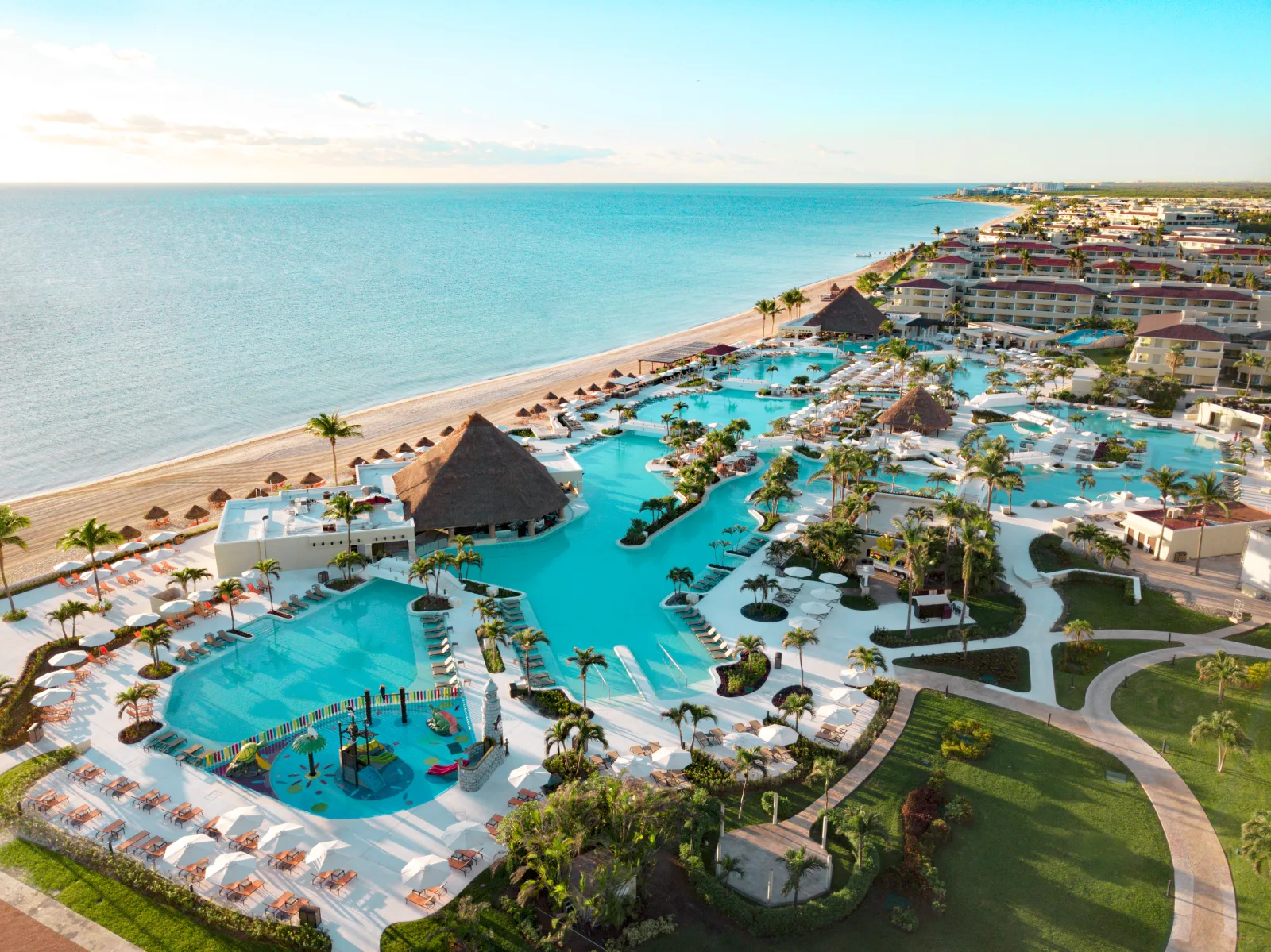
Staying in the Hotel Zone usually makes the trip easier for those who want the beach in their daily routine and less commuting between hotel, sea, and nightlife. This is where the large hotels are concentrated, many of them all inclusive, with their own beach setup and service designed for guests to spend much of their time at the hotel. If the idea is to open the door and already be close to the sand, this is the most practical area.
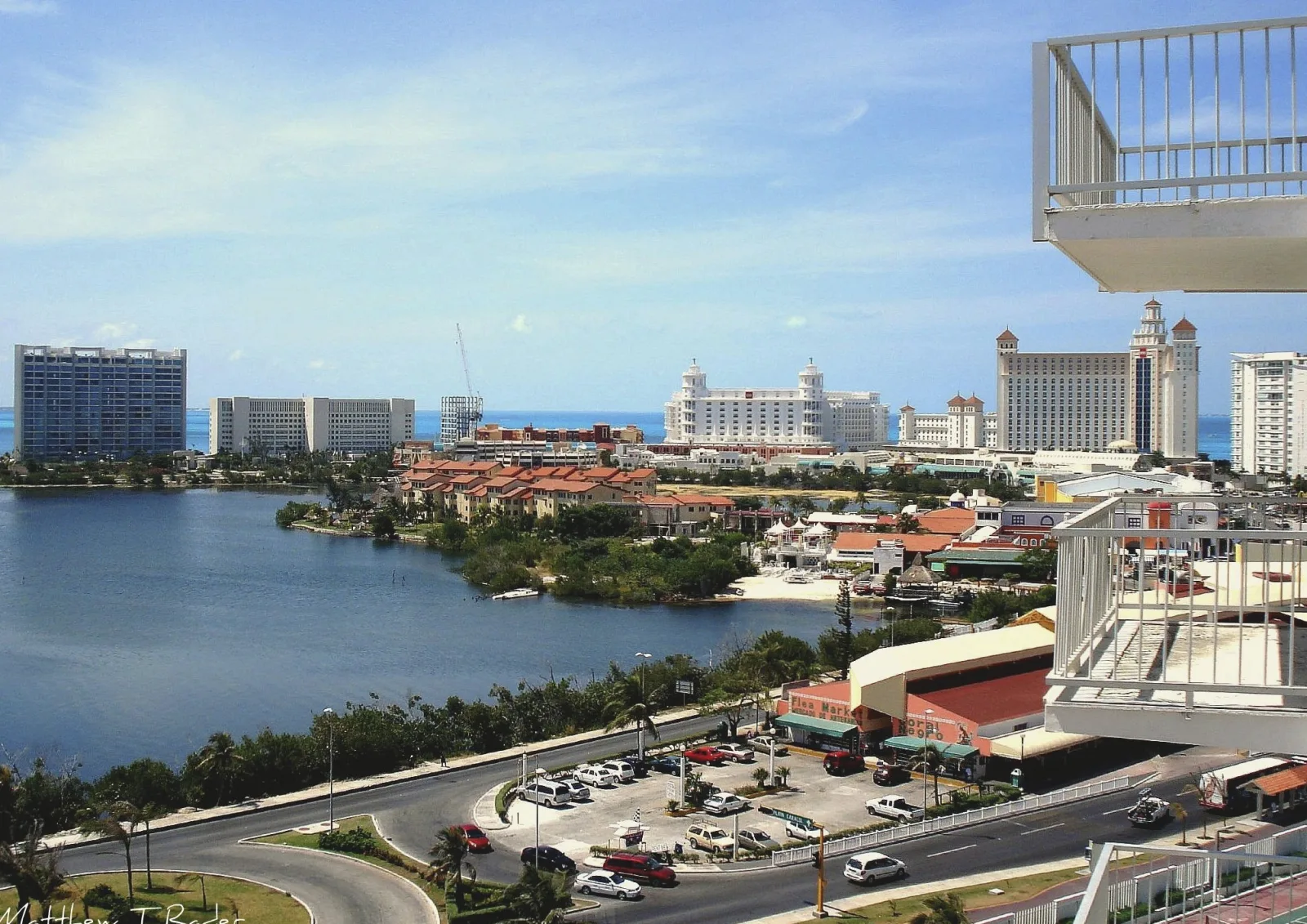
The urban area works better for those who want to spend less on accommodation and do not rely as much on the hotel beach. You are closer to shops, markets, restaurants, and the everyday life of Cancún, but you lose the convenience of stepping outside and being by the sea. For those who will use the city as a base and spend the day out on tours, this trade-off makes sense. For those who really want the beach, the distance to the sand matters in everyday use.
Among all inclusive resorts, the right question is not whether it is “worth it,” but how much you plan to leave the hotel. If you will use the resort as a central part of the trip, it makes a difference to choose one with a good outdoor area, easy beach access, and service that matches your pace. As a couple, this can make the stay much simpler. For families, it helps when the hotel brings dining, pool, and beach together in one place. When traveling alone, the choice depends more on how much you want to rely on the hotel’s facilities or get around on your own.
If your priority is the sea, prefer staying in the beach strip of the Hotel Zone, keeping an eye on direct access to the sand and the type of facilities the hotel offers. If your priority is autonomy and getting around the city, the urban area works better.
Editorial transparency: Some links on this page are affiliate links. We may earn a commission at no extra cost to you. This does not influence our recommendations.
How to get around Cancun and the surrounding area
Renting a car in Cancun makes sense if you want to plan your itinerary at your own pace and include trips outside the city without depending on fixed schedules. It works well for exploring the surrounding area, with one important caveat: the day trip to Chichén-Itzá is not the stretch I would choose to drive on my own. For those planning to leave early, stop along the way, and control the day, a car offers real independence; for those who prefer to forget about logistics, organized tours handle the departure and pick you up at the hotel.
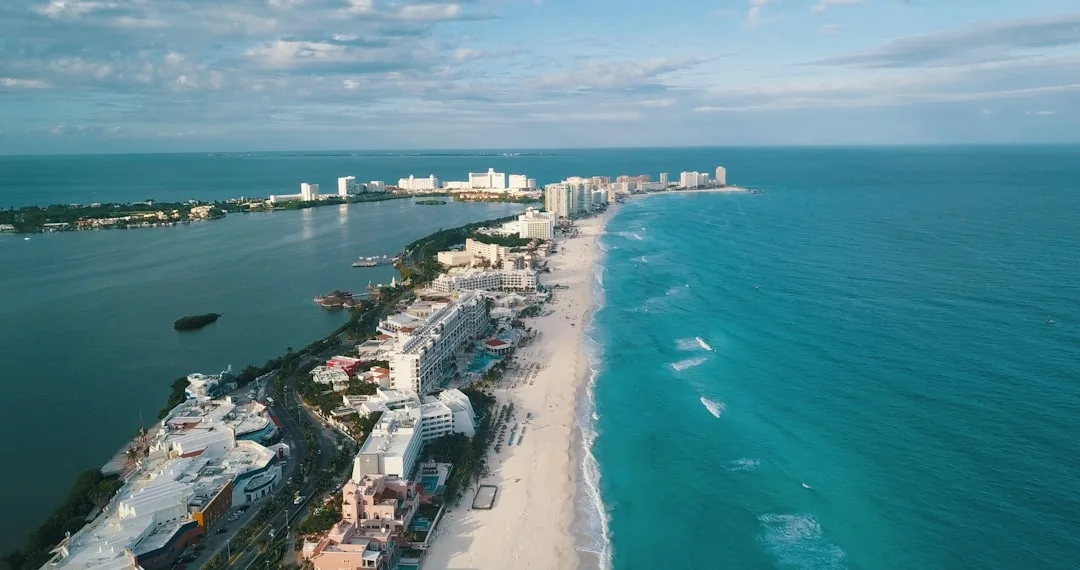
Within the city, you can get around by taxi or use the bus that runs along the Hotel Zone. The bus costs 1 dollar and is the simplest way to go from one point to another along the hotel strip without depending on a car. In taxis, it’s worth confirming your hotel’s rate table before getting in, because the price is not something to assume on the fly.
For Isla Mujeres, Playa del Carmen, and Cozumel, there is public transportation that usually fits better than a car for part of the itinerary. In Cancun, this is especially important when the plan is to spend a day out and return without complicating parking, crossings, or long urban transfers. The choice between public transportation, a tour, or a car depends less on the destination itself and more on how you want to use your time: if the goal is convenience, the tour takes you there and brings you back; if the goal is flexibility, the car helps; if the goal is to make a simple, direct trip, public transportation is usually enough.
Cancún Beaches and What to Expect from the Sand Strip
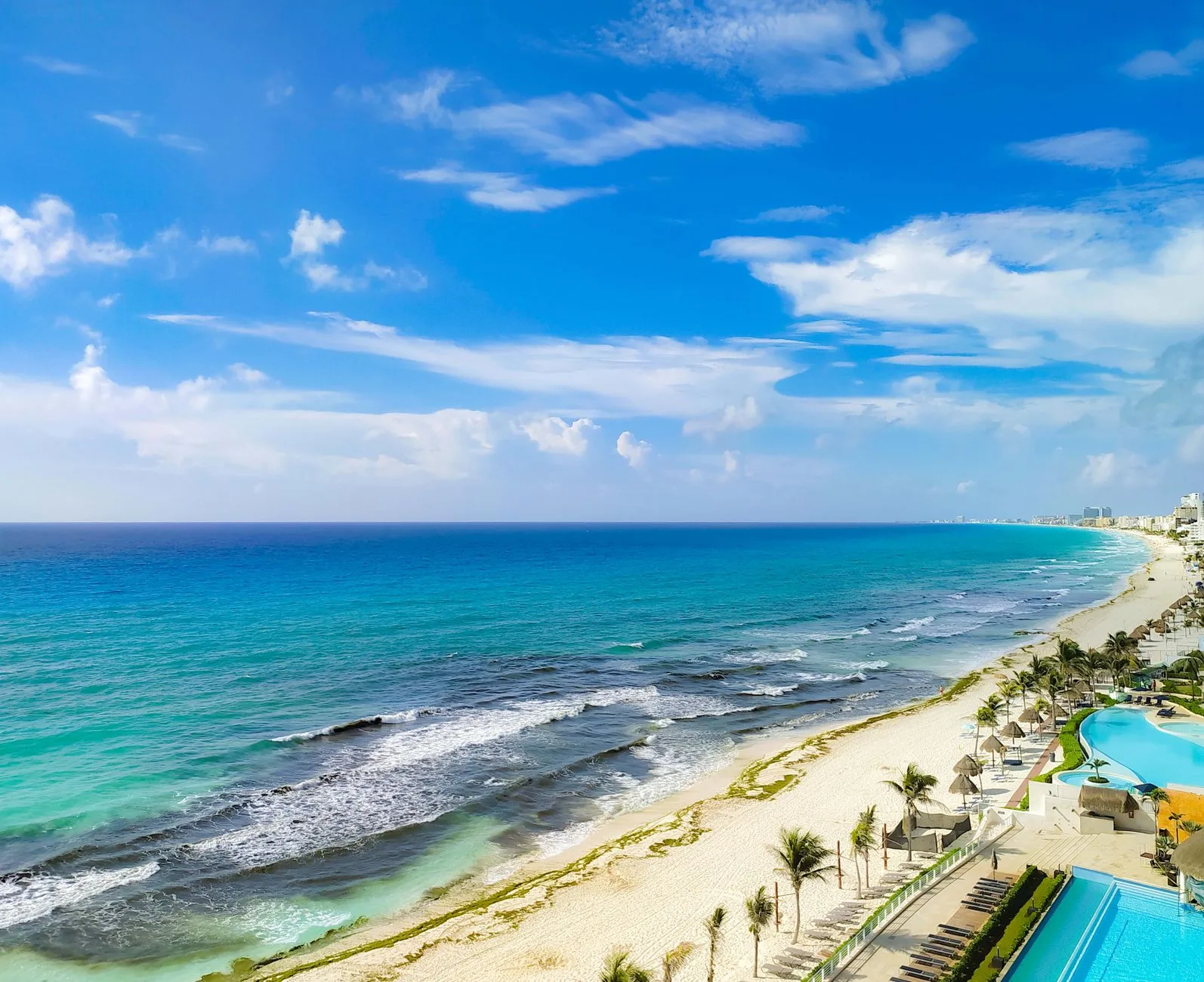
The beach in Cancún makes the most sense when you stay in the hotel zone and use the hotel’s own facilities. That is where access to the sea is usually more direct and where the experience is more practical for those who want to alternate between swimming in the sea, the pool, and a break in the room without crossing the city. Outside this area, beachgoing is still possible, but the experience depends much more on the public beach chosen and what you bring in your bag.
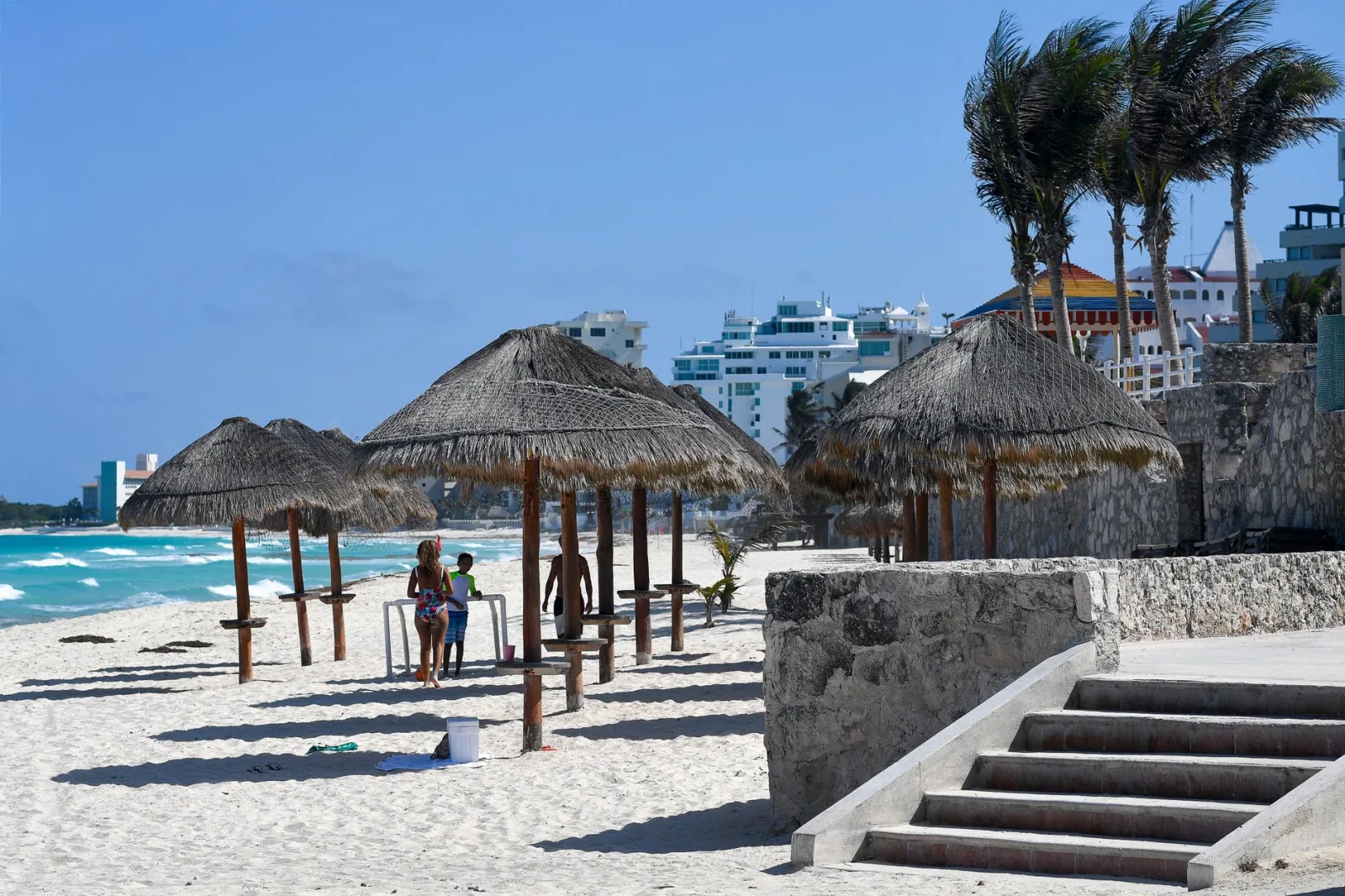
Among the most popular public beaches, Playa Delfines is the best known for the Cancún sign and usually attracts those who want a photo stop and open sea; the facilities are more basic, so don’t count on resort-level comfort. Playa Tortugas is a practical option for swimming in the sea and often becomes part of the itinerary for those moving around the Hotel Zone. Playa Caracol works well for those who want sand and calmer water, especially if the hotel is not right on the seafront.
It’s also worth understanding that, in Cancún, the everyday beach is often the hotel’s own beach. Many resorts arrange loungers, umbrellas, and drinks in the sand area, which weighs heavily in the decision of where to stay. If a public beach is your main goal, choose based less on the hotel name and more on actual access to the sea and the kind of sand strip you will use.
Day trips from Cancún that are worth including in your itinerary
Isla Mujeres easily fits into the itinerary of anyone looking for a day at the sea with calmer water and a simple little downtown to stroll through at a relaxed pace. The island also works for those who want to combine the beach with snorkeling, with Garrafón Park as an option for more active activities, including ziplining and interaction with dolphins. If the idea is just the beach, Playa Norte is usually the natural focus of the visit.
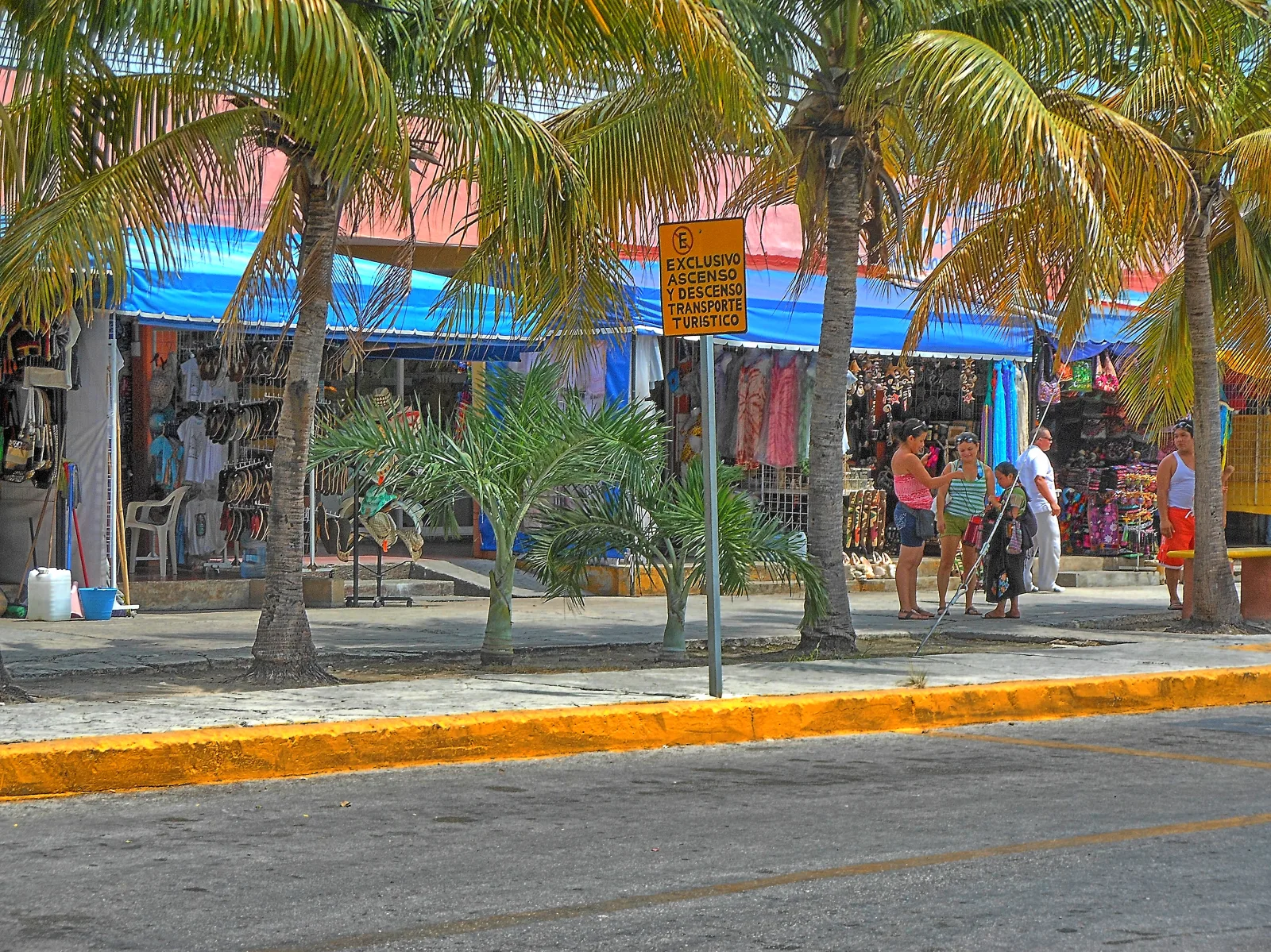
Playa del Carmen makes sense for those who want a change of pace without straying too far from the beach-and-shopping routine. The most commonly used area is near the center, with easy access to the sandy stretch and the walking area of Quinta Avenida. It’s a practical day trip for dinner, strolling, and spending a few hours outside Cancún without putting together a long program.
Cozumel calls for more interest in the sea and coral reefs than in the town itself. It’s a destination for snorkeling and diving, with a golf cart tour around the island as a possible program for those who want to see more than the central stretch. Tulum comes in a different register: the seaside ruins justify the visit, and the trip becomes more worthwhile if you want to combine archaeological heritage with the beach or with a cenote in the same outing. Chichén-Itzá, on the other hand, is the region’s major archaeological journey and usually makes more sense with an organized tour than improvisation.
Cobá is the alternative for those who prefer a greener Mayan site, with structures in the jungle, instead of the more classic and rushed visit to Chichén-Itzá. Xcaret, Xplor, and Xel-há come into play when the interest is in parks: Xcaret has the best-known overall offering, Xplor is the most adventure-oriented, and Xel-há has a more aquatic and natural profile. If your itinerary has room for only one park, choose based on the kind of day you want to have, not the most famous name.
Cenotes, diving and nature activities in the region
In Cancún, the region’s aquatic nature appears mainly in the cenotes and in snorkeling or cave diving outings. For those who want freshwater and a more enclosed experience, Río Secreto is one of the most sought-after visits: the tour takes place in a subterranean system, with rock formations and stretches of calm water. It’s the kind of outing that usually appeals to those who don’t want to depend on the beach and prefer something more contained and guided.
Dos Ojos is in the Tulum area and makes more sense for those already thinking about diving. There are sections suitable for snorkeling, but its bigger fame lies in the submerged caves, which require more comfort with dark water and a cave environment. If the idea is just to observe the cenote without entering technical sections, it’s worth confirming which circuit is included in the tour, because the experience changes quite a bit depending on the level of access.
Ik Kil usually comes up as a refreshing stop on the way to or from Chichén-Itzá. It’s a simpler choice for those who want to get to know a cenote without setting up an entire day of diving or caves. The logic here is less athletic and more about swimming, with the added appeal of being close to the archaeological site.
For those who prefer action over contemplation, Jungle Speed Boat fits well. You pilot the speedboat through a mangrove channel from Nichupté Lagoon to a reef, where you can snorkel. It’s a more straightforward program in terms of planning and more direct in its concept: speed first, open water afterward. If the trip calls for something that combines movement and sea, it works better than a closed cenote.
Dolphins, turtles and marine animal experiences
There is interaction with dolphins at several points in the Hotel Zone and in the parks in the region. In Cancún, the Interactive Aquarium at La Isla mall is included in the list of places where this is available without you needing to leave the city. In Isla Mujeres, Parque Garrafón also offers this activity, along with snorkeling, scuba diving, and ziplining.
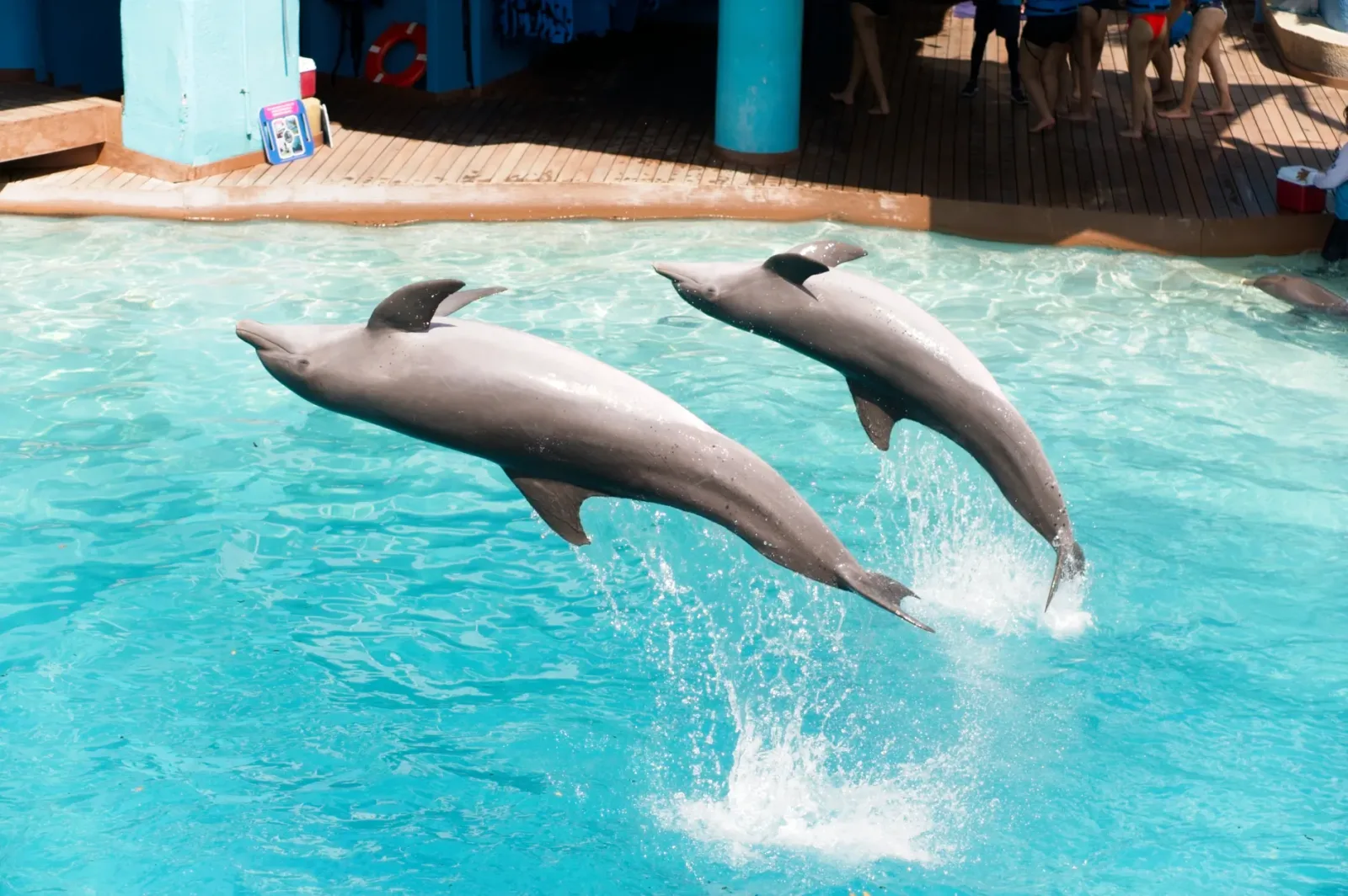
Those looking for contact with dolphins will find options spread across Cancún, Riviera Maya, Cozumel, Tulum, Playa del Carmen, Puerto Aventuras and Isla Mujeres. In Cancún, the places mentioned include the Dreams Cancún resort and La Isla itself; in Riviera Maya, there is an operation alongside the Occidental Grand hotel; in Tulum, the options appear at the Gran Bahía Príncipe Akumal complex and at Xel-há. If your idea is to choose by location, confirm on the day which unit is active and what type of interaction is offered, because this changes from one place to another.
For seeing sea turtles without entering a park facility, Akumal is the most important name in the region. The bay receives turtles on a daily basis, and access is usually done with snorkeling gear rented right on the beach. It is a simpler option than the dolphin programs, and works best for those who want to observe marine life in shallow water, without a rigid itinerary.
Those who want to combine the theme with other excursions in the region also usually look to Cozumel and Isla Mujeres, since both are among the places with dolphin and snorkeling activities. In Isla, this pairs well with Playa Norte itself and with Garrafón; in Cozumel, the focus is more on those who already plan to include the sea and diving in their day.
Where to Shop and Go Out at Night in Cancún
Kukulkán Plaza is the most obvious mall for anyone looking for more traditional shopping in Cancún. It is located in the Hotel Zone and has an area dedicated to designer brands, Luxury Avenue. If the idea is to browse the windows of well-known brands and get your shopping done in one place, this is the most straightforward address.

La Isla is more practical for those who prefer an open-air shopping center by the lagoon and want to combine shopping with a stop at the Interactive Aquarium. On rainy days, this type of mall works better than the more enclosed spaces in the area. Forum by the Sea, at km 9, also belongs on the itinerary, but more for entertainment than for shopping. This is where you’ll find a central hub of the city’s nightlife.
For souvenirs and crafts, Plaza Flamingo is usually the simplest stop in the Hotel Zone. Mercado 28, in the downtown area, requires more time on foot and makes more sense if you want to see local commerce and eat at a typical restaurant in the area. It is closed on Sundays, so it’s worth checking the day before you go.
At night, the concentration is clear: Forum by the Sea and its surroundings. That’s where Coco Bongo, Dady O and Señor Frog’s are located. Coco Bongo is the most famous spot in the strip, with shows and an open bar wristband system; Dady O shares the spotlight with it; and Señor Frog’s stands out for its more casual format, with the oversized margaritas that attract those who want to start the night without ceremony. If you plan to go, confirm the schedule and entry policy on the day, because it changes frequently.
Frequently asked questions
How many days are ideal to stay in Cancún?
To use Cancún as a base and do beaches, islands, and regional tours, 4 to 6 days works well. If you want to include ruins, a cenote, and a park, a week makes the itinerary more relaxed.
What is the best time to go to Cancún?
The best window is usually from December to April, when the weather tends to be more stable. From June to November, there is a higher chance of rain and hurricane risk in the Caribbean.
Where is the best place to stay in Cancún?
The Hotel Zone is the most practical area for those who want the beach and short distances between hotel, sea, and outings. The downtown area makes more sense for those who want to save money and do not depend as much on the hotel beach.
Is it easy to get around in Cancún and the surrounding area?
Yes. You can use taxis, buses in the Hotel Zone, organized tours, or a rental car, depending on the itinerary. For Isla Mujeres, Playa del Carmen, and Cozumel, public transportation can also work well.
Which day trips from Cancún are worth including in the itinerary?
Isla Mujeres, Playa del Carmen, Cozumel, Tulum, Chichén-Itzá, Cobá, and some parks in the region are often included in itineraries. The best choice depends on whether you want beaches, ruins, snorkel, cenotes, or a park.