Canberra: how to get there, get around, choose the best time, and decide what to do
Learn how to get to Canberra, where to stay, when to visit, and how to get around the capital to plan a practical itinerary without wasting time.

What makes Canberra a planned capital
Canberra was designed to be the Australian capital, and that shows in the city’s very form. The center does not spread out spontaneously like in older capitals: it was organized around Lake Burley Griffin, an artificial lake that divides the central area and shapes the mental map of anyone visiting. For the traveler, this means the city makes sense in well-defined zones, with movement often planned around the lakefront and the avenues that connect the institutional spaces.
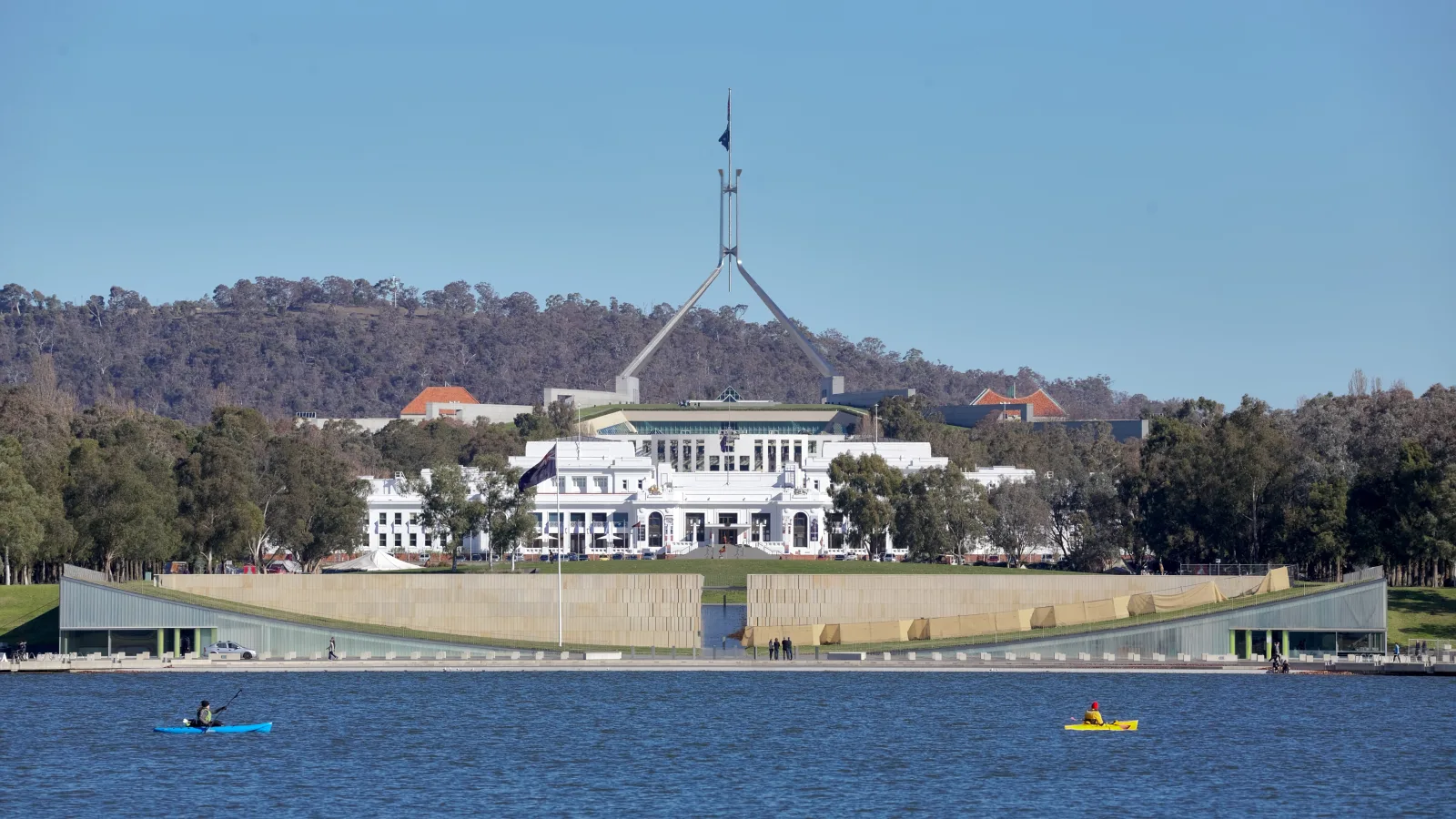
The basic layout helps explain what is where. Civic lies north of the lake and concentrates commerce and services. To the south is the Parliamentary Triangle and the embassy area. The main national institutions are also distributed in a similar way: the National Museum of Australia and the Australian War Memorial are on the north side; the National Library and the National Gallery of Australia, on the south side. This organization reduces the feeling of a “chaotic city” and makes the visit more straightforward, as long as you accept that Canberra calls for itinerary planning.
The capital’s character matches this structure. It is not a destination geared toward endless shopping streets or intense nightlife; the city works best for those who want museums, monuments, lakes, and time outdoors. Open spaces have real weight in the experience: bike paths, gardens, parks, bushwalking, and nature reserves are part of the same package as the urban visit, without seeming like an add-on. It is a capital where the design of the place matters as much as the buildings it brings together.
Best time to visit Canberra and what to wear
Canberra has a drier, more extreme climate than many people expect. In summer, the days can get hot, with average highs around 28 °C and peaks above 34 °C during some periods between December and March. Even so, temperatures usually drop quite a bit at night, so a light jacket is still useful. If the day starts hot, layered clothing helps adjust comfort without carrying too much.
Winter is dry and cold. Between June and August, nights often fall below zero, while daytime temperatures usually stay just above 10 °C. It generally feels like dry cold, not persistent humidity, and snow is almost never part of the package. For this time of year, bring a proper coat, a thermal base layer if you tend to feel cold, and pieces that work well layered.
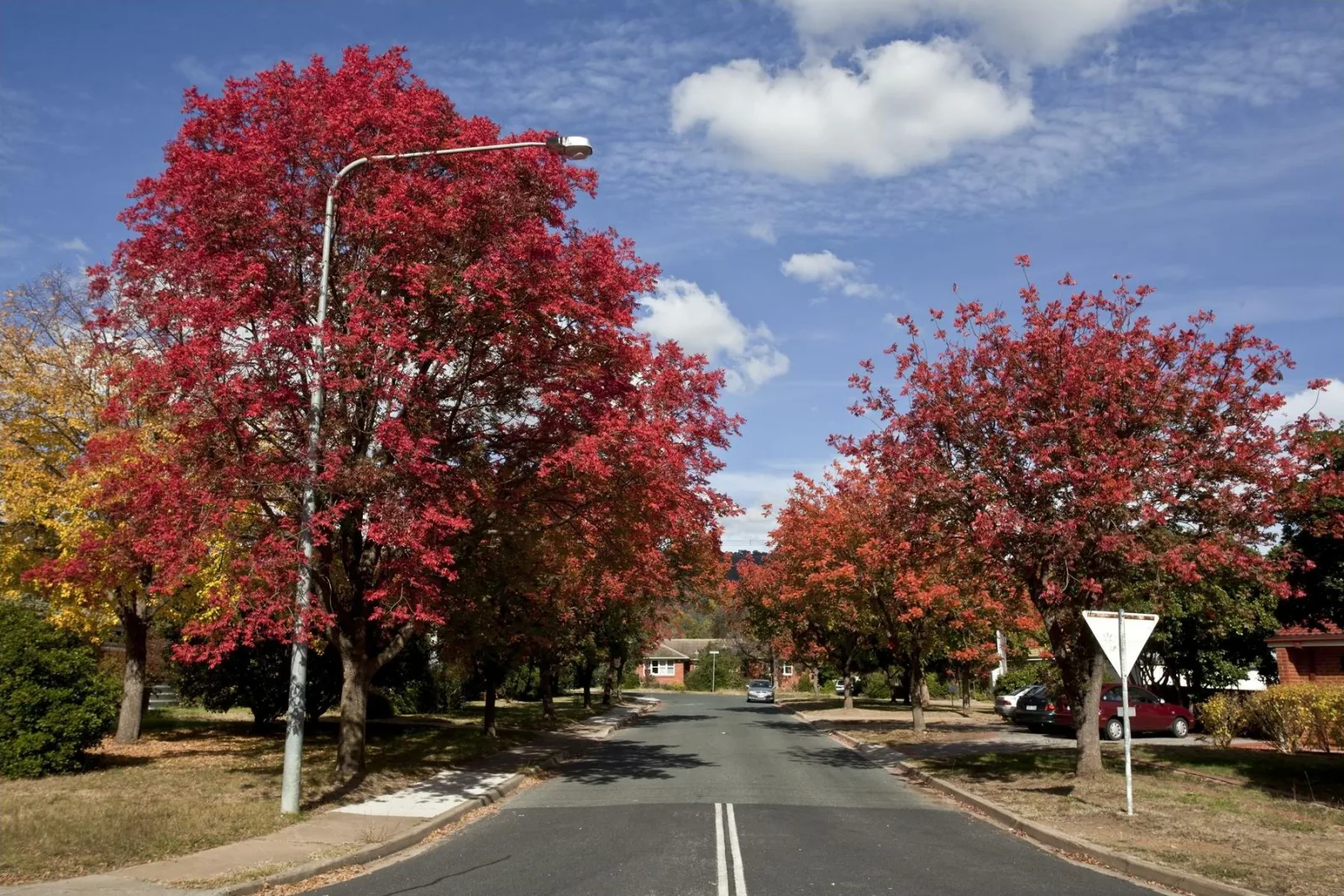
Spring changes quickly: one day may feel mild and the next call for a coat. If you want a more pleasant time for walking, the late part of autumn, from mid-April to May, usually offers the best balance between temperature and clear skies. Even so, the weather can vary quite a lot, so it’s not worth relying only on the first day’s forecast.
What works best in Canberra is versatile clothing. A T-shirt, mid-layer, and light jacket cover summer; in winter, add thermal pieces and a coat that handles the drop in temperature at night well. Even in the warmer months, it’s worth having an extra layer in your bag.
Editorial transparency: Some links on this page are affiliate links. We may earn a commission at no extra cost to you. This does not influence our recommendations.
How to get to Canberra by plane, train, bus, or car
Canberra Airport (CBR) serves the capital as well as nearby cities on the other side of the border with New South Wales. It is a small airport, with a modern terminal, and processing is generally quick on arrival and departure. Airlines such as Fiji Airways, Jetstar, Qantas, Regional Express, and Virgin Australia operate flights from Australian capitals; Nadi appears as a useful connection for those arriving from the Americas and the Pacific. In the terminal, there is a taxi stand inside the ground floor, Uber, buses, and car rental counters. To get to Civic, a taxi usually costs around A$ 25; for more distant neighborhoods, the fare rises considerably. Uber is usually cheaper. The R3 bus links the airport to Civic, departs from the baggage claim area, and on weekdays runs every 15 minutes or less; on weekends, every 30 minutes. The single fare between Civic and the airport is A$ 4.90, or less with a MyWay card. There is also a Royale Group shuttle, with a fare of A$ 10 per trip, operating daily between 7 a.m. and 6 p.m. and less frequently on weekends; it is worth checking the current schedule before relying on this service.

If you are traveling by car, the rental companies are in the arrivals hall and return is simple, with a fuel station next to the terminal. There is covered and uncovered parking within a short walk, and the open-air lot is usually cheaper. Those who prefer to cycle can reach the airport via the bike path around the lake, but the final stretch requires attention to the gravel surface near the creek and the underpasses beneath the avenues. The local bus also carries bicycles on front racks.
By train, Canberra Railway Station is in Kingston, southeast of the city center. The NSW TrainLink Xplorer service leaves Sydney three times a day and takes about 4h20; on some days, it is even possible to do a day trip. From Melbourne, NSW TrainLink operates a daily train/bus combination via Cootamundra, with ticket sales varying by season, and there are also daily coaches to the south coast via Cooma, Nimmitabel, and Bega. V/Line runs a daily connection between Melbourne and Canberra, with stops at the Jolimont Centre and Canberra Railway Station on some services; the fare is fixed, so it is worth checking whether your chosen date falls within the current operation. Among private operators, Murrays is the biggest name on the Sydney–Canberra route, with up to 10 express services per day and a journey of about 3h30. Greyhound Pioneer also competes on this route and offers direct service to Melbourne.
The bus station is at the Jolimont Centre, in Civic, which brings together all the coaches passing through the city. Its location is convenient for those who want to walk to central hotels or transfer to local transport. By car, the most commonly used routes come from Sydney and Melbourne via the main highways; from Batemans Bay, access follows the direction of Queanbeyan and enters the ACT via roads that connect the city to the east of the territory.
Where to stay in Canberra without getting lost in the spread-out city
Civic works well for those who want to stay in the practical center of the city, close to the main bus arrival point, shops, and everyday services. It is the most convenient base if you plan to spend much of your stay without relying on a car every day, because it concentrates amenities and keeps trips short to several points in the central core.
Kingston makes more sense if you prefer a quieter area, with easy access to the southern part of the lake and a stay in a neighborhood setting. For those who want to stay near the national institutions on the south side, it is also a logical choice, especially if the idea is to combine walks, short car rides, or occasional app-based rides.
The areas along Lake Burley Griffin tend to work well for those who value the view and want to stay between the commercial center and the institutional axis. The advantage here is location: you reduce the feeling of a “spread-out city” because you are closer to the central area that organizes Canberra. The price of convenience is usually accepting less immediate commerce than in Civic.
In the town centres of the north and south, the logic changes. Belconnen and Gungahlin are better for those who will move around a lot in those areas or want a more residential base in the north. Tuggeranong, Woden, Weston, and Molonglo Valley are better suited to those with commitments or plans concentrated in the south and who are willing to rely more on a car to cross the city. If the stay is short and the itinerary stays in the center, it is the kind of choice that only makes sense if there is a clear reason to sleep outside the central core.
How to get around Canberra in everyday life
In Canberra, a car is usually the most practical way to get around. The city is spread out, with neighborhood centers separated by wide roads and large park areas, so getting from one point to another on foot rarely works well for an itinerary that wants to cover more than one area in the same day. If you plan to visit just one region, getting around can be simple; if you want to cross the city frequently, a car greatly reduces wasted time.
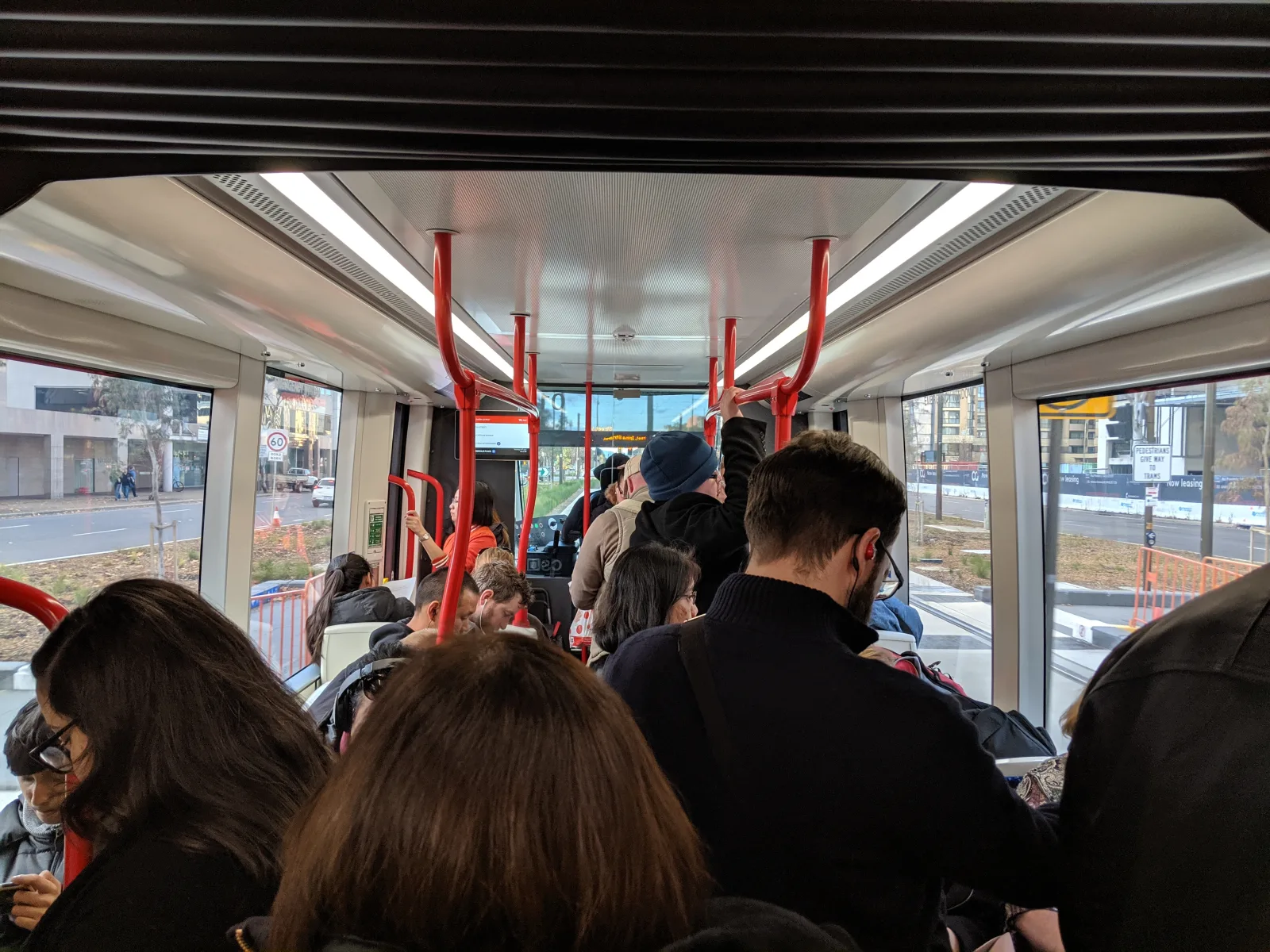
Public transport works best along specific corridors and for clear routes. Civic is the main hub of the network, with the City Interchange and the tram terminus, so from there it is easier to combine services. The tram helps along well-defined corridors, and the buses cover the rest of the urban network. Ticketing uses MyWay+, so it is worth checking before your trip how to top up and validate the card, as well as possible service or integration changes.
Bicycles make sense in Canberra because there is a network of bike paths off the main road, and the terrain does not usually punish you as much as in very hilly cities. It is a good alternative for daytime trips between nearby areas, especially around the lake and the planned corridors. Even so, the size of the city calls for planning: what looks close on the map can turn into a stretch that is too long to walk comfortably.
Walking works well in specific areas, such as Civic, Kingston, and stretches along the lake, but not as a general mobility solution. Think of short walks between attractions or between your hotel and a transport stop, and use a car, bus, tram, or bicycle for longer hops.
What to See in Canberra: museums, monuments and outdoor areas
The national institutions in Canberra are located around Lake Burley Griffin and call for a visit that combines museum, gallery and a short walk from one point to another. On the north side of the lake, the National Museum of Australia and the Australian War Memorial account for part of the most obvious route; on the south side, the National Library of Australia and the National Gallery of Australia complete the visit linked to the civic and institutional axis. If you have little time, choose the spaces according to the theme that interests you most: national history, military memory, literary collection or art.
The parliamentary triangle concentrates the more political side of the city, with institutional areas and official headquarters that help explain Canberra’s logic as a planned capital. It is not an area to “rush through” without context: the interest lies precisely in observing how the avenues, lawns and public buildings are organized in relation to the lake. For those who enjoy civic architecture and national symbols, this is the part of the city that makes the most sense to see on foot, with short stops between one point and another.
Outside the public buildings, Canberra works well for outdoor activities. There are parks, gardens, bike paths, bushwalking and nature reserves spread across the city and surrounding areas, which makes the experience quite different from denser capitals. If the idea is to balance museums with the outdoors, it is worth dividing the day between a national institution, a stretch by the lake and a short walking or cycling route.
If you have time left, look beyond the central core without expecting major tourist transfers: the city was already designed for that. The interest is less in “seeing everything” and more in putting together a coherent selection between public culture and open landscape, which is precisely where Canberra works best.
Out-of-Center Outings Worth Considering
The neighborhoods and town centres outside the central axis serve more to round out the visit than to “replace” Canberra Central. Belconnen and Gungahlin are to the north; Tuggeranong, Woden, Weston and Molonglo Valley are to the south. For those who want to stay or get around with less focus on the national buildings, they help explain the city as it actually functions, with local commerce, services and more everyday commuting.
Belconnen and Gungahlin make sense if you want to stay on the north side of the city. Tuggeranong, Woden and Weston work better as a base if your itinerary leans more to the south. Molonglo Valley is more an urban expansion area than a tourist stop in itself. The choice here depends less on attractions and more on logistics: where you’ll spend more time, and whether you’re willing to head into the center whenever needed.
In the ACT outskirts, Murrumbateman is the most useful name if you want to leave the city without going too far; it is associated with cool-climate wine. Tharwa and Hall have the profile of historic villages and work well as short detours for a half-day outing. Jervis Bay Territory, on the other hand, is outside the urban register: it is a small coastal area, administered by the federal government, with very white-sand beaches and about a three-hour drive from Canberra. It is the extension that changes the type of trip the most, because it takes you from the inland to the coast.
Which extension is worth it depends on how much time you have and the purpose of the trip. If the idea is to keep the visit centered on institutions, the lake and monuments, the outer neighborhoods are enough as support. If you want to leave the urban perimeter, Murrumbateman, Tharwa, Hall and Jervis Bay Territory are the names that really come into play.
Practical Information for Organizing Your Visit
The most useful starting point is the Canberra and Region Visitors Centre, at Regatta Point, on Barrine Drive, Parkes. It is next to the National Capital Exhibition and also serves as an information desk for your visit: you can ask questions about the city, confirm what is open on the day, and get help booking accommodation or tickets for local events. Hours change depending on the day of the week and public holidays, so it is worth checking before you go.
Canberra is a spread-out capital, and that affects how the map is read more than many people expect. The commercial center is in Civic, while part of the institutional and official life is distributed around the lake and the parliamentary triangle. To plan well, think in blocks of visits, not in “covering the whole city” in one day. If your goal is to stay near restaurants, shops, and the main transport hub, Civic makes things simpler. If you want to be closer to the southern shore of the lake and the national institutions, Kingston and nearby areas usually make more sense.
It also helps to keep in mind that the city was not designed to be taken in all at once. Instead of trying to cover everything, choose what really fits into your schedule and leave some flexibility for short trips between neighborhoods and civic areas. The local experience is usually more relaxed when you work with time margins and accept that Canberra functions better by sectors than as a compact center.
If you have a last-minute question, the visitor center takes care of much of the fine planning: where to stay, what still fits into the day, and how to fit local services in without wasting time.
Frequently asked questions
What is the best time to visit Canberra?
The late part of autumn, from mid-April to May, usually has milder temperatures and clear skies. Even so, the weather varies quite a bit, so it’s worth bringing layered clothing.
How do I get to Canberra by plane?
Canberra Airport serves the city and has quick access to Civic by taxi, Uber, bus, and shuttle. The R3 bus connects the airport to the center with regular frequency.
Is it worth staying in Civic?
Yes, Civic is the most practical base for those who want to be close to shops, services, and the city’s main connection point. It also makes it easier to spend much of your stay without a car every day.
What is getting around Canberra like?
A car is usually the most practical way to get around, because the city is spread out. Buses, tram, and bicycle work better for defined routes and specific areas.
What should I do in Canberra on a first visit?
A first visit usually combines the national institutions around Lake Burley Griffin, such as museums, the gallery, the library, and the Australian War Memorial. It’s also worth including outdoor stretches, such as parks and walks along the lake.