Biei, in Japan: how to get there, what to see, and how to plan your trip
Biei in Japan: see how to get there, when to go, and which areas to visit to plan an itinerary among viewpoints, fields, and local transport.
Where is Biei and what to expect from the landscape
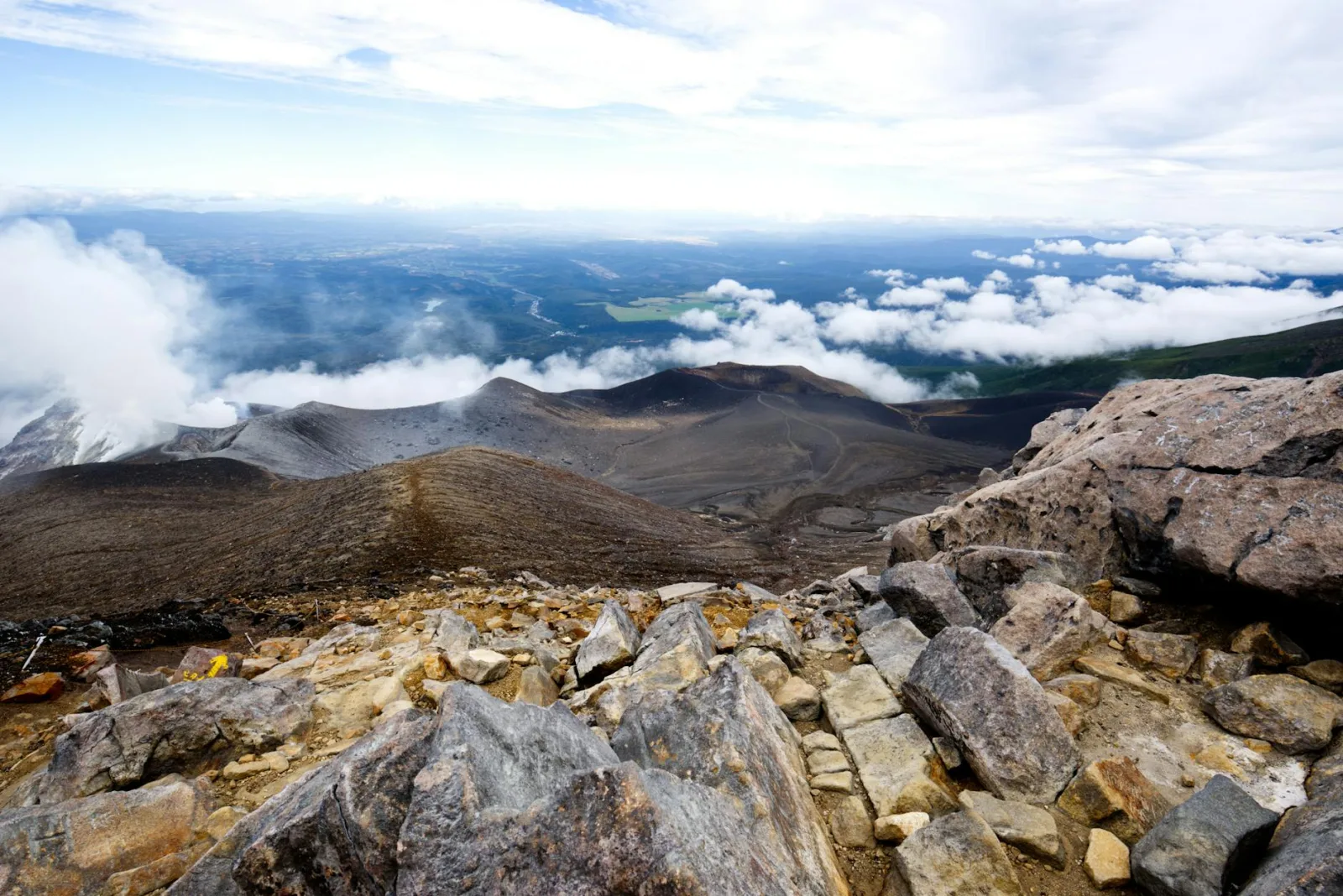
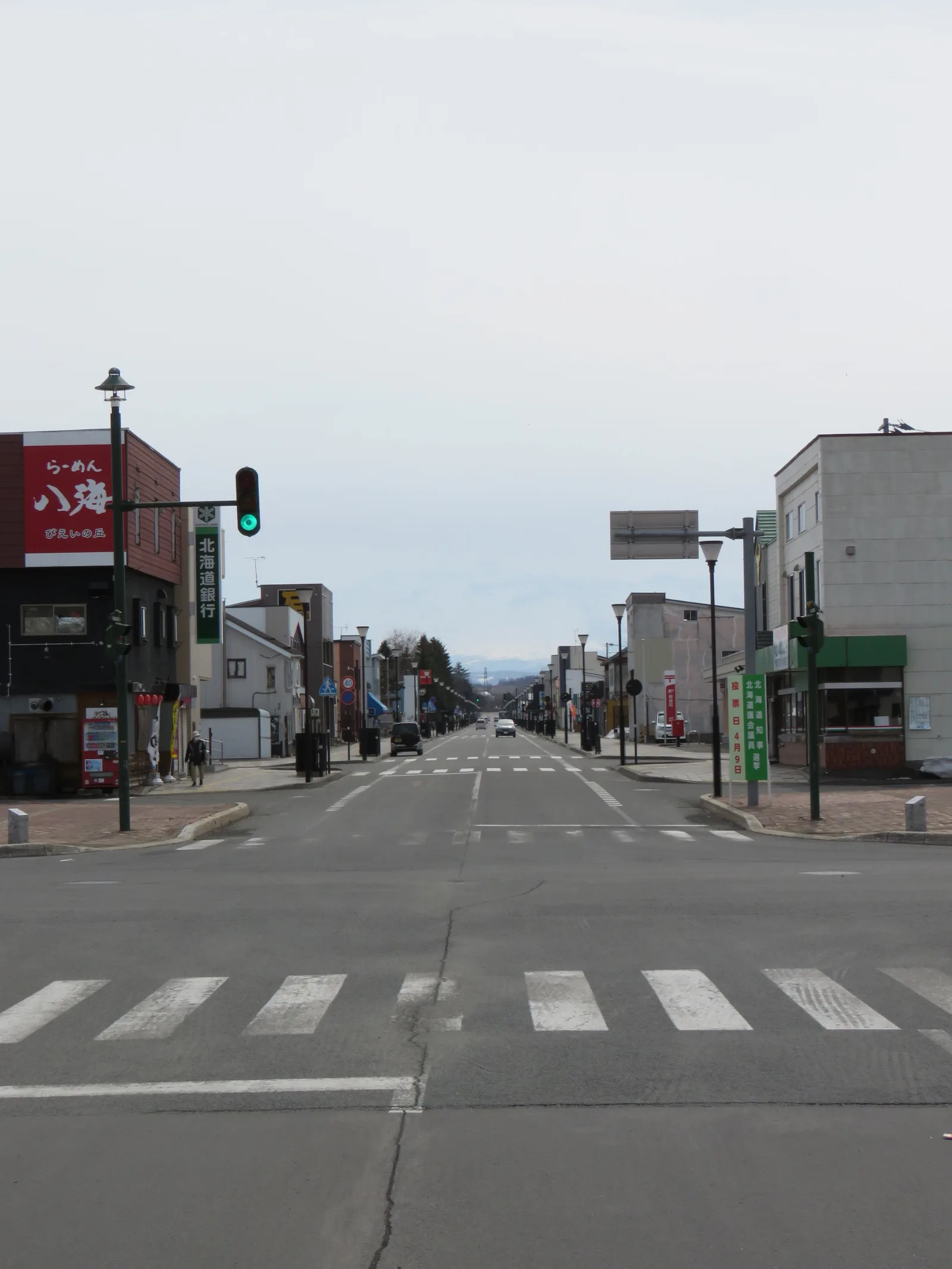
Biei is in Hokkaido, between Asahikawa and Furano, in an area of low hills and agricultural fields that change quite a bit in appearance throughout the year. It is a small town, and its appeal is not in the urban center itself, but in the set of scenic roads, fields, and observation points spread around the area. Those who include Biei in their itinerary are usually looking for rural scenery, short trips between viewpoints, and visits that depend heavily on the season.
The most useful division for understanding the destination is to look at two areas: Patchwork Road, northwest of the center, and Panorama Road, to the south. The name Patchwork comes from the appearance of the fields seen from above, with plots of crops forming a mosaic. Panorama Road, in turn, brings together another stretch of hills and open areas, with the same type of rural landscape, but in a different direction. In practice, this helps organize the day by sector, instead of trying to “see Biei” as if it were a compact place.
Patchwork Road tends to make more sense for those who want to combine viewpoints, famous trees, and fields that make for great photos in any season, with a stronger highlight in summer, autumn, and snowy winter. Panorama Road works well for those who want to go beyond the center and focus the visit on more scattered points, preferably by car or bicycle. Both areas deliver the same travel logic: little urban movement, more road, and open scenery.
How to get to Biei from Asahikawa, Furano, and the airport
Biei is on the railway line that connects Asahikawa and Furano, with local service throughout the day. From Asahikawa to Biei, the trip takes about 30 to 40 minutes; from Furano, the time is the same. In general, there is a little more than one train per hour on this segment, so it is worth checking the most convenient departure before leaving the station.
The fares listed for the train are 680 yen from Asahikawa and 800 yen from Furano. As fares and availability may change, confirm the current service when planning your itinerary, especially if you are traveling on a weekday outside peak season.
For those arriving via Asahikawa Airport, the Lavender-go is the most direct route. The bus connects Asahikawa Airport, Asahikawa Station, Biei, and Furano in about 15 minutes to Biei, with a fare of 380 yen and a frequency of one bus every 1 to 2 hours. It is the simplest option if you want to go from the airport to Biei without relying on a train connection.
In summer, sightseeing buses come into play, departing from Asahikawa, Biei, and Furano. They help fit arrivals into busier dates, but the services vary by season. If your plan depends on them, confirm the operating period, boarding point, and schedule in advance.
Editorial transparency: Some links on this page are affiliate links. We may earn a commission at no extra cost to you. This does not influence our recommendations.
How to get around Biei without complicating your itinerary
Downtown Biei is easy to explore on foot, especially if your goal is to move between the station, local shops, and basic services. For the spots scattered across the hills, walking quickly stops being practical: the terrain becomes demanding and the distances start to shape the itinerary.
A car is the simplest option for anyone who wants to visit several places in the same day. It handles the spread between sightseeing areas more efficiently and reduces dependence on schedules. If you prefer to cycle, there are bicycle rentals at shops in the center, with regular bikes costing about 200 yen per hour and electric bikes about 600 yen per hour. The electric version makes a difference when you want to save your energy on the climbs.
During peak season, sightseeing buses come into play, departing from the stations in Furano, Biei, and Asahikawa. They help those who don’t want to drive or put together a bike-only itinerary. Since they operate on specific dates, the first step is always to confirm whether there is service during your travel period.
If you plan to use a bicycle or sightseeing bus, it’s worth deciding before finalizing the day: in Biei, the choice of transport changes the pace of the outing more than the attraction itself.
Best time to visit Biei and what changes in each season
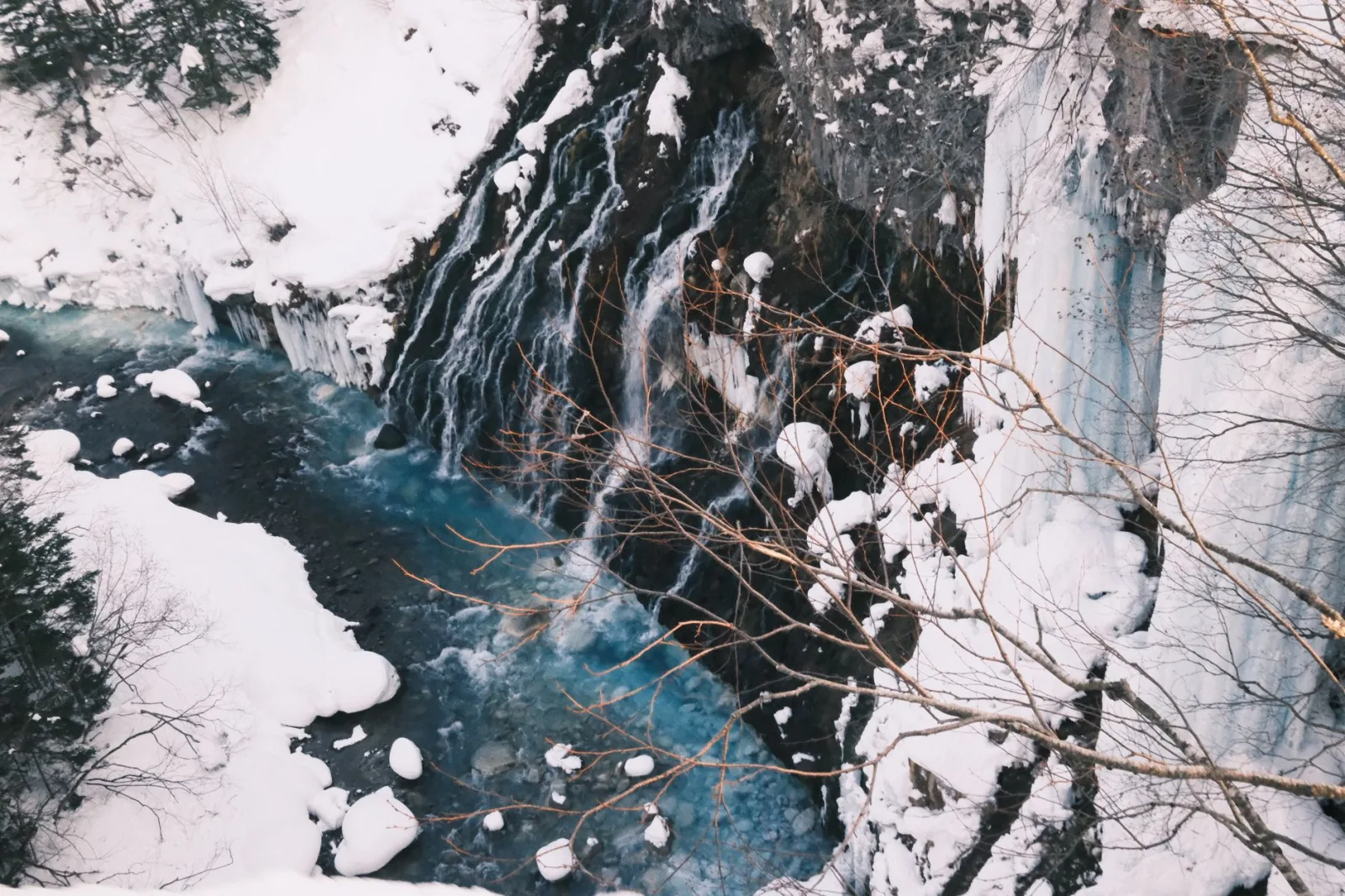
The easiest period to read Biei’s landscape is from late spring to autumn. In summer, the fields gain color and the hills become clearer for those who want to photograph the agricultural areas with good visibility. In autumn, the change in tone helps define the terrain; the city’s two scenic routes become especially practical for those who want to compare different areas on the same day. In winter, snow covers everything uniformly and the visual reading changes quite a bit: the appeal shifts less to the colors of the fields and more to the contrast of shapes, as long as you accept short days and severe cold.
If the trip falls between May and October, it is worth paying close attention to the flower parks. Shikisai Hill operates from 8:40 to 17:30 from June to September, from 8:40 to 17:00 in May and October, and has shorter hours outside that period: 8:40 to 16:30 in January, 9:10 to 17:00 from February to April and 9:10 to 16:30 in November and December. Admission is paid from July to September and free for the rest of the year; separate activities are charged separately. This matters for planning because the park changes its concept depending on the season, and the visiting window becomes tighter in winter.
Other spots also factor into the calendar. Zerubu Hill closes from late October to mid-April; if it is on your itinerary, the useful window is basically the snow-free season. Takushinkan is open from 10:00 to 17:00, with a reduction to 16:00 from November to March, and closes between exhibitions. In Biei, this matters more than it seems: some places are worth visiting for the open landscape, while others depend on being in operation that day. Before finalizing your travel date, confirm the current hours of each attraction, because it is the kind of information that changes with the season.
The main places to visit in Patchwork Road
The Patchwork Road area is northwest of downtown Biei and is where the landscape most often appears as a “mosaic” of fields seen from above. The appeal here is not a sequence of attractions clustered together, but observation points and solitary trees scattered across the countryside. On clear days, what changes most from one spot to another is the angle over the hills and the layout of the fields.
Among the most straightforward spots to include in your itinerary are the Hokusei Hill Observatory and Zerubu Hill. The first is a pyramid-shaped lookout designed to open up the view over the surrounding fields. The second combines a flower garden and a lookout, with a route that can be done on foot and also with the venue’s own sightseeing vehicles. If the idea is to see Patchwork Road with less internal movement, these two usually do the job well.
The other names in the area are trees that became famous through appearances in advertising campaigns or packaging: Mild Seven Hill, with rows of larch trees; Ken and Mary Tree, a solitary poplar; Seven Star Tree, a tree that became well known on cigarette boxes; and the group of oaks called Parents and Child Tree. Here, the interest is photographic and scenic, not in a long visit: these are spots to stop, take in the fields, and move on.
If you are choosing what to prioritize in Patchwork Road, the practical difference is simple: lookouts for a broad reading of the landscape, gardens for a bit more walking, and the famous trees for short stops. The area makes more sense when you go through it unhurriedly, combining nearby points in the same stretch.
The main places to visit on Panorama Road
Panorama Road: Shikisai Hill, Kanno Farm, and Takushinkan
South of Biei’s center, the logic of the visit changes a bit: instead of scattered points along a route of viewpoints and famous trees, you find stops that are easier to combine in the same day, especially if you are traveling by car or bicycle. This is the area where flower fields, paid activities, and landscape photography come into play.
Shikisai Hill is a large flower park, with areas planted in different colors along the trails. In summer, lavender is part of the itinerary; in winter, there is the option of snow mobiles. It is also possible to walk around, rent carts, or take the tractor-pulled wagons. If you have little time, it is usually the easiest stop to fit in with room to stroll without rushing.
Kanno Farm is on the main road between Biei and Furano and serves as a smaller stop to see flowers without extending the trip too much. Takushinkan, on the other hand, is different from the other two: it is not a park, but an exhibition space featuring landscape photography by Maeda Shinzo and his son Akira, with a special focus on images of Biei. For those who enjoy photography, it works well as a complement on the same day, without requiring a long itinerary around it.
As for costs, what usually weighs most is Shikisai Hill: admission is paid from July to September and, for the rest of the year, it is free, with separate charges for the rides. At Takushinkan, opening hours vary according to the season: 10:00 to 17:00, or until 16:00 from November to March; between exhibitions, the space is closed. If the visit depends on a tight schedule, it is worth checking the day’s opening hours before you go.
How much it costs to enter the attractions and which activities are paid
Shikisai Hill charges 500 yen from July to September. For the rest of the year, admission is free. The activities there are charged separately: cart rides, tractor-drawn carriage rides, and snowmobile rides in winter. If you want to include the park in your budget, think of the ticket as just the base cost; what really adds up is whether or not you choose these extra rides.
Zerubu Hill has free admission, but the on-site rides are charged separately. The logic is the same: access to the area costs nothing, and you only pay if you decide to use one of the vehicles offered there. This makes it easy to fit the visit in without commitment, especially if the idea is just to stop by and see the area.
Takushinkan did not have an admission fee listed in the available materials, so the safest option is to check the current price before going. The same applies to any one-off activity that appears on specific dates in Biei: when there is a separate fee, it is usually charged for the service itself, not together with the admission to the site.
Among the other places mentioned in the region, Ken and Mary Tree, Seven Star Tree, Parents and Child Tree, Hokusei Hill Observatory, and Mild Seven Hill do not have any listed access fee. If you are putting together your budget, the simplest approach is to separate what is an overlook or roadside tree from what functions as a park, gallery, or paid tour.
Where to stay in Biei and nearby cities
Biei has few truly practical bases for staying overnight, so the choice usually revolves more around logistics than variety. Staying in the center makes things easier for those who want to rely on the station, shops, and short walks. Outside of that, the equation changes for those traveling by car or who want to sleep along the Furano area, where there are more lodging options.
In Biei, the options mentioned include Country Inn Oyado Iyashi no Furusato and Pension Natsuminosato. The former is about 5 minutes by car from Biei Station and has an onsen, as well as services like dinner and breakfast. Pension Natsuminosato is also in Biei and appears as a simple alternative for those who want a base in the town. For those who need to stay close to transportation, these details matter more than the formal category of the accommodation.
Furano comes in as a practical base for those who prefer more options and flexibility. Among the options mentioned are Cottage Morino Nakamatachi, Hotel Hanafuji Inn, Shooting Star the Bed & Breakfast, Fenix West, FURANO B&B, Winery Hotel and Condominium HITOHANA, Chalet Fuyuri, Pension Gooseberry, Nozo Hotel, and Hotel Munin Furano. There are different profiles: some are closer to Furano Station, others have free parking, family rooms, a kitchen, ski access, shuttle service, or a spa. If you want to reduce travel time, it’s worth looking first at the distance to the station; if you’re driving, parking and room type usually carry more weight.
To decide between Biei and the nearby cities, think about your itinerary. Those who want to leave early to move around the sights in the region usually save time sleeping in Furano or in central Biei. Those who depend on trains or plan to use buses and bicycles tend to prefer a base near the station. If the trip includes winter, an in-room kitchen, laundry, a relaxation area, or an onsen can make a real difference at the end of the day.
Where to eat and what to buy in the Biei area
There are only a few options concentrated in the center, so eating in Biei is usually a matter of convenience, not variety. Among the places mentioned, Restaurant Bi works well for anyone who wants to sit down for a meal without leaving the station area. For the rest of the day, Road Station Oka no Kura handles snacks and local product shopping, which helps a lot when the itinerary is short or you are just passing through between Biei and Furano.
At Road Station Oka no Kura, the focus is more practical than sophisticated: snacks, regional items, and small purchases to take with you. It is a good place to grab something quick before hitting the road again or to put together a simple snack without relying on a restaurant. If you want to leave with food, look there; if you just want a break, the station’s setup usually fits that in-between travel moment well.
For souvenirs, the shops near Biei Station are the most practical option. They concentrate the kind of shopping that makes sense here: small souvenirs and products you can carry without effort. If the idea is to avoid detours and handle everything in one place, staying around the station is the most direct route.
Frequently asked questions
How do I get to Biei from Asahikawa or Furano?
There is a local train between Asahikawa, Biei, and Furano, with a travel time of about 30 to 40 minutes. There is also the Lavender-go bus, which connects Asahikawa Airport, Asahikawa Station, Biei, and Furano.
Is it worth visiting Biei without a car?
Yes, but the itinerary is more limited to the town center and places accessible by train, bus, or bicycle. To combine several viewpoints and scattered areas in one day, a car is the most practical option.
What is the best time to visit Biei?
From late spring to autumn, it is easier to read the landscape and visit the main spots. In summer the fields are more colorful, in autumn the terrain stands out better, and in winter the scenery changes with the snow.
What are the main places to visit in Biei?
On Patchwork Road, the viewpoints and famous trees such as Ken and Mary Tree and Seven Star Tree are worth visiting. On Panorama Road, Shikisai Hill, Kanno Farm, and Takushinkan are usually part of the itinerary.
Where should I stay in Biei or nearby?
Staying in central Biei is convenient for those who want to rely on the station and make short trips. Furano offers more accommodation options and may be better for those who want more flexibility in their itinerary.