Arequipa: what to do, how to get there, where to eat, and how to plan the trip
See what to do in Arequipa, how to get there, where to stay, and how to organize tours to the historic center, viewpoints, and Colca.
Why Arequipa deserves to be on the itinerary
Arequipa is in southern Peru and usually makes it onto the itinerary for a simple reason: it offers a very distinctive view of the country, with the scale of a large city, a preserved historic center, and a landscape dominated by volcanoes. It is the second-largest Peruvian city, behind Lima, and sits at around 2,300 meters above sea level.
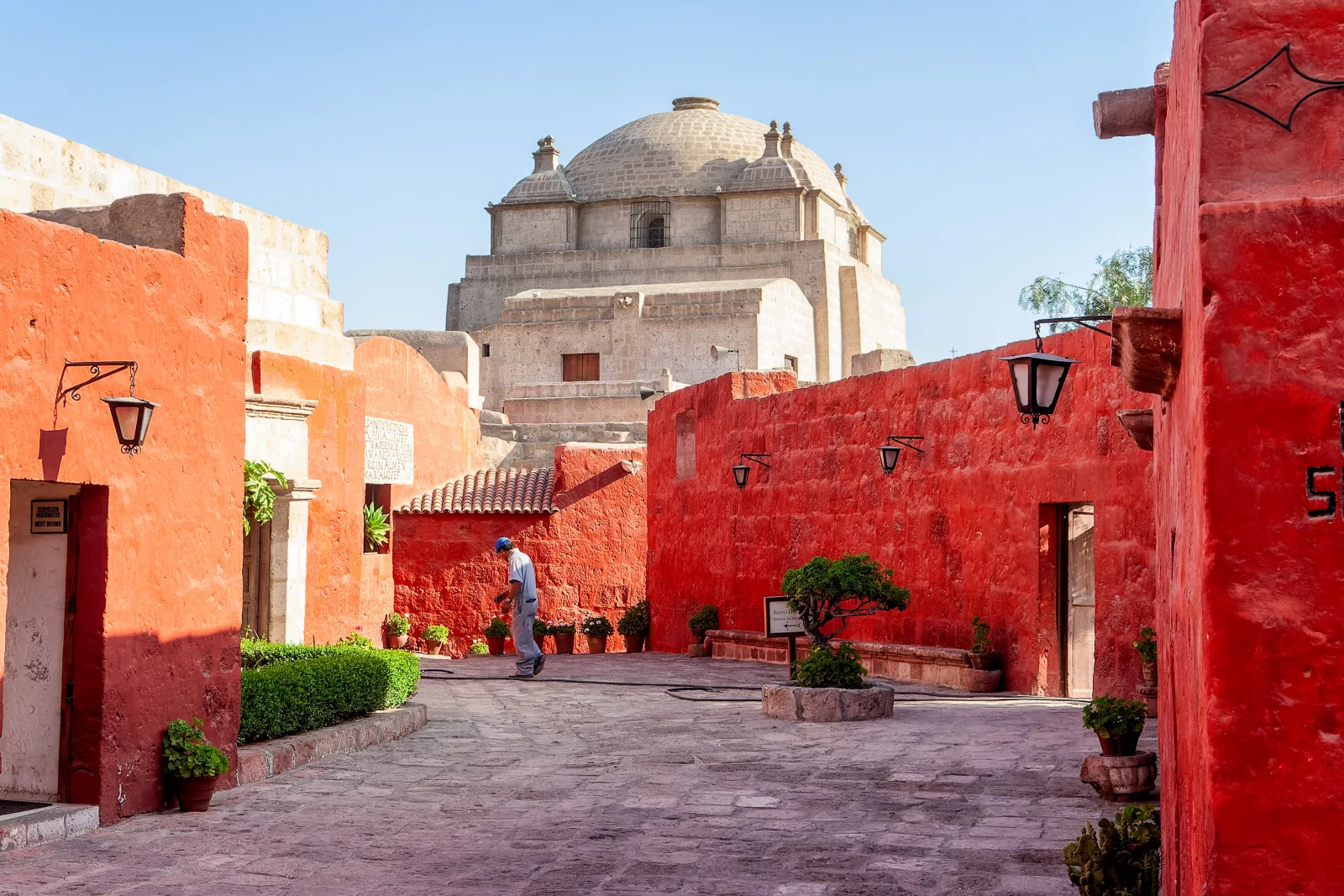
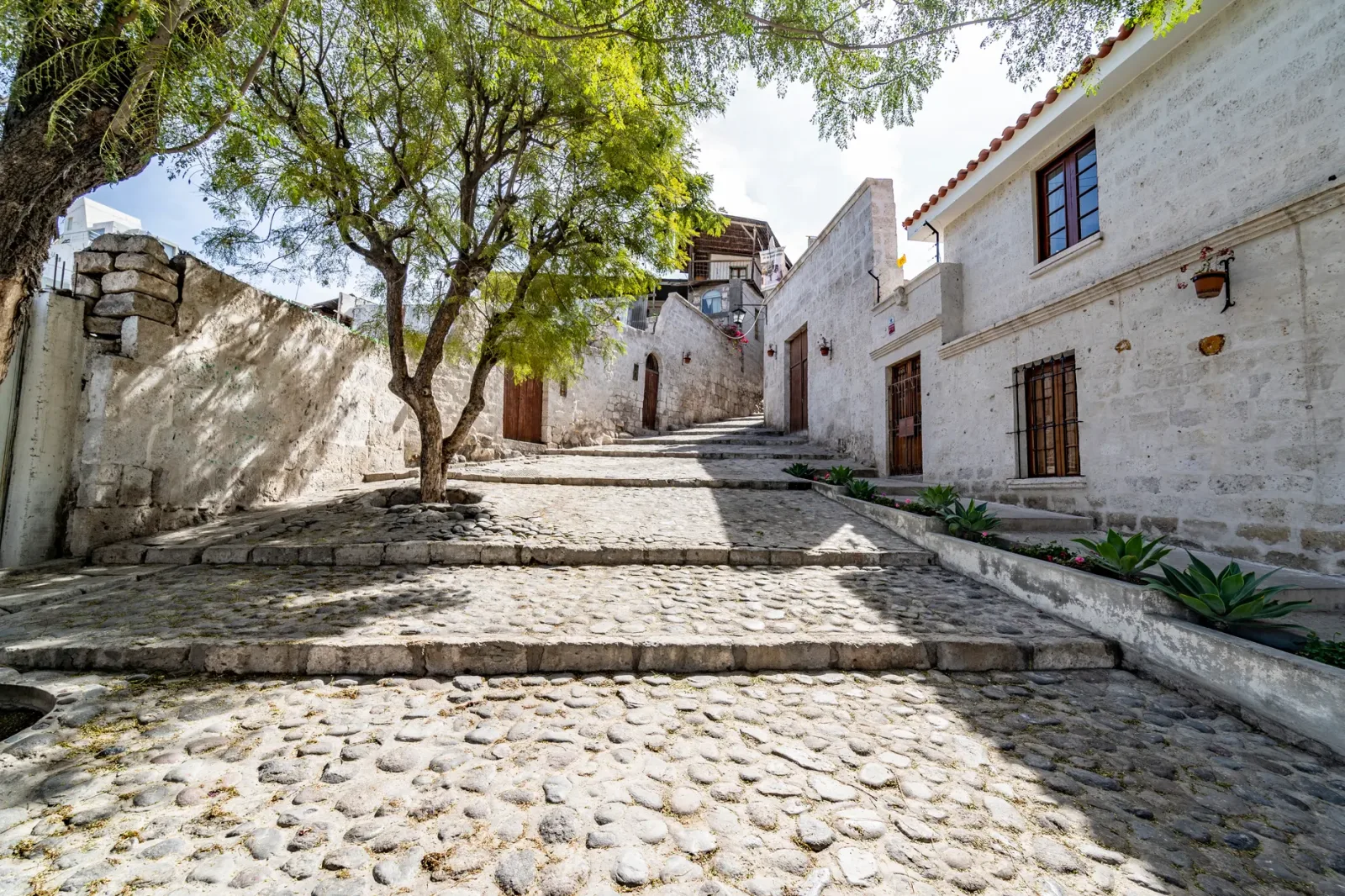
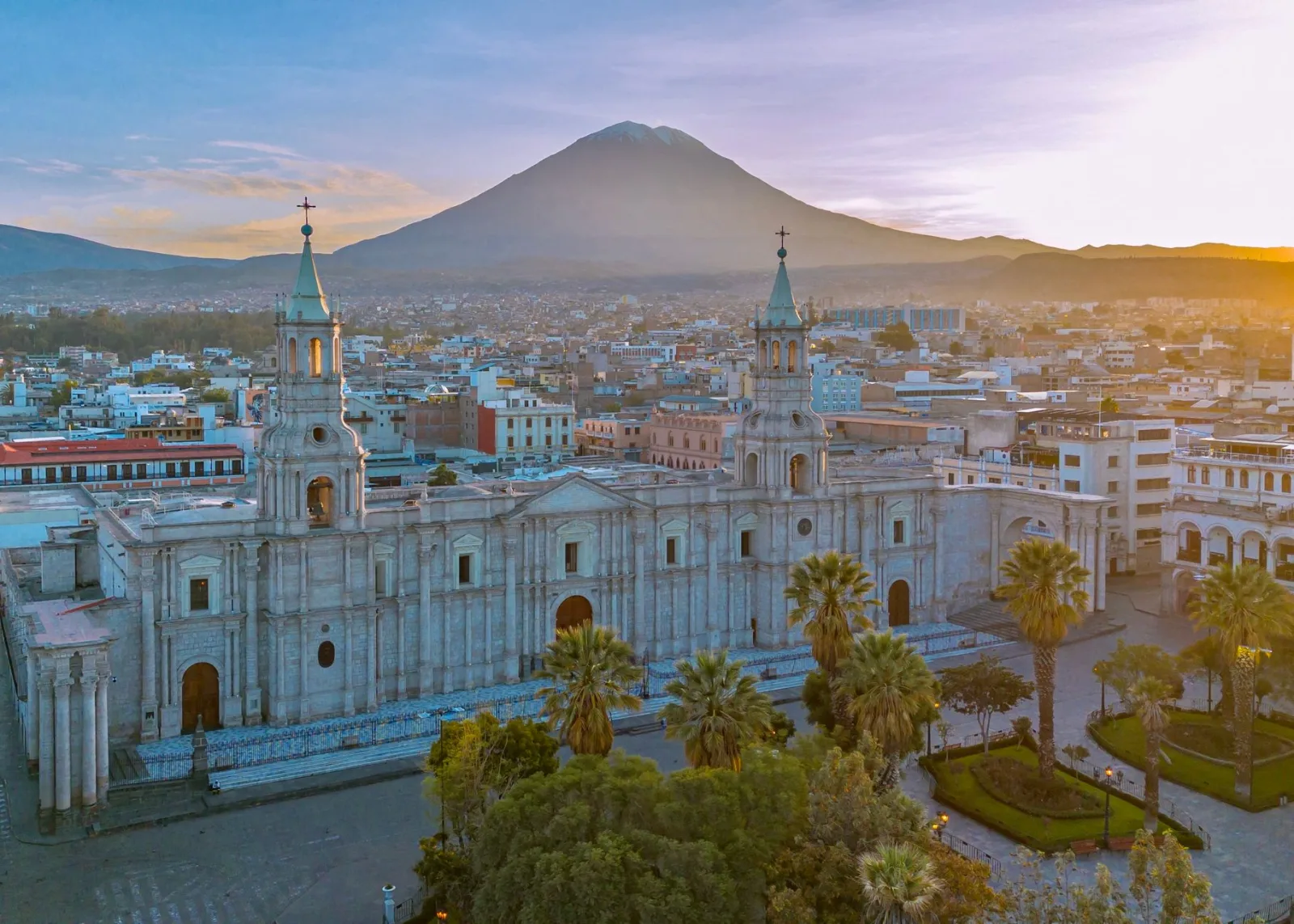
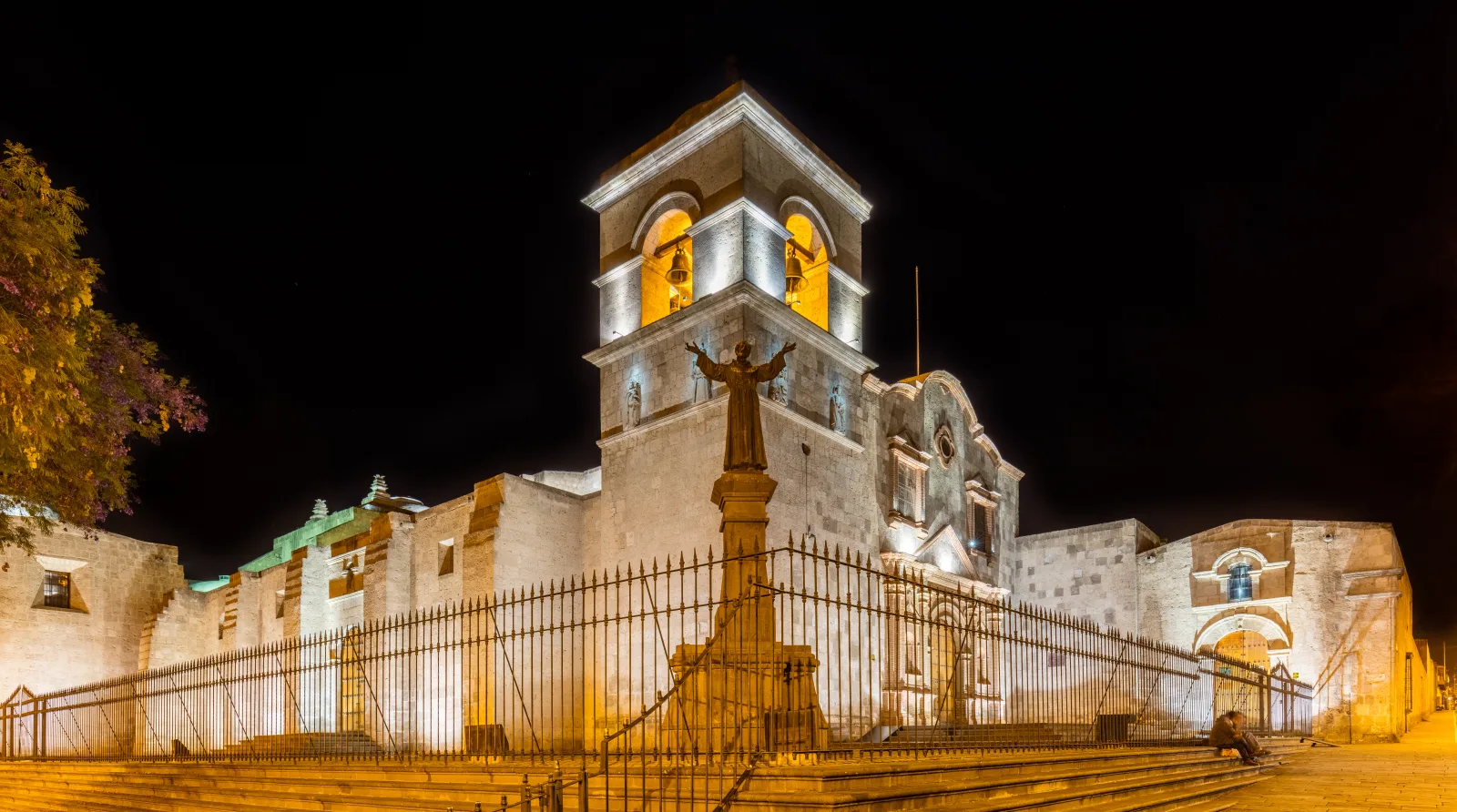
The nickname White City comes from the sillar stone, used in much of the local construction. This light volcanic stone appears in the architecture and helps give the city visual unity. It is also part of what makes Arequipa stand out from other Peruvian destinations, which are often first remembered for the coast, the jungle, or the better-known Andean circuit.
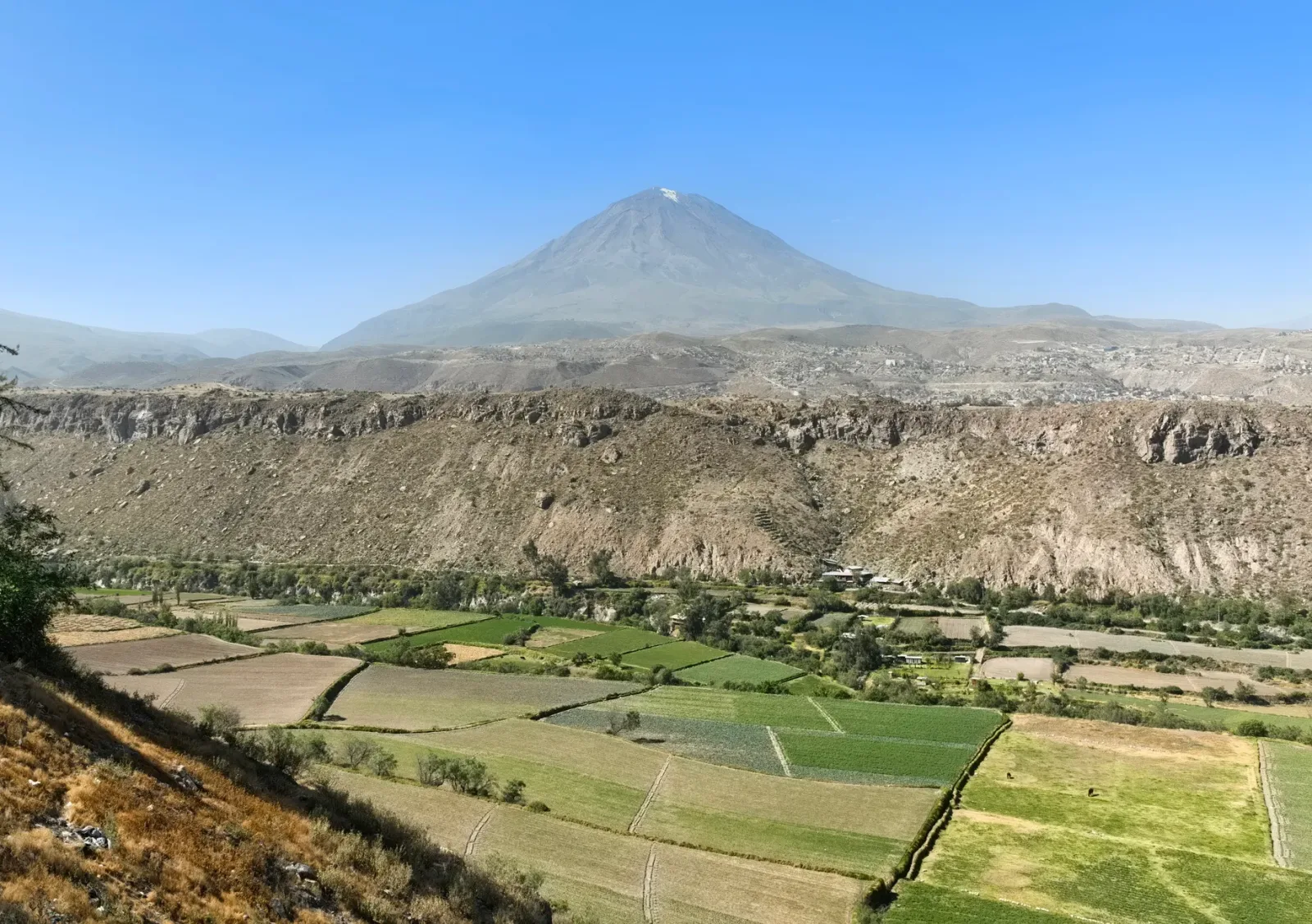
Surrounding the city are three volcanoes that shape the scenery: El Misti, Chachani, and Pichu Pichu. El Misti is the most striking, with its almost perfect shape, while the others complete the horizon and change the landscape depending on the light and the season. On clear days, they appear as part of urban life, not as a distant backdrop.
This combination of moderate altitude, light stone architecture, and the constant presence of volcanoes gives Arequipa its own identity within a trip to Peru. It is a destination that works well as a break between the country’s more obvious places, without losing character or requiring a major detour to make sense in the itinerary.
How to get to Arequipa
From Lima, the easiest way to get there is by plane. The route usually takes about 1 hour, with several daily flights. For those in Cusco, there is also a direct air connection, on a shorter route of about 500 km.
Those leaving from São Paulo need to connect in Lima. There are no direct flights from Brazil to Arequipa in the available information, so the most practical combination is to go to the Peruvian capital and then take a second flight to the white city. On round-trip journeys, many people arrange the segments separately to better fit in the stopover in Lima.
It is also possible to go by bus or car from other Peruvian cities. In that case, the trip from Cusco takes around 10 to 12 hours. It is a long journey, but it works for those who are already traveling overland and want to include Arequipa without relying on a plane.
If the idea is to combine cities, it is worth looking carefully at the logistics: the air segment saves time, while the road makes more sense for those already traveling through southern Peru and who do not want to depend on connection schedules.
Editorial transparency: Some links on this page are affiliate links. We may earn a commission at no extra cost to you. This does not influence our recommendations.
Where to stay in Arequipa
The most practical area to stay in Arequipa is around Plaza de Armas and the streets of the historic center surrounding it. That’s where you’ll find the restaurants, part of the nightlife, and the kind of sightseeing you can do on foot, without relying on long transfers. For those who want to leave the hotel, walk a bit, and return after dinner without hassle, this is the most efficient base.
By staying in this area, you also gain easy access to the rhythm of the center: activity during the day, more movement late in the afternoon, and streets that remain useful at night. This makes a difference especially for couples and for solo travelers, because it reduces the need to plan every outing. In general, the closer you are to the main square, the easier it is to fit in meals, breaks, and short strolls around the historic center.
Some hotels in the city offer coca tea at reception, a useful touch for those who feel the altitude in the first moments. It’s not something to choose a trip based on alone, but it can be a practical detail upon arrival, especially if you prefer to stay in a central area and go out less during the first few outings.
If your priority is to sleep with immediate access to what matters in the city, it’s worth looking for accommodations around Plaza de Armas and confirming in your booking whether the location is truly walkable to the historic center, because that changes the experience in Arequipa quite a bit.
What to do in the historic center
Plaza de Armas is the most useful starting point for exploring the historic center. This is where the city was born, and it is also where the colonial ensemble is most legible: the square, the light-colored stone arcades, and the constant movement all around. During the day, the pace is one of strolling and observation; at night, the square remains lively, with people circulating among the restaurants, shops, and surrounding buildings.
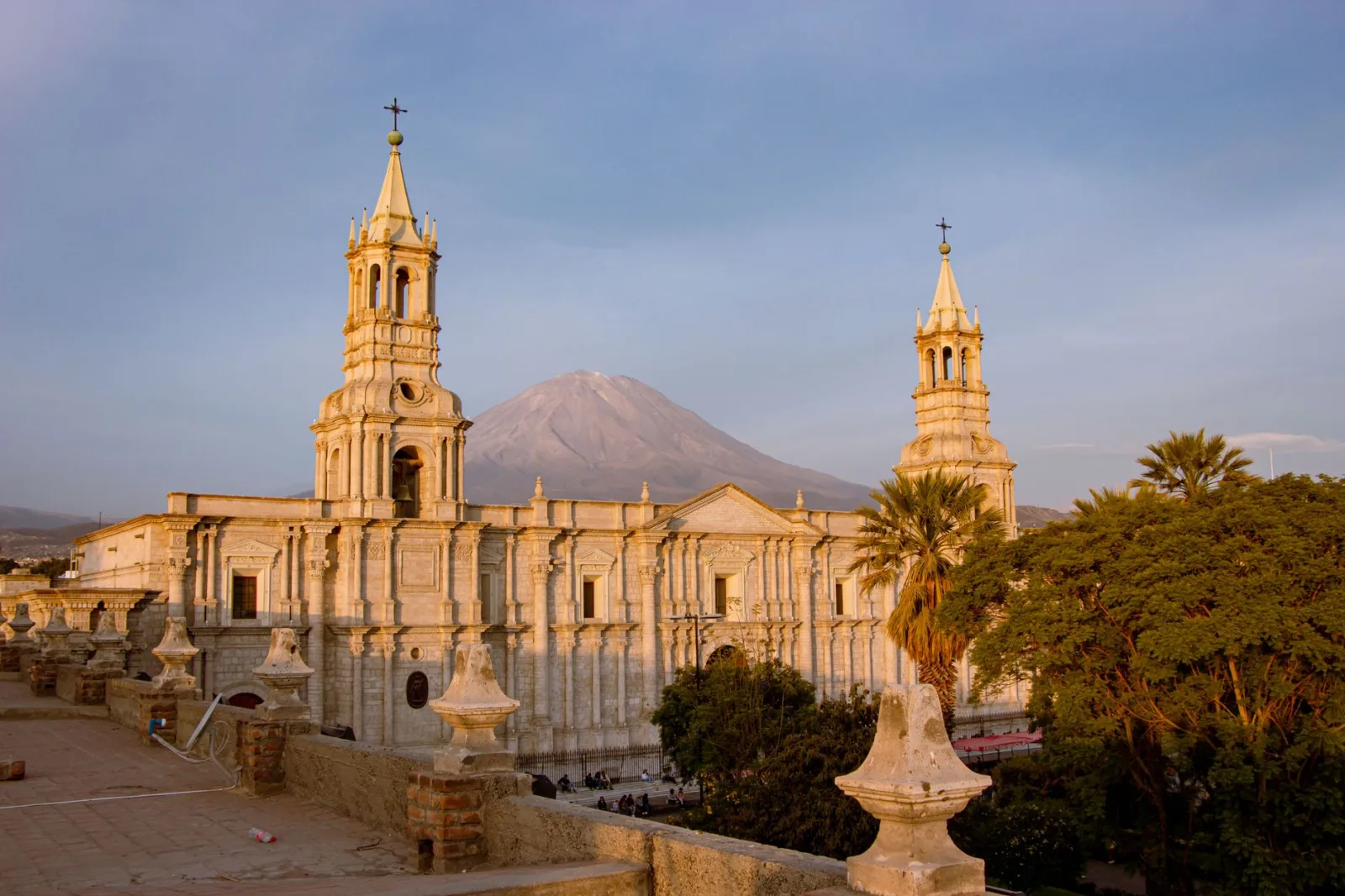
The colonial arcades frame the square on three sides, and the Cathedral of Arequipa occupies the other. The façade stands out for its scale and the sillar stone, but the greater interest lies in going inside and taking the visitor circuit up, if it is available on the day you pass through. The visit is also usually worthwhile for the view from above, with the square and the volcanoes appearing in the same frame.
In the same area is the Museo Santuarios Andinos, where the mummy of Juanita is kept, one of the city’s best-known pieces. If you like pre-Columbian history, it is worth fitting the visit in together with the cathedral and the area around the square, since everything lies along the same walking route. The Monasterio de Santa Catalina also fits well into this itinerary: it is a large complex, with inner streets and courtyards that help you understand another layer of Arequipa’s history without leaving the center.
On Sunday morning, the square usually takes on a different kind of movement, with parades by schools and institutions, music, and traditional dances. The shops in the center stay open for much of the day and night, and the flow of residents with llamas and alpacas still appears there, especially in the more touristy areas. It is an itinerary that works without haste: walking, going into the buildings that interest you, and returning to the square at another time changes the experience quite a bit.
Viewpoints and neighborhoods to see the volcanoes
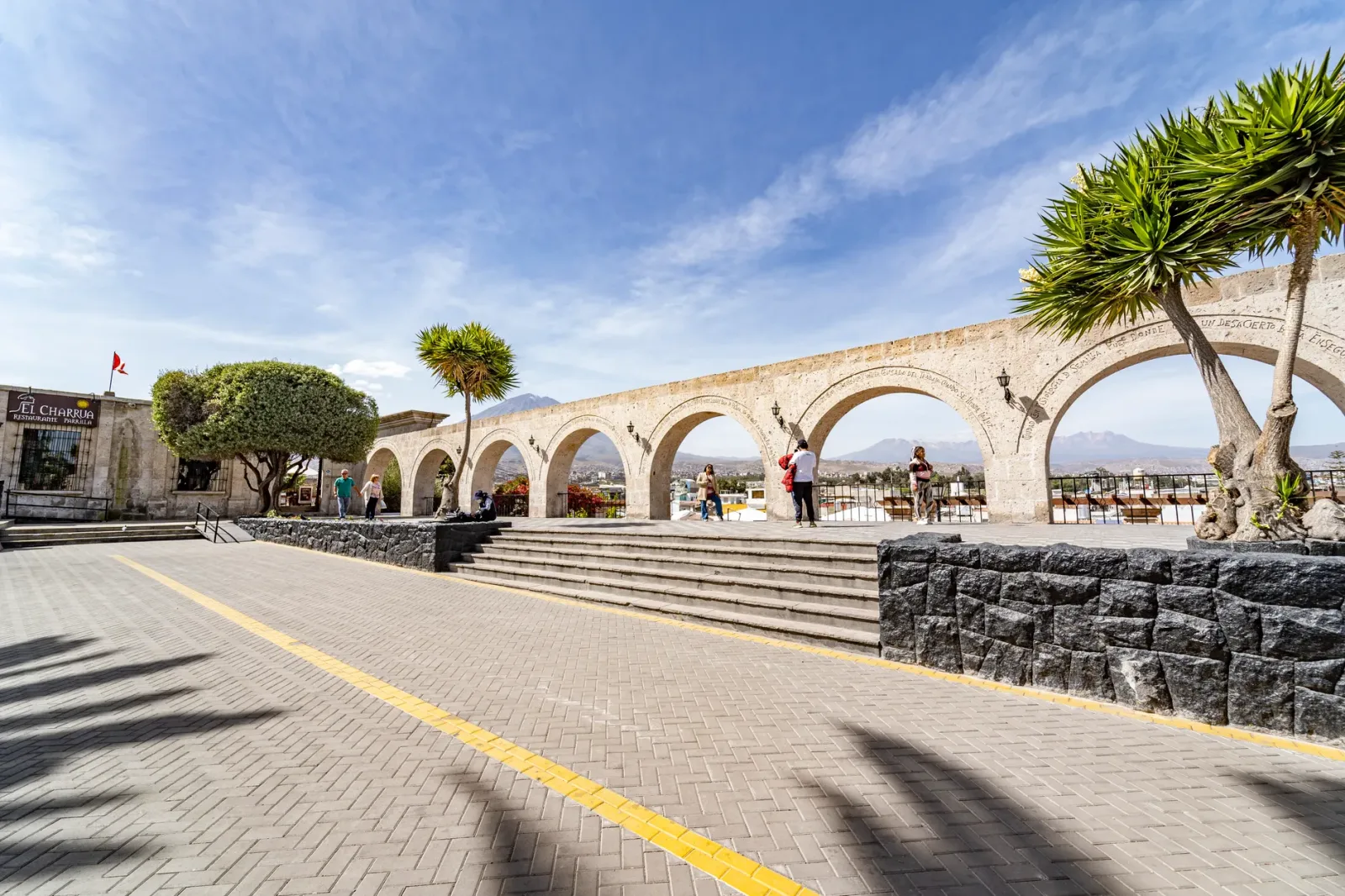
Yanahuara is the most direct spot to see Misti with the city in the foreground. The neighborhood has sillar arches that work as a natural frame for photos, and it is there that Arequipa’s urban landscape appears in the most easily recognizable way. If the idea is to leave with a classic image of the city, this is the most predictable place to get the framing right.
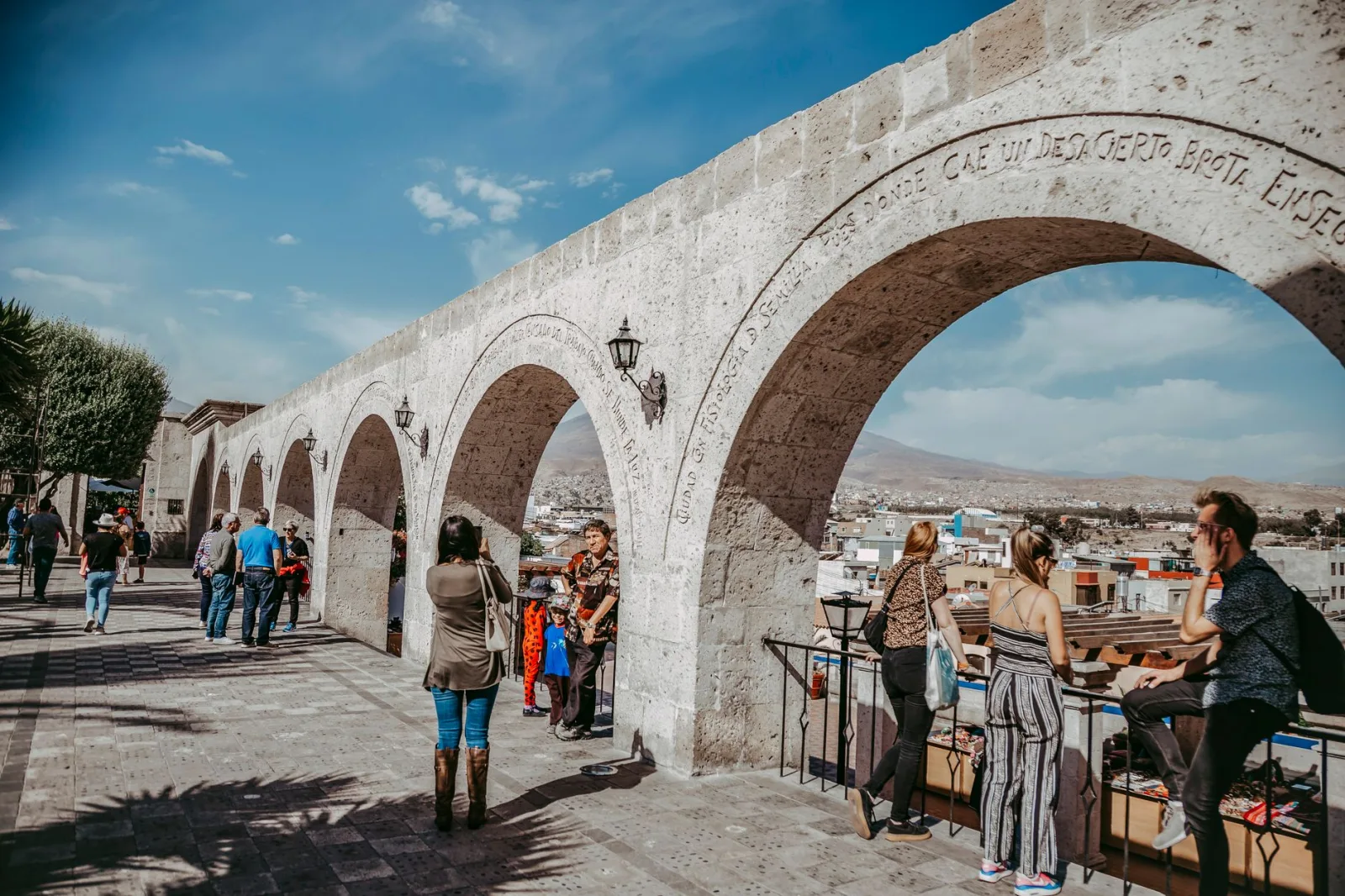
Next to the viewpoint is the church of San Juan Bautista, which helps complete the scene without competing with the volcanoes for attention. The visit usually works best when you have time to wait for the crowd to thin out, because the spot is very popular and the framing changes quite a bit depending on the time and the flow of people. For photography, the difference lies less in the equipment and more in patience.
The Mirador Carmen Alto and the Boyden Observatory are alternatives for those who want to compare angles. Both let you see the surroundings in a different way, but Boyden usually stands out for the sign and the kind of composition it allows. If you only have room for one, Yanahuara remains the most practical; if you want to vary your Misti shots, it is worth fitting a second viewpoint into the same trip.
Those who like to observe the city without rushing notice that these spots are not just for “seeing the volcano.” They help you understand how Arequipa was built in dialogue with the surrounding landscape. On clear days, Misti’s presence changes the reading of the entire neighborhood, and the difference between one viewpoint and another shows up in what enters the frame: more city, more sky, or more stone cutout.
Sillar Route and other tours in the surrounding area
The Sillar Route makes sense for those who want to understand where Arequipa’s visual language comes from. The tour takes you to the quarries where the light volcanic stone used in much of the city’s architecture is extracted, so it connects directly with the historic center you have already seen. It is a short logical detour, even when the experience takes place outside the urban core: you leave the square and arrive at the raw material of the facades, courtyards, and porticoes.
The appeal of the route lies less in “seeing a quarry” and more in following the work that shaped the city. Sillar appears as blocks, cuts, walls, and reliefs; along the way, this helps connect landscape and construction without much explanation. If you enjoy photography, the tour is especially rewarding because of this change in scale: the stone stops being an architectural detail and becomes the setting.
The Culebrillas Canyon is often included as a natural complement to this route. It changes the tone of the outing, shifting from an urban reading to a more open area, with formations that reinforce the geological side of the region. For those who want a trip outside the center without repeating squares, museums, or churches, this combination works well because it offers context and variety in the same itinerary.
If the idea is to choose just one extra outing besides the city, the Sillar Route is usually the option most in tune with Arequipa. It explains why the city has this uniform appearance and why the stone is not just a building material, but part of the local identity.
Where to eat in Arequipa and what a picantería is
Picanterías are the face of Arequipa’s cuisine. They operate like traditional restaurants, with dishes served in generous portions and preparations that usually pass through a wood-fired oven. They are not on the itinerary just to “try the local cuisine”; they are there because they help you understand how the city eats on a day-to-day basis.
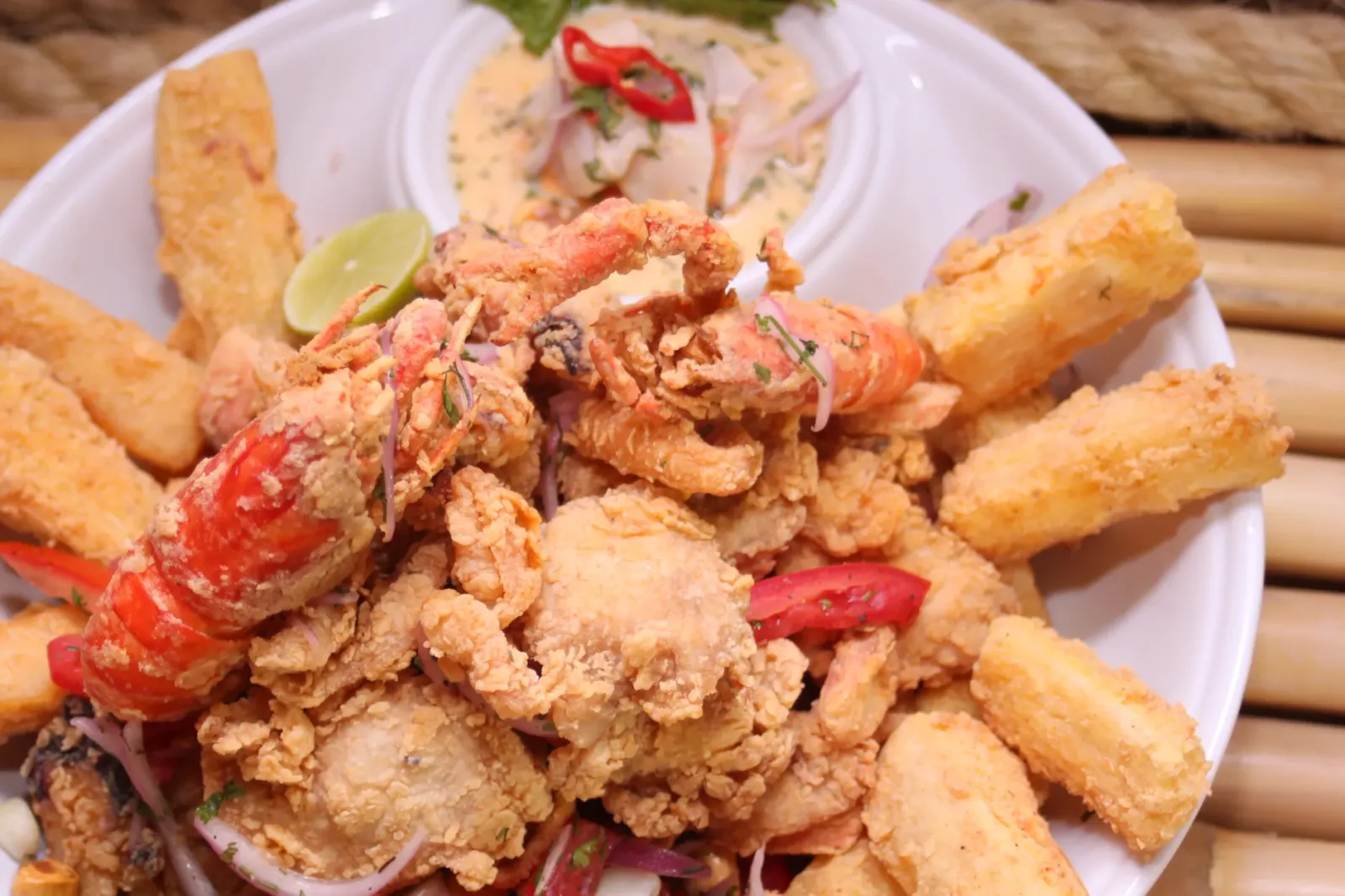
Each place has its own rhythm, but the common thread is home-style cooking, unpretentious service, and the logic of ordering to share or to eat slowly. If you want a meal that makes sense in the context of the city, this is the most straightforward choice. The best criterion is simple: choose a picantería where the daily dishes are clearly listed and go hungry.
In the center, there are also shops related to food and drink, with special emphasis on pisco, which usually shares space with chocolate and other local products. These are useful stops for anyone who wants to take something home without falling for the generic souvenirs that fill much of the tourist shop windows. In general, it is worth paying attention to what is produced there and what is merely resold.
Arequipa works well for those who like to eat without hurry and without excessive formality. Between a meal at a picantería and a stroll through the shops in the center, you already get a good sense of the city’s character without having to put together an entire culinary itinerary.
Colca Valley: a day trip is not the best idea
Colca Valley often makes its way into the itinerary as the most obvious regional excursion from Arequipa, but it needs more time than many people imagine. The journey to Chivay takes about 5 hours, and that already clearly separates the transfer from the sightseeing itself: one thing is getting to the region, another is enjoying the valley with some calm.
Doing it as a day trip makes the day too tight. You spend much of your time on the road and have little left for the stops that give the route meaning. The smartest option is to spend the night in Chivay or another point in the valley, because that way you spread the trip out better, can take in the scenery, and do not turn the outing into a sequence of counted hours.
Along the way, the Salinas y Aguada Blanca National Reserve already works as part of the experience. It is there that the landscape changes and vicuñas appear, one of the clearest signs that you have left the city and entered a more open Andean area. This stretch helps explain why Colca is not limited to the main canyon: the journey itself is already part of the visit.
If you only fit the valley into one day, you tend to see less than it offers. With an overnight stay, the stops carry more weight and the passage through the region becomes less tiring. What truly matters here is not showing up, but leaving space for the journey.
Mirador Cruz del Cóndor, hot springs and villages of the Colca
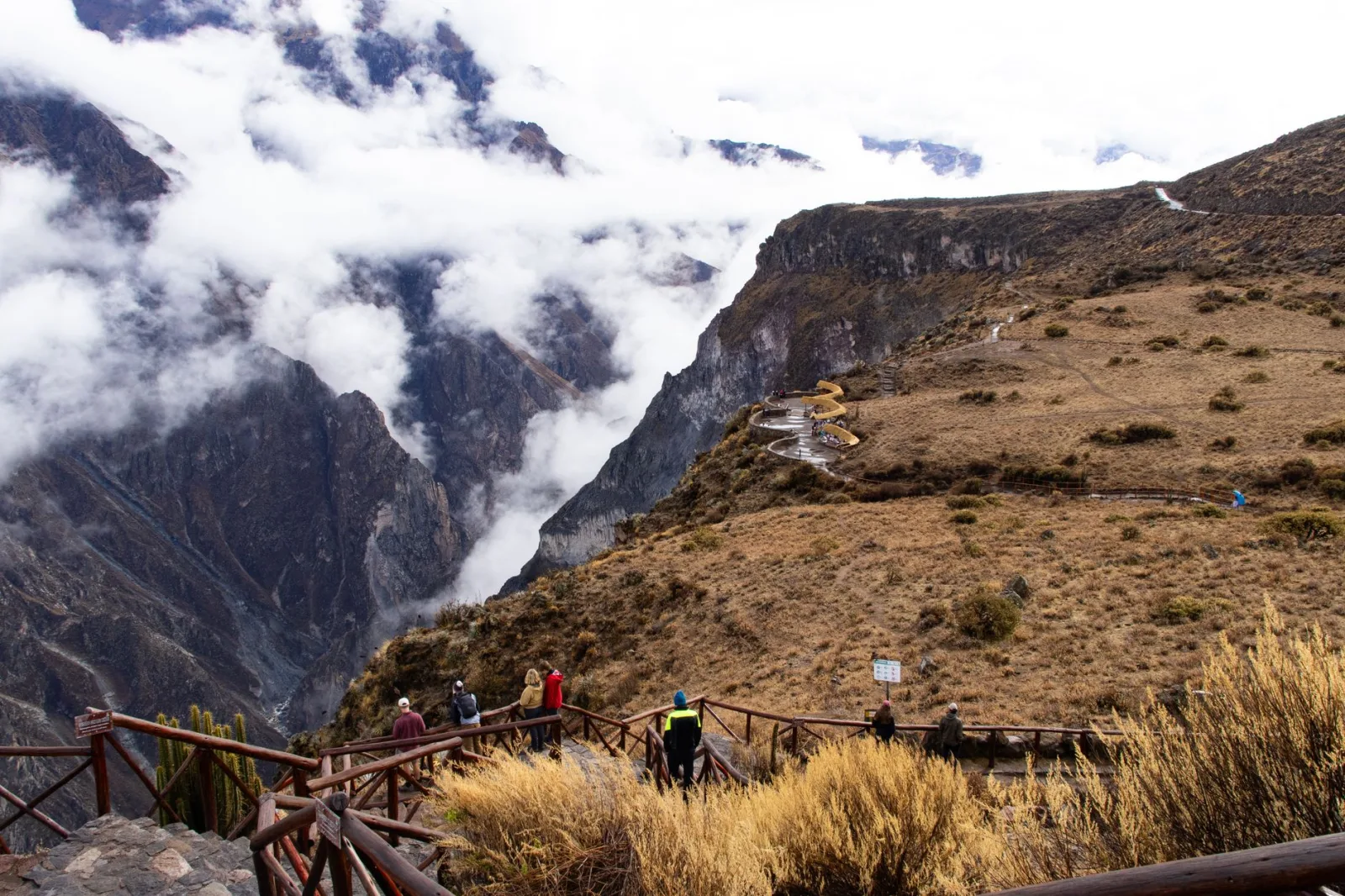
The Mirador Cruz del Cóndor is the stop that draws the attention of those going to Colca to see the flight of condors. The visit usually works best early in the day, when activity is still low and the chance of observing the birds taking advantage of thermal currents is greater. If the idea is to photograph, arriving with a margin helps more than trying to “rush to see it”.
Before or after this stretch, the villages and hot springs of the valley come into play. Coporaque, Yanque and Chacapi appear as useful names for structuring your passage through the region without reducing everything to the main canyon. In Chacapi, the hot springs usually attract those who want a break after hours on the road and hikes. Yanque and Coporaque, on the other hand, work well as stops to observe the valley and local daily life.
The viewpoints along this stretch also change the reading of the landscape. While Cruz del Cóndor is the best-known spot to see the birds, the other viewpoints are there to follow the shape of the valley, the agricultural terraces and the depth of the canyon with fewer people around. If you have to choose, prioritize the morning for the condors and leave the villages for the rest of the day.
The pace in Colca depends more on patience than on a list of attractions. Those who organize themselves to sleep in the valley gain time to fit in viewpoints, hot springs and villages without rushing everything.
Frequently asked questions
What to do in Arequipa on a first trip?
Start with Plaza de Armas, the Cathedral, the Andean Sanctuaries Museum, and Santa Catalina Monastery. If you have time left, include Yanahuara to see the volcanoes.
Where to stay in Arequipa to do everything on foot?
The most practical area is around Plaza de Armas and the historic center. That way, you are close to restaurants, tours, and the main sights.
Is it worth doing the Colca Valley as a day trip?
It is not ideal. The trip to Chivay takes about 5 hours, so staying overnight in the region usually makes for a better experience.
What is a picantería in Arequipa?
It is a traditional restaurant closely tied to local cuisine. The dishes are usually abundant, with stews and simple preparations, served to be enjoyed leisurely.
How to see the volcanoes of Arequipa?
Yanahuara is the most practical spot to see Misti with the city in the foreground. You can also compare views from Mirador Carmen Alto and Boyden Observatory.